
Creating a Multilingual Freight Listing Profile
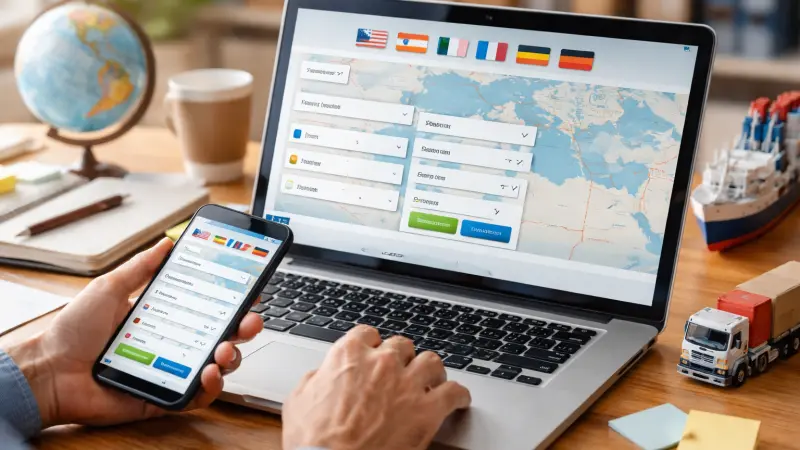
Imagine a freight broker in Hamburg searching online for a reliable UK haulage partner. They type their query in German, scan the first few results, and click on the business whose profile speaks their language — literally. Now ask yourself: would your freight company appear in that search? More importantly, would your listing communicate clearly enough to convert that visit into an enquiry?
For freight and logistics businesses operating in or alongside international trade routes, a multilingual freight listing profile is no longer a luxury — it is an operational necessity. As global supply chains grow more interconnected, UK freight companies must adapt their online presence to serve clients across multiple languages, cultures, and regulatory environments. This guide explains precisely how to build, optimise, and maintain such a profile, from choosing the right languages to structuring your content for maximum visibility.
Why Multilingual Freight Listings Matter for UK Businesses
The United Kingdom remains one of the world's largest trading nations. Post-Brexit trade agreements, renewed focus on export-led growth, and the rise of e-commerce have all increased demand for freight services that can communicate across borders. Yet many UK freight operators still maintain monolingual listings that fail to serve the international clients they actively seek.
A multilingual freight listing profile addresses this gap directly. When a shipping manager in Rotterdam, a manufacturer in Gdańsk, or an importer in Lyon searches for UK freight partners, they are far more likely to engage with a business whose profile meets them in their own language. Even a partial translation — key services, contact details, and core capabilities — signals professionalism and cultural awareness.
Beyond client acquisition, multilingual profiles also improve search engine visibility across international markets. Search engines index content by language and region. A listing that includes French, German, or Polish content is more likely to appear in relevant searches originating from those countries, expanding your reach without proportionally expanding your marketing budget.
Understanding the Structure of a Freight Listing Profile
Before translating anything, it is essential to understand what a freight listing profile should contain. A poorly structured profile in ten languages is still a poorly structured profile. Begin by establishing a clear, complete, and compelling monolingual version — typically in British English — before proceeding with additional language variants.
Core Elements of a Freight Business Profile
- Business name and trading name — Consistent across all languages; avoid localising brand names unless deliberately rebranding for a specific market.
- Service descriptions — Clear summaries of the freight services you offer, including road haulage, sea freight, air freight, warehousing, customs brokerage, and any specialist capabilities.
- Geographic coverage — The countries, regions, and trade lanes you serve. This is critical for international clients assessing suitability.
- Contact information — Phone numbers in international format, email addresses, physical address, and relevant regulatory identifiers (e.g., EORI number for customs purposes).
- Accreditations and memberships — BIFA membership, IATA accreditation, ISO certifications, and other industry credentials lend credibility, particularly to overseas clients unfamiliar with the business.
- Operational hours and response times — Especially important for time-sensitive freight enquiries crossing multiple time zones.
- Languages spoken — A simple list of the languages your team can communicate in reassures international clients before they even make contact.
Optional but Valuable Elements
- Case studies or examples of successful cross-border shipments
- Client testimonials, ideally including international clients
- FAQs tailored to common queries from specific markets
- A brief explanation of UK customs procedures for exporters new to trading with Britain
Selecting Languages for Your Freight Profile
One of the most common mistakes UK freight businesses make is choosing languages based on assumption rather than data. The instinct to add French, German, and Spanish is understandable, but it may not reflect your actual client base or growth targets.
Data-Driven Language Selection
Begin by reviewing your existing client enquiry data. Which countries do your current international enquiries originate from? Which trade lanes do you serve most frequently? If your freight operations are heavily focused on cross-Channel road haulage, French and Dutch are obvious choices. If you handle significant volumes to and from Poland or the Baltic states, Polish and Lithuanian may be far more valuable than Spanish.
Supplement internal data with external research. The Office for National Statistics and HMRC publish detailed UK trade statistics by country and commodity. These figures can help you identify which markets are growing and which languages correlate with high-value trade flows relevant to your service offering.
Prioritising Languages by Business Impact
Not every language needs a full profile translation. A tiered approach is often more practical and cost-effective:
- Tier 1 — Full translation: Languages spoken by your largest or most strategically important client groups. Every element of the profile should be available in these languages.
- Tier 2 — Partial translation: Languages relevant to secondary markets. Translate key service descriptions, contact information, and a brief company introduction.
- Tier 3 — Language indicator only: For markets where you have limited but growing presence, simply noting that staff members speak a particular language can be sufficient as a first step.
Translation Quality and Localisation
The distinction between translation and localisation is fundamental to the success of a multilingual freight profile. Translation converts words from one language to another. Localisation adapts content to suit the cultural, regulatory, and commercial context of a specific market. Both are necessary; neither alone is sufficient.
Common Translation Pitfalls in Freight Listings
Freight and logistics terminology is highly specialised. Generic machine translation tools frequently produce inaccurate or misleading results when applied to industry-specific language.
Terms such as "groupage," "bonded warehouse," "bill of lading," "multimodal transport," and "incoterms" have precise meanings that must be rendered accurately to maintain professional credibility.
Consider the following when managing translation quality:
- Use human translators with logistics expertise. A general-purpose translator may produce grammatically correct text that is nonetheless meaningless or misleading to a logistics professional.
- Validate translations with native speakers in your target markets. Ideally, ask a contact in the relevant country to review the translated profile before it is published.
- Avoid literal translation of idiomatic phrases. British English is particularly rich in idioms and colloquialisms that do not translate cleanly. "We go the extra mile" may resonate with a domestic audience but could confuse or even alienate readers in other cultural contexts.
- Keep formatting consistent. Date formats, currency symbols, telephone number structures, and address formats vary significantly between countries. Ensure your contact details are presented in a format that makes immediate sense to readers in each target market.
Regulatory and Legal Localisation
Freight operations are governed by an extensive and varied set of international regulations. When writing profile content for specific markets, ensure that any references to regulatory frameworks are accurate for the jurisdiction in question. For example, customs procedures that apply to UK imports may not be relevant to a European client seeking an export partner. Tailor regulatory content accordingly, and always recommend that clients seek professional advice for complex customs matters.
SEO Optimisation for Multilingual Freight Profiles
A multilingual freight listing profile that nobody can find online is of limited commercial value. Search engine optimisation (SEO) for multilingual content requires a structured approach that differs meaningfully from standard monolingual SEO practice.
Hreflang Tags and Language Signals
If your freight profile is hosted on a website you control, implementing hreflang tags is essential. These HTML attributes signal to search engines which version of a page is intended for which language and regional audience. Correct hreflang implementation ensures that a French-speaking user searching in France is directed to your French-language profile rather than your English version.
For profiles hosted on third-party directories or listing platforms, hreflang implementation is typically handled by the platform itself. In this context, focus on ensuring that your profile content is correctly categorised by language and region within the platform's own structure.
Keyword Research by Language and Market
Keywords that perform well in English do not automatically have equivalent high-volume counterparts in other languages. Each language variant of your freight profile requires independent keyword research to identify the terms and phrases that international clients actually use when searching for freight services.
For example, the English phrase "road freight UK" may have a direct German equivalent, but search volumes, competition levels, and user intent may differ significantly. Use keyword research tools that support multilingual queries, and factor in local search behaviour rather than assuming direct linguistic equivalence.
Building Consistent NAP Data Across Languages
NAP — Name, Address, and Phone Number — consistency is a foundational element of local SEO. When creating multilingual profile variants, ensure that your business name, address, and contact number are presented identically (or in a clearly consistent format) across all language versions. Discrepancies between profile versions can confuse search engines and reduce the authority of your online presence.
Choosing the Right Platforms for Your Freight Listing
The platform on which you publish your freight listing profile significantly affects its visibility, credibility, and multilingual capabilities. Not all directories are equally suited to international freight businesses.
Industry-Specific Freight Directories
Specialist freight and logistics directories typically attract a professional audience with genuine commercial intent. Listings on platforms designed for the shipping industry carry inherent relevance signals and are more likely to be discovered by freight buyers, forwarders, and supply chain managers. Many such platforms also support multilingual profiles or serve international audiences by design.
General UK Business Directories
General business directories remain valuable for UK freight companies, particularly for domestic visibility and as part of a broader citation-building strategy. A presence across several reputable platforms strengthens your overall online authority, which in turn supports your rankings across all language versions of your profile.
When assessing general directories, prioritise platforms that are well-established, well-indexed by search engines, and that offer meaningful profile customisation. A listing that allows you to describe
your services in detail, specify the countries you serve, and include relevant accreditations is far more valuable than a bare-bones name-and-number entry.
International Trade Platforms
For freight businesses with significant international ambitions, trade-focused platforms that connect exporters, importers, and logistics providers across multiple countries offer additional profile opportunities. These platforms are often language-agnostic or multilingual by design, making them well-suited to the kind of comprehensive multilingual profile described in this guide.
Managing and Updating Multilingual Profiles
Creating a multilingual freight listing profile is not a one-time task. Service offerings change, contact details evolve, accreditations are renewed, and trade routes expand. A profile that was accurate twelve months ago may now contain outdated or misleading information.
Establishing a Review Cycle
Set a regular review schedule for all language versions of your profile. Quarterly reviews are appropriate for most freight businesses; monthly reviews may be warranted if your service offering or market focus changes frequently. Assign clear responsibility for profile maintenance to a specific individual or team, and ensure that updates made to the primary language version are promptly reflected in all translated variants.
Monitoring Performance Across Languages
Track the performance of each language variant of your profile using web analytics tools and, where available, directory platform analytics. Key metrics to monitor include profile views by language, enquiry volumes attributable to each language version, and conversion rates from profile view to contact. This data will help you refine your language prioritisation and identify underperforming translations that may benefit from revision.
Responding to International Enquiries Effectively
A multilingual profile that generates enquiries in languages your team cannot handle creates a poor client experience and wastes the investment made in translation. Before publishing a profile in a given language, ensure that your team has the capacity to respond to enquiries in that language within a reasonable timeframe. If in-house language capability is limited, consider partnerships with translation services or agents in key markets who can facilitate initial communication.
Practical Steps to Create Your Multilingual Freight Profile
The following step-by-step framework provides a practical pathway for UK freight businesses looking to establish or improve their multilingual online presence.
Step 1: Audit Your Current Profile
Review your existing online listings — website, directories, trade platforms — and assess their completeness, accuracy, and consistency. Identify gaps in information and inconsistencies in NAP data before proceeding with translation.
Step 2: Define Your Target Markets
Using trade data, client enquiry history, and strategic business objectives, identify the two to four markets that represent the greatest opportunity for international growth. These markets will determine your initial language priorities.
Step 3: Develop a Master Profile in English
Create a comprehensive, well-structured English-language profile that serves as the source document for all translations.
Ensure it covers all core elements outlined earlier in this guide and reflects your current service offering accurately.
Step 4: Commission Professional Translations
Engage translators with demonstrable expertise in freight and logistics terminology. Provide them with a glossary of key industry terms if available, and brief them on your brand tone and any specific localisation requirements for each target market.
Step 5: Publish and Optimise
Publish each language version of your profile on the platforms most relevant to that market. Implement appropriate technical SEO measures, including hreflang tags where applicable, and ensure that each version is fully categorised and tagged within the platform's own taxonomy.
Step 6: Monitor, Review, and Refine
Establish performance tracking and a regular review cycle as described above. Treat your multilingual freight profile as a living asset that requires ongoing attention rather than a static document.
The Competitive Advantage of Multilingual Visibility
It is worth stepping back to consider the broader competitive context. Relatively few UK freight companies have invested meaningfully in multilingual online profiles. Those that have done so enjoy a tangible advantage: they appear in searches that competitors do not, they communicate credibility to international clients before the first conversation takes place, and they reduce the friction that often prevents overseas buyers from making initial contact.
As digital visibility becomes an increasingly significant factor in freight procurement decisions — particularly among smaller importers and exporters who rely on online research rather than established broker relationships — the value of a well-constructed, multilingual listing profile will only grow.
For UK businesses operating in international freight and shipping, the question is no longer whether a multilingual profile is worthwhile. The question is how quickly one can be implemented and how effectively it can be maintained. The businesses that act now will establish an online presence that competitors will spend years trying to replicate.
Improving Your Online Visibility Through Business Directories
For freight businesses looking to enhance their discoverability across both domestic and international markets, listing on reputable platforms is a practical and cost-effective starting point. The UK has a well-developed ecosystem of business directories that support freight and logistics businesses in building a credible online presence. When evaluating options, look for platforms that appear consistently in UK local business directory lists and are recognised among the best UK business directories for professional services.
Submitting your freight business to a trusted uk local business directory ensures that your contact details, service descriptions, and credentials are accessible to potential clients searching online. Platforms featured in best uk business listing directory rankings typically offer greater visibility and indexing authority than lesser-known alternatives. Local Page UK is one such platform, providing UK businesses with a structured listing environment suited to professional service providers including those in freight and logistics. For freight companies beginning their directory presence, a free business listing can serve as a practical first step before investing in premium visibility options.
Questions Clients Commonly Ask
Do I need a separate website for each language, or can I add translations to my existing site?
A separate website is not required. Most freight businesses add multilingual content through subdirectories (e.g., yoursite.com/de/) or subdomains (e.g., de.yoursite.com) on their existing website. The key is to implement hreflang tags correctly so search engines understand which version to serve to which audience. For directory listings, most platforms allow you to select the language in which your profile content is written, and some support multiple language entries for the same business.
How many languages should a UK freight company prioritise initially?
For most UK freight businesses, starting with two to three languages beyond English is a manageable and effective approach. The specific languages chosen should be driven by your existing trade lanes and client base rather than assumptions about which languages are most widely spoken globally. A full translation in two languages will typically deliver better results than partial translations in five.
Is machine translation acceptable for a freight business profile?
Machine translation tools have improved significantly in recent years and can serve as a useful starting point, particularly for drafting purposes. However, they should not be used as the sole translation method for a published freight profile. Freight terminology is highly technical, and errors in translation can misrepresent your capabilities or create confusion about the services you offer. Human review by a logistics-experienced translator is strongly recommended before any machine-translated content is published.
How does a multilingual listing profile affect my search engine rankings?
A correctly implemented multilingual profile can improve your visibility in search results across multiple countries and languages. Each language version creates an additional set of pages or listing entries that can rank for relevant queries in their respective markets.
Over time, this expands your organic search footprint without requiring proportional increases in advertising spend. The key is correct technical implementation and genuine, useful content in each language — search engines penalise low-quality or duplicated content regardless of language.
What accreditations should UK freight companies highlight in international profiles?
The accreditations most relevant to international clients include BIFA (British International Freight Association) membership, IATA accreditation for air freight, AEO (Authorised Economic Operator) status for customs purposes, and relevant ISO certifications such as ISO 9001 for quality management. These credentials are recognised internationally and signal to overseas clients that your business operates to established professional standards. Ensure that accreditation details are included in all language versions of your profile, as they carry particular weight with clients in regulated industries or those navigating complex supply chains.
Disclaimer: The information provided in this article is for general informational and research purposes only. Company details, features, services, and market positions may change over time. Readers are advised to visit official company websites and conduct independent research before making any business decisions or purchasing services.
Most Searchable Keywords
Recent Blogs


Related Listings

Categories
- Accountants (295)
- Advertising Agencies (559)
- Architects (149)
- Automobiles (377)
- Beauty (300)
- Carpenters (146)
- Cleaning Services (387)
- Dentists (189)
- Driving (62)
- Electricians (215)
- Energy (8)
- Event Organiser (686)
- Finance (602)
- Guide (3374)
- Health (2207)
- Information technology (206)
- Legal Services (354)
- Logistics (6)
- Maintenance (65)
- Manufacturing (35)
Sponsored Listings in Travel Agencies


Related Blogs

Meet the Fair Work Agency Changing UK Work Ru...
Read this insightful article "Meet the Fair Work Agency Changing UK Work Rules in 2026" to expand your knowledge!

Collective Redundancy Errors Now Carry Higher...
Read this insightful article "Collective Redundancy Errors Now Carry Higher 2026 Penalties" to expand your knowledge!

Explore Dog Friendly Walks in the Cotswolds f...
Read this insightful article "Explore Dog Friendly Walks in the Cotswolds for 2026" to expand your knowledge!
Questions & Answers – Find What
You Need, Instantly!
How can I update my business listing?
Is it free to manage my business listing?
How long does it take for my updates to reflect?
Why is it important to keep my listing updated?
