
Definitive Guide to the Best Electric Cars in the United Kingdom
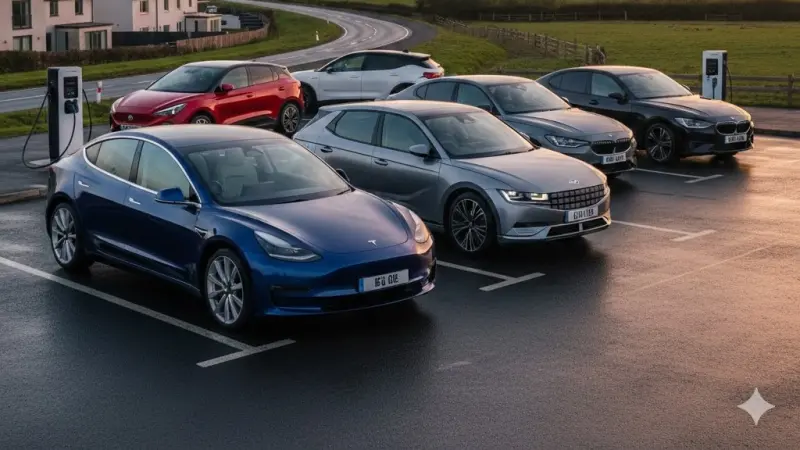
The transition to electric motoring in the United Kingdom has reached a significant turning point as the second-hand market matures and new technology delivers unprecedented range. Selecting the best electric cars UK drivers can buy today requires a balance of efficiency, charging speed, and practical daily usability. Most modern electric vehicles now offer a real-world range exceeding 200 miles, making them perfectly suited for the average British commute of under 20 miles. Whether you are looking for a compact city runaround or a premium family SUV, the current crop of EVs provides a refined driving experience that significantly undercuts petrol and diesel running costs. ``` The best electric cars in the UK for 2026 are defined by their ability to integrate into your lifestyle while offering a minimum range of 250 miles and access to reliable rapid-charging networks. Top-rated models like the Kia EV3 and the updated Tesla Model Y currently dominate the market by providing exceptional value for money and superior battery management systems that handle the British climate with ease.

Market Leaders for British Families
Family life in the UK demands versatility, ample boot space, and a car that can handle everything from the school run to a weekend trip to the Highlands. The current standout in the family segment is the Kia EV3, which has redefined what buyers can expect for around £33,000. It offers a staggering range of up to 375 miles in its high-spec battery form, providing a level of "range peace of mind" previously reserved for luxury saloons. The cabin is designed with sustainable materials and features a flat floor, creating a sense of space that traditional combustion engines simply cannot match.
Practicality and Interior Space
The shift to dedicated electric platforms allows manufacturers to push the wheels to the corners of the vehicle, resulting in more legroom than many larger executive cars. The Tesla Model Y remains a powerhouse in this regard, offering a cavernous 854-litre luggage capacity when including the front trunk. British families appreciate the minimalist interior, though the reliance on a single central touchscreen for almost all functions remains a point of contention for some drivers. Despite this, the seamless integration with the Supercharger network makes it a formidable choice for those who travel long distances regularly.
Boot and Storage Capacity
Storage is often a dealbreaker for UK buyers. The Audi Q4 e-tron and the Skoda Elroq provide more traditional SUV silhouettes with easy-access boots. These models offer roughly 520 litres of space, accommodating pushchairs and weekly shops with ease. The inclusion of "froots"—front-mounted storage areas—is particularly useful for storing muddy charging cables away from clean luggage.
Budget Friendly Options for City Driving
Affordability has long been a barrier to EV adoption, but a new wave of budget-conscious models has arrived on British shores. The Dacia Spring, currently the cheapest electric car in the UK, serves as the perfect entry point for urban dwellers. Starting at well under £15,000, it prioritises essential features over luxury. While its range is more modest at approximately 140 miles, this is more than sufficient for city commutes and local errands where home charging is available.
Value Without Compromise
MG has consistently challenged the market with the MG4 EV, a hatchback that drives with a level of agility that rivals the Volkswagen ID.3 but at a much lower price point. It has become a common sight on UK roads because it manages to deliver a premium feel and a 323-mile range in its Extended Range guise. The tactile buttons and intuitive infotainment system make it a safe and approachable choice for those moving away from traditional hatchbacks.
Standard Equipment Levels
Even at the lower end of the price scale, UK buyers now expect high levels of standard kit. Most budget EVs include reversing cameras, smartphone mirroring via Apple CarPlay or Android Auto, and sophisticated regenerative braking systems. This level of equipment ensures that even the most affordable electric cars feel like a significant upgrade over older petrol counterparts.
Premium Saloons and Executive Travel
For the business user or the long-distance cruiser, the executive electric saloon offers unparalleled refinement and tax efficiency. The BMW i5 and the Mercedes-Benz EQE represent the pinnacle of German engineering adapted for the electric age. These vehicles focus on "hush-quiet" cabins and advanced suspension systems that iron out the imperfections of British B-roads. With Benefit-in-Kind (BiK) tax rates remaining highly favourable for electric company cars, these models are increasingly popular for fleet drivers.
Range and Long Distance Ability
A true executive EV must be capable of crossing the country with minimal stops. The Tesla Model 3 Long Range and the Hyundai Ioniq 6 are leaders in aerodynamics, allowing them to slice through the air and achieve over 400 miles on a single charge.
This efficiency is crucial during winter months when cold temperatures can naturally reduce battery performance. Rapid charging at 250kW means these cars can add 150 miles of range in less time than it takes to buy a coffee at a motorway service station.
Charging Speed and Technology
High-end EVs now utilise 800-volt electronic architectures. This technology allows cars like the Kia EV6 and Hyundai Ioniq 5 to charge from 10% to 80% in just 18 minutes. For a professional driver, this speed is a game-changer, effectively eliminating the downtime associated with older electric technology.
Navigating the UK Charging Landscape
The UK's public charging infrastructure grew by over 38% in the last year alone, with over 70,000 public points now available. Ultra-rapid charging hubs are appearing at retail parks and farm shops, moving beyond the traditional motorway service area. For most owners, however, the "fuel station" is now their driveway. Installing a dedicated 7kW home charger is the most cost-effective way to run an EV, allowing you to take advantage of off-peak electricity tariffs that can cost as little as 7p per kWh.
Public Network Reliability
New government regulations now mandate 99% reliability for rapid chargers and the provision of contactless payment options. This has significantly improved the user experience, removing the need for dozens of different smartphone apps. Networks like InstaVolt and the Tesla Supercharger network (now open to many other brands) are consistently rated as the most reliable by UK drivers.
On Street Charging Solutions
For those without a driveway, on-street solutions are expanding rapidly. Lamppost chargers and pop-up pavement hubs are becoming common in urban areas like London, Bristol, and Manchester. These allow residents to charge overnight at rates much lower than those of high-speed motorway units, ensuring that the benefits of electric driving are accessible to everyone regardless of their housing situation.
Mistakes to Avoid When Buying Electric
Many first-time buyers fall into the trap of "over-speccing" their battery needs. Buying a massive 100kWh battery "just in case" you drive to Cornwall once a year adds unnecessary weight and cost to your daily driving. It is far more efficient to choose a car that meets 95% of your daily needs and use the UK’s excellent rapid charging network for the occasional long trip. Another common error is ignoring the impact of wheel size; larger alloy wheels look great but can reduce your total range by up to 10% due to increased rolling resistance.
Understanding Real World Range
The official WLTP range figures provided by manufacturers are tested in laboratory conditions. In the UK, you should expect a 15-20% reduction in this figure during the winter when the cabin heater and battery thermal management are working harder. Always look for "real-world" range tests from independent UK reviewers to get a more accurate picture of how a car will perform in British weather.
Home Charging Readiness
Never wait until the car is delivered to think about your home charging setup. Check your fuse box capacity and consult with a certified OREZEV installer early. Some older UK properties may require a "main fuse" upgrade from the local DNO (Distribution Network Operator) before a fast charger can be installed, a process that can take several weeks.
The Step by Step Buying Process
Transitioning to electric requires a slightly different approach than buying a petrol car. First, audit your weekly mileage to determine your true range requirement. Second, check your home’s electrical suitability for a charger.
Once you have a shortlist of vehicles, book an extended test drive that includes a motorway stint, as electric cars handle and decelerate differently due to regenerative braking.
Choosing the Right Tariff
One of the greatest financial benefits of EV ownership comes from switching to a dedicated EV energy tariff. Suppliers like Octopus Energy and OVO offer ultra-low rates during the night. By scheduling your car to charge between midnight and 5 am, you can "fill up" your car for less than £5, providing enough energy for a week of average commuting.
Leasing vs Buying
Given the rapid pace of battery technology, many UK drivers prefer leasing or Personal Contract Hire (PCH). This protects you from potential depreciation and allows you to upgrade to the latest technology every three years. However, if you plan to keep the car for a decade, the lower maintenance costs of an EV make outright ownership a very viable long-term financial decision.
Future Outlook and Resale Values
The UK government’s commitment to zero-emission motoring means the infrastructure will only continue to improve. We are seeing a shift towards "Vehicle-to-Load" (V2L) technology, where your car can act as a giant power bank to run household appliances or even power your home during a blackout. As petrol and diesel cars face increasing restrictions in Clean Air Zones across cities like Birmingham and Glasgow, the resale value of high-quality electric cars is expected to remain robust.
Solid State Batteries
Looking further ahead, the arrival of solid-state batteries promises even faster charging and greater energy density. While these are still a few years away from mass-market cars, the current generation of lithium-ion batteries is more than capable of lasting over 200,000 miles with minimal degradation, as proven by high-mileage Tesla taxis currently operating across the UK.
Sustainability and Recycling
The environmental impact of EVs extends beyond the tailpipe. UK-based recycling facilities are now coming online to recover up to 95% of the precious metals used in EV batteries. This circular economy ensures that the transition to electric is not just about reducing carbon emissions during driving, but about creating a sustainable transport ecosystem for the future of the British Isles.
FAQ
What is the real-world range of most electric cars in the UK?
While official figures are often higher, most modern EVs in the UK provide a dependable real-world range of between 200 and 300 miles. During the winter, this can drop by roughly 20% due to the energy required for heating the cabin and maintaining battery temperature. However, for the vast majority of UK drivers who cover fewer than 30 miles a day, this is more than sufficient for weekly needs.
How much does it cost to charge an electric car at home?
Charging at home is the most affordable way to power an EV. If you use a standard domestic tariff, a full charge for a typical 60kWh battery costs around £15. However, by switching to a dedicated overnight EV tariff with rates around 7p per kWh, that same charge drops to approximately £4.20. This represents a massive saving compared to the £80-£100 required to fill a petrol tank.
Are electric cars more expensive to insure in the UK?
Initially, EVs were in higher insurance groups due to their high performance and the cost of specialist repairs. However, as they become more common and more technicians are trained, premiums are stabilising. Many UK insurers now offer specialist EV policies that include cover for charging cables and wall boxes. It is always worth comparing quotes, as some manufacturers offer fixed-price insurance incentives for the first year of ownership.
Can I charge an electric car if I don't have a driveway?
Yes, although it requires more planning. The UK is rapidly expanding its on-street charging network, including lamppost-mounted chargers and pavement hubs. Many drivers also utilise workplace charging or "destination charging" at supermarkets and gyms. While public rapid charging is more expensive than home charging, many councils are working with providers to offer "resident rates" for those without off-street parking to ensure fairness.
How long do electric car batteries actually last?
Modern EV batteries are designed to outlast the car itself. Most manufacturers offer an eight-year or 100,000-mile warranty on the battery, guaranteeing at least 70-80% of its original capacity. Real-world data from older EVs shows that batteries typically lose only a small percentage of their range over several years. With proper care, such as avoiding frequent 100% charges, a battery can easily remain functional for 15 to 20 years.

Disclaimer: The information provided in this article is for general informational and research purposes only. Company details, features, services, and market positions may change over time. Readers are advised to visit official company websites and conduct independent research before making any business decisions or purchasing services.
Most Searchable Keywords

Recent Blogs

Related Listings


Categories
- Accountants (295)
- Advertising Agencies (559)
- Architects (149)
- Automobiles (377)
- Beauty (300)
- Carpenters (146)
- Cleaning Services (386)
- Dentists (189)
- Driving (62)
- Electricians (215)
- Energy (8)
- Event Organiser (685)
- Finance (599)
- Guide (3364)
- Health (2207)
- Information technology (206)
- Legal Services (353)
- Logistics (6)
- Maintenance (65)
- Manufacturing (35)

Sponsored Listings in Locksmith Services


Related Blogs

What Is the £12.71 National Living Wage Strat...
Read this insightful article "What Is the £12.71 National Living Wage Strategy for UK Employers" to expand your knowledge!

Where to Find the Best Summer Festivals in Br...
Read this insightful article "Where to Find the Best Summer Festivals in Bristol" to expand your knowledge!

Provisional Driving Licence UK Benefits and L...
Read this insightful article "Provisional Driving Licence UK Benefits and Limits Explained" to expand your knowledge!
Questions & Answers – Find What
You Need, Instantly!
How can I update my business listing?
Is it free to manage my business listing?
How long does it take for my updates to reflect?
Why is it important to keep my listing updated?
