
Display Ads vs Native Ads: Which Drives Better ROI?
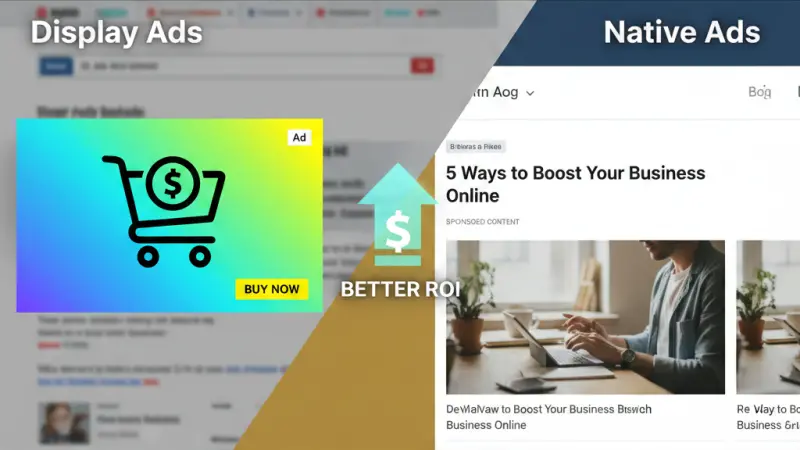
In the rapidly evolving landscape of 2026, digital advertising has moved far beyond simple "clicks." With the rise of AI-driven search, zero-click queries, and heightened user sensitivity to "ad fatigue," choosing between Display Advertising and Native Advertising is no longer just a matter of budget—it’s a matter of psychology.

Both formats are pillars of the digital marketing ecosystem, yet they serve radically different masters. One is designed to be noticed; the other is designed to be experienced. But which one will actually move the needle for your business this year?
In this comprehensive guide, we will break down every nuance, from technical specs to behavioral data, to help you build a high-converting ad strategy.
Table of Contents
Defining the Modern Ad Landscape
What is Display Advertising in 2026?
The Evolution of Native Advertising
Key Differences: A Side-by-Side Comparison
Types of Display Ads (Static to Interactive)
Types of Native Ads (Context is King)
Performance Metrics: CTR, CPM, and Conversions
The Psychology of the Click: Banner Blindness vs. Discovery
When to Choose Display Ads
When to Choose Native Ads
Budgeting for 2026: Cost-Effectiveness and ROI
Integrating Both for a Full-Funnel Strategy
Promotional Section: Local Page UK
Frequently Asked Questions (FAQ)
What is Display Advertising?
At its core, Display Advertising is the "billboard" of the internet. It communicates a commercial message through visual elements—images, banners, videos, or animations—placed on third-party websites, apps, and social platforms.
In 2026, display advertising has become highly sophisticated through Programmatic Bidding. Instead of buying a "spot" on a specific blog, you are buying "access" to a specific user. If a user has been searching for "hiking boots," your display ad follows them across the web, regardless of whether they are reading a news site or checking the weather.
The Goal of Display Ads
Direct Response: Encouraging immediate action (buy now, sign up).
Visual Dominance: Using high-contrast branding to ensure the logo is remembered.
Scale: Reaching 90% of internet users via networks like the Google Display Network (GDN).
What is Native Advertising?
If display ads are billboards, Native Advertising is the "sponsored article" in a magazine. It is a form of paid media where
the ad experience follows the natural form and function of the user experience in which it is placed.
Native ads don't look like ads. They look like the content around them. When you scroll through your favorite news app and see a "Recommended for You" article that happens to be branded, that is native advertising. Because they don't interrupt the flow, they are significantly less invasive and often more trusted by modern consumers who are increasingly skeptical of traditional "hard sell" tactics.
The Goal of Native Ads
Engagement: Getting users to read a long-form story or watch a video.
Trust Building: Aligning with the credibility of the host publisher.
Discovery: Meeting users in a "content consumption" mindset rather than a "shopping" mindset.
Key Differences: A Side-by-Side Comparison
| Feature | Display Advertising | Native Advertising |
|---|---|---|
| Appearance | Stands out; clearly an advertisement. | Blends in; matches site design. |
| User Experience | Interruptive (can be annoying). | Seamless (complementary). |
| Average CTR | Lower (approx. 0.06% - 0.1%). | Higher (approx. 0.2% - 0.8%). |
| Main Objective | Brand Awareness & Retargeting. | Content Discovery & Engagement. |
| Ad Blocker Sensitivity | High (often blocked). | Low (frequently bypasses filters). |
| Placement | Sidebars, Headers, Footers. | In-feed, Recommended Content. |
Deep Dive: Types of Display Ads
While we often think of "banners," the display world has expanded into several high-tech formats:
1. Responsive Display Ads
The standard for 2026. You provide the assets (headlines, logos, images), and Google’s AI automatically adjusts the size, appearance, and format to fit any available ad space. This ensures your ad looks just as good on a smart fridge as it does on a desktop monitor.
2. Remarketing/Retargeting Ads
The most powerful tool for e-commerce. These ads target users who have already visited your site. If someone added a watch to their cart but didn't buy it, a display ad of that exact watch will "follow" them, serving as a visual nudge to complete the purchase.
3. Interstitial Ads
These are full-screen ads that cover the interface of their host app or site. While they have high viewability, they must be used carefully to avoid frustrating the user. In 2026, the best interstitials are "gamified" or offer interactive value.
4. Rich Media Ads
These go beyond static images. They include video, audio, or elements that encourage users to interact (like a mini-quiz or a 360-degree product view) without leaving the ad unit.
Deep Dive: Types of Native Ads
Native advertising thrives on its chameleon-like ability to adapt:
1. In-Feed Units
These appear in your social media feed (Facebook, Instagram, LinkedIn) or on news sites. They look exactly like the post from your friend or the article from the editor, save for a small "Sponsored" or "Promoted" label.
2. Recommendation Widgets
Commonly found at the bottom of articles under headings like "You May Also Like" or "Recommended from around the Web." Platforms like Taboola and Outbrain dominate this space, driving massive traffic to brand-owned content.
3. Paid Search Ads
Technically, Google Search ads are a form of native advertising because they match the "form and function" of the search results. They provide the answer to a user's query in the same format as organic results.
4. Promoted Listings
Common on e-commerce sites like Amazon or Etsy. When you search for "organic coffee," the first few results are ads that look identical to organic listings, helping brands jump to the front of the line.
Performance Metrics: The 2026 Benchmarks
In 2026, "vanity metrics" like impressions are dead. Advertisers now focus on Attention Metrics and Incremental Lift.
CTR (Click-Through Rate): Native ads typically see a 5x to 8x higher CTR than display ads. This is because users are in a "reading" mode and perceive native links as recommendations rather than interruptions.
CPM (Cost Per Mille): Display ads are generally cheaper on a per-thousand-impression basis. If you want 10 million people to see your logo for the lowest price, Display wins.
Conversion Rate: While Display has a lower CTR, its conversion rate on retargeting is often superior. A user who has already been to your site is "warm" and more likely to convert from a direct banner.
The Psychology of the Click: Dealing with Banner Blindness
The biggest challenge for display advertising is Banner Blindness. For decades, users have trained their brains to ignore the top and right-hand sidebars of websites. This is a subconscious filter.
Native advertising solves this by placing the message in the User’s Path of Sight. Because the ad is in the center of the feed (where the eyes are focused), it bypasses the subconscious filter. However, this comes with a responsibility: the content must be good. If a user clicks a native ad and finds a low-quality sales pitch, you lose brand trust.
When Should You Use Display Advertising?
1. Rapid Brand Awareness
Launching a new product? Use display ads to flood the web with your visual identity. The goal here isn't necessarily the click; it's the 15 times the user sees your logo so that when they are in a store, they recognize your brand.
2. Visual-Heavy Products
Fashion, travel, and food thrive on display. A stunning photo of a beach resort or a slow-motion video of
a melting burger does more work in a banner than 500 words of native content ever could.
3. Retargeting (The "Closer")
Display ads are the ultimate "closers." They remind the "almost-buyer" what they're missing. Dynamic retargeting can even show the specific size and color of the item the user was looking at.
When Should You Use Native Advertising?
1. Educational or B2B Sales
If your product requires explanation (like SaaS software or financial consulting), native is better. You can use a native ad to lead to a "How-To" guide or a case study, moving the user through the funnel via education.
2. High-Trust Environments
Advertising on premium news sites (like the BBC or New York Times) using native formats transfers some of that publisher's "halo of trust" to your brand.
3. Mobile-First Campaigns
Display banners can often be clunky on mobile. Native in-feed ads are designed for the "thumb-scroll" experience, making them the most effective way to reach users on their smartphones.
Budgeting for 2026: Maximizing ROI
The modern advertiser uses a 60/40 Split.
60% Native: To drive new discovery, build "top of funnel" awareness, and educate the market.
40% Display: To retarget those who engaged with the native content and push them toward a final conversion.
By using both, you create a "Surround Sound" effect where the user learns about you through content (Native) and is reminded of you through visuals (Display).
Boost Your UK Presence with Local Page UK
Whether you are running a global display campaign or a local native strategy, visibility is the foundation of growth. For businesses operating in the United Kingdom, being found by local customers is paramount. This is where Local Page UK becomes your most valuable digital asset.
If you want to be the top choice in your area, you need to be listed where customers are looking. Start by securing your business listing uk to increase your online footprint instantly. As a comprehensive uk online business directory, Local Page UK helps bridge the gap between service providers and active searchers.
For those looking to dominate their niche, being part of a uk business directory is no longer optional; it’s a standard for SEO authority. Our platform serves as a premier uk local business directory, ensuring that when people try to find local businesses uk, your brand stands out. Whether you are looking for a local businesses list uk or want to join a uk small business directory, we provide the infrastructure you need.
From uk b2b business directory connections to reaching consumers through our uk b2c business directory, our reach is unmatched. We are the business directory uk online that serves everyone from sole traders to large corporations. If you are a specialist, get featured in our uk service providers directory or enhance your uk business listings online for maximum impact.
Take advantage of the local page uk business directory today. It is the uk business directory website designed for the modern era. Don't miss out on a business listing uk opportunity or a business listing uk that can drive traffic to your site. Our business listing uk offers a seamless business listing uk process. Whether you need a business listing uk or a business listing uk, we are here to help.
Even for city-specific needs, like a business listing uk or a business listing uk, our platform delivers. Explore our local business listings uk and uk service listings to see why we are the home of uk verified business listings. Find uk top rated local businesses or get listed in our uk home services directory. From uk professional services listings to uk trade services listings and the uk local trades directory, we cover it all. Trust the local page uk listings to power your uk local business search success.
Questions Clients Commonly Ask
1. Which is better for small businesses: Display or Native?
Native is often better for smaller budgets because of its higher engagement rates and cost-per-click efficiency.
2. Do native ads really work if people know they are ads?
Yes. In 2026, users don't mind ads as long as they are relevant and provide value or entertainment.
3. Are display ads dead?
Not at all. They are essential for retargeting and massive brand-building campaigns.
4. How do I measure the success of a native ad?
Look at "Time on Page," "Scroll Depth," and "Social Shares" rather than just clicks.
5. Which format is more mobile-friendly?
Native Ads. They fit perfectly within the vertical scrolling behavior of mobile users.
6. Can I use video in both?
Yes. Video display ads (banners) and native video ads (in-feed) are both highly effective.
7. Is native advertising more expensive?
Initially, yes. The CPM is often higher, but the better CTR usually leads to a lower Cost Per Lead (CPL).
8. How do I avoid "ad fatigue"?
Rotate your creatives every 2-4 weeks and use frequency capping to ensure a user doesn't see the same ad 50 times.
9. What is "Banner Blindness"?
The tendency of web users to subconsciously ignore anything that looks like a traditional banner ad.
10. Are native ads ethical?
As long as they are clearly labeled as "Sponsored" or "Ad," they are a standard and ethical industry practice.
11. Which platform is best for native ads?
Facebook, Instagram, LinkedIn, and recommendation platforms like Taboola are the leaders.
12. Which platform is best for display ads?
The Google Display Network (GDN) is the largest and most versatile.
13. Should I use both at once?
Ideally, yes. Native for awareness and Display for retargeting is the "Gold Standard" strategy.
14. Do ad blockers stop native ads?
Some do, but many native formats (especially in-feed) are harder for basic ad blockers to identify compared to traditional banners.
15. How do I get started with a low budget?
Start with a retargeting display campaign for $5/day and a small native in-feed campaign on a platform where your audience is most active.

Disclaimer: The information provided in this article is for general informational and research purposes only. Company details, features, services, and market positions may change over time. Readers are advised to visit official company websites and conduct independent research before making any business decisions or purchasing services.
Most Searchable Keywords
Recent Blogs


Related Listings
Categories
- Accountants (295)
- Advertising Agencies (559)
- Architects (149)
- Automobiles (376)
- Beauty (300)
- Carpenters (146)
- Cleaning Services (386)
- Dentists (189)
- Driving (61)
- Electricians (215)
- Energy (8)
- Event Organiser (684)
- Finance (598)
- Guide (3363)
- Health (2205)
- Information technology (206)
- Legal Services (352)
- Logistics (6)
- Maintenance (65)
- Manufacturing (35)
Sponsored Listings in Health and Wellbeing

Related Blogs

Bristol Firework Displays Every Local Should...
Read this insightful article "Bristol Firework Displays Every Local Should Experience" to expand your knowledge!

Self Assessment Registration 2026 Common Erro...
Read this insightful article "Self Assessment Registration 2026 Common Errors and Rules" to expand your knowledge!
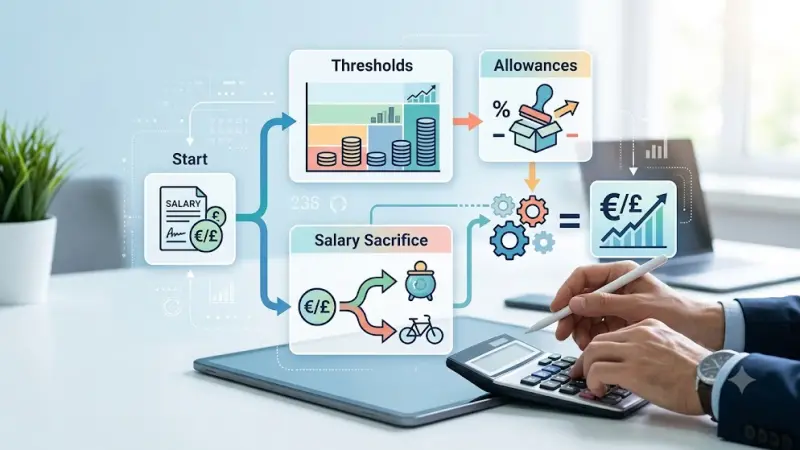
Calculate Your 2026 Employer National Insuran...
Read this insightful article "Calculate Your 2026 Employer National Insurance Bill Easily" to expand your knowledge!
Questions & Answers – Find What
You Need, Instantly!
How can I update my business listing?
Is it free to manage my business listing?
How long does it take for my updates to reflect?
Why is it important to keep my listing updated?
