
Energy Price Changes UK 2026
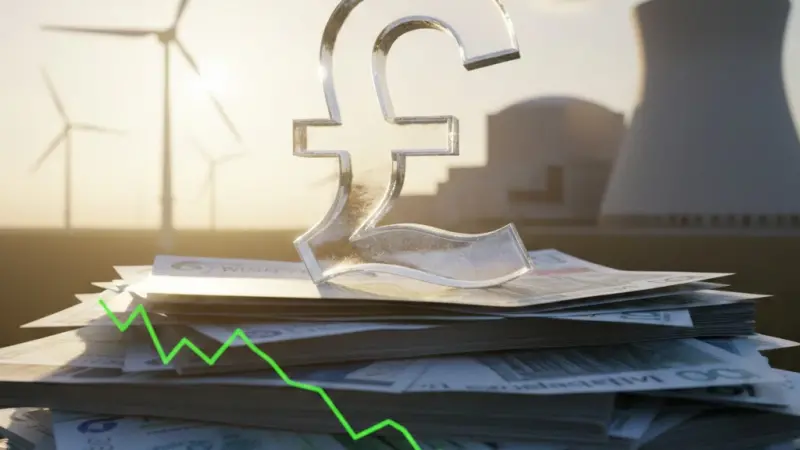
Navigating the UK energy market has become a full-time preoccupation for households across Britain. As we move through 2026, the landscape of "Energy Price Changes UK 2026" is defined by a complex tug-of-war between falling wholesale costs and rising infrastructure levies. While the headline figures suggest stability, the underlying mechanics of your monthly bill are undergoing their most significant transformation in a decade.

From the introduction of the Nuclear Regulated Asset Base (RAB) to the shifting of green levies into general taxation, the 2026 energy story is one of structural reform. This authoritative guide breaks down exactly what is happening to your gas and electricity rates, why the "standing charge" remains a point of contention, and what the future holds for the Great British energy consumer.
Understanding the Ofgem Price Cap Trajectory in 2026
The Current State of the Default Tariff Cap
How January's 0.2% Increase Set the Tone for 2026
The year 2026 began with a marginal uptick. On 1st January, Ofgem set the price cap at £1,758 for a typical dual-fuel household paying by Direct Debit. This represented a slight 0.2% increase from the final quarter of 2025. While a £3 annual rise might seem negligible, it signalled that the era of rapid price drops had reached a plateau.
Industry analysts, including the experts at Cornwall Insight, have noted that this stability is deceptive. While wholesale gas prices have stabilised significantly compared to the 2022-2023 crisis, "non-commodity" costs—the price of maintaining wires, pipes, and funding new power plants—are now making up a larger percentage of the total bill than ever before.
- Q1 2026 (Jan-Mar): £1,758 (Confirmed)
- Q2 2026 (Apr-Jun): £1,620 (Forecast - 8% Drop)
- Q3 2026 (Jul-Sep): £1,622 (Predicted stability)
Why April 2026 is the Critical Turning Point for Energy Bills
The Great Levy Shift: Moving Green Costs to Taxation
Scrapping the Energy Company Obligation (ECO) from Direct Bills
The biggest news for 2026 energy prices is the "April Tumble." Current forecasts suggest an 8% fall in the price cap, bringing the typical bill down to approximately £1,620. This isn't primarily due to cheaper gas, but rather a monumental shift in government policy announced in the Autumn Budget of 2025.
For years, UK consumers have paid for social and environmental schemes through their energy bills. From April 2026, a significant portion of the Renewables Obligation (RO) and the Energy Company Obligation (ECO) is being shifted into general taxation. This move is designed to "de-link" energy bills from the cost of the green transition, providing immediate relief to the highest-usage households.
Key Stat: Shifting levies to taxation is expected to save the average household roughly £150 per year starting in the 2026/27 financial year.
Wholesale Market Dynamics: The Role of Gas in 2026
Global Supply Chains and the Liquefied Natural Gas Surplus
The Influence of US LNG Exports on UK Domestic Gas Rates
Despite Britain's rapid transition to renewable energy, gas remains the "marginal setter" of electricity prices in the UK. In 2026, we are seeing the benefits of a "comfortable" global gas supply.
Increased exports of Liquefied Natural Gas (LNG) from the United States and Qatar have dampened the price volatility that defined the early 2020s.
Market data from early 2026 suggests that wholesale gas prices are trending towards a long-term average of 100p-110p per therm. This is significantly lower than the 600p+ peaks seen during the height of the energy crisis but remains roughly double the pre-2021 historical norms. This "new normal" means that while bills are falling from their peak, they are unlikely to return to the £1,000-a-year levels seen five years ago.
The Nuclear Tax: Sizewell C and the RAB Model
Financing the Future of British Base-Load Power
Breaking Down the Regulated Asset Base Charges on Your 2026 Bill
A new line item has become prominent on energy statements in 2026: the Nuclear RAB charge. To fund the construction of the Sizewell C nuclear power station in Suffolk, the government has implemented a "Regulated Asset Base" model. This allows the developer to recoup financing costs from consumers during the construction phase, rather than waiting for the plant to start generating power.
While this model is designed to lower the overall cost of capital—and thus lower bills in the 2030s—it adds an immediate burden to 2026 bills. Consumer advocates have raised concerns that today's bill-payers are subsidising energy for the next generation, though proponents argue it is the only way to ensure energy security and meet Net Zero targets.
Standing Charges and Regional Disparities
The Controversy of Fixed Costs vs. Unit Rates
Why Londoners Pay Less than Consumers in North Wales and Mersey
The standing charge—the fixed daily fee you pay regardless of usage—continues to be the most hated aspect of UK energy pricing in 2026. Under the January 2026 cap, the average daily electricity standing charge sits at 54.75p, with gas at 35.09p. This means the average household pays over £300 a year before even turning on a light bulb.
Ofgem has faced intense pressure throughout 2025 and 2026 to reform this "loyalty penalty." The issue is exacerbated by regional disparities. Customers in North Wales and the Mersey region traditionally pay significantly higher network charges than those in London, due to the higher cost of maintaining the grid in more rural or geographically challenging areas.
- Standing Charge Average: ~90p per day (combined)
- Highest Region: North Wales & Mersey
- Lowest Region: London & South East
Renewable Energy and Grid Modernisation in 2026
The Impact of Dogger Bank and Offshore Wind Surge
Managing the "Curtailment Cost" Problem in the 2026 Grid
By 2026, the UK's offshore wind capacity has hit record levels, with the massive Dogger Bank project providing substantial clean power to the grid. However, the energy price changes in the UK for 2026 are also being affected by "balancing costs." When the wind blows too hard and the grid cannot handle the surge, National Grid ESO pays wind farms to turn off—a cost passed back to the consumer.
To combat this, 2026 has seen a surge in "Time of Use" tariffs. Companies like Octopus Energy and E.ON Next are incentivising customers to use electricity when renewable generation is high. For savvy consumers with electric vehicles or home batteries, these "Agile" tariffs offer the potential to bypass the high standard variable rates entirely.
Supporting Vulnerable Households: The 2026 Safety Net
The Launch of the New Debt Relief Scheme
The Role of the Warm Home Discount in the 2026/27 Winter
Despite the predicted fall in prices for April 2026, fuel poverty remains a critical issue for six million UK households. In early 2026, the government and Ofgem launched a new "Debt Relief Scheme" aimed at the 195,000 most vulnerable energy consumers.
This scheme helps those on means-tested benefits clear "legacy debt" accumulated during the price spikes of previous years.
The Warm Home Discount also remains a vital pillar of support. For the 2025/2026 winter, the payment stayed at £150, but eligibility criteria were tightened. As we look toward the 2026/2027 winter, campaigners are calling for a "Social Tariff"—a tiered pricing system that would guarantee lower unit rates for those on the lowest incomes.
Strategic Planning for a Volatile Year
The energy price changes in the UK for 2026 represent a transitional phase. We are moving away from a crisis-managed market toward a reformed, infrastructure-heavy system. The headline drop in April 2026 provides a much-needed "breathing space" for families, but it should not be mistaken for a return to the cheap energy of the 2010s.
The shift of green levies to taxation and the stabilization of global gas markets are positive trends. However, the new nuclear levies and rising network costs mean that energy efficiency remains the best "defence" for any household. Whether through the adoption of smart tariffs, home insulation, or simply monitoring usage via smart meters, staying proactive is the key to managing your 2026 energy budget.
Frequently Asked Questions
Will energy prices go down in 2026?
Yes, analysts predict a significant fall of around 8% in April 2026, primarily due to government policy changes shifting green levies off energy bills and into general taxation.
What is the current Ofgem price cap for 2026?
From 1 January to 31 March 2026, the cap is set at £1,758 per year for a typical household on a dual-fuel direct debit tariff.
Why is my standing charge so high in 2026?
Standing charges cover the cost of maintaining the physical energy network and the cost of failed suppliers.
In 2026, these costs remain high due to ongoing grid modernization and the "levelisation" of prepayment and direct debit charges.
What is the "Nuclear RAB" charge on my bill?
The Regulated Asset Base (RAB) model is a new levy introduced to help fund the construction of the Sizewell C nuclear power station. It appears as a small additional cost on all consumer bills.
Is it worth switching to a fixed-rate tariff in 2026?
With prices expected to fall in April 2026, many experts suggest waiting until the Q2 cap is announced before locking in a fixed rate, unless you can find a deal at least 10% below the current January cap.
How much could the "Green Levy" shift save me?
Moving the Energy Company Obligation (ECO) and other green levies to general taxation is expected to save the average household approximately £150 per year from April 2026.
Does the price cap limit my total bill?
No. The price cap limits the amount you can be charged per unit of energy and the daily standing charge. If you use more energy, your total bill will be higher than the headline "cap" figure.
What are the electricity unit rates for early 2026?
Under the January 2026 cap, the average electricity unit rate is 27.69p per kWh for direct debit customers.
What are the gas unit rates for early 2026?
The average gas unit rate for the first quarter of 2026 is 5.93p per kWh.
Are smart tariffs better than the price cap in 2026?
For households that can shift their usage (e.g., charging an EV at night), "Time of Use" smart tariffs can offer significant savings compared to the standard variable price cap.
What happens if my energy supplier goes bust in 2026?
Ofgem's "Safety Net" ensures your supply will not be interrupted. You will be moved
to a "Supplier of Last Resort," and your credit balance will be protected.
Is there a social tariff for low-income families in 2026?
While a formal "Social Tariff" has not been fully implemented by mid-2026, various support schemes and the new Debt Relief Scheme provide targeted help for the most vulnerable.

Disclaimer: The information provided in this article is for general informational and research purposes only. Company details, features, services, and market positions may change over time. Readers are advised to visit official company websites and conduct independent research before making any business decisions or purchasing services.
Most Searchable Keywords

Recent Blogs


Related Listings


Categories
- Accountants (295)
- Advertising Agencies (559)
- Architects (149)
- Automobiles (377)
- Beauty (300)
- Carpenters (146)
- Cleaning Services (386)
- Dentists (189)
- Driving (62)
- Electricians (215)
- Energy (8)
- Event Organiser (685)
- Finance (599)
- Guide (3365)
- Health (2207)
- Information technology (206)
- Legal Services (353)
- Logistics (6)
- Maintenance (65)
- Manufacturing (35)

Sponsored Listings in Locksmith Services

Related Blogs

Gen Z Political Reporters and News Creators i...
Read this insightful article "Gen Z Political Reporters and News Creators in the UK" to expand your knowledge!

Famous Female Social Media Influencers Across...
Read this insightful article "Famous Female Social Media Influencers Across the UK" to expand your knowledge!
Your UK Sponsor Licence 2026 Step by Step Gui...
Read this insightful article "Your UK Sponsor Licence 2026 Step by Step Guide" to expand your knowledge!
Questions & Answers – Find What
You Need, Instantly!
How can I update my business listing?
Is it free to manage my business listing?
How long does it take for my updates to reflect?
Why is it important to keep my listing updated?
