
10 Ways to Save on Electricity And Lower Your UK Energy Bills
- 👤 Alex
- 👁️ 131 Views
- Last Updated: March 18, 2026
- 🏷️ Electricians
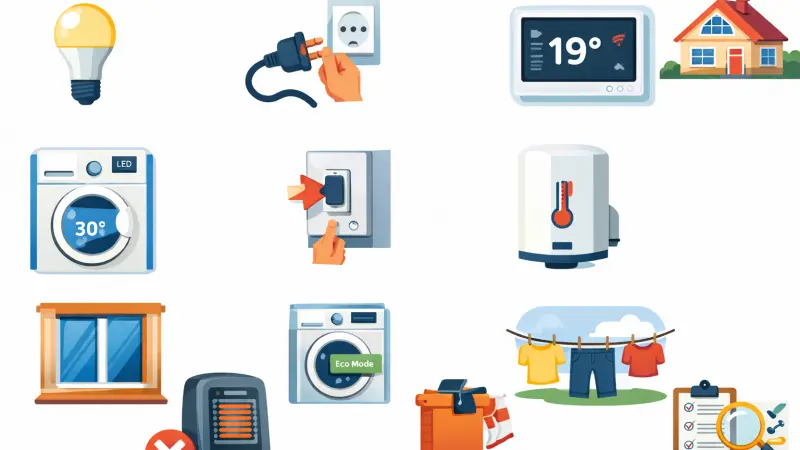
Did you know that the average UK household currently spends a significant portion of its disposable income on standing charges and unit rates before even considering the actual consumption of appliances? With the fluctuations in the Ofgem energy price cap and the transition toward a more electrified national grid, managing residential overheads has never been more critical for homeowners and private tenants alike. Understanding how to reduce electricity consumption is not merely about frugality; it is about sophisticated resource management in an increasingly volatile economic climate.
For many residents across Great Britain, the monthly utility statement arrives as a source of stress rather than a simple administrative task. However, by deconstructing the mechanics of your bill and implementing strategic, evidence-based changes, it is entirely possible to regain control over your expenditure. This guide explores ten proven methodologies designed to enhance energy efficiency and provide long-term financial relief.
Understanding the Architecture of Your UK Electricity Bill
Before implementing any tactical changes, one must first master the terminology and structure of a standard UK energy statement. Most consumers focus solely on the final amount due, but the nuances are found within the breakdown of costs. In the UK, your bill is primarily composed of the following elements:
- Unit Rate (kWh): This is the price you pay for every kilowatt-hour of electricity consumed. A kilowatt-hour is the amount of energy used by a 1,000-watt appliance running for one hour.
- Standing Charge: A fixed daily fee that covers the cost of maintaining the wires, pipes, and cables that deliver power to your door, as well as the cost of reading your meter. This is charged regardless of whether you use any electricity that day.
- VAT: Currently set at a reduced rate of 5% for domestic energy in the UK, unlike the standard 20% applied to most goods and services.
- EAC (Estimated Annual Consumption): An estimate of how much electricity you are likely to use over a year based on past patterns.
By scrutinising these figures, particularly the unit rate, you can determine if you are on a standard variable tariff (governed by the price cap) or a fixed-term contract. Knowing your exact kWh usage allows you to calculate the potential Return on Investment (ROI) for energy-saving upgrades such as LED transitions or insulation improvements.
1. Strategic Procurement: Switching Electricity Suppliers
In the current UK market, "switching" has become more complex due to the narrowing gap between the cheapest deals and the Ofgem price cap. However, strategic procurement remains the most significant lever for lowering costs. It is no longer just about finding the lowest price, but about finding the tariff structure that matches your lifestyle.
For instance, households with electric vehicles (EVs) or heat pumps should look for "time-of-use" tariffs. These offer significantly lower rates during the night. Conversely, those working from home may benefit from a flat-rate fixed tariff that protects against price spikes during peak afternoon hours. Regularly using impartial comparison services—which are accredited by the Ofgem Confidence Code—ensures you are not paying a "loyalty premium" to a legacy supplier.
2. Advanced Energy Monitoring and Smart Services
The roll-out of smart meters across England, Scotland, and Wales has revolutionised how we interact with energy data. A smart meter sends automatic readings to your supplier, ensuring your bills are based on actual usage rather than estimates. This eliminates the "bill shock" often associated with underestimated winter consumption.
Beyond the meter itself, new energy management services and apps allow users to see real-time consumption in pounds and pence. By identifying "baseload" power—the electricity your home uses when everything is seemingly off—you can pinpoint phantom loads. Many modern UK energy services also offer "Demand Side Response" incentives, where you are actually paid to reduce your usage during periods of high national demand.
3. The Efficiency of Modern LED Lighting Systems
Lighting accounts for approximately 15% of a typical UK household's electricity bill. The transition from old-fashioned incandescent or even halogen bulbs to Light Emitting Diodes (LEDs) is perhaps the simplest high-impact change available.
A standard 60W incandescent bulb can be replaced by an LED that consumes only 6W to 8W while providing the same level of luminosity.
Furthermore, LEDs are far more durable in the damp, variable climate of the British Isles, lasting up to 25,000 hours compared to the 1,000-hour lifespan of traditional bulbs. When selecting bulbs, UK consumers should look for the "Lumen" rating rather than "Watts" to ensure they achieve the desired brightness while maintaining the lowest possible energy draw.
4. Eliminating the 'Phantom Load': Unplugging and Power Management
The term "vampire power" refers to the electricity consumed by appliances while they are in standby mode. In the UK, it is estimated that standby power accounts for nearly £147 of the average annual electricity bill. While modern EU and UK regulations limit standby power for newer devices, older televisions, microwave ovens, and desktop computers remain significant offenders.
A proactive approach involves physically disconnecting devices or using "eco" settings. For example, a games console left in "instant-on" mode consumes significantly more power than one in "energy-saver" mode. Developing the habit of switching off at the wall is a zero-cost strategy that yields immediate, measurable reductions in kWh consumption.
5. Precision Temperature Control with Programmable Thermostats
While heating in the UK is predominantly gas-led, the electricity required to run pumps, fans, and electric secondary heating is substantial. A programmable thermostat—or a smart thermostat like Hive or Tado—allows for zonal heating and precision scheduling. Rather than heating an empty house, these systems use geo-fencing to lower temperatures when the occupants leave and raise them just before they return.
For those with electric storage heaters, proper programming is even more vital. Ensuring these units charge during off-peak "Economy 7" hours and discharge effectively during the day can mean the difference between a manageable bill and an exorbitant one. Even a 1-degree reduction in average thermostat temperature can lower a heating-related energy bill by up to 10%.
6. Envelope Integrity: Sealing Air Leaks and Draught Proofing
British housing stock is among the oldest in Europe, which often leads to significant "thermal leakage." If your home is losing heat through gaps in window frames, doors, or floorboards, your heating system (and the electricity required to run its components) must work overtime. Draught-proofing is one of the cheapest and most effective ways to save energy.
Simple interventions include using "sausage" draught excluders for doors, applying self-adhesive foam strips to window apertures, and ensuring that letterboxes and keyholes have dedicated covers. By maintaining a consistent internal temperature, you reduce the "cycling" frequency of your heating system, thereby extending the life of the appliance and reducing energy spikes.
7. Investment in Energy-Efficient White Goods
When an old appliance fails, the replacement should be viewed as a long-term financial investment. The UK energy rating scale (which was recalibrated to an A-G scale in 2021) provides a clear indicator of efficiency.
An "A" rated fridge-freezer, for example, will use significantly less electricity over its 15-year lifespan than an "E" or "F" rated model.
Specific attention should be paid to "wet" appliances like washing machines and dishwashers. Modern units often feature "Eco" cycles that run for longer but at lower temperatures, using up to 50% less electricity per load. In the context of the UK’s hard water areas, ensuring these appliances are descaled regularly also maintains their energy efficiency by preventing the heating elements from working harder than necessary.
8. Capitalising on Natural Illumination and Passive Heat
The UK is not known for constant sunshine, but making the most of available natural light can reduce the need for electric lighting during the daytime. Keeping windows clean, using light-coloured interior paint, and strategically placing mirrors can amplify daylight throughout a home. This is particularly relevant for those using home offices in spare rooms or "converted lofts."
Furthermore, passive solar gain can be managed through curtain control. During winter, opening curtains on south-facing windows during the day allows the sun to naturally warm the room, while closing them at dusk provides an extra layer of insulation to trap that heat, reducing the reliance on electric space heaters in the evening.
9. Utilising Smart Power Strips and Centralised Isolation
If unplugging every individual device is impractical, the use of "smart" power strips or "master-slave" extensions can automate the process. These strips can detect when a primary device (like a TV) is turned off and automatically cut power to peripheral devices (like Blu-ray players, soundbars, and game consoles).
For home offices, a single power strip for the monitor, printer, and speakers allows the user to isolate the entire workstation with a single switch at the end of the day. This centralised isolation prevents the collective "leakage" of multiple power adapters, which can be surprisingly high over a 24-hour period.
10. Exploiting Off-Peak Tariffs and Load Shifting
Load shifting is the practice of moving electricity-heavy tasks to times when the grid is under less strain and prices are lower.
For those on "Economy 7" or "Economy 10" tariffs, electricity is significantly cheaper during specific night-time windows. Modern dishwashers and washing machines often have delay timers specifically for this purpose.
Even for those on standard tariffs, some UK providers are introducing "Agile" pricing, where rates change every half hour based on wholesale market costs. On particularly windy days, when the UK's wind farms are over-producing, prices can even turn negative, effectively paying consumers to use electricity. Monitoring these trends through mobile apps allows the savvy consumer to perform heavy tasks, such as tumble drying or EV charging, at a fraction of the standard cost.
The Long-Term Value of Energy Efficiency
While the immediate goal of these strategies is to lower monthly outgoings, the broader impact on property value and environmental sustainability should not be overlooked. An energy-efficient home in the UK typically achieves a higher Energy Performance Certificate (EPC) rating. Data suggests that properties with higher EPC ratings (C and above) often command a price premium and are more attractive to prospective buyers and tenants who are increasingly conscious of running costs.
Furthermore, reducing your electricity demand contributes to the UK’s broader "Net Zero" targets. By lowering the total load on the grid, we reduce the necessity for gas-fired "peaker" plants to spin up during high demand, thereby lowering the carbon intensity of the electricity we do use. Efficiency is the first step toward a sustainable, resilient energy future for all residential occupiers.
Frequently Asked Questions (FAQ)
The Ofgem Price Cap limits the amount a supplier can charge per unit of gas and electricity, and the maximum daily standing charge. It is designed to protect customers on standard variable tariffs from excessive pricing. It is reviewed every three months in the UK, meaning your bills can fluctuate even if your usage stays the same.
No, smart meters are not mandatory, but energy suppliers are required to take "all reasonable steps" to offer them to all customers. Having a smart meter is highly recommended for accurately monitoring usage and accessing the most competitive "time-of-use" tariffs.
Yes. If you replace 10 incandescent bulbs with LEDs, you could save over £100 per year on your electricity bill depending on your usage. Because they last so much longer, you also save on the replacement cost of the bulbs themselves.
You can perform a basic "draught audit" by feeling for cold air around windows and doors on a windy day. For a more professional view, you can hire a surveyor to perform a thermal imaging survey, which will show exactly where heat is escaping from your property.
Typically, wet appliances like washing machines and tumble dryers, along with electric showers and kettles, are the most energy-intensive.
Refrigerators are also significant because they run 24 hours a day, 365 days a year.
Disclaimer: The information provided in this article is for general informational and research purposes only. Company details, features, services, and market positions may change over time. Readers are advised to visit official company websites and conduct independent research before making any business decisions or purchasing services.
Most Searchable Keywords
Recent Blogs


Related Listings


Categories
- Accountants (295)
- Advertising Agencies (559)
- Architects (149)
- Automobiles (377)
- Beauty (300)
- Carpenters (146)
- Cleaning Services (387)
- Dentists (189)
- Driving (62)
- Education (1)
- Electricians (215)
- Energy (8)
- Event Organiser (689)
- Finance (602)
- Guide (3492)
- Health (2207)
- Information technology (207)
- Legal Services (361)
- Logistics (6)
- Maintenance (65)
Sponsored Listings in Electricians
Related Blogs

Creamfields Daresbury: Impact on Local Reside...
Read this insightful article "Creamfields Daresbury: Impact on Local Residents" to expand your knowledge!

UK High Street Businesses in 2026-27: Which S...
Read this insightful article "UK High Street Businesses in 2026-27: Which Sectors Are Growing?" to expand your knowledge!

Why Complete Business Listings Matter More Th...
Read this insightful article "Why Complete Business Listings Matter More Than You Think" to expand your knowledge!
Questions & Answers – Find What You Need, Instantly!
Connect with local business experts, share verified insights, and find trusted answers across the Local Page UK network.
Ask Community
Ask questions to the Local Page UK community
Share Knowledge
Share your knowledge to help out others
Find Solutions
Find answers or offer instant solutions
Some of the most popular fantasy TV shows include "Game of Thrones," known for its epic battles and political intrigue, "The Witcher," which features monster hunting and magic, and "Stranger Things," blending supernatural elements with 1980s nostalgia. Other notable mentions are "His Dark Materials," "Shadow and Bone," and "The Mandalorian," each offering unique worlds and captivating storytelling that have garnered large fan bases.
When seeking bathroom renovation providers that handle both plumbing and tiling, it's advisable to look for licensed contractors who specialize in comprehensive bathroom remodels. Companies such as Home Depot, Lowe's, and Bath Fitter offer these services, often providing a seamless experience by managing all aspects of the renovation process. Additionally, local contractors with positive reviews in platforms like Angie's List or Houzz may also offer tailored solutions for your bathroom needs.
Absolutely, there are several distributors that supply crash mats and soft play equipment to gymnastics clubs in and around Birmingham. National companies like Gymnova, S & G (Spieth Gymnastics), and Jaques of London offer a wide range of crash mats, foam pits, and soft play pieces, and they typically deliver to the Birmingham area. For more local options, you might try The Gym Equipment Company, which has a showroom in the West Midlands, or check out smaller specialist suppliers like Playtime UK. Many of these distributors cater specifically to clubs, offering high-density foam mats that meet safety standards. I'd recommend reaching out to a few to compare pricing, delivery times, and whether they offer custom sizes or installation services. It's also worth checking if any of them have a physical showroom near Birmingham so you can test the equipment before buying. Happy tumbling!
For professionals seeking a reliable sanitaryware supplier in Manchester with trade account facilities, several established merchants combine extensive product ranges, competitive pricing, and dedicated trade support. The most reputable option is Graham Plumbers Merchant, which operates multiple branches across Manchester, including Salford Quays and Oldham. They offer a dedicated trade account service with preferential pricing, priority delivery scheduling, and access to a vast inventory of leading sanitaryware brands such as Villeroy & Boch, Duravit, Ideal Standard, and Roca. Their trade accounts typically include net 30-day payment terms, online account management, and a tailored project quotation system. Similarly, City Plumbing Supplies has several Manchester-based depots (such as Ashton-under-Lyne and Stockport) that cater specifically to trade customers, providing a rapid order-and-collect service, trade-only promotions, and a loyalty programme offering rebates on repeat purchases. Their product range covers everything from basins and WCs to complete bathroom suites and brassware, with in-house technical advisors available for specification support. Another key player is Plumb Center, part of the Wolseley Group, which offers trade accounts with bespoke pricing structures, direct-to-site deliveries within the Greater Manchester area, and access to over 10,000 lines of sanitaryware, including premium brands like Grohe and Hansgrohe. Their trade portal allows for real-time stock checking and order history tracking, facilitating efficient project management. For those seeking a more specialist or high-end option, Bathroom Spares in Manchester provides trade accounts with a focus on hard-to-find sanitaryware and discontinued ranges, which can be invaluable for refurbishment projects. Additionally, independent merchants such as M&B Plumbase in Trafford Park offer flexible trade terms, personalised service, and competitive pricing on both mainstream and luxury sanitaryware. When evaluating suppliers, trade customers should consider factors beyond price: reliability of stock availability, delivery timescales within Manchester’s often congested zones, clarity of returns policies, and the quality of after-sales support for warranty claims. It is advisable to request a trade account application from at least two to three suppliers to compare discounts, minimum order values, and payment terms. Many suppliers also offer showroom access for trade clients, allowing you to inspect finishes and dimensions before committing to large orders. For ongoing projects, establishing a relationship with a single supplier who offers consolidated invoicing and dedicated account management can streamline procurement. Ultimately, the most reliable supplier for your trade account in Manchester will be one that aligns with your volume requirements, preferred brands, and service expectations, so a site visit to their local branch and a discussion about your specific trade needs is highly recommended before committing to an account.
People in Leeds are loving their local florists—customers often mention gorgeous, fresh arrangements and super friendly service. Many rave about reliable same-day delivery and creative wedding bouquets. A few note pricing can vary, but overall, the buzz is all about quality and that personal touch making every order feel special.
Common problems for commercial gardening in Bristol include weed overgrowth, soil degradation, pest infestations, and irrigation malfunctions. Additionally, managing seasonal transitions, adhering to sustainability regulations, and maintaining consistent aesthetics pose significant challenges. Expert services mitigate these via structured maintenance, integrated pest management, and soil analysis to ensure long-term landscape health.