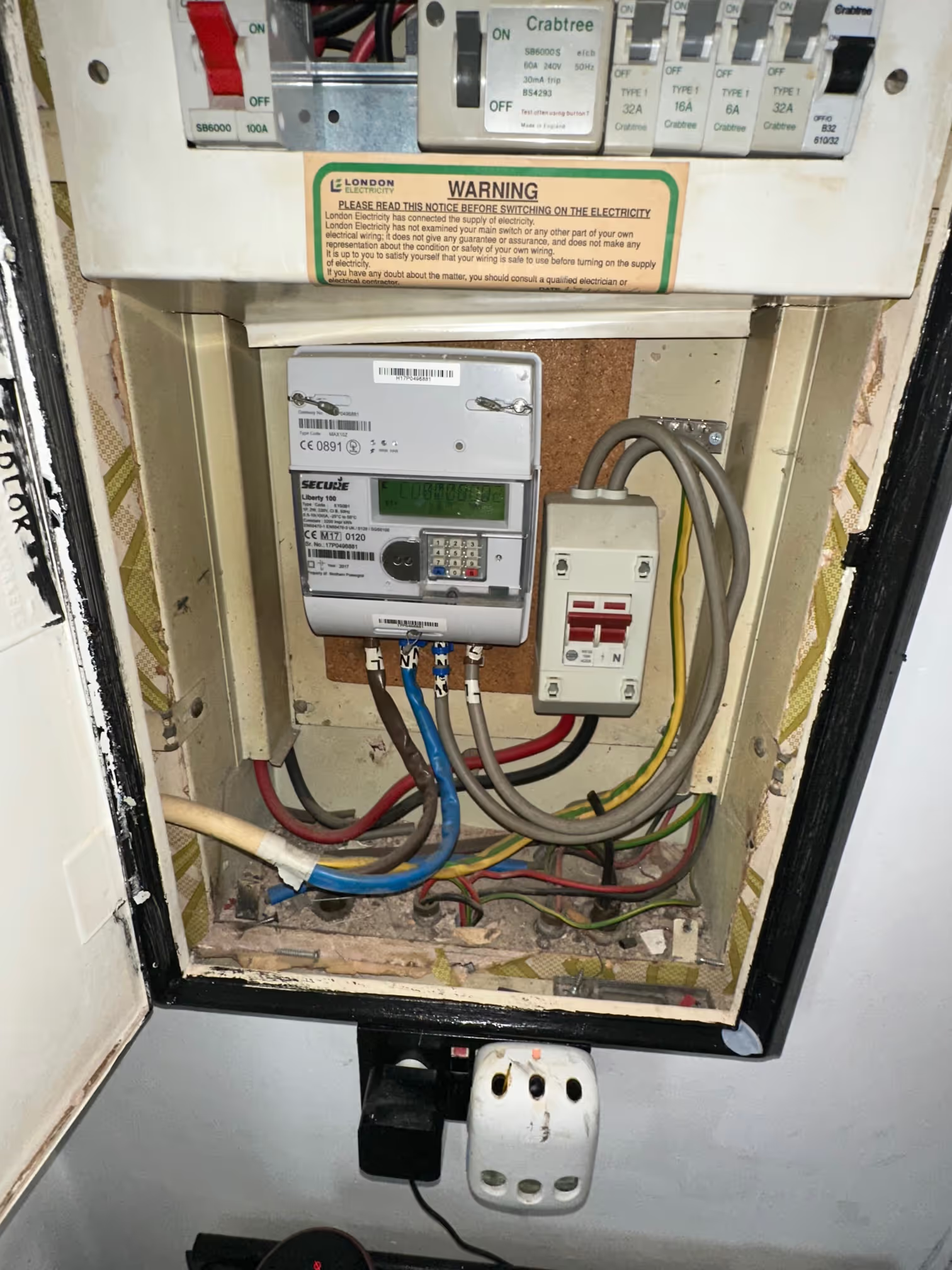
Picture this: you go to make a cup of tea, plug in the kettle, and nothing happens. The kitchen socket is completely dead — and so is the one next to it. Before you reach for the phone to book an electrician and face a £60–£150 call-out charge, there is every chance you can resolve the issue yourself in under five minutes, without touching a single wire.
Dead electrical sockets in kitchens and bathrooms are one of the most common household electrical complaints in the UK. The reassuring truth is that the overwhelming majority of these faults share a single, simple cause: a tripped Residual Current Device (RCD) or Ground Fault Circuit Interrupter (GFCI) outlet. Both terms refer to the same category of safety device, and resetting one requires nothing more than pressing a button. This guide explains exactly how to do it, what to check if that does not work, when you genuinely do need a qualified electrician, and how the relevant regulations apply to UK properties.
Why Kitchen and Bathroom SocketsStop Working
Electrical sockets in kitchens, bathrooms, utility rooms, and outdoor areas operate under a different set of safety conditions to those in your living room or bedroom. These so-called "damp locations" place electricity in close proximity to water, which creates a heightened risk of electric shock. To manage this risk, UK building regulations — aligned with BS 7671, the IET Wiring Regulations — require that sockets and circuits in these zones be protected by an RCD.
An RCD continuously monitors the current flowing through a circuit. The moment it detects even a tiny imbalance between the live and neutral conductors — indicating that electricity is leaking to earth, perhaps through a faulty appliance or a person receiving a shock — it cuts the power in milliseconds. This rapid disconnection is fast enough to prevent a potentially fatal electric shock.
Because RCDs are so sensitive, they occasionally trip for reasons that are not immediately obvious: a brief power surge, an ageing appliance with slightly degraded insulation, moisture in an exterior socket, or even a thunderstorm. The socket simply goes dead, and the cause can seem mysterious. This guide will walk you through the logical sequence of checks to restore power quickly and safely.
This guide covers safe, non-invasive checks that any competent adult can perform. You should never open electrical panels, tamper with wiring, or attempt repairs beyond those described here unless you hold the appropriate qualifications. If in doubt, contact a registered electrician — look for those registered with NICEIC, NAPIT, or a member of the Electrical Contractors' Association (ECA).
Understanding theRCD / GFCIin a UK Home
What Is an RCD?
A Residual Current Device (RCD) is the UK's standard term for the safety switch that protects circuits in high-risk zones. You may also encounter the term GFCI (Ground Fault Circuit Interrupter), which is the North American equivalent. In modern UK homes the two terms are often used interchangeably when discussing the same protective function, particularly with imported appliances or articles written for an international audience. For the purposes of this guide, they refer to the same safety mechanism.
RCD protection in a UK property typically comes in one of three forms:
- RCD-protected consumer unit (fuse board): The most common arrangement in homes built or rewired after the 17th Edition Wiring Regulations (2008). A split-load or fully-protected consumer unit contains one or more RCDs that protect groups of circuits. Kitchens, bathrooms, and outdoor sockets will be on an RCD-protected side of the board.
- Socket-mounted RCD (RCD socket outlet): A single socket or double socket that contains a built-in RCD, identifiable by two small buttons labelled Test and Reset. One such socket can protect multiple downstream sockets on the same circuit.
- Plug-in RCD adaptor: A portable adaptor inserted into a standard socket to give RCD protection to a single appliance. These are particularly common for outdoor power tools and lawnmowers.
How Does an RCD Trip?
An RCD is constantly comparing the current in the live wire with the current in the neutral wire. Under normal operation these two values are virtually identical. If there is a discrepancy — even as small as 30 milliamps, the standard trip threshold for life protection — the RCD detects a fault current flowing to earth and opens the circuit instantly.
Common causes of an RCD trip in the kitchen or bathroom include:
- A faulty or ageing appliance with degraded insulation (kettles, toasters, hairdryers, washing machines)
- Water ingress into a socket or appliance
- An overloaded extension lead with multiple high-wattage appliances connected simultaneously
- A brief voltage spike or fluctuation on the incoming supply
- A wiring fault that has developed over time within the fixed installation
- An earth leakage fault in underfloor heating or a heated towel rail
Regardless of the precise trigger, the outcome is the same: a group of sockets loses power. The fix, in most cases, is equally straightforward.
Step-by-Step:Resetting a Tripped RCD Socket
If your kitchen or bathroom sockets have gone dead and there is an RCD socket outlet somewhere on the circuit, follow these steps:
-
Unplug all appliances from the affected sockets. This is important: if an appliance caused the trip, plugging it back in immediately will trip the RCD again. Disconnect everything first.
-
Locate the RCD socket outlet. Look for a socket that has two small buttons — typically labelled Test and Reset — in the centre of its faceplate. In a kitchen, this is often situated close to where the worktop meets the splashback. In a bathroom, it may be positioned near the door or in a shaver socket near the mirror. Check all rooms in the zone: if no RCD socket is visible in the room with the dead outlets, check adjacent bathrooms, hallways, or utility areas.
-
Observe the Reset button. On a tripped RCD outlet, the Reset button will be slightly protruding or popped out
Also Read: How to Reset Sky Box UKcompared to its normal flush position. Some models also illuminate a small indicator light when tripped.
-
Press the Reset button firmly until you feel or hear it click into place. On a properly functioning outlet, it should click cleanly and remain depressed.
-
Test the previously dead sockets. Plug in a lamp or a phone charger to confirm power has been restored to the circuit.
-
Reconnect your appliances one at a time. If the RCD trips again immediately after you plug in a particular appliance, that appliance is almost certainly the source of the fault. Withdraw it from use and have it inspected or replaced.
If the Reset button refuses to stay engaged — it pops back out as soon as you release it — there is likely still an active fault on the circuit. Do not force it. Disconnect all appliances again, then attempt the reset. If the button still will not latch, the fault may be in the fixed wiring and you will need a registered electrician.
Locating the RightRCD SocketWhen It Is Not Obvious
One of the most common frustrations householders report is finding the dead sockets but being unable to identify an RCD outlet anywhere nearby. This is perfectly normal, and understanding how RCD circuits are laid out will help you track down the right device.
One RCD Can Protect Many Sockets
A single RCD socket outlet, or a single RCD in your consumer unit, can protect a chain of standard sockets wired in a ring or radial circuit. This means the RCD device may be physically located some distance from the sockets that have lost power.
Bathrooms Are Often Wired Together
In many UK homes, all bathroom circuits — including upstairs and downstairs bathrooms, en suites, cloakrooms, and sometimes the utility room — are protected by a single RCD. If the socket in your main bathroom has stopped working, check the en suite, the downstairs toilet, and any shaver sockets throughout the house. The RCD outlet that controls them all may be in any one of those rooms.
External Sockets Share a Circuit
Outdoor power sockets — for example, those in the garden, on a garage wall, or in a porch — are also required to be RCD protected under UK wiring regulations. If your garden socket stops working, check all outdoor socket positions around the perimeter of the property. One RCD socket is often fitted on an exterior wall closest to the consumer unit, protecting all the others.
The Garage and Outbuildings
Garages and detached outbuildings frequently have their own sub-consumer unit or a dedicated RCD protection device. If sockets in your garage have gone dead, check for a small fuse board or RCD unit mounted on the wall of the garage itself, sometimes near the light switch or entry point.
Kitchen Circuits and the Consumer Unit
In newer homes, kitchen circuits are frequently protected at the main consumer unit rather than via a dedicated socket-mounted RCD. If you cannot find an RCD socket in the kitchen at all, proceed directly to checking your consumer unit (see the following section).
Checking YourConsumer Unit(Fuse Board)
If resetting the RCD socket outlet has not resolved the problem — or if you cannot find a socket-mounted RCD anywhere on the circuit — the next place to check is your consumer unit. In the UK, this is commonly referred to as the fuse board, distribution board, or breaker box, though the term consumer unit is the correct technical designation.
Your consumer unit is normally located in the hallway, under the stairs, in the kitchen, or in a utility room. It is a flat box, usually white or grey, fixed to the wall at approximately shoulder height.
Identifying a Tripped RCD or MCB
Open the cover of the consumer unit. You will see a row of individual circuit breakers (Miniature Circuit Breakers, or MCBs) and one or more larger switches labelled RCD. In a modern split-load consumer unit, there are typically two RCD switches, each protecting half of the circuits in the board.
A healthy switch will be in the upright "on" position. A tripped device will be:
- Switched to the "off" position (all the way down)
- Sitting in a middle "tripped" position — neither fully up nor fully down — indicated by a slightly wobbly or loose handle
- On some modern units, showing a coloured indicator in a small window on the device body
Note which switches appear in an abnormal position. These are your candidates for resetting.
How to Reset a Tripped MCB or RCD in the Consumer Unit
-
Disconnect major appliances on the affected circuit where possible. Unplug items you suspect may have caused the trip.
-
Push the tripped switch fully to the OFF position first. Even if it looks off, push it deliberately downwards until it clicks. This is necessary to reset the internal latch mechanism.
-
Switch it back to the ON position firmly and smoothly. It should stay in place with a clean click.
-
Test the previously affected sockets. Return to the kitchen or bathroom and confirm power has been restored.
-
Reconnect appliances one at a time to identify any that retrigger the trip.
If the switch trips immediately after you reset it, or refuses to stay in the on position, there is an active electrical fault on that circuit. Do not repeatedly attempt to force it on. Leave the circuit off and contact a registered electrician. Repeatedly resetting a tripping device in the presence of an active fault is dangerous and can cause damage to the wiring or start a fire.
The Link Between Tripped Breakersand RCD Faults
There is an important relationship between your consumer unit's MCBs and the RCDs that deserves explanation. In a split-load consumer unit, each MCB sits "downstream" of an RCD. When the mains supply drops — such as during a power cut — or when a breaker trips, the RCDs on that side of the board can also lose power momentarily and reset themselves, sometimes leaving them in a tripped state even after the underlying fault has cleared.
This means that after resetting a tripped MCB, you may also need to go back and reset any RCD socket outlets that lost power during the interruption. The correct sequence is:
- Restore the MCB in the consumer unit first.
- Then return to the kitchen or bathroom and reset the RCD socket outlet.
- Finally, test the downstream sockets.
This two-step process catches many situations where a householder resets the consumer unit but finds the sockets are still dead — and incorrectly concludes there is a more serious fault.
IdentifyingFaulty AppliancesAfter a Trip
When the RCD or MCB trips repeatedly, the culprit is usually a faulty appliance rather than a problem with the fixed wiring. Identifying and isolating the problematic device is the key to preventing further trips and, more importantly, preventing a safety hazard.
Common offenders in the kitchen and bathroom include:
| Appliance | Common Fault | Risk Level |
|---|---|---|
| Electric kettle | Scale build-up causing element insulation failure | Moderate |
| Toaster | Crumb deposits near live elements, degraded flex | Moderate |
| Dishwasher | Worn door seal, water entering electrics | High |
| Washing machine | Drum bearing seal failure, motor insulation | High |
| Hairdryer | Overheating, damaged flex near handle | Moderate |
| Electric shaver charger | Transformer breakdown, moisture ingress | Low–Moderate |
| Underfloor heating | Insulation failure in heating mat | High |
| Heated towel rail | Fluid leakage around element, corroded connections | High |
To identify a faulty appliance methodically, unplug every device on the affected circuit, reset the RCD, and then reconnect items one at a time.
Leave a gap of 30 seconds between each reconnection. When the RCD trips following a specific reconnection, you have found your culprit.
Any appliance that repeatedly causes a trip should be taken out of service immediately. Have it assessed by a qualified appliance repair engineer or replace it. Do not attempt to use it again until it has been declared safe.
When toCall a Registered Electrician
The checks described in this guide are safe and appropriate for any competent householder. However, there are clear circumstances in which professional intervention is required, and recognising these is equally important.
Situations That Require a Qualified Electrician
- The RCD or MCB trips immediately every time it is reset, with no appliances connected (suggesting a wiring fault)
- Sockets feel warm to the touch, smell of burning, or show visible scorch marks
- You notice sparking when inserting or removing a plug
- Multiple circuits lose power simultaneously with no obvious cause
- Flickering lights coincide with socket failures (indicating a potentially loose or deteriorating connection)
- Your consumer unit is more than 25 years old, or contains rewireable fuses rather than MCBs (a common finding in properties built before 1980)
- You have recently had building work, loft conversion, or kitchen refurbishment during which wiring may have been disturbed
- Water has entered a socket or appliance due to a leak or flooding
What to Expect From a Registered Electrician
A reputable UK electrician will carry out an initial diagnostic check known as an Installation Condition Report (ICR) or a targeted fault-finding procedure. They will use test instruments to measure insulation resistance, earth continuity, and RCD operating times. In most cases, a fault-finding visit resolves the issue within an hour. Call-out fees in the UK vary by region, but you should expect to pay between £60 and £150 for an initial visit, with hourly rates of approximately £45–£80 per hour thereafter. Always obtain a written quote before work commences.
Ensure any electrician you engage is registered with a competent person scheme recognised under Part P of the Building Regulations. NICEIC and NAPIT are the two most widely recognised registration bodies. Registration can be verified on each body's website using the contractor's name or postcode.
UK Regulations:What the Law Requires
RCD protection for specific circuits in UK homes is governed by BS 7671 — the IET Wiring Regulations. The current edition requires RCD protection for all socket outlets likely to be used outdoors, circuits in zones associated with bathing and showering, and circuits supplying areas of increased risk such as kitchens. The 18th Edition Amendment 2 (2022) extended RCD requirements considerably, meaning that properties recently rewired or inspected to the latest standard will have comprehensive RCD protection throughout the installation.
Older properties — particularly those with consumer units installed prior to 2008 — may have more limited RCD coverage. If you are buying, selling, or letting a property, it is advisable to commission an Electrical Installation Condition Report (EICR) to establish the current safety standard of the installation. For rental properties, EICRs are legally required by the Electrical Safety Standards in the Private Rented Sector (England) Regulations 2020, and must be renewed every five years or at the start of each new tenancy.
If you are a private landlord in England, you are legally required to have a valid EICR in place and to provide a copy to tenants. Failure to comply can result in fines of up to £30,000 and remedial notices from local authorities. Scotland, Wales, and Northern Ireland have their own equivalent regulations.
Preventative Maintenance:Avoiding Future Trips
Whilst a tripping RCD is not always avoidable, there are sensible steps that can reduce the frequency of nuisance trips and ensure your electrical installation remains in good condition.
Regular Appliance Inspection
Periodically inspect the flexible cords of all kitchen and bathroom appliances. Look for fraying, kinking, or damage at the point where the cord enters the plug or the appliance body. These are common failure points. Replace any damaged cord immediately — do not use tape as a temporary repair. In commercial kitchens, Portable Appliance Testing (PAT) is a regulatory requirement; for domestic use, a visual inspection is the minimum standard of care.
Avoid Overloading Sockets
Using an extension lead or multi-socket adaptor to run several high-wattage appliances simultaneously — for example, a kettle, toaster, and microwave from a single twin socket — can cause cumulative earth leakage that triggers an RCD trip. Where possible, dedicate individual sockets to high-draw appliances, and avoid daisy-chaining extension leads.
Test Your RCDs Regularly
Every RCD socket outlet and every RCD in your consumer unit has a Test button for a reason. The IET recommends testing your RCDs quarterly by pressing the Test button and confirming that it trips correctly (power is cut), then pressing Reset to restore power. If the RCD does not trip when tested, or does not reset cleanly, it may have developed a fault and should be replaced by a qualified electrician.
Address Moisture Issues Promptly
Condensation, leaks, and poor ventilation are significant contributors to RCD trips in kitchens and bathrooms. If sockets are positioned close to a steam source or a dripping pipe, address the underlying moisture problem rather than simply resetting the device repeatedly.
Consider an EICR
Even if your property is owner-occupied and an EICR is not a legal requirement, having one carried out every ten years — or every five years if the installation is older — is widely regarded as best practice. An EICR will identify any degradation in the wiring, outdated components, or non-compliance with current standards, giving you the opportunity to address issues before they become expensive or dangerous.
Quick Reference Summary
- Dead kitchen or bathroom sockets are most commonly caused by a tripped RCD or a tripped MCB in the consumer unit.
- Locate the RCD socket outlet (identifiable by its Test and Reset buttons) and press Reset firmly until it clicks.
- If no RCD socket is visible, check adjacent bathrooms, hallways, and the main consumer unit.
- Always unplug all appliances before resetting, then reconnect them one at a time.
- If the RCD will not stay reset, or trips immediately with no appliances connected, call a registered electrician.
- Test your RCDs quarterly using the Test button to ensure they remain fully functional.
Frequently AskedQuestions
Conclusion:Simple Checks Save Significant Costs
A sudden loss of power to your kitchen or bathroom sockets is almost always more straightforward to resolve than it initially appears. The protective technology built into modern UK electrical installations — RCD socket outlets and RCD-equipped consumer units — is designed to trip quickly and reset easily, providing safety without creating an unnecessarily complex fault-finding process for the householder.
By systematically working through the checks in this guide — locating the relevant RCD socket, resetting any tripped devices in the consumer unit, and identifying any faulty appliances — the majority of dead socket problems can be resolved in under ten minutes. That represents a meaningful saving against the average electrician's call-out fee, and gives you a greater understanding of your home's electrical installation in the process.
The key is to know when to stop. If the RCD will not stay on, if you see any signs of heat damage, if the problem recurs persistently, or if you have any doubt whatsoever about what you are looking at — stop, and call a qualified professional.
Electricity is unforgiving. The value of the safety devices described in this guide lies precisely in their ability to protect you when something goes wrong; respecting their signals is the mark of a responsible homeowner.
Keep this guide bookmarked as a reference, test your RCDs every quarter, and schedule an EICR if your installation has not been assessed in the last ten years. A little preventative diligence now will spare you considerable inconvenience — and expense — in the future.