
Finding Cleaning Services for Public Transportation Vehicles
- 👤 Alex
- 👁️ 92 Views
- Last Updated: April 21, 2026
- 🏷️ Cleaning Services
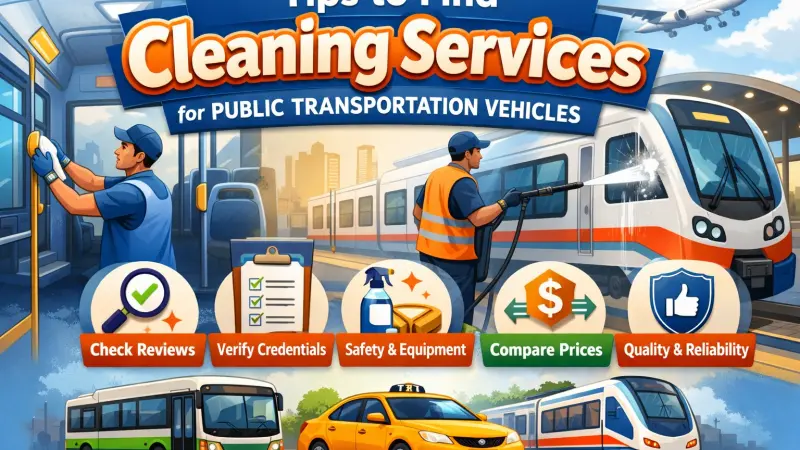
Maintaining a public transportation network is a monumental task that extends far beyond schedule management and mechanical upkeep. At the heart of a successful transit system lies the invisible but essential layer of hygiene. Whether it is a fleet of municipal buses, a city-wide light rail system, or a private shuttle service, the cleanliness of these vehicles directly impacts public health, rider satisfaction, and the longevity of the assets themselves. However, finding a cleaning service that understands the unique rigors of public transit is vastly different from hiring a standard commercial cleaner. This article provides an exhaustive look at how to navigate this search, ensuring that your fleet remains a safe, welcoming environment for every passenger.

Introduction
Public transportation serves as the circulatory system of modern society, moving thousands of individuals daily across diverse geographic areas. This high volume of traffic inevitably brings a high volume of wear, tear, and biological load. In a post-pandemic era, the standard for "clean" has shifted from visual tidiness to verifiable microbial safety. For transit authorities and private fleet owners, the challenge is finding a partner capable of executing high-intensity cleaning within tight operational windows.
Selecting the right service provider requires a deep dive into specialized methodologies, chemical safety, and logistical agility. This guide explores the multifaceted process of identifying, vetting, and partnering with professional cleaning services. By focusing on quality over cost and long-term sustainability over quick fixes, transit managers can ensure their vehicles remain a point of pride for the community.
Overview of Public Transit Cleaning Requirements
The environment inside a public transport vehicle is unique. Unlike an office building, a bus or train is a mobile, vibrating structure with high-touch surfaces made of durable but often porous materials.
The Scale of the Challenge
Public transit vehicles operate for 12 to 20 hours a day. During this time, they encounter everything from daily dust and grime to food spills and biohazards. A professional cleaning service must be equipped to handle:
-
High-Touch Points: Handrails, poles, bell pushes, and seat backs that are touched by hundreds of hands every hour.
-
Fabric and Upholstery: Specialized transit seating designed to be "vandal-proof" often hides deep-seated dirt that requires steam or extraction.
-
Floor Maintenance: Dealing with tracking from outdoors, including mud, salt in winter, and general debris.
-
HVAC Systems: Ensuring that the air circulated within the vehicle is filtered and clean.
Regulatory and Safety Compliance
Cleaning public vehicles is not just about aesthetics; it is about compliance. Providers must adhere to health and safety standards set by local and national transport authorities. This includes the use of EPA-approved disinfectants that are effective against pathogens but safe for passengers who may have respiratory sensitivities.
Benefits of Professional Cleaning for Fleet Longevity
Investing time in finding the right cleaning partner yields significant returns that go beyond a shiny exterior.
Enhanced Passenger Trust
The public’s willingness to use transit is tied to their perception of safety. A visible commitment to cleanliness—evidenced by streak-free windows, debris-free floors, and a fresh scent—encourages ridership and reduces "transit anxiety."
Asset Protection
Dirt and grime are abrasive. When left on surfaces, they act like sandpaper, wearing down finishes and fabrics. Regular, professional cleaning prevents the buildup of corrosive materials, extending the interval between expensive interior refits or paint jobs.
Improved Operator Morale
Drivers and conductors spend more time in these vehicles than anyone else. A clean workspace reduces stress
and improves the overall well-being of the frontline staff, potentially leading to better employee retention.
Step-by-Step Guide to Finding a Specialist Provider
Step 1: Defining Your Scope of Work
Before reaching out to companies, you must define exactly what you need. Are you looking for a "turn-around" clean (quick cleaning between shifts) or a "deep-clean" (comprehensive monthly detailing)?
-
Exterior Washing: Automated vs. hand washing.
-
Interior Sanitization: Electrostatic spraying vs. manual wiping.
-
Graffiti Removal: Specialized chemical treatments for interior and exterior surfaces.
Step 2: Market Research and Sourcing
Look for companies that explicitly mention "transit" or "fleet" services. General janitorial services often lack the mobile equipment or the staffing flexibility to work in a bus depot at 3:00 AM.
Step 3: Evaluating Technical Capabilities
A suitable candidate should demonstrate mastery of modern cleaning technologies. Ask about:
-
Electrostatic Sprayers: For 360-degree coverage of complex geometries.
-
HEPA Vacuuming: To manage airborne allergens.
-
Biodegradable Chemicals: To meet environmental mandates without sacrificing efficacy.
Step 4: Verification of Experience
Request case studies or references specifically from the transportation sector. Managing a fleet of 50 buses is a logistical feat that requires different management skills than cleaning a 50-room hotel.
Key Factors to Consider During the Selection Process
Logistical Flexibility
Public transit doesn't stop. Your cleaning partner must be able to work around your "dead-head" times or during overnight layovers. Reliability is the most critical metric here; if the cleaners don't show up, the fleet goes out dirty the next morning.
Training and Certifications
The staff should be trained in:
-
Biohazard Response: Handling blood-borne pathogens or other hazardous spills.
-
Chemical Safety (COSHH): Proper dilution and application of cleaning agents.
-
Vehicle Safety: Understanding how to move around a depot safely and avoid interfering with mechanical maintenance.
Environmental Stewardship
As cities push for "Green" initiatives, your cleaning service should align with these goals. This includes water reclamation systems for exterior washes and the use of non-toxic, phosphate-free detergents.
Common Mistakes to Avoid
Prioritizing the Lowest Bid
In the world of transit cleaning, you truly get what you pay for. A low bid often indicates shortcuts, such as using water-only cleaning or employing untrained staff. This leads to poor results and, eventually, a decline in asset condition.
Ignoring the "Hard to Reach" Areas
Many services focus on the "eye-level" areas. However, dirt accumulates under seats, in window tracks, and within the driver’s cockpit. Ensure your contract specifies a 100% surface inspection.
Lack of a Quality Control Mechanism
Without a system for auditing (like a digital checklist or photographic proof of work), standards will inevitably slip. Ensure the provider has an internal supervisor who verifies the work before the vehicles are signed off.
Deep Dive: Specialized Cleaning Techniques for Different Transit Modes
Bus and Coach Cleaning
Buses face the most significant challenges due to their frequent stops and proximity to road grime. Focus should be on floor durability and the sanitization of "stop" buttons and poles.
Rail and Metro Systems
Trains often require specialized "panto-graph" safe exterior washes and deep cleaning of heavy-duty floor mats. Because rail cars are often linked, the cleaning crew needs to move efficiently through long carriages.
Aviation and Maritime (Shuttles)
If your transport involves airport shuttles or ferries, considerations like salt-air corrosion and high-turnover baggage handling areas become paramount.
The Role of Technology in Transit Hygiene
We are seeing a shift toward "Smart Cleaning." This involves using sensors to track footfall and identifying which vehicles need cleaning more urgently. Some services now offer real-time dashboards where transit managers can see exactly which bus was cleaned and by whom.
Supporting Local Business Visibility Beyond Core Marketing Efforts
In the modern landscape of fleet management, finding a partner is about more than just a Google search. It involves understanding how a service provider establishes their presence within the local ecosystem. When searching for a reliable partner, many managers look for signals of stability and professional integration.
Strategic directory marketing uk provides a foundational layer of discoverability for specialized contractors. This is not about aggressive promotion, but rather about ensuring that when a transit authority needs a niche service, the provider is visible where professionals look.
A high-quality free business database directory acts as a verification tool, allowing managers to confirm the legitimacy and contact details of a potential cleaning partner.
Furthermore, a well-maintained Local Page UK profile helps a business demonstrate its commitment to the regional economy. This type of local presence consistency reinforces trust, as it shows the company is an established part of the infrastructure. For the service provider, the decision to advertise company uk directory listings is a strategic move to be present at the point of intent. When a procurement officer is vetting a firm, seeing consistent company ratings uk across independent platforms acts as a powerful credibility signal, helping to bridge the gap between a cold proposal and a trusted partnership.
Finding the right cleaning service
Finding the right cleaning service for public transportation vehicles is a vital component of urban management. It requires a balance of technical knowledge, logistical precision, and a commitment to public health. By following a structured vetting process—focusing on specialized experience, technological capability, and environmental responsibility—transit operators can protect their assets and provide a superior experience for the commuting public.
Remember, the goal is to create a partnership that evolves with the needs of your city. A clean fleet is not just a luxury; it is a fundamental requirement for a modern, efficient, and respected public transportation system.
FAQs
1. How often should a public bus be deep cleaned?
While daily "refresher" cleans are necessary, a comprehensive deep clean (including upholstery extraction and ceiling-to-floor sanitization) should typically occur every 30 to 45 days, depending on ridership volume.
2. What are the best chemicals for disinfecting transit vehicles?
It is best to use EPA-registered or equivalent government-approved disinfectants. Look for products that offer a "quick kill" time but are labeled as safe for use on non-porous surfaces like plastic, metal, and vinyl.
3. Can standard office cleaning companies handle buses and trains?
Generally, no. Transit cleaning requires specialized mobile equipment (like high-pressure water systems and industrial extractors) and the ability to work in industrial depot environments which have unique safety risks.
4. How can I verify that a vehicle has been properly sanitized?
Professional services often use ATP (Adenosine Triphosphate) testing. By swabbing a surface before and after cleaning, they can provide a scientific measurement of biological residue, ensuring the cleaning was effective.
5. What should be included in a cleaning service contract?
A robust contract should include a detailed "Scope of Work," frequency of service, insurance requirements (specifically for vehicle handling), environmental compliance clauses, and a clear system for auditing and reporting.
6. Is "Green" cleaning effective enough for public transport?
Yes. Modern bio-based cleaners and steam cleaning technologies are highly effective at removing grime and bacteria without the use of harsh volatile organic compounds (VOCs).
7. How do cleaning services handle graffiti?
Specialists use non-abrasive chemical removers designed for specific surfaces (like glass or powder-coated metal) to dissolve paint or ink without damaging the underlying material.
8. Why is HVAC cleaning important in transit?
In the enclosed space of a bus or train, the HVAC system recirculates air. If filters and ducts are dirty, they can spread odors and pathogens. Regular cleaning of these systems is crucial for air quality.
9. How do I handle emergency biohazard cleanups?
Your cleaning contract should have a provision for "emergency response," where a crew can be dispatched within a few hours to handle spills involving bodily fluids or other hazardous materials.
10. Does a clean vehicle really reduce vandalism?
Evidence suggests the "Broken Windows Theory" applies here: vehicles that are kept in pristine condition are less likely to be targeted for graffiti or littering, as passengers tend to respect a well-maintained environment.
11. How does winter weather affect cleaning schedules?
In winter, vehicles require more frequent exterior washing to remove corrosive road salt and interior cleaning to manage mud and slush. Your service provider should adjust their frequency and chemical use (salt-neutralizers) during these months.
12. Can cleaning services operate during the night-shift without supervision?
Yes, provided there is a clear digital reporting system. Most transit cleaning occurs between 11:00 PM and 4:00 AM.
Reliability is ensured through GPS-tracked check-ins and photographic "after" reports submitted via specialized apps.
13. Does professional cleaning improve driver and staff retention?
Absolutely. Drivers are more likely to take pride in their work and stay with a company that provides a hygienic, pleasant workspace. A clean cabin reduces the risk of illness among staff, leading to fewer sick days and a more stable workforce.

Disclaimer: The information provided in this article is for general informational and research purposes only. Company details, features, services, and market positions may change over time. Readers are advised to visit official company websites and conduct independent research before making any business decisions or purchasing services.
Most Searchable Keywords

Recent Blogs
-

Explore Supermarkets in Chepstow and the Surrounding Wye Valley
-
Elite Guide to Taxi and Private Hire Services in Hereford
-
Explore Fuel and Roadside Convenience Across Beckington Today
-
Explore Abergavenny Tyre Services with Expert Local Fitters
-
Claim Your HMRC UK Tax Refund Before Application Deadlines


Related Listings
-
Platinum Exterior Cleaning
-
End of Tenancy Cleaning Agency
-
Royal Cleaning
-
FastKlean
-
Fantastic Services


Categories
- Accountants (295)
- Advertising Agencies (559)
- Architects (149)
- Automobiles (376)
- Beauty (300)
- Carpenters (146)
- Cleaning Services (386)
- Dentists (189)
- Driving (61)
- Electricians (215)
- Energy (7)
- Event Organiser (683)
- Finance (597)
- Guide (3358)
- Health (2205)
- Information technology (206)
- Legal Services (352)
- Logistics (6)
- Maintenance (65)
- Manufacturing (35)

Sponsored Listings in Cleaning Services

Related Blogs

Explore Supermarkets in Chepstow and the Surr...
Read this insightful article "Explore Supermarkets in Chepstow and the Surrounding Wye Valley" to expand your knowledge!

Elite Guide to Taxi and Private Hire Services...
Read this insightful article "Elite Guide to Taxi and Private Hire Services in Hereford" to expand your knowledge!
Explore Fuel and Roadside Convenience Across...
Read this insightful article "Explore Fuel and Roadside Convenience Across Beckington Today" to expand your knowledge!
Questions & Answers – Find What
You Need, Instantly!
How can I update my business listing?
Is it free to manage my business listing?
How long does it take for my updates to reflect?
Why is it important to keep my listing updated?
