
Finding Providers for Retail Store Cleaning
- 👤 Alex
- 👁️ 235 Views
- Last Updated: April 23, 2026
- 🏷️ Cleaning Services
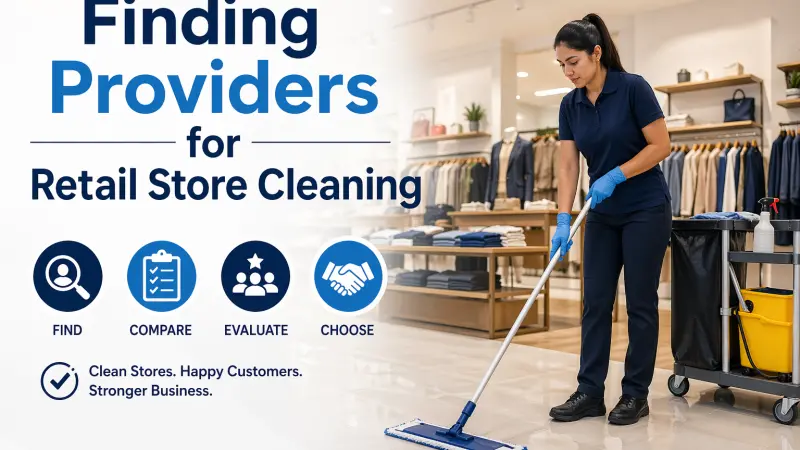
In the competitive landscape of modern commerce, the physical condition of a retail store serves as a silent brand ambassador. From the moment a customer crosses the threshold, their perception of product quality and service reliability is inextricably linked to the cleanliness of the environment. Whether managing a high-end luxury boutique or a high-volume department store, finding providers for retail store cleaning is a critical task that goes beyond simple floor maintenance. It involves identifying partners who understand the psychology of the "customer journey," the importance of high-gloss presentation, and the necessity of maintaining hygiene in high-touch areas. This guide provides a detailed exploration of how to navigate the commercial cleaning market, evaluate technical proficiency, and establish a sanitation schedule that enhances your brand’s reputation while ensuring a safe and inviting space for every shopper.
Overview: The Strategic Importance of Retail Sanitation
Retail sanitation is fundamentally distinct from general office cleaning, as it operates at the intersection of facility maintenance and experiential marketing. It requires a highly specific focus on aesthetics, the rhythm of foot traffic patterns, and the meticulous preservation of diverse—and often expensive—surfacing materials. A store’s environment is not static; it must remain pristine even under the immense stress of hundreds, or thousands, of daily visitors who inadvertently bring in external debris and bacteria.
The Psychology of Cleanliness in Retail
Research in environmental psychology consistently shows that shoppers spend more time and significantly more money in environments that feel meticulously cared for. This is often referred to as the "halo effect," where a clean floor and sparkling glass lead consumers to believe that the products themselves are of higher quality and the staff more professional. Conversely, smudges on glass displays, dust on merchandise shelves, or neglected flooring can subconsciously trigger a "flight" response in consumers. This psychological discomfort leads to lost sales, shortened dwell times, and lasting damage to brand loyalty. Professional retail cleaners specialize in "detail cleaning" that addresses these subtle cues, ensuring the subconscious message sent to the consumer is one of trust and excellence.
Operational Challenges of Retail Environments
Unlike standard corporate offices, retail stores are high-stakes visual landscapes featuring complex lighting fixtures that highlight every speck of dust, expensive window displays that act as the face of the brand, and varying floor types ranging from polished concrete to delicate hardwood. Furthermore, the logistical challenge is immense: cleaning must often be performed in extremely tight windows—either in the early hours before opening or late at night after closing—to avoid disrupting the customer experience. A retail cleaning provider must be a master of efficiency, ensuring that the heavy machinery and chemicals used do not leave lingering odors or residues that could interfere with the sensory experience of the next day's shoppers.
The Benefits of Professional Retail Store Cleaning
Investing in a specialized provider offers advantages that directly impact a store’s bottom line and operational longevity.
1. Elevated Brand Perception
Consistency is key in retail. A professional service ensures that the store looks exactly the same on a Tuesday morning as it does on a Saturday afternoon. This consistency builds trust with consumers, signaling that the business pays attention to detail in every aspect of its operation.
2. Longevity of Store Assets
Commercial flooring and custom shelving are significant investments. Improper cleaning techniques or the use of harsh chemicals can lead to premature wear, stripping of finishes, or staining. Specialized providers use pH-neutral cleaners and advanced equipment designed to preserve the integrity of high-end materials.
3. Health and Safety Compliance
High-traffic environments are hotspots for the transmission of seasonal illnesses. Professional cleaners prioritize "high-touch" points—door handles, payment terminals, and fitting room latches—using medical-grade disinfectants that are safe for public spaces, thereby reducing health risks for both staff and customers.
How to Identify Qualified Retail Cleaning Providers
The process of finding a partner requires a methodical approach to vetting. You are looking for a company that treats your sales floor with the same respect as a showroom.
Verification of Experience in Retail
Ask potential providers about their current portfolio. A company that primarily cleans warehouses may not have the finesse required for a clothing boutique. Look for:
-
References from similar industries: High-end retailers should look for cleaners with experience in luxury sectors.
-
Specialized Service Offerings: Can they handle window displays, mannequin dusting, and floor buffing?
Evaluation of Training and Equipment
The retail sales floor is no place for outdated equipment. A qualified provider should utilize:
-
HEPA-filter Vacuums: To ensure dust is removed, not just redistributed into the air.
-
Low-Moisture Floor Care: To prevent slip hazards and protect sensitive flooring materials.
-
Microfiber Technology: Which is more effective at capturing bacteria and preventing cross-contamination than traditional mops.
Insurance and Accountability
Retail stores are filled with valuable inventory. Ensure any provider you hire carries comprehensive liability insurance and "Bonding." Ask for their "Quality Assurance" protocol—how do they track their own performance and handle missed spots?
Step-by-Step Details: The Selection and Onboarding Process
Step 1: Conduct a Facility Audit
Before reaching out to providers, walk your store and identify the specific challenges. Note the types of flooring, the height of the ceilings, and the frequency of traffic. This allows you to provide a clear "Scope of Work" (SOW) to bidders.
Step 2: Request a Site Walk-Through
A reputable provider will insist on seeing the space before giving a quote. During the walk-through, observe their attention to detail. Do they notice the dust on the top of the partitions? Do they ask about the specific needs of your fitting rooms?
Step 3: Define the Service Window
In retail, timing is everything. Decide whether you require "Day Porter" services to manage spills and restrooms during operating hours, or if a "Night Crew" for deep cleaning is more appropriate for your workflow.
Step 4: Pilot Period and Review
Start with a three-month trial period. Schedule weekly check-ins with the cleaning supervisor to review the "Detail Log" and ensure that the standards established during the SOW are being met consistently.
Common Mistakes When Choosing a Provider
1. Prioritizing Price Over Performance
The cheapest bid often comes at the cost of high staff turnover and poor equipment maintenance. In retail, a single poor cleaning job can be visible to every customer, making the "savings" of a cheap contract far more expensive in lost sales.
2. Neglecting the Fitting Rooms
Fitting rooms are the most intimate part of the retail journey. Neglecting to deep-clean these areas—including mirrors and seating—can result in a negative customer experience at the exact moment a purchase decision is being made.
3. Ignoring Seasonal Adjustments
A cleaning schedule that works in the dry summer months may fail during the winter.
Ensure your provider can scale their services to handle mud, salt, or increased holiday foot traffic without requiring a completely new contract.
Tips for Long-term Retail Maintenance
-
Lighting Maintenance: Ensure your cleaning crew is tasked with dusting light fixtures; dim lighting due to dust can make merchandise look unappealing.
-
Entrance Matting: Invest in professional-grade mats at every entrance to trap up to 80% of outdoor dirt before it hits your main sales floor.
-
Periodic Deep Cleans: Schedule professional carpet steaming or hard-floor waxing during seasonal transitions.
Supporting Local Business Visibility Beyond Core Marketing Efforts
For independent retailers and boutique owners, the process of finding reliable contractors is deeply rooted in the local ecosystem. Navigating a resource like Local Page UK allows facility managers to discover niche service providers who understand the specific aesthetic standards of their community. When a cleaning firm chooses to advertise company uk directory details, they provide a necessary service to retailers by making specialized sanitation skills more accessible.
Consistency in digital presence is a vital credibility signal in the B2B world. When a retailer reviews company ratings uk, they are seeking the same level of third-party validation that their own customers look for. Utilizing a directory marketing uk approach helps service providers maintain a high level of trust across various platforms. Furthermore, a firm's presence in a free business database directory acts as a supporting visibility layer, ensuring that when a store manager needs a local discovery aid for an emergency cleanup, the right professional is only a search away.
Finding The Right Provider For Retail Store
Finding the right provider for retail store cleaning is not merely an operational necessity; it is a profound investment in the "sensory marketing" and long-term viability of your brand. A clean, fresh, and meticulously maintained store does far more than just satisfy health codes—it creates a psychological safe haven for consumers, encouraging them to linger, explore, and ultimately commit to a purchase. The selection process requires a sophisticated commitment to quality, a thorough vetting of technical capabilities, and a deep understanding that the sales floor is a high-performance environment demanding professional, expert care.
By moving beyond a transactional view of janitorial services and embracing a strategic partnership with a retail sanitation specialist, you ensure that your store remains a vibrant, inviting, and competitive destination in an increasingly digital world. As the retail landscape continues to shift toward "experiential" shopping, where the physical visit is as much about the environment as the product, the condition of your space will remain a primary brand differentiator. Regularly audit your current standards, prioritize the customer journey at every touchpoint, and choose a partner who understands that every polished surface and dust-free shelf is a reflection of your brand’s dedication to excellence. A well-maintained store isn't just clean; it's a powerful, silent engine for sustainable growth and unwavering customer loyalty.
FAQs
1. How often should a retail store be cleaned?
Daily maintenance of floors and high-touch areas is recommended for all retail stores. Deep cleaning of carpets and high-access dusting should occur monthly or quarterly depending on foot traffic.
2. What is "Day Porter" service?
A Day Porter is a cleaning professional who stays on-site during business hours to
manage immediate needs like spills, restroom restocking, and trash removal without interrupting customers.
3. Can cleaning chemicals damage my merchandise?
Yes, if used incorrectly. Professional retail cleaners use low-VOC, non-volatile chemicals that are designed not to leave residues or scents that could affect sensitive fabrics or luxury goods.
4. How do I handle cleaning during the busy holiday season?
Most professional providers offer "seasonal scaling," where they increase the frequency of visits or add extra staff to handle the influx of shoppers and winter weather debris.
5. Why is microfiber better than traditional cotton mops?
Microfiber is designed to lift and trap dirt and bacteria, whereas cotton often pushes it around. In a retail environment, microfiber ensures a streak-free finish on hard floors.
6. Are there specific cleaning standards for fitting rooms?
Fitting rooms should be cleaned multiple times a day. Mirrors should be streak-free, and floors must be free of pins, tags, or dust bunnies that could transfer to a customer's clothing.
7. What should be in a retail cleaning contract?
A contract should include a detailed scope of work, frequency of tasks, insurance proof, emergency contact information, and a clear "Quality Assurance" check-list.
8. How does cleanliness affect retail conversion rates?
Studies suggest that shoppers are less likely to buy if they perceive the environment as dirty, as it correlates to poor management and potentially poor product quality in their minds.
9. What is the best way to clean high-end glass displays?
Ammonia-free cleaners and lint-free microfiber cloths are essential to prevent streaks and protect the finish of custom display cases.
10. Do cleaners need to be bonded for retail work?
Yes. Bonding provides an extra layer of protection for the retailer in the event of theft or damage to high-value merchandise while the cleaning crew is on-site.
11. How can a cleaning provider assist with Loss Prevention?
While cleaners are not security guards, professional crews are trained to be "eyes and ears" on the floor. They can report suspicious activity, unsecured exits, or merchandise left in hidden corners, contributing to a total store security strategy.
12. Are there specialized methods for cleaning stone or marble retail floors?
Yes. Professional providers use stone-specific, pH-neutral detergents and periodic diamond-pad polishing rather than standard floor wax. This maintains the stone’s natural luster without creating the "yellowing" effect common with cheap waxes.
13. What is "high-dusting" and why is it critical in retail?
High-dusting refers to cleaning areas above 10 feet, including rafters, HVAC vents, and decorative light fixtures. In retail, dust from these areas can vibrate loose and fall onto merchandise, creating a perception of "old" or "neglected" stock.
14. How should a provider handle cleaning during a floor-set or renovation?
A specialized provider offers "post-construction" or "merchandise-reset" cleaning. This involves removing fine drywall dust and adhesive
residues that standard daily cleaning cannot tackle, ensuring the new display looks perfect immediately.
15. How do I manage a cleaning crew if I have multiple store locations?
Look for a provider with a "Centralized Management" model. This allows you to have one point of contact and one consolidated invoice while ensuring that the "Scope of Work" is performed to the same standard across every location in your estate.
Disclaimer: The information provided in this article is for general informational and research purposes only. Company details, features, services, and market positions may change over time. Readers are advised to visit official company websites and conduct independent research before making any business decisions or purchasing services.
Most Searchable Keywords
Recent Blogs


Related Listings

Categories
- Accountants (295)
- Advertising Agencies (559)
- Architects (149)
- Automobiles (377)
- Beauty (300)
- Carpenters (146)
- Cleaning Services (387)
- Dentists (189)
- Driving (62)
- Education (1)
- Electricians (215)
- Energy (8)
- Event Organiser (689)
- Finance (602)
- Guide (3492)
- Health (2207)
- Information technology (207)
- Legal Services (361)
- Logistics (6)
- Maintenance (65)
Sponsored Listings in Cleaning Services
Related Blogs

Creamfields Daresbury: Impact on Local Reside...
Read this insightful article "Creamfields Daresbury: Impact on Local Residents" to expand your knowledge!

UK High Street Businesses in 2026-27: Which S...
Read this insightful article "UK High Street Businesses in 2026-27: Which Sectors Are Growing?" to expand your knowledge!

Why Complete Business Listings Matter More Th...
Read this insightful article "Why Complete Business Listings Matter More Than You Think" to expand your knowledge!
Questions & Answers – Find What You Need, Instantly!
Connect with local business experts, share verified insights, and find trusted answers across the Local Page UK network.
Ask Community
Ask questions to the Local Page UK community
Share Knowledge
Share your knowledge to help out others
Find Solutions
Find answers or offer instant solutions
Some of the most popular fantasy TV shows include "Game of Thrones," known for its epic battles and political intrigue, "The Witcher," which features monster hunting and magic, and "Stranger Things," blending supernatural elements with 1980s nostalgia. Other notable mentions are "His Dark Materials," "Shadow and Bone," and "The Mandalorian," each offering unique worlds and captivating storytelling that have garnered large fan bases.
When seeking bathroom renovation providers that handle both plumbing and tiling, it's advisable to look for licensed contractors who specialize in comprehensive bathroom remodels. Companies such as Home Depot, Lowe's, and Bath Fitter offer these services, often providing a seamless experience by managing all aspects of the renovation process. Additionally, local contractors with positive reviews in platforms like Angie's List or Houzz may also offer tailored solutions for your bathroom needs.
Absolutely, there are several distributors that supply crash mats and soft play equipment to gymnastics clubs in and around Birmingham. National companies like Gymnova, S & G (Spieth Gymnastics), and Jaques of London offer a wide range of crash mats, foam pits, and soft play pieces, and they typically deliver to the Birmingham area. For more local options, you might try The Gym Equipment Company, which has a showroom in the West Midlands, or check out smaller specialist suppliers like Playtime UK. Many of these distributors cater specifically to clubs, offering high-density foam mats that meet safety standards. I'd recommend reaching out to a few to compare pricing, delivery times, and whether they offer custom sizes or installation services. It's also worth checking if any of them have a physical showroom near Birmingham so you can test the equipment before buying. Happy tumbling!
For professionals seeking a reliable sanitaryware supplier in Manchester with trade account facilities, several established merchants combine extensive product ranges, competitive pricing, and dedicated trade support. The most reputable option is Graham Plumbers Merchant, which operates multiple branches across Manchester, including Salford Quays and Oldham. They offer a dedicated trade account service with preferential pricing, priority delivery scheduling, and access to a vast inventory of leading sanitaryware brands such as Villeroy & Boch, Duravit, Ideal Standard, and Roca. Their trade accounts typically include net 30-day payment terms, online account management, and a tailored project quotation system. Similarly, City Plumbing Supplies has several Manchester-based depots (such as Ashton-under-Lyne and Stockport) that cater specifically to trade customers, providing a rapid order-and-collect service, trade-only promotions, and a loyalty programme offering rebates on repeat purchases. Their product range covers everything from basins and WCs to complete bathroom suites and brassware, with in-house technical advisors available for specification support. Another key player is Plumb Center, part of the Wolseley Group, which offers trade accounts with bespoke pricing structures, direct-to-site deliveries within the Greater Manchester area, and access to over 10,000 lines of sanitaryware, including premium brands like Grohe and Hansgrohe. Their trade portal allows for real-time stock checking and order history tracking, facilitating efficient project management. For those seeking a more specialist or high-end option, Bathroom Spares in Manchester provides trade accounts with a focus on hard-to-find sanitaryware and discontinued ranges, which can be invaluable for refurbishment projects. Additionally, independent merchants such as M&B Plumbase in Trafford Park offer flexible trade terms, personalised service, and competitive pricing on both mainstream and luxury sanitaryware. When evaluating suppliers, trade customers should consider factors beyond price: reliability of stock availability, delivery timescales within Manchester’s often congested zones, clarity of returns policies, and the quality of after-sales support for warranty claims. It is advisable to request a trade account application from at least two to three suppliers to compare discounts, minimum order values, and payment terms. Many suppliers also offer showroom access for trade clients, allowing you to inspect finishes and dimensions before committing to large orders. For ongoing projects, establishing a relationship with a single supplier who offers consolidated invoicing and dedicated account management can streamline procurement. Ultimately, the most reliable supplier for your trade account in Manchester will be one that aligns with your volume requirements, preferred brands, and service expectations, so a site visit to their local branch and a discussion about your specific trade needs is highly recommended before committing to an account.
People in Leeds are loving their local florists—customers often mention gorgeous, fresh arrangements and super friendly service. Many rave about reliable same-day delivery and creative wedding bouquets. A few note pricing can vary, but overall, the buzz is all about quality and that personal touch making every order feel special.
Common problems for commercial gardening in Bristol include weed overgrowth, soil degradation, pest infestations, and irrigation malfunctions. Additionally, managing seasonal transitions, adhering to sustainability regulations, and maintaining consistent aesthetics pose significant challenges. Expert services mitigate these via structured maintenance, integrated pest management, and soil analysis to ensure long-term landscape health.