
Finding Providers Specializing in Eco Friendly Chemicals
- 👤 Alex
- 👁️ 101 Views
- Last Updated: April 9, 2026
- 🏷️ Cleaning Services
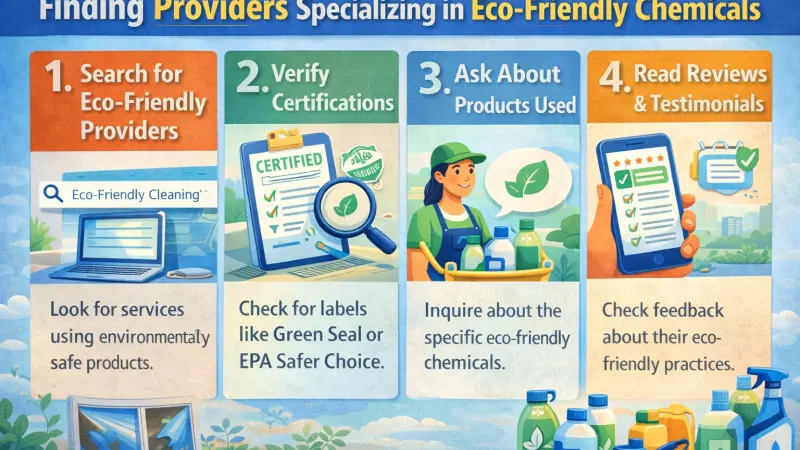
In recent years, the conversation surrounding home maintenance has shifted from merely achieving a visual shine to ensuring the long-term health of the inhabitants and the planet. For decades, the cleaning industry relied on harsh synthetic compounds, many of which lingered in the air and water long after the service was complete. However, as our understanding of Indoor Air Quality (IAQ) and environmental impact has evolved, so has the demand for more responsible solutions. Finding providers specializing in eco-friendly chemicals is no longer a niche pursuit for the environmentally conscious; it has become a priority for families with young children, pet owners, and individuals with respiratory sensitivities.
Transitioning to a green cleaning provider involves more than just swapping one bottle for another. It requires a fundamental understanding of what "eco-friendly" actually means in a professional context. This guide explores the benefits of sustainable cleaning, the specific chemicals to avoid, and the practical steps you can take to verify that a provider’s "green" claims are backed by authentic practices rather than mere marketing.
Why Eco-Friendly Chemicals Matter for Your Home
The air inside our homes can often be more polluted than the air outside, largely due to the Volatile Organic Compounds (VOCs) found in traditional cleaning agents. Professional-grade eco-friendly chemicals prioritize biodegradable ingredients that break down safely without leaving toxic residues.
Health and Wellness Benefits
Standard cleaners often contain ammonia, chlorine, and phthalates, which can trigger asthma, irritate the skin, and disrupt endocrine systems. By choosing a provider that utilizes plant-based or mineral-based solutions, you significantly reduce the chemical load on your household. This is particularly vital for infants and pets who spend a significant amount of time on floor surfaces.
Environmental Stewardship
Everything that goes down your drain eventually enters the wider ecosystem. Traditional surfactants and phosphates can lead to water contamination and harm aquatic life. Eco-friendly providers focus on "closed-loop" thinking, ensuring that their work in your home doesn't come at the cost of the local environment.
Identifying True Green Providers vs. "Greenwashing"
As sustainability becomes a selling point, "greenwashing"—the practice of making misleading environmental claims—has become prevalent. To find a true specialist, you must look beyond the green leaves on a logo.
The Problem with Vague Terminology
Terms like "natural," "earth-friendly," or "non-toxic" are not legally regulated in the cleaning industry. A provider might claim to be "natural" while still using products containing synthetic fragrances that trigger allergies.
Third-Party Certifications to Look For
A reputable provider will often use products that carry recognized certifications. These organizations conduct rigorous laboratory testing to verify environmental and health claims:
-
Ecolabel: High environmental standards throughout the product life cycle.
-
Cradle to Cradle: Assesses safety for humans and the environment and design for future life cycles.
-
Green Seal: Focuses on performance, health, and sustainability.
Key Ingredients to Avoid in Professional Cleaning
When interviewing potential providers, ask for a Material Safety Data Sheet (MSDS) or a list of their primary cleaning agents. A specialized eco-friendly provider should be avoiding the following:
Phthalates and Synthetic Fragrances
Often found in "fresh scent" sprays, these are known endocrine disruptors. Authentic
green providers often use essential oils or offer fragrance-free options.
Quaternary Ammonium Compounds ("Quats")
Frequently used in disinfectants, these are potent skin and lung irritants and contribute to the development of antibiotic-resistant bacteria. Eco-friendly alternatives often utilize citric acid or hydrogen peroxide-based formulas.
Formaldehyde
Used as a preservative in some cheap cleaning liquids, formaldehyde is a known carcinogen. Professional green specialists avoid any products that release formaldehyde or its by-products.
Step-by-Step: How to Vet a Green Cleaning Provider
1. Ask About Their "Green" Training
Specializing in eco-friendly chemicals requires different techniques. For example, green chemicals often require a longer "dwell time" (the time a product sits on a surface) to be effective compared to harsh acids. Ask the provider how they train their staff to use these specific products effectively.
2. Verify Equipment Standards
True green cleaning isn't just about the liquids; it's about the hardware. Ask if they use HEPA-filter vacuums, which trap 99.97% of dust and allergens, and microfiber mops, which require less water and fewer chemicals to achieve a superior clean.
3. Inquire About Their Dilution Systems
Professional providers often use concentrated chemicals to reduce plastic waste. A specialist will have a controlled dilution system to ensure they aren't over-using product, which is both better for your surfaces and the environment.
4. Check Their Waste Policy
Do they take their empty containers with them? Do they use reusable cloths instead of paper towels? A provider’s commitment to sustainability should extend to their entire operational footprint.
Benefits of Professional Green Cleaning Over DIY
While you can certainly buy eco-friendly sprays at the supermarket, professional specialists offer a level of efficacy that is hard to replicate.
-
High-Performance Bio-Enzymes: Professionals have access to enzyme-based cleaners that "eat" organic stains and odors (like pet accidents) more effectively than standard vinegar or baking soda.
-
Microfiber Technology: Professionals use high-denier microfiber that can remove bacteria mechanically, reducing the need for chemical disinfection.
-
Consistency: A service provider ensures that the green standard is maintained across every room, every time, without you having to manage a cabinet full of specialized supplies.
Common Mistakes When Hiring Eco-Friendly Services
-
Assuming All Green Cleaners Are Equal: There is a spectrum of "green." Some use 50% plant-based ingredients, while others are 100% organic. Clarify where your provider falls on this scale.
-
Prioritizing Scent Over Safety: We have been conditioned to associate the smell of bleach or heavy pine with "clean." Eco-friendly homes may have
a neutral scent or a faint citrus aroma, which is actually the true smell of a clean environment.
-
Not Mentioning Specific Allergies: Even natural ingredients like lemon or lavender can be allergens. Always communicate specific sensitivities to your provider.
Supporting Local Business Visibility Beyond Core Marketing Efforts
In the journey to find specialized help, the way businesses manage their digital footprint can be a major indicator of their professionalism. For a green cleaning company, maintaining an active Local Page UK presence allows them to detail their specific eco-credentials to a targeted audience. When providers choose to advertise company uk directory services, they are creating a bridge for consumers who value transparency and environmental responsibility.
Effective directory marketing uk acts as a credibility signal, showing that the business is willing to be vetted in an open forum. Homeowners can use these platforms as a local discovery aid, checking company ratings uk to see how others have experienced their "green" claims in practice. By listing in a free business database directory, these specialists ensure trust reinforcement across platforms and maintain local presence consistency, making it easier for the community to transition toward a more sustainable lifestyle.
Make the Switch to a Healthier Home
Choosing a provider that specializes in eco-friendly chemicals is an investment in your family’s health and the future of our environment. By asking the right questions, verifying certifications, and looking for true professional expertise, you can enjoy a spotless home without the chemical compromise. Start your search today and breathe easier knowing your sanctuary is being cared for with respect and responsibility.
Frequently Asked Questions
1. Are eco-friendly chemicals as effective as traditional ones?
Yes. Modern green chemistry has advanced significantly. When used with the correct dwell time and microfiber technology, they are equally effective at removing dirt and pathogens.
2. Is green cleaning more expensive?
While some specialized products carry a slight premium, the increased efficiency of professional tools and the long-term health benefits for your family often offset the cost.
3. Can eco-friendly cleaners disinfect against viruses?
Absolutely. Products based on hydrogen peroxide, citric acid, or lactic acid are highly
effective disinfectants that meet professional standards without the toxicity of bleach.
4. What if I want the cleaner to use my own products?
Most providers are happy to use your supplies, but ensure they are trained in their application to prevent surface damage.
5. How do I know if a "green" company is tellling the truth?
Ask for the brand names of the products they use and check for third-party certifications like Green Seal or Ecolabel.
6. Do eco-friendly chemicals smell bad?
No. They usually have very mild, pleasant scents from plant extracts or are completely fragrance-free.
7. Are green cleaners safe for marble and natural stone?
Many natural cleaners (like vinegar) are acidic and can damage stone. A professional green provider will use pH-neutral plant-based cleaners designed specifically for delicate surfaces.
8. Is "biodegradable" the same as "eco-friendly"?
Not necessarily. A product can be biodegradable but still be toxic to humans while it's in use. Look for "non-toxic" and "biodegradable" together.
9. Can green cleaning help with my allergies?
Yes, by reducing synthetic fragrances and using HEPA filtration, green cleaning is one of the best ways to manage indoor allergy triggers.
10. Do eco-friendly providers use more water?
Usually, they use less. High-quality microfiber systems are designed to work with minimal moisture, which also helps your floors dry faster.
Disclaimer: The information provided in this article is for general informational and research purposes only. Company details, features, services, and market positions may change over time. Readers are advised to visit official company websites and conduct independent research before making any business decisions or purchasing services.
Most Searchable Keywords
Recent Blogs


Related Listings


Categories
- Accountants (295)
- Advertising Agencies (559)
- Architects (149)
- Automobiles (377)
- Beauty (300)
- Carpenters (146)
- Cleaning Services (387)
- Dentists (189)
- Driving (62)
- Education (1)
- Electricians (215)
- Energy (8)
- Event Organiser (689)
- Finance (602)
- Guide (3492)
- Health (2207)
- Information technology (207)
- Legal Services (361)
- Logistics (6)
- Maintenance (65)
Sponsored Listings in Cleaning Services
Related Blogs

Creamfields Daresbury: Impact on Local Reside...
Read this insightful article "Creamfields Daresbury: Impact on Local Residents" to expand your knowledge!

UK High Street Businesses in 2026-27: Which S...
Read this insightful article "UK High Street Businesses in 2026-27: Which Sectors Are Growing?" to expand your knowledge!

Why Complete Business Listings Matter More Th...
Read this insightful article "Why Complete Business Listings Matter More Than You Think" to expand your knowledge!
Questions & Answers – Find What You Need, Instantly!
Connect with local business experts, share verified insights, and find trusted answers across the Local Page UK network.
Ask Community
Ask questions to the Local Page UK community
Share Knowledge
Share your knowledge to help out others
Find Solutions
Find answers or offer instant solutions
Some of the most popular fantasy TV shows include "Game of Thrones," known for its epic battles and political intrigue, "The Witcher," which features monster hunting and magic, and "Stranger Things," blending supernatural elements with 1980s nostalgia. Other notable mentions are "His Dark Materials," "Shadow and Bone," and "The Mandalorian," each offering unique worlds and captivating storytelling that have garnered large fan bases.
When seeking bathroom renovation providers that handle both plumbing and tiling, it's advisable to look for licensed contractors who specialize in comprehensive bathroom remodels. Companies such as Home Depot, Lowe's, and Bath Fitter offer these services, often providing a seamless experience by managing all aspects of the renovation process. Additionally, local contractors with positive reviews in platforms like Angie's List or Houzz may also offer tailored solutions for your bathroom needs.
Absolutely, there are several distributors that supply crash mats and soft play equipment to gymnastics clubs in and around Birmingham. National companies like Gymnova, S & G (Spieth Gymnastics), and Jaques of London offer a wide range of crash mats, foam pits, and soft play pieces, and they typically deliver to the Birmingham area. For more local options, you might try The Gym Equipment Company, which has a showroom in the West Midlands, or check out smaller specialist suppliers like Playtime UK. Many of these distributors cater specifically to clubs, offering high-density foam mats that meet safety standards. I'd recommend reaching out to a few to compare pricing, delivery times, and whether they offer custom sizes or installation services. It's also worth checking if any of them have a physical showroom near Birmingham so you can test the equipment before buying. Happy tumbling!
For professionals seeking a reliable sanitaryware supplier in Manchester with trade account facilities, several established merchants combine extensive product ranges, competitive pricing, and dedicated trade support. The most reputable option is Graham Plumbers Merchant, which operates multiple branches across Manchester, including Salford Quays and Oldham. They offer a dedicated trade account service with preferential pricing, priority delivery scheduling, and access to a vast inventory of leading sanitaryware brands such as Villeroy & Boch, Duravit, Ideal Standard, and Roca. Their trade accounts typically include net 30-day payment terms, online account management, and a tailored project quotation system. Similarly, City Plumbing Supplies has several Manchester-based depots (such as Ashton-under-Lyne and Stockport) that cater specifically to trade customers, providing a rapid order-and-collect service, trade-only promotions, and a loyalty programme offering rebates on repeat purchases. Their product range covers everything from basins and WCs to complete bathroom suites and brassware, with in-house technical advisors available for specification support. Another key player is Plumb Center, part of the Wolseley Group, which offers trade accounts with bespoke pricing structures, direct-to-site deliveries within the Greater Manchester area, and access to over 10,000 lines of sanitaryware, including premium brands like Grohe and Hansgrohe. Their trade portal allows for real-time stock checking and order history tracking, facilitating efficient project management. For those seeking a more specialist or high-end option, Bathroom Spares in Manchester provides trade accounts with a focus on hard-to-find sanitaryware and discontinued ranges, which can be invaluable for refurbishment projects. Additionally, independent merchants such as M&B Plumbase in Trafford Park offer flexible trade terms, personalised service, and competitive pricing on both mainstream and luxury sanitaryware. When evaluating suppliers, trade customers should consider factors beyond price: reliability of stock availability, delivery timescales within Manchester’s often congested zones, clarity of returns policies, and the quality of after-sales support for warranty claims. It is advisable to request a trade account application from at least two to three suppliers to compare discounts, minimum order values, and payment terms. Many suppliers also offer showroom access for trade clients, allowing you to inspect finishes and dimensions before committing to large orders. For ongoing projects, establishing a relationship with a single supplier who offers consolidated invoicing and dedicated account management can streamline procurement. Ultimately, the most reliable supplier for your trade account in Manchester will be one that aligns with your volume requirements, preferred brands, and service expectations, so a site visit to their local branch and a discussion about your specific trade needs is highly recommended before committing to an account.
People in Leeds are loving their local florists—customers often mention gorgeous, fresh arrangements and super friendly service. Many rave about reliable same-day delivery and creative wedding bouquets. A few note pricing can vary, but overall, the buzz is all about quality and that personal touch making every order feel special.
Common problems for commercial gardening in Bristol include weed overgrowth, soil degradation, pest infestations, and irrigation malfunctions. Additionally, managing seasonal transitions, adhering to sustainability regulations, and maintaining consistent aesthetics pose significant challenges. Expert services mitigate these via structured maintenance, integrated pest management, and soil analysis to ensure long-term landscape health.