
How Different Freight Services Handle Dangerous and Perishable Goods
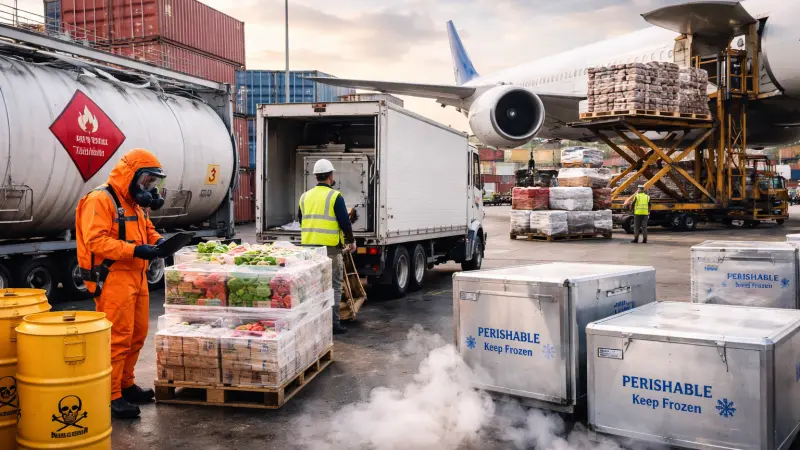
Imagine a pharmaceutical company urgently needing to ship temperature-sensitive vaccines across the country, or a chemical manufacturer dispatching flammable solvents to a production facility. In both cases, standard freight services simply will not do. The transport of dangerous goods and perishable items in the UK is governed by strict regulations, specialised handling protocols, and carrier-specific requirements — all designed to protect people, property, and the environment throughout the supply chain.
Whether you are a business owner, logistics manager, or simply trying to understand how freight services for dangerous goods work, this guide offers a comprehensive overview of what UK carriers and freight providers do differently when handling high-risk or time-sensitive cargo.
Understanding Dangerous Goods in Freight
The term "dangerous goods" refers to substances or materials that pose a risk to health, safety, property, or the environment during transport. In the UK and across the European Union, these materials are classified under internationally recognised systems and include a wide range of everyday and industrial products.
The Nine Hazard Classes
Dangerous goods are categorised into nine primary hazard classes by the United Nations. These classes are recognised across road, air, sea, and rail transport:
- Class 1 – Explosives (e.g., fireworks, ammunition)
- Class 2 – Gases (e.g., propane, aerosols, oxygen cylinders)
- Class 3 – Flammable liquids (e.g., petrol, paint, solvents)
- Class 4 – Flammable solids and self-reactive substances
- Class 5 – Oxidising substances and organic peroxides
- Class 6 – Toxic and infectious substances (e.g., clinical waste, certain chemicals)
- Class 7 – Radioactive material
- Class 8 – Corrosives (e.g., acids, batteries)
- Class 9 – Miscellaneous dangerous substances (e.g., lithium batteries, dry ice)
It is worth noting that many seemingly ordinary shipments fall into these categories. Lithium batteries — found in laptops, mobile phones, and power tools — are classified as Class 9 dangerous goods and are subject to specific packaging and labelling requirements, particularly for air freight.
Key Regulatory Frameworks in the UK
The transport of dangerous goods in the United Kingdom is governed by several regulations depending on the mode of transport:
- ADR (Agreement Concerning the International Carriage of Dangerous Goods by Road) – Governs road transport within the UK and Europe
- IATA Dangerous Goods Regulations (DGR) – Applies to air freight
- IMDG Code (International Maritime Dangerous Goods Code) – Applies to sea freight
- RID Regulations – Governs dangerous goods transported by rail
- The Carriage of Dangerous Goods and Use of Transportable Pressure Equipment Regulations 2009 (CDG 2009) – The primary UK domestic legislation
Carriers operating in the UK must comply with whichever framework applies to their mode of transport, and in many cases, a single shipment may pass through multiple regulatory environments — for example, a road haulage leg followed by an air freight segment.
How Road Freight Handles Dangerous Goods
Road transport is the most commonly used mode for dangerous goods in the UK. Under the ADR framework, both the vehicle and the driver must meet specific requirements before a dangerous goods shipment can legally depart.
Driver Certification and Training
Drivers carrying dangerous goods by road must hold a valid ADR certificate, which is issued after completing an approved training course and passing an examination. The certificate is specific to the class of goods being transported — a driver certified for Class 3 flammable liquids, for example, is not automatically authorised to carry Class 6 toxic substances without additional certification.
Training covers the properties of hazardous materials, proper documentation, emergency procedures, and the correct use of personal protective equipment (PPE).
Vehicle Requirements
Vehicles used for transporting dangerous goods must be appropriately equipped and marked. For certain quantities of hazardous materials, vehicles are required to display orange hazard warning panels (known as Kemler plates) and emergency information boards. Larger or higher-risk consignments may require specialist tankers or enclosed curtainsiders with fire suppression systems.
All vehicles carrying dangerous goods must also carry a set of mandatory documents, including transport emergency cards (known as TREMCARDS) and a written emergency response plan.
Packaging and Labelling
The packaging of dangerous goods must be UN-approved and capable of withstanding the rigours of transport without leaking, rupturing, or reacting with the contents.
Labels must display the correct hazard diamond, UN number, and class-specific markings. Incorrect or missing labels are one of the most common causes of dangerous goods shipments being refused or held at depots.
Air Freight and Dangerous Goods: The Strictest Standards
Of all freight modes, air transport applies the most stringent rules to dangerous goods. The consequences of a hazardous material incident at altitude can be catastrophic, which is why airlines and freight forwarders operating under IATA Dangerous Goods Regulations (DGR) follow a near-zero-tolerance approach to compliance.
Shipper Declarations and Acceptance Checks
Before a dangerous goods consignment is accepted for air freight, the shipper must complete a Shipper's Declaration for Dangerous Goods — a legally binding document that confirms the goods have been correctly classified, packaged, marked, and labelled. Freight forwarders and airlines conduct acceptance checks to verify this documentation before the cargo is loaded.
Many dangerous goods are forbidden on passenger aircraft but may be permitted on cargo-only flights. For example, certain quantities of flammable liquids or corrosives may only move on freighter aircraft with proper segregation from other cargo.
Quantity Limits and Exemptions
IATA regulations specify maximum quantities per package and per aircraft for each class of dangerous good. However, there are also limited quantity and excepted quantity exemptions that allow smaller amounts of certain hazardous items to travel under less stringent requirements. These exemptions are widely used in e-commerce and retail logistics, particularly for goods such as perfumes, aerosols, and consumer batteries.
Sea Freight and the IMDG Code
For international shipments of dangerous goods, sea freight is frequently the method of choice due to the volume capacity of container vessels. The International Maritime Dangerous Goods (IMDG) Code governs how these shipments must be packed, documented, and stowed aboard vessels.
Container Packing and Stowage
Dangerous goods sent by sea must be packed in approved containers with the correct segregation from incompatible materials. For instance, flammable liquids must be kept away from oxidisers, and toxic substances must be separated from foodstuffs. The IMDG Code provides detailed segregation tables to guide shippers and freight forwarders in planning container loads correctly.
Marine Pollutants
A category unique to sea freight is that of marine pollutants — substances that are harmful to the marine environment. These goods require additional marking and documentation, even if they do not fall into one of the standard nine hazard classes. Businesses exporting chemicals, solvents, or industrial compounds via sea freight should always verify whether their products are listed as marine pollutants.
Perishable Goods: A Different Kind of Urgency
While dangerous goods demand regulatory compliance above all else, perishable goods present a different challenge: time. From fresh produce and chilled meats to pharmaceuticals and cut flowers, perishable cargo must move quickly and be maintained within strict temperature parameters to reach its destination in acceptable condition.
What Counts as Perishable?
Perishable goods in a freight context include any cargo that deteriorates or becomes unsafe if exposed to inappropriate temperatures or excessive transit times. Common categories include:
- Fresh fruit, vegetables, and salad produce
- Chilled and frozen meat, poultry, and fish
- Dairy products and chilled ready meals
- Pharmaceuticals and biological samples requiring temperature control
- Fresh flowers and horticultural products
- Confectionery and bakery goods with short shelf lives
Temperature Zones in Freight
Different perishable goods require different temperature ranges, and freight providers must be able to maintain these throughout the journey. The main temperature categories used in UK and European logistics are:
- Ambient (15°C to 25°C) – For goods sensitive to heat but not requiring refrigeration
- Chilled (0°C to 8°C) – Standard for fresh food and many pharmaceutical products
- Frozen (-18°C or below) – For meat, fish, ice cream, and frozen ready meals
- Deep frozen (-25°C or below) – For specialist medical products and certain seafood
- Controlled Room Temperature (15°C to 25°C with tight tolerances) – For pharmaceutical logistics
Cold Chain Logistics: How It Works
The cold chain refers to the unbroken sequence of temperature-controlled storage and transport that keeps perishable goods within their required temperature range from origin to destination. A failure at any point in this chain — whether during loading, transit, or unloading — can result in spoilage, safety risks, or regulatory non-compliance.
Refrigerated Vehicles and Trailers
Road freight for perishable goods relies on refrigerated vehicles — known in the industry as reefers — that use diesel-powered refrigeration units to maintain precise internal temperatures regardless of external conditions. Modern reefer trailers can maintain multiple temperature zones within a single vehicle, allowing a carrier to transport chilled and frozen goods simultaneously.
In the UK, food-grade refrigerated transport must comply with the Temperature Control Requirements of the Food Safety Act
1990 and associated regulations, which specify maximum permitted temperatures for various categories of food during transport.
Temperature Monitoring and Data Loggers
Reputable freight providers use electronic data loggers and real-time temperature monitoring systems to track cargo conditions throughout transit. These devices record temperature at regular intervals, creating an audit trail that can be used to verify that the cold chain was maintained. For pharmaceutical and medical shipments, this documentation is often a regulatory requirement under Good Distribution Practice (GDP) guidelines.
Packaging Solutions for Perishable Freight
Not all perishable goods travel in refrigerated vehicles. For smaller consignments or last-mile deliveries, insulated packaging with gel packs or dry ice is commonly used to maintain temperature over short periods. Pharmaceutical companies frequently use validated thermal packaging solutions — such as phase change material (PCM) shippers — which can maintain a precise temperature range for 24 to 96 hours without active refrigeration.
Air Freight for Perishable Goods
Speed is the primary advantage of air freight for perishable goods. Fresh produce, live seafood, cut flowers, and time-critical pharmaceutical products are routinely transported by air to minimise the time between harvest or production and delivery.
Airport Handling Facilities
Major UK airports, including Heathrow, Manchester, and East Midlands, operate dedicated perishable cargo centres equipped with refrigeration facilities, temperature-controlled loading areas, and priority handling procedures. These facilities ensure that perishable goods spend as little time as possible at ambient temperatures on the ground.
Freight forwarders specialising in perishable air cargo coordinate closely with airlines and ground handlers to ensure seamless pre-cooling before loading and prompt transfer upon arrival.
IATA Perishable Cargo Regulations
IATA publishes its own Perishable Cargo Regulations (PCR), which provide guidance to airlines and freight forwarders on the handling, packaging, and documentation of perishable goods. While not legally binding in the same way as dangerous goods regulations, the PCR is widely adopted across the industry as a best practice framework.
When Dangerous and Perishable Goods Overlap
Some consignments fall into both categories simultaneously — creating additional complexity for freight providers. A common example is dry ice (solid carbon dioxide), which is used as a refrigerant for temperature-sensitive shipments but is itself classified as a Class 9 dangerous good due to its risk of sublimation and asphyxiation in confined spaces.
Similarly, certain pharmaceutical products may require both refrigeration and dangerous goods classification. Clinical trial materials, radioactive isotopes used in diagnostic imaging, and biological specimens are all examples of cargo that demands expertise in both cold chain management and hazardous materials handling.
Freight providers handling such consignments must ensure that their staff are trained across both disciplines and that their documentation and packaging meet the requirements of all applicable regulatory frameworks.
Choosing the Right Freight Provider
Not all freight companies are equipped to handle dangerous goods or perishables.
When evaluating providers, businesses should consider the following:
- Certifications and accreditations – Look for DGSA (Dangerous Goods Safety Adviser) registration, IATA accreditation for air freight, and GDP certification for pharmaceutical logistics
- Vehicle and equipment capability – Ensure the provider has appropriate refrigerated vehicles, temperature monitoring systems, and UN-approved packaging materials
- Staff training records – Ask about ADR certification levels and how frequently training is refreshed
- Insurance and liability – Specialist freight attracts higher liability; confirm that the provider's insurance covers dangerous goods and temperature-sensitive cargo
- Track record – Case studies, references, and compliance history are important indicators of reliability
- Documentation support – A good provider will assist with or verify dangerous goods declarations, manifests, and temperature logs
Common Mistakes in Shipping Dangerous and Perishable Goods
Even experienced shippers make errors that can result in cargo being refused, delayed, or — in the worst cases — causing incidents during transit. The most common mistakes include:
- Incorrect or incomplete classification of dangerous goods
- Using non-UN-approved packaging for hazardous materials
- Failing to include required documentation such as Safety Data Sheets (SDS)
- Booking standard freight services for goods that require specialist handling
- Inadequate pre-cooling of perishable goods before collection
- Underestimating transit times and choosing packaging with insufficient thermal protection
- Mixing incompatible dangerous goods in the same consignment without proper segregation
A Dangerous Goods Safety Adviser (DGSA) can be invaluable for businesses that regularly ship hazardous materials. UK law requires certain organisations to appoint a DGSA to oversee the classification, packaging, documentation, and transport of dangerous goods — and even businesses not legally obliged to do so often benefit from professional oversight.
Industry Trends Shaping Specialist Freight
The specialist freight sector in the UK is evolving rapidly, driven by regulatory changes, technological innovation, and shifting market demands.
E-Commerce and Consumer Dangerous Goods
The growth of e-commerce has dramatically increased the volume of dangerous goods moving through parcel networks. Products such as lithium batteries, aerosols, nail polish, and alcohol-based hand sanitisers are all technically dangerous goods, and parcel carriers have had to invest significantly in staff training and sorting technology to manage this increased complexity.
Pharmaceutical Cold Chain Expansion
Following the COVID-19 pandemic, the pharmaceutical industry's demands on cold chain logistics have grown substantially. The distribution of mRNA vaccines, biosimilars, and temperature-sensitive clinical materials has accelerated investment in GDP-compliant freight infrastructure across the UK and Europe.
Sustainability in Temperature-Controlled Freight
Refrigerated transport is energy-intensive, and the industry is under increasing pressure to reduce its environmental footprint. Many freight providers are exploring hybrid or electric refrigeration units, reusable insulated packaging, and route optimisation software to reduce emissions while maintaining cold chain integrity.
The Role of Freight Forwarders
For businesses without in-house logistics expertise, a specialist freight forwarder can navigate the complexities of dangerous goods and perishable freight on their behalf. Forwarders act as intermediaries between shippers and carriers, managing documentation, booking appropriate transport modes, and ensuring compliance with all relevant regulations.
When selecting a forwarder for dangerous goods or perishable cargo, it is advisable to choose one with demonstrable expertise in the specific category — pharmaceutical cold chain freight, for example, requires different knowledge and infrastructure than fresh produce logistics or hazardous chemicals distribution.
Final Thoughts
The transport of dangerous goods and perishable cargo represents one of the most regulated and operationally demanding areas of the freight industry in the UK. Whether you are shipping flammable chemicals by road, fresh produce by air, or temperature-sensitive pharmaceuticals across multiple modes, the key to a successful outcome lies in choosing the right carrier, ensuring full regulatory compliance, and working with experienced specialists who understand the unique requirements of your cargo.
As logistics networks become more complex and the demand for specialist freight services continues to grow, visibility matters — not just in tracking your shipment, but in ensuring that the businesses providing these services can be found by those who need them. For freight operators, cold chain specialists, and dangerous goods carriers looking to strengthen their presence in local and national markets, platforms such as Local Page UK — which supports a broad black owned business directory UK and a diverse range of service listings — offer a practical way to improve online visibility and connect with customers searching for specialist services in their area.
Questions Clients Commonly Ask
Q1: Do I need special documentation to ship dangerous goods by road in the UK?
Yes. Road shipments of dangerous goods under the ADR framework require a transport document that includes the UN number, proper shipping name, hazard class, packing group, and quantity. Certain shipments also require a written emergency response plan (TREMCARD) and, for larger quantities, a driver's ADR certificate. Your freight provider or a DGSA can help ensure your documentation is complete and compliant.
Q2: Can perishable goods be shipped internationally by road from the UK?
Yes, perishable goods can be transported internationally by road from the UK using refrigerated vehicles. Post-Brexit, cross-border food shipments require additional documentation, including health certificates and customs declarations. Transit times and border delays must be factored into packaging decisions to ensure temperature integrity throughout the journey.
Q3: What is the difference between a refrigerated and a temperature-controlled shipment?
While the terms are often used interchangeably, a temperature-controlled shipment implies active management and monitoring of temperature throughout transit, often with data logging. Refrigerated transport simply refers to the use of a chilled or frozen vehicle or container. For pharmaceutical and high-value perishables, full temperature-controlled shipping with documented proof is typically required.
Q4: Are lithium batteries considered dangerous goods for UK freight?
Yes. Lithium-ion and lithium metal batteries are classified as Class 9 dangerous goods. The requirements vary depending on whether the batteries are shipped alone, inside equipment, or with equipment, and whether the shipment is by road, air, or sea.
Air freight has the strictest requirements, with quantity limits per package and specific packaging and labelling rules under IATA DGR.
Q5: How do I find a freight provider that handles both dangerous and perishable goods?
Look for providers with dual expertise — specifically, those holding both ADR or IATA accreditation for dangerous goods and GDP or HACCP certification for perishable or food-grade logistics. Many specialist freight forwarders offer both services, and it is worth requesting references or case studies relevant to your specific cargo type before committing to a provider.
Disclaimer: The information provided in this article is for general informational and research purposes only. Company details, features, services, and market positions may change over time. Readers are advised to visit official company websites and conduct independent research before making any business decisions or purchasing services.
Most Searchable Keywords
Recent Blogs

Related Listings


Categories
- Accountants (295)
- Advertising Agencies (559)
- Architects (149)
- Automobiles (377)
- Beauty (300)
- Carpenters (146)
- Cleaning Services (387)
- Dentists (189)
- Driving (62)
- Education (1)
- Electricians (215)
- Energy (8)
- Event Organiser (689)
- Finance (602)
- Guide (3492)
- Health (2207)
- Information technology (207)
- Legal Services (361)
- Logistics (6)
- Maintenance (65)
Sponsored Listings in Plumbers

Related Blogs

Creamfields Daresbury: Impact on Local Reside...
Read this insightful article "Creamfields Daresbury: Impact on Local Residents" to expand your knowledge!

UK High Street Businesses in 2026-27: Which S...
Read this insightful article "UK High Street Businesses in 2026-27: Which Sectors Are Growing?" to expand your knowledge!

Why Complete Business Listings Matter More Th...
Read this insightful article "Why Complete Business Listings Matter More Than You Think" to expand your knowledge!
Questions & Answers – Find What You Need, Instantly!
Connect with local business experts, share verified insights, and find trusted answers across the Local Page UK network.
Ask Community
Ask questions to the Local Page UK community
Share Knowledge
Share your knowledge to help out others
Find Solutions
Find answers or offer instant solutions
Some of the most popular fantasy TV shows include "Game of Thrones," known for its epic battles and political intrigue, "The Witcher," which features monster hunting and magic, and "Stranger Things," blending supernatural elements with 1980s nostalgia. Other notable mentions are "His Dark Materials," "Shadow and Bone," and "The Mandalorian," each offering unique worlds and captivating storytelling that have garnered large fan bases.
When seeking bathroom renovation providers that handle both plumbing and tiling, it's advisable to look for licensed contractors who specialize in comprehensive bathroom remodels. Companies such as Home Depot, Lowe's, and Bath Fitter offer these services, often providing a seamless experience by managing all aspects of the renovation process. Additionally, local contractors with positive reviews in platforms like Angie's List or Houzz may also offer tailored solutions for your bathroom needs.
Absolutely, there are several distributors that supply crash mats and soft play equipment to gymnastics clubs in and around Birmingham. National companies like Gymnova, S & G (Spieth Gymnastics), and Jaques of London offer a wide range of crash mats, foam pits, and soft play pieces, and they typically deliver to the Birmingham area. For more local options, you might try The Gym Equipment Company, which has a showroom in the West Midlands, or check out smaller specialist suppliers like Playtime UK. Many of these distributors cater specifically to clubs, offering high-density foam mats that meet safety standards. I'd recommend reaching out to a few to compare pricing, delivery times, and whether they offer custom sizes or installation services. It's also worth checking if any of them have a physical showroom near Birmingham so you can test the equipment before buying. Happy tumbling!
For professionals seeking a reliable sanitaryware supplier in Manchester with trade account facilities, several established merchants combine extensive product ranges, competitive pricing, and dedicated trade support. The most reputable option is Graham Plumbers Merchant, which operates multiple branches across Manchester, including Salford Quays and Oldham. They offer a dedicated trade account service with preferential pricing, priority delivery scheduling, and access to a vast inventory of leading sanitaryware brands such as Villeroy & Boch, Duravit, Ideal Standard, and Roca. Their trade accounts typically include net 30-day payment terms, online account management, and a tailored project quotation system. Similarly, City Plumbing Supplies has several Manchester-based depots (such as Ashton-under-Lyne and Stockport) that cater specifically to trade customers, providing a rapid order-and-collect service, trade-only promotions, and a loyalty programme offering rebates on repeat purchases. Their product range covers everything from basins and WCs to complete bathroom suites and brassware, with in-house technical advisors available for specification support. Another key player is Plumb Center, part of the Wolseley Group, which offers trade accounts with bespoke pricing structures, direct-to-site deliveries within the Greater Manchester area, and access to over 10,000 lines of sanitaryware, including premium brands like Grohe and Hansgrohe. Their trade portal allows for real-time stock checking and order history tracking, facilitating efficient project management. For those seeking a more specialist or high-end option, Bathroom Spares in Manchester provides trade accounts with a focus on hard-to-find sanitaryware and discontinued ranges, which can be invaluable for refurbishment projects. Additionally, independent merchants such as M&B Plumbase in Trafford Park offer flexible trade terms, personalised service, and competitive pricing on both mainstream and luxury sanitaryware. When evaluating suppliers, trade customers should consider factors beyond price: reliability of stock availability, delivery timescales within Manchester’s often congested zones, clarity of returns policies, and the quality of after-sales support for warranty claims. It is advisable to request a trade account application from at least two to three suppliers to compare discounts, minimum order values, and payment terms. Many suppliers also offer showroom access for trade clients, allowing you to inspect finishes and dimensions before committing to large orders. For ongoing projects, establishing a relationship with a single supplier who offers consolidated invoicing and dedicated account management can streamline procurement. Ultimately, the most reliable supplier for your trade account in Manchester will be one that aligns with your volume requirements, preferred brands, and service expectations, so a site visit to their local branch and a discussion about your specific trade needs is highly recommended before committing to an account.
People in Leeds are loving their local florists—customers often mention gorgeous, fresh arrangements and super friendly service. Many rave about reliable same-day delivery and creative wedding bouquets. A few note pricing can vary, but overall, the buzz is all about quality and that personal touch making every order feel special.
Common problems for commercial gardening in Bristol include weed overgrowth, soil degradation, pest infestations, and irrigation malfunctions. Additionally, managing seasonal transitions, adhering to sustainability regulations, and maintaining consistent aesthetics pose significant challenges. Expert services mitigate these via structured maintenance, integrated pest management, and soil analysis to ensure long-term landscape health.