
How to Apply for Bus Pass UK
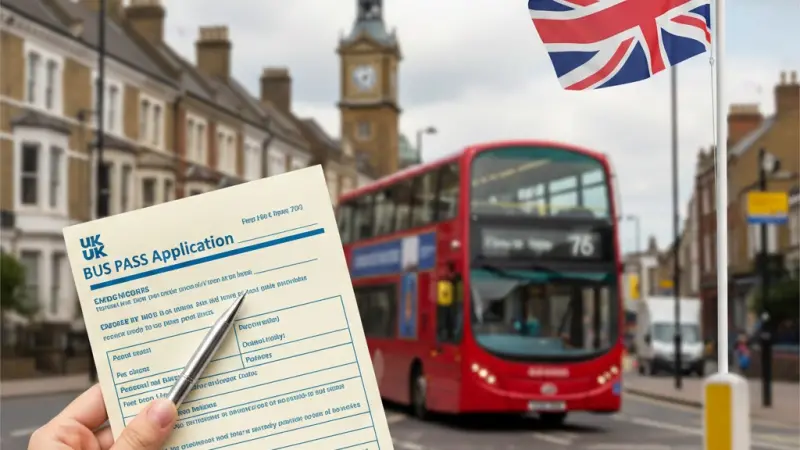
How to Apply for Bus Pass UK: A Strategic Guide for Businesses and Employees
Published by LocalPage.uk Content Architecture Team | Updated for 2025-2026 Fiscal Year

Navigating the complexities of the UK transport network is a critical endeavour for both individual commuters and strategic business planners. As we move into 2026, the emphasis on sustainable travel and cost-effective commuting has never been higher. For many, the question of "how to apply for bus pass UK" is not merely a personal admin task, but a step towards economic efficiency and reduced carbon footprints. This guide explores the multifaceted landscape of bus pass applications, eligibility criteria, and regional variations across the United Kingdom.
76% of UK consumers research local business transport accessibility online before visiting (Ofcom, 2025). Ensuring your workforce and customers can navigate the bus pass system is a key pillar of modern operational accessibility.
Determining Eligibility for Different UK Bus Pass Categories
Eligibility for a bus pass in the UK is largely determined by age, disability, or specific regional schemes. Whilst the core principles remain consistent, the nuances of the application process can vary significantly depending on whether you are based in England, Scotland, Wales, or Northern Ireland. For businesses, understanding these categories allows for better employee support and benefit planning.
Age-Based Concessions and State Pension Milestones
In England, eligibility for an older person's bus pass is tied to the female State Pension age, regardless of the applicant's gender. This has led to a shifting timeline that both employees and employers must monitor. Conversely, in Scotland, Wales, and Northern Ireland, the age threshold remains a fixed 60 years. This regional disparity is a crucial factor for multi-site organisations to consider when advising staff on travel perks.
Disability Criteria and Medical Evidence Requirements
Individuals with certain disabilities are eligible for a "disabled person's bus pass." This generally includes those who are blind or partially sighted, profoundly deaf, or have a disability that makes walking difficult. The application process requires rigorous documentation, often involving letters from medical professionals or evidence of receiving specific benefits like the Personal Independence Payment (PIP).
Evidence Verification Tip
Ensure that all medical evidence is dated within the last 12 months. Local authorities are increasingly stringent about the recency of documentation to prevent fraud and ensure resources reach those with current needs.
The Application Process Across England's Local Authorities
England operates a decentralised system where individual local councils or Integrated Transport Authorities manage the distribution of passes. This means the portal or office you visit in Manchester will differ from the one in Cornwall, even though the pass remains valid for travel across the whole of England during off-peak hours.
Using the GOV.UK Centralised Tool to Locate Your Council
The primary starting point for any English application is the central GOV.UK "Apply for a bus pass" tool. By entering your postcode, the system redirects you to the specific local authority responsible for your area. For professional services firms managing hundreds of staff, creating a centralised database of these council links can significantly optimise the internal onboarding process.
Online vs. Postal Application Routes
Most councils now prioritise digital-first applications. Whilst this speeds up processing times—often resulting in a pass arriving within 10-15 working days—provisions remain for postal applications to support those who may lack digital literacy. Business owners in the hospitality sector, which employs a diverse age demographic, should be prepared to assist staff with scanning photographs and uploading proof of residence.
There are currently 5.6 million private sector businesses in the UK (Department for Business and Trade, 2025). A significant portion of these businesses now actively promote public transport use to meet ESG (Environmental, Social, and Governance) targets.
Navigating the National Entitlement Card in Scotland
Scotland offers a more unified approach through the National Entitlement Card (NEC). This smartcard acts as a gateway to various services, including the National Concessionary Travel Scheme.
For businesses operating in the Scottish Highlands or Central Belt, the NEC is a vital tool for employee mobility.
Free Travel for Under-22s: A Scottish Success Story
One of the most significant trends in 2025-2026 is the continued success of free bus travel for residents in Scotland under the age of 22. This initiative has dramatically reduced the cost of entering the workforce for young apprentices and graduates. Scottish Enterprise has noted that this scheme has improved labour market fluidity, allowing young professionals to seek opportunities further from home without the burden of high transport costs.
The Role of Improvement Service and MyGovScot
Applications in Scotland are handled through the MyGovScot portal. The process is streamlined but requires a "Young Scot" or "NEC" account. If your business employs a high volume of young people, providing a quiet space with a computer for them to complete these applications can be a low-cost, high-impact way to support staff retention whilst they await their first paycheque.
System Integration Insight
Scottish businesses should note that the NEC can often be integrated with local office security systems, allowing one card to serve as both a bus pass and an employee ID, provided the hardware is compatible.
The Welsh Government's Approach to Concessionary Travel
In Wales, the bus pass system is overseen by Transport for Wales (TfW) on behalf of the Welsh Government. The "Concessionary Travel Card" is the standard for both over-60s and disabled residents. Business Wales often highlights the availability of these passes as part of their "Green Growth" mentorship programs, encouraging SMEs to reduce their reliance on private vehicle fleets.
Bilingual Application Support and Accessibility
Reflecting the nation's commitment to the Welsh language, all application materials and support lines are available bilingually. This is an essential consideration for retail and hospitality businesses in Wales, ensuring that all staff—regardless of their primary language—can access their entitlements. The online application process is managed through a dedicated TfW portal, separate from the main GOV.UK site.
Travel Rights for Companions in Wales
Wales offers a specific "Companion Pass" for those who cannot travel alone due to their disability. This allows a second person to travel for free with the pass holder. For businesses in the healthcare or social care sectors, understanding the companion pass system is vital for planning patient transport and staff accompaniment logistics.
Northern Ireland: Translink and the Senior SmartPass
Northern Ireland's system is unique due to the dominance of Translink, the integrated public transport provider. The "SmartPass" system covers both bus and rail travel, providing a more comprehensive travel solution than the standard bus-only passes found in many parts of England. With cross-border trade up 12% since 2024, the role of transport in NI's economic landscape is increasingly pivotal.
Applying via Translink and Post Office Branches
In Northern Ireland, applications are often handled through a combination of online forms and physical verification at Post Office branches. For startups in Belfast or Derry/Londonderry, the "60+ SmartPass" and "Senior SmartPass" (for 65+) are common amongst senior consultants and directors who prefer the convenience of the Glider or rail network for city-centre meetings.
Impact of the Windsor Framework on Transport Logistics
Whilst the Windsor Framework primarily concerns the movement of goods, it has fostered a climate of increased investment in Northern Irish infrastructure. This includes upgrades to the Translink fleet, making the bus pass an even more valuable asset for commuters in 2026. Invest Northern Ireland suggests that improved public transport links are a key selling point for attracting foreign direct investment into the region.
Strategic Financial Perspective
Small businesses contribute £2.3 trillion to UK annual turnover. By encouraging employees to use concessionary bus passes, companies can effectively lower the "cost of employment" without increasing salary overheads, particularly for staff members in the over-60 or under-22 categories.
Common Roadblocks in the Bus Pass Application Journey
Despite the move towards digitisation, many applicants encounter hurdles. From incorrect photo formats to rejected proof of address, these delays can result in weeks of lost travel savings. For the 4.2 million micro-businesses in the UK, where every employee's punctuality and financial wellbeing matters, these "minor" admin issues can have a ripple effect on productivity.
Addressing Proof of Residency Challenges
Most authorities require a Council Tax bill or a utility bill dated within the last three months. In an era of paperless billing, many applicants struggle to provide "original" documents.
Businesses can assist by providing a formal "Letter of Employment" which some councils accept as supplementary evidence of local residence, especially for those in tied accommodation or houses of multiple occupancy (HMOs).
Photograph Standards and Digital Compliance
The photograph must be a "passport-style" image: clear, against a plain background, and without headwear (unless for religious or medical reasons). Many applications are rejected because the photo is too dark or of low resolution. Using a modern smartphone with a high-quality camera—owned by 82% of UK adults—is usually sufficient, provided the lighting is adequate.
Success Factor: The Digital Check
Before submitting an online application, use a "Passport Photo Checker" tool to ensure the image meets the technical specifications for facial recognition systems used by many local authorities in 2026.
Renewing and Replacing Lost or Stolen Bus Passes
A bus pass is not a lifetime entitlement; it has an expiry date, usually aligned with the duration of the applicant's eligibility or a fixed five-year term. Furthermore, the loss of a pass can be a significant inconvenience for those who rely on it for their daily commute to work or business appointments.
The Automatic Renewal Myth
Whilst some councils in London and the South East (who represent 34% of the UK business population) have trialled automatic renewals, the majority of UK residents must proactively reapply. We recommend that businesses include a "Check your travel pass expiry" reminder in their quarterly internal newsletters to prevent staff from being caught out by a sudden loss of travel rights.
Fees for Replacement Cards
Whilst the initial pass is usually free, most local authorities charge a replacement fee for lost or damaged cards, typically ranging from £5 to £15. In Scotland and Wales, these fees are sometimes waived for the first replacement, but in England, they are standard. Northern Ireland's Translink also requires a fee for replacements, which can be paid at most major bus stations.
Future Trends: Digital Wallets and Smart Transport in 2026
The UK is rapidly moving towards a "contactless-first" transport economy. The Department for Transport has signalled a shift away from physical plastic cards towards digital passes stored in smartphone wallets. This aligns with the fact that 71% of UK adults now use their smartphones for local business searches and transactions.
Integration with Apple Wallet and Google Pay
Several local authorities in the Midlands and North of England are currently piloting "Virtual Bus Passes." These allow the user to apply through an app and have the pass instantly issued to their phone. For businesses, this reduces the "onboarding lag" for new employees who need immediate transport solutions.
The Rise of Mobility-as-a-Service (MaaS)
MaaS platforms are beginning to integrate bus pass entitlements with bike-sharing and e-scooter schemes. In cities like Bristol and Glasgow, a single app can now tell a user if their bus pass covers a specific journey and, if not, offer a discounted alternative. Professional services businesses are increasingly adopting these MaaS platforms to manage corporate travel more sustainably.
"Hey Google, how do I get a bus pass in Manchester?"
In Manchester, you apply through Transport for Greater Manchester (TfGM). You'll need proof of age or disability and a digital photo. You can apply online or at a local library.
"Siri, is my London bus pass valid in Scotland?"
Standard English concessionary bus passes are valid for travel within England only. They are not typically valid for free travel on buses in Scotland, Wales, or Northern Ireland, which have their own national schemes.
Frequently Asked Questions
Can I use my bus pass on the London Underground?
Generally, no. A standard English National Concessionary Travel Scheme (ENCTS) pass is for bus travel only. However, London residents with a Freedom Pass or a 60+ Oyster card can travel on the Tube, Overground, and Elizabeth Line for free during off-peak hours. Non-London residents must pay for rail and tube travel.
I'm 60 but live in England - why can't I get a free pass?
In England, the age for a free bus pass is tied to the female State Pension age (currently 66). This differs from Scotland, Wales, and Northern Ireland where the threshold is 60. Some regions, like London, offer a local "60+" pass, but this is only valid within the capital's boundaries.
How long does it take for a bus pass to arrive after applying?
Most local authorities in the UK aim to process applications within 10 to 15 working days. During peak periods, such as the start of the academic year or when pension ages shift, this can extend to 21 days. Digital applications are significantly faster than postal ones.
Do I need to be a UK citizen to apply for a bus pass?
No, citizenship is not a requirement, but you must be a "legal resident" in the area where you are applying. You will need to provide proof of residence, such as a utility bill or rental agreement, to satisfy the local council's eligibility checks.
Is my bus pass valid on "Park and Ride" services?
This varies by council. In many historic UK cities like Oxford or York, concessionary passes are accepted on Park and Ride buses, though you may still have to pay for the parking itself. Always check the local council's transport website for specific exclusions.
Can I apply for a bus pass if I'm still working full-time?
Yes. Eligibility is based on age or disability, not employment status or income. Many professionals in the UK continue to work well past their eligibility age and use their bus pass to significantly reduce their commuting costs or for travel between business meetings.
What happens if I move to a different county?
If you move to a new local authority area in England, your old pass remains technically valid for travel, but you should inform your new council and apply for a replacement pass from them. This ensures you receive renewal notices and are correctly accounted for in local transport funding.
Can I get a bus pass for my child who has a disability?
Yes, children with qualifying disabilities (usually aged 5 and over) are eligible for a disabled person's bus pass. Under-5s usually travel for free on UK buses anyway. The application will usually require evidence of Disability Living Allowance (DLA) or an Education, Health and Care (EHC) plan.
Does the bus pass cover cross-border travel to Wales?
English passes are generally valid for journeys that start or finish in England. For example, a bus from Bristol to Cardiff is covered if the journey begins in Bristol.
However, once in Wales, you cannot use an English pass for local Welsh bus journeys (e.g., within Cardiff city centre).
Are there any times of day I can't use my bus pass?
In England, the national entitlement covers travel from 09:30 to 23:00 on weekdays, and all day on weekends and bank holidays. Some local councils offer "all-day" travel for their residents, but this local perk won't apply when you travel outside your home area.

Disclaimer: The information provided in this article is for general informational and research purposes only. Company details, features, services, and market positions may change over time. Readers are advised to visit official company websites and conduct independent research before making any business decisions or purchasing services.
Most Searchable Keywords

Recent Blogs



Related Listings

Categories
- Accountants (295)
- Advertising Agencies (559)
- Architects (149)
- Automobiles (377)
- Beauty (300)
- Carpenters (146)
- Cleaning Services (386)
- Dentists (189)
- Driving (62)
- Electricians (215)
- Energy (8)
- Event Organiser (685)
- Finance (599)
- Guide (3365)
- Health (2207)
- Information technology (206)
- Legal Services (353)
- Logistics (6)
- Maintenance (65)
- Manufacturing (35)
Sponsored Listings in Locksmith Services

Related Blogs

Gen Z Political Reporters and News Creators i...
Read this insightful article "Gen Z Political Reporters and News Creators in the UK" to expand your knowledge!

Famous Female Social Media Influencers Across...
Read this insightful article "Famous Female Social Media Influencers Across the UK" to expand your knowledge!

Your UK Sponsor Licence 2026 Step by Step Gui...
Read this insightful article "Your UK Sponsor Licence 2026 Step by Step Guide" to expand your knowledge!
Questions & Answers – Find What
You Need, Instantly!
How can I update my business listing?
Is it free to manage my business listing?
How long does it take for my updates to reflect?
Why is it important to keep my listing updated?
