
How to Choose the Best Freight Shipping Mode for Your Product Type
You have a product ready to move. Maybe it is a pallet of machine parts heading to a factory in the Midlands, or a container of goods being imported from East Asia. Whatever the cargo, one question sits at the heart of every shipment: which freight shipping mode is actually right for this product?
It is a question that carries real financial weight. Choose incorrectly, and you risk overpaying for speed you do not need, or underestimating transit times that leave your customers waiting. For UK businesses — particularly those scaling up their logistics operations — understanding the core freight shipping modes is not just useful background knowledge. It is a practical tool for reducing costs, improving reliability, and building a supply chain that holds up under pressure.
The Four Primary Freight Shipping Modes
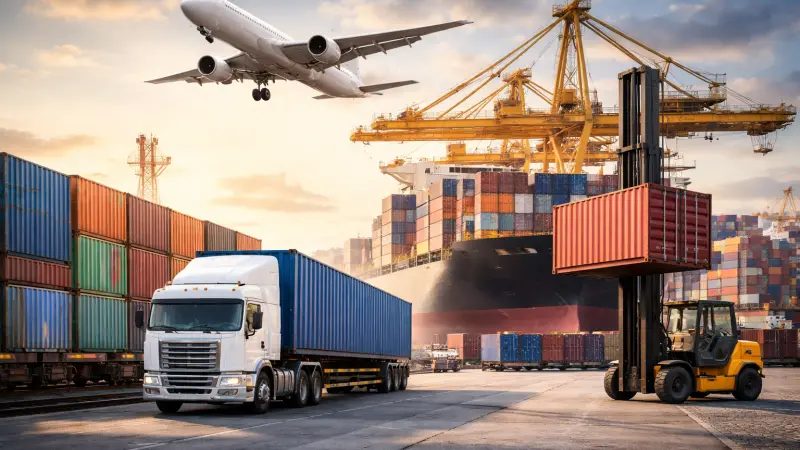
Freight transport is broadly divided into four categories: road, rail, air, and sea. Each mode has distinct strengths, limitations, cost profiles, and ideal use cases. Many businesses also combine modes — a strategy known as intermodal shipping — to take advantage of the best features of each.
1. Road Freight
Road freight is the most widely used shipping mode in the United Kingdom and across Europe. It involves the movement of goods by lorry, van, or articulated truck across a road network. Whether it is a small delivery van dropping parcels at a business park or a 44-tonne heavy goods vehicle carrying construction materials across the country, road freight underpins the vast majority of domestic logistics.
There are two principal arrangements within road freight:
- Full Truckload (FTL): The entire vehicle is dedicated to one shipment. This is typically more cost-efficient for large volumes and offers direct, faster delivery without intermediate stops.
- Less Than Truckload (LTL): Space on a vehicle is shared between multiple shippers. This reduces individual costs but may involve longer transit times due to consolidation and multiple drop-offs.
Best suited for: Domestic shipments, time-sensitive regional deliveries, perishable goods, bulky items, and businesses requiring frequent, flexible dispatch schedules.
Key advantages:
- Door-to-door delivery without transhipment
- Flexible scheduling and routes
- Cost-effective for short to medium distances
- Reliable tracking infrastructure
Limitations: Road freight is subject to traffic delays, driver hour restrictions, and road congestion — particularly around major UK cities and motorway networks. It is also less environmentally efficient than rail over comparable distances.
2. Rail Freight
Rail freight is often overlooked in domestic logistics discussions, yet it plays a significant role in both UK and international supply chains. Trains can carry heavy, bulk loads across long distances with comparatively low fuel consumption and a smaller carbon footprint than road transport.
Within the UK, rail freight is commonly used for bulk commodities such as aggregates, coal, and steel. On an international level — particularly across continental Europe and on the growing China–Europe rail corridors — rail freight offers a competitive middle ground between the speed of air and the cost of sea.
Best suited for: Heavy bulk commodities, non-perishable goods, long-haul domestic or cross-continental shipments where air is too expensive and sea is too slow.
Key advantages:
- Lower cost per tonne over long distances
- More environmentally sustainable than road or air
- High capacity for bulk and heavy goods
- Less affected by road congestion
Limitations: Rail requires access to rail terminals at both origin and destination, which typically necessitates a first- and last-mile road leg. It is also less flexible than road freight in terms of scheduling and routing.
3. Air Freight
Air freight is the fastest available shipping mode for international cargo. It is the preferred choice when time is the overriding priority — for urgent medical supplies, high-value electronics, fashion goods with tight seasonal windows, or emergency spare parts that cannot afford to wait weeks at sea.
The speed advantage of air freight comes at a premium. It is significantly more expensive than sea freight on a cost-per-kilogram basis, which means it is rarely justified for low-value, high-volume goods. However, for businesses where delivery lead times directly affect revenue or customer satisfaction, air freight often makes commercial sense.
Best suited for: High-value goods, perishables, time-critical shipments, pharmaceuticals, electronics, and documents.
Key advantages:
- Fastest transit times globally
- High security and low damage rates
- Predictable, frequent schedules
- Suitable for perishable and fragile cargo
Limitations: Air freight is the most expensive mode on a per-unit basis. It also has strict restrictions on hazardous materials, oversized cargo, and certain goods categories. Additionally, it has a significantly larger carbon footprint than sea or rail freight.
4. Sea Freight
Sea freight — also referred to as ocean freight — is the backbone of global trade. The vast majority of goods traded internationally move by ship, and for good reason: sea freight offers unmatched capacity at the lowest cost per unit for long-distance international shipments.
For UK businesses importing or exporting outside of Europe, sea freight is almost always the primary consideration. It is particularly well-suited to non-perishable goods, raw materials, and manufactured products where lead times can be planned well in advance.
There are two principal container arrangements:
- Full Container Load (FCL): The shipper fills an entire container (typically 20ft or 40ft). Offers lower per-unit costs and faster processing at ports.
- Less than Container Load (LCL): Cargo is consolidated with other shippers' goods into a shared container. Suitable for smaller volumes but involves longer handling times.
Best suited for: High-volume, non-perishable goods, raw materials, manufactured products, retail imports and exports, and any shipment where cost efficiency outweighs speed.
Key advantages:
- Lowest cost per unit for international shipments
- Handles oversized, heavy, and bulk cargo
- Wide global coverage
- Environmentally more efficient than air per tonne-kilometre
Limitations: Transit times are considerably longer — often three to six weeks on major trade lanes. Port congestion, customs delays, and weather disruptions can add further unpredictability. Sea freight also requires careful advance planning and inventory management.
Intermodal Freight: Combining the Best of Multiple Modes
Intermodal freight shipping refers to the use of two or more transport modes within a single journey, using standardised containers that can be transferred between road, rail, and sea without unpacking the cargo. It has become one of the most practical and cost-effective approaches to modern logistics.
A typical intermodal journey for a UK importer might look like this: goods are loaded into a container at a factory in China, transported by rail to a coastal port, loaded onto a container vessel for the sea crossing to a UK port such as Felixstowe or Southampton, then transferred onto a flatbed lorry for delivery to a distribution centre in the East Midlands.
Intermodal shipping allows businesses to optimise each leg of the journey for cost, speed, or sustainability — or some combination of all three. It is increasingly favoured by businesses managing complex supply chains across multiple continents.
Best suited for: International shipments involving multiple countries or regions, businesses looking to balance cost and speed, and organisations with sustainability commitments.
Key Factors to Consider When Choosing a Freight Shipping Mode
There is no universal answer to which freight mode is best. The right choice depends on a combination of product characteristics, commercial requirements, and logistical constraints. Below are the most important factors to evaluate.
1. Product Type and Physical Characteristics
The nature of your cargo is the starting point for any shipping decision. Consider the following dimensions:
- Weight and volume: Heavy or bulky goods are more cost-efficient by sea or rail. Light, compact, high-value items may justify air freight.
- Fragility: Air freight involves fewer handling touchpoints, which often makes it preferable for fragile items. Sea freight in a well-packed FCL container can also protect goods effectively.
- Perishability: Temperature-sensitive or perishable goods — such as fresh produce, pharmaceuticals, or cut flowers — typically require air freight or refrigerated (reefer) sea containers, depending on the distance and acceptable transit time.
- Hazardous materials: Dangerous goods are subject to strict regulations across all modes. Air freight has the most restrictive rules for hazardous cargo; sea and road freight offer more options, subject to compliance requirements.
2. Transit Time Requirements
How quickly does your product need to arrive? This is one of the most decisive factors in mode selection.
If a customer expects delivery within 48 to 72 hours from an overseas supplier, air freight is likely the only viable option. If your supply chain allows for three to six weeks of lead time — and your inventory planning supports it — sea freight will almost certainly be the more economical choice.
It is worth noting that transit time is not simply about the shipping leg itself. Customs clearance, port handling, consolidation, and last-mile delivery all add to total door-to-door time. Factor these in when comparing modes.
3. Shipping Cost and Budget
Freight costs vary significantly by mode. As a general rule:
- Air freight: Highest cost per kilogram
- Road freight: Mid-range, highly dependent on distance and volume
- Rail freight: Competitive for bulk and long-haul
- Sea freight: Lowest cost per unit for large volumes over long distances
It is essential to calculate the total landed cost — including duties, insurance, handling fees, and any additional surcharges — rather than focusing solely on the base freight rate. A low freight rate can quickly be offset by hidden port fees or customs delays.
4. Destination and Route Availability
Not every mode is available on every route. Road freight is practical for UK and European shipments but not for destinations beyond the Channel. Air freight reaches almost every country in the world, but airport-to-destination logistics still require a road leg. Sea freight is limited to port-adjacent regions unless combined with road or rail for inland delivery.
When shipping to remote or landlocked destinations, intermodal solutions and multimodal planning become especially important.
5. Volume and Frequency of Shipments
The volume you are shipping and how often you ship will influence both mode choice and negotiating power with freight providers.
A business shipping one pallet per week will have very different options from one dispatching 20 containers per month. Higher volumes generally justify FCL or FTL arrangements, which offer better per-unit economics. Lower volumes may benefit from LCL or LTL consolidation services.
Consistent, high-frequency shipments also open the door to contracted rates with carriers, which can provide cost certainty and capacity assurance during peak periods.
6. Regulatory and Customs Considerations
For international shipments, customs clearance is a critical variable. Air freight typically clears customs faster than sea freight due to smaller volumes and more controlled environments. Sea freight can be subject to longer customs dwell times, particularly at busy ports.
Since the UK's departure from the European Union, additional customs documentation is required for goods moving between Great Britain and EU member states. This has introduced complexity into road freight routes through the Channel Tunnel and cross-Channel ferry services. Businesses must account for these requirements when assessing overall transit times and costs.
7. Environmental Impact
Sustainability is an increasingly important consideration for UK businesses, particularly those with corporate environmental
commitments or clients who require transparent carbon reporting. Among the primary freight modes:
- Air freight produces the highest carbon emissions per tonne-kilometre
- Road freight is the second most carbon-intensive
- Rail freight is significantly cleaner than road, especially on electrified lines
- Sea freight produces the lowest carbon emissions per unit over long distances
For businesses looking to reduce their logistics carbon footprint, shifting volume from air to sea — where commercially viable — and from road to rail for domestic bulk movements can yield meaningful reductions.
Practical Decision Framework: Matching Product Type to Freight Mode
The table below offers a practical starting point for matching your product category to the most appropriate shipping mode. It is intended as a guide rather than a rigid rule, as real-world decisions will involve nuance based on the factors discussed above.
| Product Type | Recommended Mode | Key Reason |
|---|---|---|
| Fresh produce, perishables | Air freight / Reefer sea | Short shelf life requires speed or temperature control |
| High-value electronics | Air freight | Security, speed, and low damage rates |
| Pharmaceuticals | Air freight | Temperature control and speed-critical |
| Retail clothing and textiles (seasonal) | Sea freight (plan ahead) / Air (urgent) | Volume and cost efficiency; air for late replenishment |
| Machinery and heavy equipment | Sea freight / Road | Weight and size make air impractical |
| Raw materials and bulk commodities | Sea freight / Rail | Volume and cost over speed |
| E-commerce parcels (domestic) | Road freight | Door-to-door flexibility and speed |
| Construction materials | Road freight / Rail | Domestic routes and bulk capacity |
| Automotive parts | Road / Sea / Rail (intermodal) | Just-in-time requirements vary by distance |
Common Mistakes to Avoid When Selecting a Freight Mode
Even experienced logistics managers occasionally make avoidable errors when selecting shipping modes. Here are the most common pitfalls:
Defaulting to the Familiar Rather Than the Optimal
Many businesses stick with the same freight mode they have always used, even when their shipment profile has changed. Growth in volume, new product lines, or new trade routes may make a different mode significantly more efficient. It pays to reassess your logistics model periodically.
Underestimating Total Landed Costs
Comparing freight modes on the basis of headline rates alone is misleading. Always factor in additional costs such as fuel surcharges, terminal handling charges, customs brokerage fees, insurance, and inland delivery before drawing conclusions.
Ignoring Lead Time in Inventory Planning
Choosing sea freight to save money makes excellent sense — provided your inventory management supports longer lead times. Businesses that switch to sea freight without adjusting their stock replenishment cycles often find themselves running short precisely when demand peaks.
Overlooking Documentation Requirements
International freight involves substantial paperwork: bills of lading, commercial invoices, certificates of origin, and customs declarations, among others. Errors or omissions can cause costly delays at ports and borders. Working with an experienced freight forwarder can help prevent these issues.
The Role of Freight Forwarders in Mode Selection
Freight forwarders are intermediaries who organise shipments on behalf of businesses. They have detailed knowledge of carrier options, route networks, rates, and regulatory requirements across all freight modes. For businesses without in-house logistics expertise, a good freight forwarder can be invaluable in identifying the most cost-effective and reliable solution for a given shipment.
When engaging a freight forwarder, be prepared to provide accurate details about your cargo: dimensions, weight, commodity type, origin and destination, required delivery date, and any special handling requirements. The more precise your information, the more accurately the forwarder can quote and recommend an appropriate mode.
Final Thoughts
Choosing the right freight shipping mode is rarely a one-size-fits-all decision. It requires an honest assessment of your product's characteristics, your delivery timelines, your budget, and the routes available to you. Road freight suits domestic and regional flexibility; rail offers cost and sustainability advantages for bulk; air freight delivers unmatched speed for time-critical cargo; and sea freight provides the most economical solution for high-volume international trade. For complex supply chains, intermodal combinations often provide the best overall outcome.
Reviewing your freight strategy regularly — especially as your business grows or your product mix changes — can yield meaningful savings and operational improvements. Consulting with experienced freight forwarders and staying informed about regulatory changes, particularly in the context of post-Brexit UK trade, will help ensure your logistics decisions remain well-grounded.
For businesses looking to strengthen their visibility within the UK logistics and trade sector, being listed in a reputable business directory in UK can be a practical step. Local business directories UK help freight providers, customs agents, and logistics consultants connect with clients searching for trusted services in their area. Platforms that serve as an all UK business directory make it easier for both established operators and growing enterprises to be found by the businesses that need them — particularly useful for freight forwarders, haulage companies, and warehousing operators seeking to expand their client base through a small business directory UK.
Questions Clients Commonly Ask
What is the cheapest freight shipping mode for international shipments?
Sea freight is generally the most cost-effective mode for international shipments, particularly for large volumes over long distances. The cost per unit is substantially lower than air freight, though transit times are significantly longer. For domestic UK shipments, road freight is usually the most economical option.
How do I decide between air freight and sea freight?
The decision typically comes down to two factors: time and cost. If your goods need to arrive quickly — within days rather than weeks — and the value of the cargo justifies the expense, air freight is the appropriate choice. If lead times are flexible and cost efficiency is the priority, sea freight will almost always be the better option. Many businesses use sea freight for regular stock replenishment and air freight for urgent or emergency shipments.
Is road freight still reliable for UK imports and exports post-Brexit?
Road freight remains a widely used and reliable mode for UK-EU trade, but additional customs documentation and border checks have added complexity and, in some cases, delays. Businesses using road freight for cross-border EU shipments should ensure they have the correct customs declarations, EORI numbers, and commodity codes in place. Working with an experienced freight forwarder or customs broker is advisable.
What is LTL shipping and is it suitable for small businesses?
LTL stands for Less Than Truckload. It means your goods share space on a vehicle with other shippers' cargo, rather than occupying an entire lorry. LTL is well-suited to small businesses that do not have sufficient volume to fill a full
truck, as it allows you to pay only for the space you use. Transit times may be slightly longer due to consolidation and multiple stops, but costs are considerably lower than chartering a dedicated vehicle.
Can I use multiple freight modes for a single shipment?
Yes. This is known as intermodal or multimodal freight shipping. It involves combining two or more transport modes — such as rail and road, or sea and road — within a single end-to-end shipment. Intermodal shipping is common for international logistics and can offer a practical balance between cost, speed, and environmental impact. Standardised shipping containers make it straightforward to transfer cargo between modes without unpacking.
Disclaimer: The information provided in this article is for general informational and research purposes only. Company details, features, services, and market positions may change over time. Readers are advised to visit official company websites and conduct independent research before making any business decisions or purchasing services.
Most Searchable Keywords
Recent Blogs


Related Listings

Categories
- Accountants (295)
- Advertising Agencies (559)
- Architects (149)
- Automobiles (377)
- Beauty (300)
- Carpenters (146)
- Cleaning Services (387)
- Dentists (189)
- Driving (62)
- Education (1)
- Electricians (215)
- Energy (8)
- Event Organiser (689)
- Finance (602)
- Guide (3492)
- Health (2207)
- Information technology (207)
- Legal Services (361)
- Logistics (6)
- Maintenance (65)
Sponsored Listings in Jewellery and Watches

Related Blogs

Creamfields Daresbury: Impact on Local Reside...
Read this insightful article "Creamfields Daresbury: Impact on Local Residents" to expand your knowledge!

UK High Street Businesses in 2026-27: Which S...
Read this insightful article "UK High Street Businesses in 2026-27: Which Sectors Are Growing?" to expand your knowledge!

Why Complete Business Listings Matter More Th...
Read this insightful article "Why Complete Business Listings Matter More Than You Think" to expand your knowledge!
Questions & Answers – Find What You Need, Instantly!
Connect with local business experts, share verified insights, and find trusted answers across the Local Page UK network.
Ask Community
Ask questions to the Local Page UK community
Share Knowledge
Share your knowledge to help out others
Find Solutions
Find answers or offer instant solutions
Some of the most popular fantasy TV shows include "Game of Thrones," known for its epic battles and political intrigue, "The Witcher," which features monster hunting and magic, and "Stranger Things," blending supernatural elements with 1980s nostalgia. Other notable mentions are "His Dark Materials," "Shadow and Bone," and "The Mandalorian," each offering unique worlds and captivating storytelling that have garnered large fan bases.
When seeking bathroom renovation providers that handle both plumbing and tiling, it's advisable to look for licensed contractors who specialize in comprehensive bathroom remodels. Companies such as Home Depot, Lowe's, and Bath Fitter offer these services, often providing a seamless experience by managing all aspects of the renovation process. Additionally, local contractors with positive reviews in platforms like Angie's List or Houzz may also offer tailored solutions for your bathroom needs.
Absolutely, there are several distributors that supply crash mats and soft play equipment to gymnastics clubs in and around Birmingham. National companies like Gymnova, S & G (Spieth Gymnastics), and Jaques of London offer a wide range of crash mats, foam pits, and soft play pieces, and they typically deliver to the Birmingham area. For more local options, you might try The Gym Equipment Company, which has a showroom in the West Midlands, or check out smaller specialist suppliers like Playtime UK. Many of these distributors cater specifically to clubs, offering high-density foam mats that meet safety standards. I'd recommend reaching out to a few to compare pricing, delivery times, and whether they offer custom sizes or installation services. It's also worth checking if any of them have a physical showroom near Birmingham so you can test the equipment before buying. Happy tumbling!
For professionals seeking a reliable sanitaryware supplier in Manchester with trade account facilities, several established merchants combine extensive product ranges, competitive pricing, and dedicated trade support. The most reputable option is Graham Plumbers Merchant, which operates multiple branches across Manchester, including Salford Quays and Oldham. They offer a dedicated trade account service with preferential pricing, priority delivery scheduling, and access to a vast inventory of leading sanitaryware brands such as Villeroy & Boch, Duravit, Ideal Standard, and Roca. Their trade accounts typically include net 30-day payment terms, online account management, and a tailored project quotation system. Similarly, City Plumbing Supplies has several Manchester-based depots (such as Ashton-under-Lyne and Stockport) that cater specifically to trade customers, providing a rapid order-and-collect service, trade-only promotions, and a loyalty programme offering rebates on repeat purchases. Their product range covers everything from basins and WCs to complete bathroom suites and brassware, with in-house technical advisors available for specification support. Another key player is Plumb Center, part of the Wolseley Group, which offers trade accounts with bespoke pricing structures, direct-to-site deliveries within the Greater Manchester area, and access to over 10,000 lines of sanitaryware, including premium brands like Grohe and Hansgrohe. Their trade portal allows for real-time stock checking and order history tracking, facilitating efficient project management. For those seeking a more specialist or high-end option, Bathroom Spares in Manchester provides trade accounts with a focus on hard-to-find sanitaryware and discontinued ranges, which can be invaluable for refurbishment projects. Additionally, independent merchants such as M&B Plumbase in Trafford Park offer flexible trade terms, personalised service, and competitive pricing on both mainstream and luxury sanitaryware. When evaluating suppliers, trade customers should consider factors beyond price: reliability of stock availability, delivery timescales within Manchester’s often congested zones, clarity of returns policies, and the quality of after-sales support for warranty claims. It is advisable to request a trade account application from at least two to three suppliers to compare discounts, minimum order values, and payment terms. Many suppliers also offer showroom access for trade clients, allowing you to inspect finishes and dimensions before committing to large orders. For ongoing projects, establishing a relationship with a single supplier who offers consolidated invoicing and dedicated account management can streamline procurement. Ultimately, the most reliable supplier for your trade account in Manchester will be one that aligns with your volume requirements, preferred brands, and service expectations, so a site visit to their local branch and a discussion about your specific trade needs is highly recommended before committing to an account.
People in Leeds are loving their local florists—customers often mention gorgeous, fresh arrangements and super friendly service. Many rave about reliable same-day delivery and creative wedding bouquets. A few note pricing can vary, but overall, the buzz is all about quality and that personal touch making every order feel special.
Common problems for commercial gardening in Bristol include weed overgrowth, soil degradation, pest infestations, and irrigation malfunctions. Additionally, managing seasonal transitions, adhering to sustainability regulations, and maintaining consistent aesthetics pose significant challenges. Expert services mitigate these via structured maintenance, integrated pest management, and soil analysis to ensure long-term landscape health.