
Impact of Contaminated Water on UK Household Appliances Explained
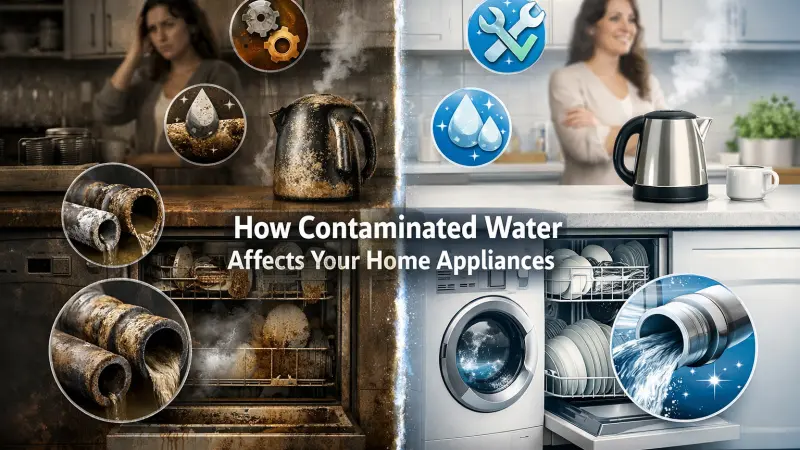
Have you ever paused to consider what exactly flows through the intricate pipes and valves of your expensive household machinery every single time you press the start button. While many homeowners in Britain take the safety of their mains supply for granted the reality is that contaminated water effects on home appliances can lead to significant financial loss and premature mechanical failure. Whether it is the subtle accumulation of limescale in a kettle or the more aggressive corrosion caused by chemical imbalances in a dishwasher the quality of your water dictates the lifespan of your property infrastructure. Understanding these dynamics is essential for maintaining a modern home and ensuring that your investment in high end appliances remains protected for years to come.
The invisible threat of hard water and mineral deposits
In many regions across the United Kingdom particularly in the South East and East Anglia the water is classified as hard due to high concentrations of calcium and magnesium carbonates. When this water is heated within an appliance these minerals solidify to form what we commonly refer to as limescale. This white chalky substance acts as a powerful insulator which is problematic for heating elements. In a washing machine or an electric shower the heating element must work significantly harder to reach the desired temperature because it has to heat through a thick layer of rock before it even touches the water. This inefficiency leads to increased energy bills and eventually causes the element to burn out entirely.
Furthermore the internal components of dishwashers are uniquely susceptible to mineral interference. The spray arms which are responsible for distributing water evenly across your plates can become blocked by tiny mineral pebbles. When these apertures are restricted the water pressure drops and the cleaning performance diminishes. You might notice cloudy glassware or gritty residues on your cutlery which are often the first visible symptoms of a much larger internal problem. Over time the pump seals may also degrade as the abrasive nature of mineral crystals wears down the rubber gaskets leading to slow leaks that can damage your kitchen flooring.
Chemical contamination and its corrosive impact
Beyond natural minerals the presence of chemicals such as chlorine and various sulphates can also wreak havoc. While water companies use chlorine to ensure the supply is biologically safe for consumption the residual levels can be detrimental to stainless steel and rubber components. Chlorine is a highly reactive element that can cause pitting corrosion in metal pipes and heat exchangers. This is especially prevalent in modern condensing boilers where the heat exchange process is central to the efficiency of the entire central heating system. If the water chemistry is not balanced the metal can thin over time leading to pinhole leaks that require expensive emergency repairs.
The impact on laundry is also noteworthy. Chemical contaminants can react with detergents to create a greyish sludge known as soap curd. This material does not rinse away easily and tends to stick to the outer drum of the washing machine. Not only does this encourage the growth of bacteria and mould leading to unpleasant odours but it also places additional strain on the motor.
As the drum becomes heavier and less balanced due to the accumulation of this residue the bearings must work harder to maintain the spin cycle. Consequently the machine becomes noisier and the likelihood of a mechanical breakdown increases substantially.
Sediment and particulate matter in the plumbing system
Small particles of sand silt or rust from ageing iron mains pipes often find their way into residential plumbing systems. While these particulates might seem harmless they act like liquid sandpaper when moving at high speeds through the internal valves of a coffee machine or an American style fridge freezer. The delicate solenoid valves which control the flow of water are particularly vulnerable. A single grain of grit can prevent a valve from closing properly resulting in a constant drip or a catastrophic overflow. For appliances with built in water filters such as modern refrigerators high levels of sediment will clog the filter far faster than the manufacturer intended necessitating frequent and costly replacements.
Protecting your investment with filtration and softening
The most effective way to combat these issues is the installation of a whole house water softener or a comprehensive filtration system. By removing the hardening minerals at the point of entry you ensure that every appliance from the humble iron to the sophisticated steam oven is receiving treated water. Softened water allows detergents to work more effectively meaning you can use less product to achieve the same results. This reduces the chemical load on the environment and prevents the build up of soap scum within your plumbing. For those living in areas with high sediment levels a simple sediment pre filter can be a cost effective way to trap physical particles before they ever reach your sensitive electronic equipment.
Maintenance strategies for long term appliance health
Regular maintenance remains a cornerstone of appliance longevity. Homeowners should consider using professional descaling agents specifically designed for their machine type at least once every three months. It is important to avoid harsh generic chemicals that might damage the internal seals. For dishwashers ensuring the salt reservoir is always full is vital as this salt is used to regenerate the internal water softener. Similarly checking the inlet filters on washing machines for trapped grit can prevent flow issues and ensure the machine operates at peak efficiency. Small proactive steps can often prevent the need for a call out from a service engineer.
In the context of the wider household environment it is also worth considering the impact of water quality on your central heating. A system flush every few years can remove the black magnetite sludge that accumulates in radiators. This sludge is essentially rust that has been ground down into a fine paste which can block the circulator pump and reduce the heat output of your home.
By keeping the water clean you ensure that the entire thermal loop of your property is functioning as designed saving you money on gas or electricity while providing a more comfortable living space during the cold British winters.
Supporting Local Infrastructure and Services
Maintaining a functional home often requires the assistance of qualified professionals who understand the specific environmental challenges of your local area. Whether you are seeking a plumber to install a new softening system or an engineer to repair a damaged boiler finding the right expertise is crucial. Many residents find that using a business directory uk free of charge allows them to quickly identify vetted tradespeople in their immediate vicinity. When businesses participate in the best free business listing directories uk offers they increase their visibility and ensure that homeowners can find the support they need. By choosing a provider from the Local page UK database you are supporting the regional economy while ensuring your household machinery is in safe hands. Using a free uk directory list for business ensures that you have access to a wide range of local specialists who can help mitigate the long term effects of water contamination on your property.
Frequently Asked Questions
How can I tell if my water is affecting my appliances
Common signs include white chalky deposits on taps cloudy dishes after a wash cycle and a noticeable decrease in the speed at which your kettle boils water.
Is hard water dangerous to drink
No hard water is generally safe to drink and can even provide essential minerals like calcium however
it is the mechanical impact on your plumbing that is the primary concern for homeowners.
How often should I descale my washing machine
In hard water areas it is recommended to perform a deep descale every three to four months to ensure the heating element remains clear of mineral buildup.
Can water filters remove all contaminants
Different filters target different issues sediment filters remove physical particles while carbon filters are excellent for removing chlorine and improve taste but you may need a softener for mineral removal.
Will a water softener save me money
Yes by improving the efficiency of heating elements and reducing the amount of detergent and soap required
a softener can pay for itself over several years through lower bills and fewer repairs.
What is the most common cause of appliance failure in the UK
Limescale accumulation on heating elements and pump failures due to abrasive sediment are among the leading causes of premature appliance breakdown in British households.
Disclaimer: The information provided in this article is for general informational and research purposes only. Company details, features, services, and market positions may change over time. Readers are advised to visit official company websites and conduct independent research before making any business decisions or purchasing services.
Most Searchable Keywords
Recent Blogs


Related Listings

Categories
- Accountants (295)
- Advertising Agencies (559)
- Architects (149)
- Automobiles (377)
- Beauty (300)
- Carpenters (146)
- Cleaning Services (387)
- Dentists (189)
- Driving (62)
- Education (1)
- Electricians (215)
- Energy (8)
- Event Organiser (687)
- Finance (602)
- Guide (3482)
- Health (2207)
- Information technology (206)
- Legal Services (361)
- Logistics (6)
- Maintenance (65)
Sponsored Listings in Plumbers
Related Blogs

Ghost Brokers Fake Car Insurance Scam Explain...
Read this insightful article "Ghost Brokers Fake Car Insurance Scam Explained" to expand your knowledge!

UK Baby Names Fastest Rising and Falling Name...
Read this insightful article "UK Baby Names Fastest Rising and Falling Names" to expand your knowledge!

How to Claim for Pothole Damage From Your Cou...
Read this insightful article "How to Claim for Pothole Damage From Your Council" to expand your knowledge!
Questions & Answers – Find What
You Need, Instantly!
How can I update my business listing?
Is it free to manage my business listing?
How long does it take for my updates to reflect?
Why is it important to keep my listing updated?
