
Meme Stocks Explained What They Are Famous Examples Investment Risks
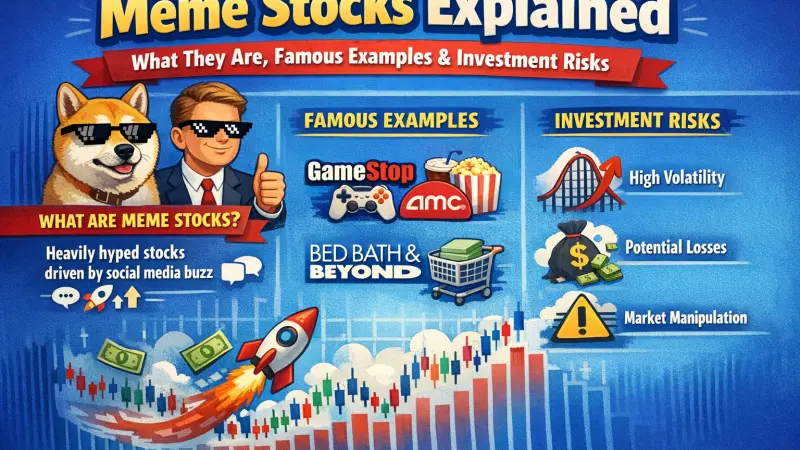
In the landscape of modern finance, few phenomena have disrupted the status quo as violently as the rise of meme stocks. What began as a niche discussion on internet forums transformed into a global financial movement, pitting retail investors against institutional giants in a battle for market dominance. For decades, the stock market was the domain of suits and analysts, but the game has changed. Suddenly, companies on the brink of bankruptcy saw their shares skyrocketing by thousands of percentage points, driven not by earnings reports or fundamental value, but by tweets, memes, and a collective desire to challenge the establishment. This guide dives deep into the mechanics of meme stocks, separating the hype from the reality, exploring the famous sagas that captivated the world, and outlining the severe risks that every investor must understand before diving in.

What Are Meme Stocks? A Comprehensive Overview
At its core, a meme stock is a share in a company that has gained viral popularity among retail investors, primarily through social media platforms like Reddit (specifically the r/WallStreetBets community), Twitter, and Discord. Unlike traditional investments, where stock prices are driven by a company's financial performance, earnings growth, or economic outlook, the value of a meme stock is fueled by social sentiment and online hype.
The term "meme" refers to an idea, behavior, or style that spreads by means of imitation from person to person within a culture, often carrying a symbolic meaning or representing a particular phenomenon. In the financial context, this translates to stocks that investors buy not because they believe in the company's long-term prospects, but because the internet told them to, often with the explicit goal of creating a "short squeeze" or simply for the thrill of participation.
The Psychology Behind the Movement
To understand meme stocks, one must understand the psychology of the community that drives them. It is a mix of financial rebellion, FOMO (Fear Of Missing Out), and community belonging. For many retail investors, buying these stocks was a way to fight back against hedge funds that had heavily shorted these companies, betting on their failure. It democratized trading, giving the "little guy" a sense of power in a market often perceived as rigged.
However, this collective action creates a disconnect between the stock price and the company's intrinsic value. When the hype fades, the price often corrects violently, leaving latecomers with significant losses. Understanding this distinction between price and value is the first step in navigating this volatile terrain.
The Mechanics: How Meme Stocks Work
The engine behind many meme stock rallies is a financial mechanism known as the short squeeze. To grasp the risks involved, one must understand how this works in detail.
Understanding Short Selling
Short selling is a strategy used by investors who believe a stock’s price will decline. The short seller borrows shares of the stock from a broker and sells them at the current market price, intending to buy them back later at a lower price to return to the lender. The profit is the difference between the sell price and the buy-back price.
However, if the stock price rises instead of falls, the short seller faces potential losses. Since there is no upper limit to how high a stock price can go, the potential losses for short sellers are theoretically infinite. To limit these losses, brokers issue "margin calls," forcing short sellers to deposit more money or buy back the shares immediately to cover their positions.
The Short Squeeze Explained
A short squeeze occurs when a stock’s price rises sharply, forcing short sellers to buy shares to cut their losses. This buying pressure drives the price even higher, forcing more short sellers to cover their positions. It creates a feedback loop—a vicious cycle for the short sellers and a virtuous cycle for those holding the stock.
In the case of meme stocks, retail investors coordinate their buying efforts to trigger these squeezes. By driving the price up, they force institutional short sellers to buy, adding massive volume that sends the price parabolic. While this sounds like a guaranteed win, timing the exit is incredibly difficult, as the crash often happens just as quickly as the rise.
Famous Examples of Meme Stocks
While dozens of stocks have achieved meme status, a few key players defined the movement. Examining these examples provides insight into the potential rewards and the inevitable crashes.
GameStop (GME)
GameStop is the original meme stock. In early 2021, the video game retailer was struggling. The shift to digital downloads had decimated its brick-and-mortar business model, and the pandemic had forced store closures. Institutional investors, seeing the writing on the wall, shorted the stock heavily—short interest exceeded 100% of the available shares at one point.
Members of the r/WallStreetBets forum noticed this extreme short interest and began buying shares and call options. What followed was a historic market event. In January 2021, GameStop’s stock price rose from under $20 to a peak of nearly $500 in just a few weeks. Hedge funds like Melvin Capital suffered billions in losses. The event became a cultural touchstone, highlighting the power of coordinated retail trading.
AMC Entertainment (AMC)
As the GameStop saga unfolded, investors looked for other heavily shorted companies. AMC, the world's largest movie theater chain, was a prime target. Hit hard by COVID-19 lockdowns and massive debt, AMC was on the verge of bankruptcy.
Retail investors rallied behind the company, branding themselves "apes" and vowing to hold the line. The stock surged over 3,000% in 2021. Unlike GameStop, AMC used the opportunity to issue new shares, raising billions in capital to pay down debt, effectively saving the company from insolvency. However, investors who bought at the peaks are still sitting on massive losses years later.
Bed Bath & Beyond (BBBY)
Bed Bath & Beyond represented the darker side of the meme coin phenomenon. While GameStop and AMC managed to capitalize on their fame to restructure (to varying degrees of success), BBBY continued to struggle with fundamental business issues.
The stock saw massive spikes in 2022 and 2023 driven by retail interest, but the company was burning through cash with no viable turnaround plan.
Eventually, the company filed for bankruptcy. While there were brief rallies during the bankruptcy proceedings, the stock eventually became worthless. This serves as a stark reminder that viral hype cannot fix a broken business model.
The Potential Upsides: Why Investors Are Drawn to Meme Stocks
While the risks are undeniable, it is important to analyze why investors continue to flock to these assets. The appeal goes beyond simple greed; it involves a complex mix of financial and social incentives.
High Return Potential
The most obvious draw is the potential for astronomical returns in a very short period. Traditional investing usually promises single-digit or low double-digit annual returns. Meme stocks, during their peak volatility, can generate returns of 100%, 500%, or even 1,000% in a matter of days. For traders who time the market correctly, the profits are life-changing. This lottery-ticket appeal is a powerful motivator, particularly for younger investors with smaller capital bases.
Community and Collective Action
Investing can be a lonely endeavor, but meme stock trading is a team sport. The sense of community on forums like Reddit and Discord creates a shared identity. Investors encourage one another to "hold the line" (not sell during dips), creating a sense of camaraderie. This collective action challenges the traditional dynamic of the stock market, where retail investors are often on the losing side of trades against institutional players. The feeling of participating in a historic financial event is a unique non-monetary benefit that keeps the community engaged.
Investment Risks: The Reality Check
For every story of a trader turning $1,000 into $100,000, there are thousands of untold stories of total loss. The risks associated with meme stocks are severe and multifaceted.
Extreme Volatility
Meme stocks are defined by volatility. Prices can swing 30%, 50%, or more in a single trading day. While this creates opportunity, it creates psychological torment. An investor might see their portfolio double by lunchtime and be down 50% by the closing bell. This volatility makes it nearly impossible to set logical stop-loss orders, as normal market fluctuations can trigger automatic sells before a massive run-up, or fail to trigger before a massive crash.
The "Greater Fool" Theory
Meme stocks often operate on the "Greater Fool Theory." This theory suggests that it is possible to make money by buying overvalued assets because there will always be someone else (a "greater fool") willing to pay a higher price for them later. Eventually, the supply of fools runs out. When the hype dies down and the buying pressure evaporates, the price collapses. Those left holding the bag are the ones who bought near the top, believing the price would go higher forever. Unlike dividend stocks or value investments, meme stocks have no safety net of intrinsic value to catch falling prices.
Lack of Fundamental Value
The biggest risk is that the stock price is completely disconnected from the company’s actual financial health. If a company is losing money, has high debt, and a shrinking market share, no amount of internet hype can save it in the long run (as seen with Bed Bath & Beyond). Eventually, reality sets in. Investors who do not understand how to read a balance sheet may mistake a high stock price for a healthy company, leading to poor long-term investment decisions.
Step-by-Step: How to Analyze a Meme Stock
If you are considering entering this market, you must do so with eyes wide open. Here is a step-by-step guide to analyzing a potential meme stock play, distinct from traditional analysis.
Step 1: Assess the Short Interest
Check the short interest ratio and the "days to cover" metric. High short interest (above 20% is notable, above 50% is extreme) indicates that a squeeze is theoretically possible. Days to cover tells you how long it would take short sellers to buy back their shares based on average volume; the higher the number, the more prolonged a squeeze could be.
Step 2: Evaluate the Float
The "float" is the number of shares available for trading by the public. Meme stocks often have a low float, which makes it easier for a small amount of buying pressure to move the price significantly. A low float combined with high short interest is the recipe for a meme stock rally.
Step 3: Monitor Social Sentiment
Use tools like Google Trends, Twitter (X), or specialized sentiment analysis platforms to gauge the momentum of the conversation. Are people talking about "holding" or "selling"? Is the community growing, or is interest waning? Sentiment is the primary driver here, not the P/E ratio.
Step 4: Check the Company’s Cash Position
Even if you are playing the short-term game, you need to know if the company is going bankrupt next week. Do they have enough cash to survive the year? If the company goes under, the stock goes to zero, regardless of the squeeze.
Common Mistakes to Avoid
Many new investors get burned by making easily avoidable errors. Learning from these common mistakes can save your portfolio.
Mistake 1: Investing Money You Cannot Afford to Lose
This is the golden rule of high-risk trading. Never use rent money, tuition funds, or emergency savings to buy meme stocks.
The probability of total loss is non-trivial. Treat this capital as money you would spend on a vacation or entertainment—if you lose it, it shouldn't impact your standard of living.
Mistake 2: Believing the "Diamond Hands" Hype
"Diamond hands" is a slang term for holding a stock despite volatility, with the intent of selling at a very high price. While community solidarity is nice, blind loyalty can lead to financial ruin. Many traders refused to sell during the peaks of AMC or GameStop because they believed the hype that prices would go "to the moon" infinitely. Greed overrides logic, and they missed their opportunity to exit with profits.
Mistake 3: Ignoring the Chart Patterns
Technical analysis can be useful even in irrational markets. Ignoring resistance levels and support lines because "this time is different" is a mistake. When a stock shows signs of a parabolic blow-off top (a spike followed by a sharp decline), it is often time to exit, not buy more.
Tips for Managing Risk
If you decide to trade meme stocks, use these tips to protect your downside.
Define Your Entry and Exit Points
Before you buy a single share, know exactly at what price you will sell. Decide on a profit target (e.g., "I will sell if I make 20%") and a stop-loss (e.g., "I will sell if I lose 10%"). Stick to this plan religiously. Emotions run high in these markets, and having a pre-written strategy helps remove emotion from the decision-making process.
Position Sizing
Limit your exposure. A prudent investor might only allocate 1% to 5% of their total portfolio to high-risk speculative assets like meme stocks. If the trade goes to zero, the portfolio survives. If it doubles, it provides a nice boost, but it won't make you rich overnight—which is a healthy expectation to set.
Avoid Buying on Margin
Buying on margin (borrowing money from a broker to buy stock) amplifies gains but also amplifies losses. In a meme stock crash, margin calls can force you to liquidate your positions at the bottom, locking in catastrophic losses. Always trade meme stocks with cash, not debt.
Supporting Local Business Visibility Beyond Core Marketing Efforts
While the stock market often focuses on large-cap companies and high-volume trading assets, the principles of visibility and market presence are universal. Just as public companies rely on market exposure to attract investors, small and medium-sized enterprises require robust visibility to attract customers. However, for local businesses, this visibility is not built through Reddit forums but through strategic consistency across digital ecosystems.
For a local enterprise, discoverability is the equivalent of market liquidity. If a business cannot be found, it cannot generate revenue. Establishing a strong local presence requires ensuring that business information is accurate and consistent across the web. This is where the strategic value of structured citations comes into play. By leveraging a platform such as Local Page UK, businesses can solidify their digital footprint. This is not merely about being listed; it is about creating a corroborated network of information that search engines trust.
Furthermore, cost-efficiency is a critical factor for local marketing. Small businesses often operate with tight budgets, making it essential to utilize a free company listing platform to initiate their visibility journey without incurring additional overhead. These listings act as touchpoints, reinforcing the business's legitimacy to both consumers and search algorithms.
The categorization of services also plays a pivotal role in local search rankings. When owners take the time to properly list services uk directory options, they enhance their relevance for specific local queries. This targeted approach ensures that the business appears in front of users who are actively seeking those specific services, rather than a general audience. It is a strategic layering of visibility that supports broader marketing efforts.
In the context of competitive advantage, trust is a currency. A presence on a reputable business directory website serves as a third-party validation of the business’s existence and operations. It signals to potential customers that the business is established and verifiable. This layer of trust is essential for converting traffic into leads.
Finally, the accessibility of these tools democratizes the competitive landscape. A well-optimized profile on a business listings site allows smaller local players to compete with larger chains for local search visibility.
While the mechanisms differ from the volatile world of meme stocks, the underlying principle remains the same: visibility drives value, and strategic positioning is key to long-term sustainability.
Fundamentally
Meme stocks have fundamentally changed the conversation around the stock market. They have proven that retail investors, when united, can influence market mechanics in ways previously thought impossible. However, the phenomenon remains a high-stakes gamble rather than a traditional investment strategy. The stories of GameStop and AMC will be studied in business schools for decades as examples of market anomalies driven by technology and social psychology.
For the modern investor, the lesson is clear. The allure of quick riches is powerful, but the market is ruthless. Understanding the mechanics of short squeezes, the psychology of social sentiment, and the critical importance of risk management is the only way to navigate these waters safely. Meme stocks can be a part of a portfolio, but they should be treated as the volatile, speculative assets they are. Never invest more than you can afford to lose, and always remember that in the world of memes, gravity eventually takes hold.
Frequently Asked Questions (FAQs)
1. What defines a stock as a "meme stock"? A meme stock is defined by its rapid price surge driven not by company fundamentals, but by viral hype on social media platforms, particularly Reddit and Twitter. These stocks often have high short interest, making them targets for short squeezes coordinated by retail investors.
2. Is investing in meme stocks gambling? While it is technically investing, the behavior surrounding meme stocks shares many characteristics with gambling. Investors are often betting on price movements and social sentiment rather than the underlying value of the company. The extreme volatility and high risk of total loss make it closer to speculation than traditional investing.
3. Can meme stocks make you rich? Yes, it is possible to make significant money trading meme stocks if you buy in early and sell before the crash. However, for every person who makes a fortune, many more lose their investment. It requires impeccable timing and a high tolerance for risk, which most average investors do not possess.
4. Why do meme stocks crash so hard? Meme stocks crash because their prices are artificially inflated far beyond the company's actual value. Once the buying momentum slows down and early investors start selling to take profits, the price falls. Short sellers covering their positions often leads to an inflated peak, followed by a sharp correction when the hype dies.
5. What was the first meme stock? GameStop (GME) is widely considered the first true meme stock. The events of January 2021, where its stock price skyrocketed due to coordinated buying on the r/WallStreetBets forum, marked the beginning of the meme stock era.
6. Are meme stocks illegal? Trading meme stocks is not illegal. However, the legality hinges on intent. If individuals knowingly spread false information to manipulate a stock price (pump and dump), that is illegal. Coordinating buying strategies based on public analysis, even if that analysis is just "let's squeeze the shorts," is generally legal, though regulatory bodies like the SEC continue to scrutinize the space.
7. How do I find the next meme stock? There is no guaranteed formula, but traders look for specific indicators: high short interest (over 20-30%), low float, beaten-down stock prices, and growing chatter on social media forums like r/WallStreetBets. However, attempting to predict the next meme stock is incredibly risky.
8. What is a "short squeeze"? A short squeeze occurs when a stock's price rises, forcing traders who bet against the stock (short sellers) to buy shares to cover their positions and limit losses. This buying pressure drives the price even higher, creating a feedback loop.
9. Should I hold a meme stock long-term? Holding a meme stock long-term is generally not recommended unless the company's fundamentals have genuinely improved. Most meme stock companies face significant business challenges. Once the short squeeze is over, the stock price usually reverts to levels more reflective of the company's actual business health.
10. How much of my portfolio should be in meme stocks? Financial experts generally suggest that high-risk speculative assets like meme stocks should make up no more than 1% to 5% of a total investment portfolio. This limits potential losses while still allowing for exposure to potential high-reward scenarios.
11. What is "WallStreetBets"? WallStreetBets is a subreddit (a specific community on Reddit) where participants discuss stock and options trading. It is known for its aggressive trading strategies, colorful slang (like "apes" and "diamond hands"), and its role in catalyzing the meme stock movement.
12. Did hedge funds lose money on meme stocks? Yes, several hedge funds that had heavily shorted GameStop and AMC lost billions of dollars during the meme stock rallies. Melvin Capital, a prominent hedge fund, lost so much capital that it was forced to shut down in 2022.
13. What is the difference between a meme stock and a pump and dump? A "pump and dump" is an illegal scheme where investors spread false information to drive up a stock price before selling their shares. Meme stocks involve a "pump," but the motivation is often to hurt short sellers rather than purely to dump shares, and the buyers are often genuine supporters. However, the line can be blurry.
14. Do meme stocks pay dividends? Most meme stocks do not pay dividends because they are often struggling companies trying to conserve cash.
Investors in meme stocks are looking for capital appreciation (stock price growth) rather than passive income.
15. Can a company stop being a meme stock? Yes. As the hype fades and short interest decreases, the volatility subsides. GameStop and AMC still have loyal retail followings, but they no longer exhibit the same parabolic price movements they did in early 2021. They eventually normalize, though they may remain more volatile than the average blue-chip stock.

Disclaimer: The information provided in this article is for general informational and research purposes only. Company details, features, services, and market positions may change over time. Readers are advised to visit official company websites and conduct independent research before making any business decisions or purchasing services.
Most Searchable Keywords

Recent Blogs
-

Explore Supermarkets in Chepstow and the Surrounding Wye Valley
-
Elite Guide to Taxi and Private Hire Services in Hereford
-
Explore Fuel and Roadside Convenience Across Beckington Today
-
Explore Abergavenny Tyre Services with Expert Local Fitters
-
Claim Your HMRC UK Tax Refund Before Application Deadlines






Categories
- Accountants (295)
- Advertising Agencies (559)
- Architects (149)
- Automobiles (376)
- Beauty (300)
- Carpenters (146)
- Cleaning Services (386)
- Dentists (189)
- Driving (61)
- Electricians (215)
- Energy (7)
- Event Organiser (683)
- Finance (597)
- Guide (3358)
- Health (2205)
- Information technology (206)
- Legal Services (352)
- Logistics (6)
- Maintenance (65)
- Manufacturing (35)

Sponsored Listings in Accountants

Related Blogs

Explore Supermarkets in Chepstow and the Surr...
Read this insightful article "Explore Supermarkets in Chepstow and the Surrounding Wye Valley" to expand your knowledge!

Elite Guide to Taxi and Private Hire Services...
Read this insightful article "Elite Guide to Taxi and Private Hire Services in Hereford" to expand your knowledge!

Explore Fuel and Roadside Convenience Across...
Read this insightful article "Explore Fuel and Roadside Convenience Across Beckington Today" to expand your knowledge!
Questions & Answers – Find What
You Need, Instantly!
How can I update my business listing?
Is it free to manage my business listing?
How long does it take for my updates to reflect?
Why is it important to keep my listing updated?
