
What Are Meme Stocks The Internet Culture Phenomenon Market Impact Explained
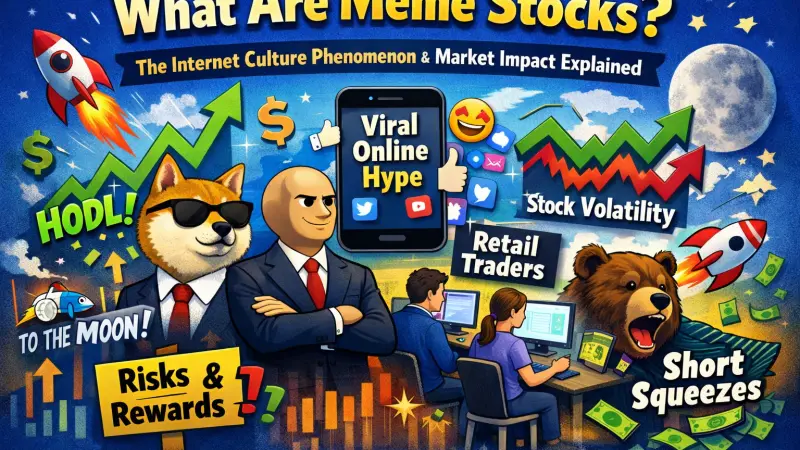
In the annals of financial history, few events have been as disruptive or unexpected as the rise of meme stocks. For decades, the stock market was the exclusive playground of institutional investors, hedge funds, and Wall Street analysts who moved capital with quiet precision. That dynamic was shattered seemingly overnight when a collective of retail investors, armed with nothing but smartphones and social media accounts, managed to dictate market movements worth billions of dollars. This was not a revolution born in the boardrooms of Manhattan, but rather in the chaotic, meme-filled forums of Reddit. The phenomenon fundamentally altered how we perceive market value, proving that in the digital age, sentiment can be just as powerful as a balance sheet. This article explores the depths of this cultural shift, dissecting what meme stocks are, how they function, and the lasting impact they have had on the global financial landscape.

What Are Meme Stocks? A Comprehensive Overview
At its most basic level, a meme stock refers to the shares of a company that have gained a cult-like following among retail investors, primarily through social media platforms. The term is derived from the concept of a "meme"—an idea, behavior, or style that spreads rapidly via the internet. Unlike traditional investments, where stock prices are driven by fundamentals like earnings, revenue growth, or product innovation, the value of a meme stock is driven largely by social sentiment, viral trends, and coordinated buying activity.
The primary platforms fueling this movement have been Reddit (specifically the subreddit r/WallStreetBets), Twitter (now X), Discord, and TikTok. On these platforms, users share investment theses—not always grounded in standard financial analysis—mixed with humor, internet slang, and a rebellious attitude toward institutional finance.
The Core Characteristics
To identify a meme stock, one must look beyond the price tag. These assets typically share several distinct characteristics:
- Viral Hype: The primary catalyst is online chatter. A sudden spike in mentions, hashtags, or discussion threads often precedes a price surge.
- High Short Interest: Many meme stocks are companies that institutional investors have bet against heavily (short selling). This makes them prime targets for a "short squeeze."
- Disconnect from Fundamentals: The market capitalization of these companies often skyrockets to levels completely detached from their actual revenue or profit potential.
- Community Cohesion: Investors in these stocks often use specific terminology (e.g., "diamond hands" for holding through volatility, "apes together strong" for unity) that reinforces group identity.
The Mechanics: How Meme Stocks Work
Understanding the mechanics behind meme stocks requires a grasp of market dynamics that are usually the domain of professional traders. The engine driving the most explosive meme stock rallies is the "short squeeze."
The Concept of Short Selling
To understand a short squeeze, one must first understand short selling. This is a strategy used by investors who believe a stock’s price will decline. A short seller borrows shares of a stock from a broker and sells them at the current market price. They intend to buy the shares back later at a lower price, return them to the lender, and pocket the difference as profit.
For example, if an investor shorts a stock at $50 hoping it drops to $30, they profit $20 per share. However, if the stock price rises, the investor faces theoretically infinite losses, as there is no cap on how high a stock can go.
The Short Squeeze Phenomenon
A short squeeze occurs when a heavily shorted stock begins to rise in price. As the price climbs, short sellers start to incur losses. To limit these losses or meet margin requirements (collateral demanded by brokers), short sellers are forced to buy back the shares to close their positions.
This buying pressure adds fuel to the fire, driving the price even higher. In the context of meme stocks, retail investors coordinate massive buying sprees to trigger this exact scenario. By driving the price up, they force institutional short sellers to buy, which pushes the price even higher—a feedback loop that can send a $5 stock to $500 in a matter of days.
Gamma Squeezes and Options
Another mechanical layer is the "gamma squeeze." This involves the options market. When retail investors buy call options (bets that a stock will go up), market makers (who sell the options) must hedge their risk. They do this by buying actual shares of the underlying stock. If millions of retail traders buy call options for the same stock simultaneously, market makers are forced to buy huge volumes of shares, driving the price up regardless of actual buying demand from investors.
The Psychology Behind the Movement
The meme stock phenomenon is as much a psychological study as it is a financial one. It represents a paradigm shift in market participation, driven by a unique blend of behavioral economics and internet culture.
Democratization of Finance
The rise of zero-commission trading apps like Robinhood, Webull, and Public lowered the barrier to entry for the average person. Suddenly, trading was accessible, gamified, and social. This accessibility coincided with the COVID-19 pandemic, where stimulus checks and lockdown boredom led to a surge in new retail accounts.
The "Us vs. Them" Narrative
A significant psychological driver was the narrative of rebellion. Following the 2008 financial crisis, trust in Wall Street institutions was low. Meme stock communities framed their buying sprees as a form of vigilante justice against hedge funds that had profited during the housing crash. Buying a stock like GameStop became a political statement as much as a financial one.
FOMO (Fear Of Missing Out)
Social media amplified the FOMO effect. Seeing screenshots of massive gains on Twitter or Reddit enticed new investors to jump in, fearing they were missing a life-changing opportunity. This herd behavior is a classic market bubble dynamic, accelerated by the real-time nature of digital communication.
Potential Benefits of Meme Stocks
While often criticized for their volatility, the meme stock movement has introduced several positive shifts in the financial ecosystem.
1. Financial Education and Engagement
The phenomenon forced an entire generation to learn about market mechanics. Terms like "short interest," "volume," "float," and "options greeks" became household terms.
Many young investors who entered the market through meme stocks have since transitioned to more traditional, long-term investing strategies, contributing to a more financially literate population.
2. Capital Injection for Struggling Companies
For companies like GameStop and AMC, the meme stock frenzy was a lifeline. These companies were able to issue new shares at inflated prices, raising billions of dollars in capital. This allowed them to pay down debt and restructure their businesses, arguably saving them from bankruptcy. GameStop, for instance, used the capital to pivot its business model and strengthen its balance sheet.
3. Highlighting Market Inefficiencies
The movement exposed vulnerabilities in institutional strategies, particularly regarding naked short selling and the risks of over-leveraging. It prompted regulators and exchanges to re-examine market structure, potentially leading to reforms that could make the market fairer for all participants.
Famous Examples of Meme Stocks
The history of meme stocks is still being written, but several key players have defined the era.
GameStop (GME)
GameStop is the undisputed original meme stock. In early 2021, the video game retailer was widely viewed as a dinosaur of the physical media era. Hedge funds had shorted over 100% of the available float, betting on its demise. However, users on r/WallStreetBets recognized the extreme short interest and the company's potential for a turnaround. In January 2021, GME shares skyrocketed from around $20 to a peak of $483 in less than two weeks. The event caused billions in losses for short sellers and resulted in congressional hearings.
AMC Entertainment (AMC)
Following GameStop, investors sought the next target. AMC, the world's largest movie theater chain, was hit hard by pandemic closures. With high short interest and a struggling business model, it fit the profile. Retail investors, dubbing themselves "apes," drove the stock up over 3,000% in 2021. AMC utilized the surge to raise capital, though the stock has since experienced significant volatility as the company grapples with long-term debt and industry changes.
Bed Bath & Beyond (BBBY)
Bed Bath & Beyond represents the darker side of the phenomenon. The home goods retailer experienced multiple meme-driven rallies in 2022 and 2023. Despite the stock surging at various points, the company's fundamentals continued to deteriorate. Eventually, the company filed for bankruptcy, and the stock became worthless. This served as a harsh lesson for investors that viral hype cannot fix a broken business model.
Step-by-Step: How to Analyze a Meme Stock
Investing in meme stocks requires a different approach than traditional value investing. If you are considering participating, here is a step-by-step guide to analyzing the setup.
Step 1: Check Short Interest and Days to Cover
High short interest is the prerequisite for a squeeze. Look for a short interest percentage of float above 15-20%. Additionally, look at "Days to Cover," which indicates how many days it would take short sellers to buy back their shares based on average trading volume. A higher number (over 3-5 days) implies a squeeze would be more difficult to execute and potentially more violent if it happens.
Step 2: Analyze the Float
The "float" refers to the number of shares available for trading by the public. Meme stocks typically have a low float, meaning a small amount of buying pressure can move the price significantly. A low float combined with high short interest is the explosive combination traders look for.
Step 3: Monitor Social Sentiment
Use tools like Google Trends, StockTwits, or specialized sentiment trackers to see where the conversation is heading. Are mentions increasing? Is the sentiment shifting from bearish to bullish? Because these stocks are sentiment-driven, gauging the crowd's mood is a crucial analytical step.
Step 4: Evaluate Technical Levels
While fundamentals matter less here, technical analysis is vital. Look for breakout levels on charts. Identifying resistance and support levels can help you set entry and exit points, which is critical in a fast-moving market.
Step 5: Assess the Catalyst
Is there a reason for the hype? Sometimes it is purely a short squeeze thesis, but other times it might be related to a CEO change (like Ryan Cohen joining GameStop) or an earnings report. Understanding the narrative helps you anticipate how long the momentum might last.
Common Mistakes Investors Make
The high-risk nature of meme stocks leads to significant losses for the unprepared. Avoiding these common pitfalls is essential.
1. Confusing Hype with Value
The most common mistake is believing that a high stock price proves the company is doing well. A stock price reflects what people are willing to pay today, not necessarily what the company is worth. Investors who bought Hertz or Bed Bath & Beyond near their highs, believing in a magical turnaround, lost their capital when the reality of bankruptcy set in.
2. Buying at the Peak (FOMO)
Entering a trade when the stock is already up 500% in a day is a recipe for disaster. Meme stock rallies often end abruptly. Buying at the peak usually means buying from the early investors who are cashing out.
3. Holding "Diamond Hands" Too Long
"Diamond hands" is a slang term for holding a stock despite volatility. While community solidarity is nice, blind loyalty can be financially ruinous. Investors often refuse to take profits during a rally because
they are emotionally attached to the community or fear selling too early. This often results in riding the stock all the way back down to its original price.
4. Ignoring Risk Management
Treating a speculative trade like a safe investment is a critical error. Putting a significant portion of one's life savings or using margin (borrowed money) to buy meme stocks can lead to financial ruin. The volatility in these assets can trigger margin calls that wipe out an account instantly.
Tips for Navigating Meme Stock Volatility
If you choose to participate in this market, approach it with a strategic mindset.
Define Your Risk Tolerance
Before buying, decide exactly how much money you are willing to lose. Treat the funds allocated to meme stocks as "entertainment money" or a lottery ticket. A general rule of thumb is to keep speculative assets to less than 5% of your total portfolio.
Set Clear Exit Strategies
Greed is the enemy of the meme stock trader. Set a price target for selling before you even buy. If the stock hits that target, sell. It is better to miss out on additional gains than to lose your principal. Many traders use "trailing stops," which automatically sell the stock if it drops by a certain percentage, protecting gains while allowing for upside.
Avoid Emotional Trading
The forums and chatrooms are designed to build emotional excitement. Take a step back. Do not let the slogans ("HODL," "To the moon") dictate your financial decisions. Make choices based on your financial goals, not the crowd's encouragement.
The Broader Market Impact
The ripple effects of the meme stock era have changed Wall Street permanently.
Regulatory Scrutiny
The volatility caught the attention of the SEC and Congress. Issues regarding payment for order flow (how brokers make money from trades), trading halts, and market manipulation are now hot topics. We can expect ongoing debates about how to regulate retail trading without stifling the democratization of finance.
Institutional Adaptation
Hedge funds and institutions can no longer ignore retail sentiment. Many firms now employ sophisticated AI tools to scrape social media data, monitoring Reddit and Twitter to gauge retail interest. The "smart money" has realized that the "dumb money" is now a market force to be reckoned with.
Changing IPOs and Capital Raising
Companies are becoming more aware of the power of the retail base. We may see more companies engaging directly with retail investors through social media to build loyalty, potentially changing how IPOs (Initial Public Offerings) are marketed and executed.
Supporting Local Business Visibility Beyond Core Marketing Efforts
The dynamics of visibility and market presence that drive meme stocks underscore a broader principle relevant to businesses of all sizes: discoverability is a critical asset. While large corporations rely on complex market mechanisms and investor relations to maintain their profile, local businesses operate in a different ecosystem where local discovery is paramount. For a small enterprise, the equivalent of a "market rally" is a steady stream of local customers, which is achieved through consistent presence across digital touchpoints.
Establishing a strong local presence requires ensuring that business information is accurate and consistent across the web. This is where the strategic value of structured citations comes into play. By leveraging a platform such as Local Page UK, businesses can solidify their digital footprint. This is not merely about being listed; it is about creating a corroborated network of information that search engines trust.
Furthermore, cost-efficiency is a critical factor for local marketing. Small businesses often operate with tight budgets, making it essential to utilize a free company listing platform to initiate their visibility journey without incurring additional overhead. These listings act as touchpoints, reinforcing the business's legitimacy to both consumers and search algorithms.
The categorization of services also plays a pivotal role in local search rankings. When owners take the time to properly list services uk directory options, they enhance their relevance for specific local queries.
This targeted approach ensures that the business appears in front of users who are actively seeking those specific services, rather than a general audience. It is a strategic layering of visibility that supports broader marketing efforts.
In the context of competitive advantage, trust is a currency. A presence on a reputable business directory website serves as a third-party validation of the business’s existence and operations. It signals to potential customers that the business is established and verifiable. This layer of trust is essential for converting traffic into leads.
Finally, the accessibility of these tools democratizes the competitive landscape. A well-optimized profile on a business listings site allows smaller local players to compete with larger chains for local search visibility. While the mechanisms differ from the volatile world of meme stocks, the underlying principle remains the same: visibility drives value, and strategic positioning is key to long-term sustainability.
Meme stocks
Meme stocks represent a fascinating collision of technology, culture, and finance. They have demystified the stock market for millions, shifted the balance of power slightly toward the individual investor, and exposed the risks inherent in institutional strategies. However, they remain a high-stakes arena where fortunes are made and lost in the blink of an eye. For the savvy investor, the lesson is clear: understand the mechanics, respect the risks, and never invest more than you can afford to lose. The internet may have changed the game, but the fundamental rules of risk and reward remain firmly in place.
Frequently Asked Questions (FAQs)
1. What exactly defines a meme stock? A meme stock is defined by its rapid price appreciation driven not by company performance, but by viral enthusiasm on social media platforms like Reddit and Twitter. Key indicators include high social sentiment, coordinated buying, and often high short interest.
2. Is investing in meme stocks illegal? No, investing in meme stocks is legal. However, market manipulation (such as spreading false information to drive a price up) is illegal. Coordinated buying based on public sentiment analysis is generally considered a legal trading strategy.
3. Why do meme stocks drop so fast? Meme stocks drop fast because their prices are artificially inflated and disconnected from the company's actual value. Once the buying momentum slows or short sellers cover their positions, the demand evaporates, leading to a sharp correction as the price realigns with reality.
4. What is a "short squeeze"? A short squeeze happens when a stock's price rises, forcing traders who bet against the stock (short sellers) to buy shares to cut their losses. This buying pressure pushes the price even higher, forcing more short sellers to cover, creating a cycle of buying.
5. Can meme stocks be a long-term investment? Generally, meme stocks are considered speculative trades rather than long-term investments. While some companies like GameStop have used the influx of capital to restructure, most meme stocks revert to lower price levels once the hype fades.
6. How do I find meme stocks early? Traders often look for stocks with high short interest, low float, and increasing chatter on forums like r/WallStreetBets. However, timing the market is incredibly difficult, and buying early still carries significant risk.
7. What are "diamond hands"? "Diamond hands" is a slang term used in the meme stock community to describe an investor who holds onto their shares regardless of volatility or losses, refusing to sell until the price reaches a very high target.
8. Did hedge funds lose money on meme stocks? Yes, several hedge funds that had heavily shorted stocks like GameStop suffered billions of dollars in losses during the 2021 rallies. Some funds were even forced to shut down entirely due to the extent of their losses.
9. What role did Robinhood play in the meme stock saga? Robinhood, a zero-commission trading app, was the primary platform used by retail investors to buy meme stocks. The platform faced controversy when it restricted buying of certain meme stocks during the peak volatility, leading to accusations of market manipulation.
10. Are meme stocks a bubble? Many financial experts characterize the rapid rise of meme stocks as a speculative bubble, where prices reflect irrational exuberance rather than intrinsic value. Like all bubbles, the eventual outcome is usually a correction.
11. What is the difference between a meme stock and a pump and dump? While both involve driving a price up, a pump and dump usually involves fraudsters spreading false info to sell their own shares at a profit. Meme stocks are often driven by genuine community coordination and a desire to hurt short sellers, though the risk of losing money is similar for late arrivals.
12. How much of my portfolio should I put in meme stocks? Financial experts generally recommend that high-risk speculative assets like meme stocks should make up a very small percentage of a portfolio, typically no more than 1% to 5%, depending on one's risk tolerance.
13. What is "gamma exposure"? Gamma exposure refers to the risk market makers face when selling options. To hedge this risk, they must buy the underlying stock. In meme stocks, massive call option buying forces market makers to buy shares, adding upward pressure on the price.
14. Has the meme stock trend ended? The initial explosive wave of early 2021 has subsided, but the phenomenon has not ended.
Meme stocks continue to appear in cycles, driven by new social media trends, "meme coin" cryptocurrencies, and ongoing market volatility.
15. Do companies benefit from being a meme stock? Yes, companies can benefit by issuing new shares at inflated prices to raise capital. However, the extreme volatility can be distracting for management and damaging to the company's reputation with long-term institutional investors.

Disclaimer: The information provided in this article is for general informational and research purposes only. Company details, features, services, and market positions may change over time. Readers are advised to visit official company websites and conduct independent research before making any business decisions or purchasing services.
Most Searchable Keywords

Recent Blogs
-

Explore Supermarkets in Chepstow and the Surrounding Wye Valley
-
Elite Guide to Taxi and Private Hire Services in Hereford
-
Explore Fuel and Roadside Convenience Across Beckington Today
-
Explore Abergavenny Tyre Services with Expert Local Fitters
-
Claim Your HMRC UK Tax Refund Before Application Deadlines






Categories
- Accountants (295)
- Advertising Agencies (559)
- Architects (149)
- Automobiles (376)
- Beauty (300)
- Carpenters (146)
- Cleaning Services (386)
- Dentists (189)
- Driving (61)
- Electricians (215)
- Energy (7)
- Event Organiser (683)
- Finance (597)
- Guide (3358)
- Health (2205)
- Information technology (206)
- Legal Services (352)
- Logistics (6)
- Maintenance (65)
- Manufacturing (35)

Sponsored Listings in Accountants

Related Blogs

Explore Supermarkets in Chepstow and the Surr...
Read this insightful article "Explore Supermarkets in Chepstow and the Surrounding Wye Valley" to expand your knowledge!

Elite Guide to Taxi and Private Hire Services...
Read this insightful article "Elite Guide to Taxi and Private Hire Services in Hereford" to expand your knowledge!

Explore Fuel and Roadside Convenience Across...
Read this insightful article "Explore Fuel and Roadside Convenience Across Beckington Today" to expand your knowledge!
Questions & Answers – Find What
You Need, Instantly!
How can I update my business listing?
Is it free to manage my business listing?
How long does it take for my updates to reflect?
Why is it important to keep my listing updated?
