
New Train Routes UK 2026: The Ultimate Rail Travel Guide
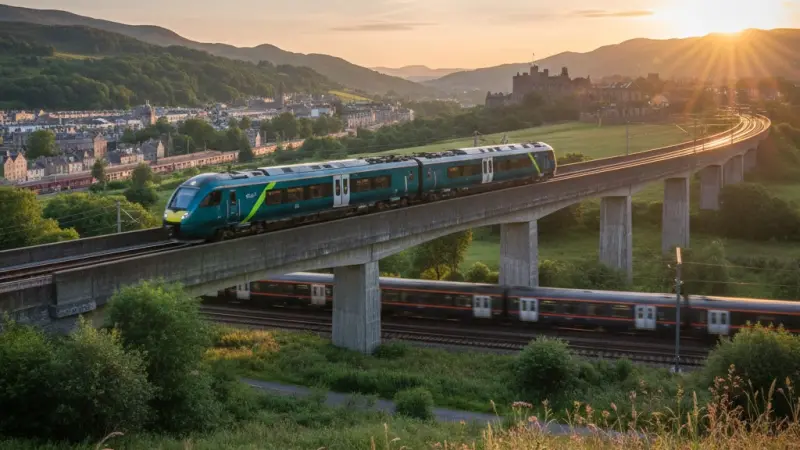
As we approach 2026, the British rail landscape is undergoing its most significant transformation since the Victorian era. The government’s commitment to "Levelling Up" is finally manifesting in physical steel and concrete, with several major projects slated for completion or significant milestones by mid-year. This isn't just about faster journeys; it's about reimagining how we move across the United Kingdom.
For the average commuter and leisure traveller, 2026 represents the year when connectivity becomes truly nationwide. From the long-awaited East-West Rail link to the expansion of low-cost open-access operators, the choices available to passengers are broadening. Recent statistics from the Department for Transport suggest that rail usage is projected to hit record highs in 2026 as these new capacities come online.
We are seeing a shift away from the London-centric model. New routes are focusing on lateral connectivity—moving east to west and north to south without the mandatory transit through a capital terminal. This decentralisation is the cornerstone of the 2026 rail strategy, aimed at boosting regional economies from Stirling to the South Coast.
Connecting Scotland and London: The Lumo Expansion
Stirling to London Euston: The Open Access Revolution
Disrupting the West Coast Main Line Monopoly
One of the most anticipated developments of 2026 is the launch of the Lumo service between Stirling and London Euston. Scheduled to begin in the spring of 2026, this service marks a pivotal moment for Scottish commuters. By offering four daily return services, Lumo is set to provide a much-needed competitive alternative to established franchises.
The route is strategically designed to serve stations that have historically lacked direct links to the capital. Stops at Larbert, Greenfaulds, and Whifflet will connect central Scotland directly to the heart of London. This isn't just a win for convenience; it's a victory for the wallet. Open-access operators like Lumo have a proven track record of driving down ticket prices across the board.
Industry analysts suggest that the "Lumo Effect" could see fares on the West Coast Main Line drop by as much as 15% as competition intensifies. Furthermore, the use of all-electric fleets aligns with the UK's 2050 Net Zero targets, making this route a primary choice for the eco-conscious traveller.
- Direct services from Stirling to London Euston starting mid-2026.
- Stops including Motherwell, Lockerbie, and Preston.
- 100% electric trains reducing carbon footprints by up to 90% compared to flying.
Bridging the Innovation Gap: East-West Rail Progress
Oxford to Milton Keynes: The Birth of the Varsity Line
Unlocking the UK’s Science and Technology Corridor
The East-West Rail (EWR) project is arguably the most vital piece of infrastructure for the UK's knowledge economy. By 2026, Connection Stage 1 between Oxford and Bletchley/Milton Keynes is expected to be fully operational with passenger services. This restores a link that was tragically lost during the Beeching cuts of the 1960s.
This route serves the "Golden Triangle" of Oxford, Cambridge, and London. By 2026, we expect to see two trains per hour between Oxford and Milton Keynes. The economic impact is projected to be immense, with local authorities anticipating a multi-billion pound boost to the regional GDP as businesses flock to better-connected hubs.
The technology behind EWR is equally impressive. The 2026 rollout will feature advanced signalling systems and the potential for battery-hybrid rolling stock.
This ensures that the line remains future-proof while minimising the environmental impact on the rural landscapes of Buckinghamshire and Oxfordshire.
The Northern Powerhouse: TransPennine Route Upgrades
Manchester to York: Faster, Greener, More Reliable
Electrification and Digital Signalling Milestones
In the North of England, the TransPennine Route Upgrade (TRU) is hitting critical mass in 2026. This multi-billion pound investment is transforming the 76-mile line between Manchester and York via Leeds and Huddersfield. For decades, this route has been hampered by diesel-only tracks and bottleneck tunnels.
By 2026, significant sections of the route will be fully electrified. This allows for the introduction of newer, faster electric trains that can reach speeds of 125mph. For passengers, this means a reduction in journey times between Manchester and Leeds to under 42 minutes. It's a game-changer for the Northern commute.
Digital signalling is another 2026 milestone. By moving to a digital system, Network Rail can run trains closer together with increased safety. This directly translates to more seats and fewer delays. In 2026, the TRU will finally deliver the "turn-up-and-go" service that Northern cities have long deserved.
HS2 Phase 1: The London to West Midlands Pulse
Old Oak Common and the Future of High Speed
Managing Expectations and Delivering Capacity
While the full scope of HS2 has been a subject of intense debate, 2026 is a landmark year for Phase 1 construction. While full passenger services won't begin until the end of the decade, 2026 will see the completion of major civil engineering works at Old Oak Common in West London.
Old Oak Common will become one of the best-connected stations in the UK, acting as a super-hub between HS2 and the Elizabeth Line. By 2026, the sheer scale of the project will be visible to all. The focus is shifting from "if" to "how" these high-speed links will integrate with the existing network to relieve pressure on the West Coast Main Line.
Research indicates that by shifting long-distance travelers to the HS2 tracks, 2026 will be the year Network Rail begins reallocating "released capacity" on existing lines. This means more local services for towns like Rugby, Milton Keynes, and Watford, which have historically been squeezed by non-stop express trains.
Regional Revivals: The Midlands Rail Hub
Birmingham’s New Connectivity Peaks
Expanding Access Across the Heart of England
The Midlands Rail Hub is a flagship project aimed at improving links between the East and West Midlands. In 2026, we will see the fruits of the "Bordesley Chords" and other engineering feats around Birmingham Curzon Street and Moor Street. This project is essential for linking cities like Leicester, Nottingham, and Hereford more effectively.
For too long, cross-Midlands travel has been cumbersome. The 2026 upgrades will facilitate an additional 10 trains per hour through central Birmingham.
This creates a "metro-style" feel for regional rail, encouraging commuters to ditch the M6 in favour of a reliable, fast rail link.
Furthermore, 2026 will see the integration of the West Midlands Metro with major rail hubs. The "one-ticket" solution, inspired by London's Oyster system, is expected to be fully rolled out across the Midlands by mid-2026, making multi-modal travel seamless for the first time.
South Coast and Welsh Connectivity: 2026 Outlook
The Great Western Main Line Improvements
Cardiff to London: Enhancing the Bristol Corridor
Heading west, the Great Western Railway (GWR) is continuing its investment in the 2026 timetable. The focus here is on the South Wales Main Line. By 2026, additional battery-electric services will be trialled on branch lines, further decarbonising the network.
In the South, the "MetroWest" project around Bristol will see new stations opening or under construction by 2026. This includes the Portishead line, which aims to reconnect a major town to the Bristol rail network. This regional focus ensures that the benefits of new train routes in the UK for 2026 are felt in every corner of the country.
A New Era for British Rail
The year 2026 stands as a lighthouse for the future of UK transport. We are moving away from an era of underinvestment and toward a period of high-frequency, low-carbon, and highly competitive rail travel. Whether it is the low-cost thrill of a Lumo service from Stirling or the high-tech precision of the East-West Rail, the British passenger has never had more to look forward to.
As these projects come to fruition, the emphasis must remain on the passenger experience. Reliability, affordability, and accessibility are the three pillars that will determine the success of these new routes. Based on current trajectories, 2026 will be the year the UK railway finally catches up with its European counterparts.
Frequently Asked Questions
When exactly will the Stirling to London Lumo service start?
The Lumo service between Stirling and London Euston is currently scheduled to launch in
late Spring 2026, pending final track access approvals and rolling stock delivery.
Will HS2 be running in 2026?
No, HS2 will not be running passenger services in 2026. However, major infrastructure milestones, particularly at Old Oak Common, will be completed during this year.
What is the benefit of East-West Rail for Oxford commuters?
For Oxford commuters, the 2026 opening of the Bletchley link provides a direct connection to Milton Keynes and eventually Cambridge, bypassing the need to travel via London.
Are ticket prices expected to rise in 2026?
While annual fare increases are standard, the introduction of open-access operators like Lumo and Grand Union is expected to create price competition on major routes.
How much faster will trains be between Manchester and Leeds in 2026?
Following the TransPennine Route Upgrade milestones in 2026, journey times are targeted to drop to approximately 42 minutes for express services.
Will 2026 routes be more environmentally friendly?
Yes, the majority of new routes for 2026, including Lumo and the electrified TransPennine sections, utilize 100% electric or hybrid-electric trains.
Can I use contactless payment on all new 2026 routes?
The "Project Oval" expansion aims to bring contactless and pay-as-you-go technology to hundreds of more stations across the South East and Midlands by 2026.
Which new stations are opening in 2026?
Major station openings or significant redevelopments expected in 2026 include Cambridge South, Winslow (EWR), and several stations along the Northumberland Line.
What is an "Open Access" operator?
An open-access operator like Lumo or Grand Central runs services independently of
the government-franchised system, often offering lower fares and specific niche routes.
Will there be more direct trains from Scotland to the North East?
Yes, the expansion of Lumo and potentially other operators will increase direct connectivity between Glasgow/Edinburgh and Newcastle/York in 2026.
Disclaimer: The information provided in this article is for general informational and research purposes only. Company details, features, services, and market positions may change over time. Readers are advised to visit official company websites and conduct independent research before making any business decisions or purchasing services.
Most Searchable Keywords
Recent Blogs


Related Listings
Categories
- Accountants (295)
- Advertising Agencies (559)
- Architects (149)
- Automobiles (377)
- Beauty (300)
- Carpenters (146)
- Cleaning Services (387)
- Dentists (189)
- Driving (62)
- Electricians (215)
- Energy (8)
- Event Organiser (686)
- Finance (602)
- Guide (3372)
- Health (2207)
- Information technology (206)
- Legal Services (353)
- Logistics (6)
- Maintenance (65)
- Manufacturing (35)
Sponsored Listings in Travel Agencies


Related Blogs

How Much Do UK Actors Really Earn Full Indust...
Read this insightful article "How Much Do UK Actors Really Earn Full Industry Breakdown" to expand your knowledge!

Blue Light Card UK 2026 Check Eligibility and...
Read this insightful article "Blue Light Card UK 2026 Check Eligibility and Claim" to expand your knowledge!

BBC Radio 1 DJs Net Worth Ranking Revealed
Read this insightful article "BBC Radio 1 DJs Net Worth Ranking Revealed" to expand your knowledge!
Questions & Answers – Find What
You Need, Instantly!
How can I update my business listing?
Is it free to manage my business listing?
How long does it take for my updates to reflect?
Why is it important to keep my listing updated?
