
Mastering UK Train Times: A Stress-Free Guide to the Rail Network
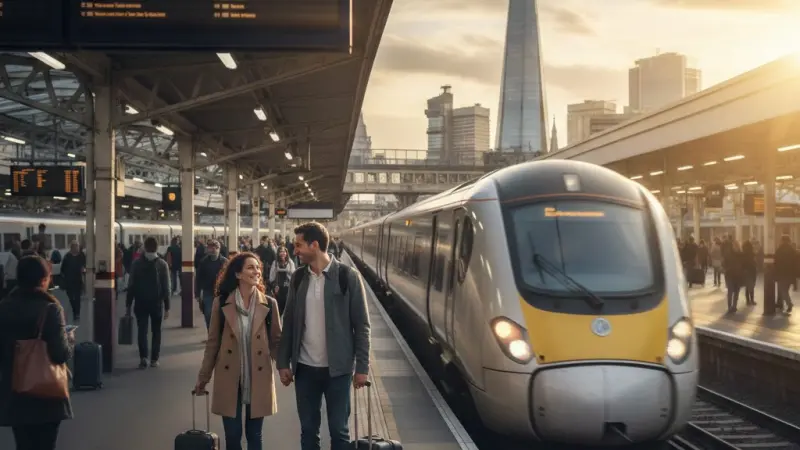
Finding accurate train times in the UK is the cornerstone of any successful journey across the British Isles, whether you are commuting into London or exploring the Scottish Highlands. To get the most reliable information, passengers should consult live departure boards which reflect real-time delays, platform changes, and cancellations. Most UK rail services run on a consistent schedule, but weekend engineering works often cause significant deviations. By checking schedules at least twenty-four hours in advance and again on the morning of travel, you ensure that your itinerary remains intact. The UK rail network is a complex web of various private operators, yet they all feed into a central data system, making it possible to view comprehensive timetables via simplified digital interfaces or physical boards at major stations.

Featured Snippet: To check UK train times effectively, use official rail industry apps or websites that provide real-time GPS tracking of locomotives. Most services operate between 05:00 and 01:00, with reduced frequencies on Sundays. Always look for the 'Live Departures' section to see current platform numbers and any active delay minutes attributed to your specific service.
Navigating the National Rail Network
The British railway system is a sophisticated infrastructure consisting of over two thousand stations and dozens of distinct train operating companies. Understanding how these entities interact is vital for any passenger trying to decipher a complex timetable. While each operator, such as Avanti West Coast or Great Western Railway, manages its own fleet, they all adhere to the National Rail Conditions of Travel. This means that even if your journey involves multiple changes between different providers, your ticket remains a valid contract for the entire route specified. Navigating this network requires a basic grasp of the primary arteries, such as the East Coast Main Line and the West Coast Main Line, which serve as the backbone for long-distance travel across the country.
Understanding Regional Variations in Service
Rail services in the United Kingdom vary significantly depending on your geographical location. In the South East, particularly around the London commuter belt, trains are frequent, often running every few minutes during peak hours. Conversely, in more rural areas of Wales or the North of England, you might find that services only operate once every hour or even less frequently. It is essential to recognise that "train times" in a metropolitan context imply high-frequency turn-up-and-go services, whereas in rural contexts, they represent a fixed appointment that must be planned for with precision to avoid long waits on exposed platforms.
Digital Versus Physical Timetables
While digital apps offer the convenience of real-time updates and GPS tracking, physical departure boards at stations remain the definitive source of truth for platform assignments. Digital versions are excellent for planning, but the physical boards are updated by station staff who have immediate knowledge of local track issues or short-notice changes that might not have propagated through the national data feed yet.
The Impact of Peak and Off Peak Hours
Timing is everything when it comes to the cost and comfort of your journey. The UK rail industry categorises travel times into Peak, Off-Peak, and Super Off-Peak windows. Generally, Peak times coincide with the morning and evening rushes, typically before 09:30 and between 15:30 and 18:30 in major cities. Travelling during these windows is significantly more expensive because demand is at its highest. If your schedule allows for flexibility, waiting just thirty minutes can often result in a price drop of over fifty percent. These distinctions are not just about cost; they also dictate the level of crowding you are likely to experience, with Off-Peak trains offering a much more relaxed environment for work or leisure.
How Evening Departures Affect Next Day Travel
Many passengers are unaware that certain tickets allow for travel on the following day if the journey begins late in the evening. For example, some Off-Peak returns are valid for the return leg for up to a month, but the specific "time of day" restrictions still apply to each individual date. Understanding the nuance of when "Night" ends and the "Morning" peak begins is crucial. Usually, the first service of the day after 04:30 is considered the start of the new daily schedule, which is when the most stringent peak restrictions re-engage for commuters heading into major employment hubs like Birmingham or Manchester.
Avoiding the Friday Afternoon Rush
Friday afternoons in the UK represent a unique challenge for rail schedules. Many travellers head home for the weekend or embark on city breaks, meaning that trains leaving between 14:00 and 19:00 are exceptionally busy. Even if a train is technically "Off-Peak" by the clock, the physical capacity is often pushed to its limit. Pre-booking a seat during these times is highly recommended.
Planning for Seasonal and Weekend Disruptions
The British rail network undergoes constant maintenance to ensure safety and reliability. Much of this work is scheduled for weekends and bank holidays to minimise the impact on the Monday-to-Friday workforce. This means that a journey taking two hours on a Tuesday could easily take four hours on a Sunday due to rail replacement bus services.
Always check the "Planned Improvements" section of travel websites before setting off. These disruptions are often announced weeks in advance, allowing you to choose an alternative route or adjust your travel date to avoid the inconvenience of coach transfers and extended journey times.
The Reality of Rail Replacement Bus Services
When a section of track is closed for engineering, the operator will provide a replacement bus service. While these are included in the price of your rail ticket, they are significantly slower than trains because they must navigate local road traffic and stop at every intermediate station. If your journey involves a bus, you should expect to add at least sixty to ninety minutes to your total travel time. It is also worth noting that buses often have limited space for luggage and bicycles compared to the trains they are replacing, which can be a major factor for those travelling with heavy gear.
Bank Holiday Schedule Adjustments
During national holidays, the entire network usually operates on a Sunday schedule. This means fewer early morning trains and an earlier finish in the evening. If you are attending a major event, such as a music festival or a sporting match during a bank holiday, the demand will be high while the supply of seats is low. Booking well in advance is the only way to guarantee your spot on these busy days.
Securing the Best Value Tickets
While checking train times, you will notice a wide range of prices for the same journey. The secret to affordable UK rail travel is the "Advance" ticket. These are released up to twelve weeks before the date of travel and are tied to a specific train time. If you miss that specific train, your ticket becomes invalid. However, the savings can be astronomical, often costing just £10 for a journey that would cost £80 on the day. For those who cannot commit to a specific time, "Anytime" tickets offer total flexibility but at the highest possible price point. Balancing your need for flexibility against your budget is the primary task of the savvy rail traveller.
Using Railcards to Reduce Every Journey
For a small annual fee, usually around £30, a Railcard can save you one-third on almost all rail fares in the UK. There are various types available, including those for youths, seniors, couples, and families. If you spend more than £90 a year on trains, the card pays for itself immediately. Most Railcards are now available in a digital format on your phone, making it impossible to leave them at home. Just ensure your phone is charged, as station staff will need to see the active Railcard alongside your ticket to validate your discount during the journey.
The Benefits of Split Ticketing
Split ticketing is a legal way to save money by buying two or more tickets for different segments of a single journey instead of one through-ticket. For example, if you are going from London to Edinburgh, it might be cheaper to buy a ticket from London to York and another from York to Edinburgh. You stay on the same train the whole time; you just have different tickets for different parts of the track. Many modern booking engines now automate this process for you.
Common Pitfalls and Mistakes to Avoid
One of the most common mistakes is assuming that a "Return" ticket is always the best value. Often, two "Advance Single" tickets are cheaper than a single "Off-Peak Return." Another frequent error is failing to allow enough time for transfers between stations, particularly in cities like London where you may need to use the Underground to get from Euston to Waterloo. The system usually suggests a minimum connection time, but if you have heavy luggage or are travelling with children, it is wise to manually increase this buffer to at least twenty or thirty minutes to account for the scale of these major terminals.
Ignoring Platform Changes and Announcements
In busy stations, platform changes can happen in seconds. It is a mistake to sit in a station cafe and assume your train will depart from the platform listed on your phone app from twenty minutes ago. Always keep an eye on the large overhead displays and listen for audio announcements. Sometimes, a train might be divided into two portions at a station further down the line, meaning you must be in the correct carriage to reach your final destination. These details are always announced on the platform before departure and should not be ignored.
Overlooking the Small Print on Restrictions
Every ticket comes with a "Restriction Code." This code dictates exactly which trains you can and cannot take. A common error is boarding a train that is ten minutes too early, falling just inside the morning peak period, which can result in a hefty fine or the requirement to buy a new full-price ticket. If you are unsure whether your ticket is valid for a specific service, always ask a member of station staff before you pass through the ticket barriers.
Practical Steps for a Stress Free Journey
To ensure your trip goes smoothly, start by downloading a reliable rail app and enabling "Push Notifications" for your specific journey. This will alert you to any sudden changes. Secondly, arrive at the station at least fifteen minutes before your train is due to depart.
This gives you time to find your platform, use the facilities, and locate your carriage if you have a reserved seat. If you are travelling on a long-distance route, try to find the "Coach" letters marked on the platform floor or screens, which indicate where your specific carriage will stop, saving you from a frantic sprint when the train arrives.
Managing Luggage and Seating
Space on UK trains is often limited, especially on older rolling stock. If you have large suitcases, try to board early to secure space in the luggage racks at the ends of the carriages. Overhead racks are suitable for small bags and coats. If you do not have a reserved seat, look for the digital displays above the seats; if they are blank or say "Available," you are free to sit there. Some operators also have "Unreserved" coaches, usually at the very front or back of the train, which are kept specifically for passengers who bought their tickets on the day.
Utilising Onboard Amenities
Most long-distance UK trains offer free Wi-Fi and power sockets, though the quality of the connection can vary as the train moves through tunnels or rural areas. There is usually a buffet car or a trolley service providing drinks and snacks. However, prices onboard are typically higher than at station shops, so it is often more economical to buy your refreshments before you board. If you are travelling in First Class, these amenities are often included in the price of your ticket, along with more spacious seating and a quieter environment.
The Future of Rail Travel in the UK
The UK rail network is currently undergoing a period of significant transformation. With the transition toward "Great British Railways," a new state-owned body designed to integrate the tracks and the trains, passengers can expect a more unified ticketing system and more consistent service levels. Future developments also include the rollout of more "Contactless" and "Pay As You Go" systems across the country, similar to what is already used in London. This will eventually eliminate the need for paper tickets and complex pre-booking for many regional journeys, making the process of checking train times and paying for travel much more intuitive for everyone.
Technological Advancements in Scheduling
Artificial intelligence is beginning to play a larger role in how train times are managed and communicated. Predictable delay modeling allows operators to inform passengers of potential issues before they even happen. We are also seeing the introduction of "Digital Twin" technology, where a virtual version of the rail network is used to test the impact of schedule changes in real-time. For the passenger, this means more accurate arrival estimates and fewer instances of "ghost trains" appearing on apps but never arriving at the platform.
Sustainability and High Speed Rail
The drive toward net-zero emissions is pushing the rail industry to phase out diesel locomotives in favour of electric and hydrogen-powered alternatives. Furthermore, while the High Speed Two (HS2) project has seen various changes in scope, the focus remains on increasing capacity on the existing network by moving long-distance travel to dedicated high-speed lines. This will free up space on local lines for more frequent commuter services, essentially rewriting the timetable for millions of people across the Midlands and the North of England in the coming decades.
Mastering UK train times is a blend of using the right digital tools and understanding the traditional logic of the rail network. By prioritising Advance tickets, staying aware of peak time restrictions, and always checking for weekend engineering works, you can travel across the UK with confidence. Remember that the network is there to serve you, and while disruptions can happen, being prepared with a backup plan or a buffer of time will mitigate most stresses.
Whether you are heading to a business meeting in the City of London or taking a scenic trip through the Lake District, the rails remain one of the most efficient and enjoyable ways to see everything the United Kingdom has to offer.
Frequently Asked Questions
How far in advance can I check train times?
You can usually check the basic timetable for UK trains up to twelve weeks in advance. However, specific details regarding engineering works and minor schedule adjustments are often finalised about six to eight weeks before travel. For the most accurate "live" data, it is best to check on the day of your journey, as this will include any real-time delays or platform changes caused by daily operations.
What is the difference between Off-Peak and Super Off-Peak?
Off-Peak tickets allow travel during less busy times of the day, usually starting after 09:30 on weekdays. Super Off-Peak tickets are even more restrictive and are generally only valid during the absolute quietest periods, such as the middle of the day on Tuesdays to Thursdays or during certain weekend windows. Both offer significant savings over Anytime tickets, but Super Off-Peak is almost always the cheapest flexible option available.
Can I use my phone as a train ticket?
Yes, most UK train operating companies now offer "e-tickets" or "m-tickets" that can be stored in your mobile wallet or within a specific rail app. When you arrive at the station, you simply scan the barcode or QR code at the ticket barrier. Ensure your phone has enough battery for the entire journey, as you may be asked to show your ticket to a conductor while on the train.
What should I do if my train is delayed or cancelled?
If your train is cancelled, your ticket is usually valid on the next available service provided by the same operator. If a delay causes you to arrive at your destination more than 15 or 30 minutes late (depending on the operator), you are entitled to compensation through the "Delay Repay" scheme. Keep your ticket and take a note of the delay duration to make a claim online through the operator's website.
Is it cheaper to buy tickets at the station or online?
It is almost always cheaper to buy tickets online in advance. Tickets sold at the station on the day of travel are typically "Anytime" or "Off-Peak" fares, which are set at a fixed, higher price. Online booking allows you to access "Advance" fares, which are discounted tickets sold in limited quantities. Even booking online just an hour before you travel can sometimes save you money compared to using the station vending machine.

Disclaimer: The information provided in this article is for general informational and research purposes only. Company details, features, services, and market positions may change over time. Readers are advised to visit official company websites and conduct independent research before making any business decisions or purchasing services.
Most Searchable Keywords

Recent Blogs



Related Listings

Categories
- Accountants (295)
- Advertising Agencies (559)
- Architects (149)
- Automobiles (376)
- Beauty (300)
- Carpenters (146)
- Cleaning Services (386)
- Dentists (189)
- Driving (61)
- Electricians (215)
- Energy (8)
- Event Organiser (684)
- Finance (598)
- Guide (3363)
- Health (2205)
- Information technology (206)
- Legal Services (352)
- Logistics (6)
- Maintenance (65)
- Manufacturing (35)

Sponsored Listings in Health and Wellbeing

Related Blogs

Bristol Firework Displays Every Local Should...
Read this insightful article "Bristol Firework Displays Every Local Should Experience" to expand your knowledge!

Self Assessment Registration 2026 Common Erro...
Read this insightful article "Self Assessment Registration 2026 Common Errors and Rules" to expand your knowledge!

Calculate Your 2026 Employer National Insuran...
Read this insightful article "Calculate Your 2026 Employer National Insurance Bill Easily" to expand your knowledge!
Questions & Answers – Find What
You Need, Instantly!
How can I update my business listing?
Is it free to manage my business listing?
How long does it take for my updates to reflect?
Why is it important to keep my listing updated?
