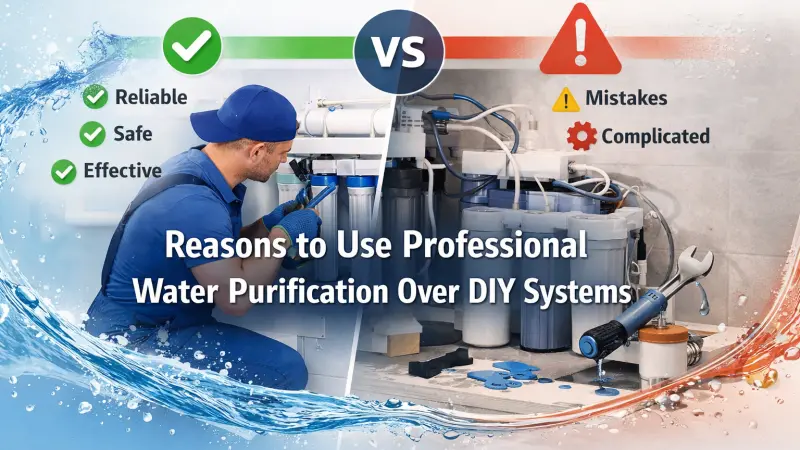
Have you ever considered the precise chemical composition of the water flowing from your tap and whether a simple jug filter is truly sufficient to manage modern contaminants? While the United Kingdom boasts some of the highest standards of drinking water globally, the journey from treatment works through miles of Victorian-era piping to a domestic residence can introduce various elements that affect taste, odour, and mineral balance. Understanding the distinction between professional-grade purification and do-it-yourself methods is essential for anyone looking to optimise their domestic or commercial water quality.

The Scientific Basis of Water Purification
Water purification is not merely the process of straining out visible particles; it is a complex sequence of physical, chemical, and biological stages designed to render water safe for specific uses. In a professional context, this often involves sophisticated technologies such as reverse osmosis, ultraviolet sterilisation, and ion exchange. DIY systems, by contrast, typically rely on basic activated carbon granules or simple sediment mesh, which have limited efficacy against dissolved solids and microscopic pathogens.
Understanding Contaminant Profiles
The contaminants found in standard UK water supplies can be categorised into several groups. These include inorganic compounds like nitrates from agricultural runoff, heavy metals such as lead from older plumbing, and organic compounds like pesticides. Furthermore, many regions in the South and East of England suffer from "hard water," which is high in calcium and magnesium carbonates. While these minerals are not harmful to health, they cause significant scale build-up in appliances and heating systems, leading to reduced efficiency and premature failure. Professional systems are engineered to address these specific regional profiles through multi-stage filtration that DIY alternatives cannot replicate.
The Limitations of DIY Filtration Methods
Many homeowners opt for DIY solutions such as pitcher filters or basic faucet attachments due to their low initial cost and ease of installation. However, these systems often provide a false sense of security. The volume of media in a standard jug filter is relatively small, meaning it becomes saturated quickly. Once saturated, the filter may not only stop removing contaminants but could potentially release trapped impurities back into the water in a process known as "breakthrough."
Contact Time and Flow Rates
A critical factor in effective water treatment is contact time—the duration that water remains in contact with the filtration media. Professional installations are designed with precise flow restrictors to ensure that water moves through the media at a speed that allows for maximum adsorption or chemical reaction. In many DIY setups, the flow is either too fast for effective treatment or too slow to be practical for a modern household's needs. Furthermore, DIY filters rarely address the issue of microbiological growth within the filter cartridge itself, which can occur if the unit sits idle for several days in a warm kitchen environment.
The Advantages of Professional Integration
Professional water purification systems are typically integrated directly into the property’s plumbing. This approach offers several technical advantages over standalone manual units. Firstly, these systems can provide "whole-house" filtration, meaning every tap—from the kitchen to the bathroom—delivers treated water.
This prevents the inhalation of chlorine vapours during showering and protects all household appliances from the damaging effects of limescale.
Advanced Filtration Technologies
While DIY systems are mostly limited to carbon filtration, professional setups utilise a broader range of technologies:
- Reverse Osmosis (RO): This process forces water through a semi-permeable membrane, removing up to 99% of dissolved solids, including fluoride, lead, and arsenic.
- UV Sterilisation: High-intensity ultraviolet light is used to neutralise the DNA of bacteria and viruses, rendering them harmless without adding chemicals to the water.
- Ultrafiltration: A pressure-driven process that removes extremely fine particulates and macromolecules, providing a high level of clarity.
- Deionisation: Utilising ion-exchange resins to remove mineral ions, resulting in high-purity water often required for sensitive equipment or laboratory use.
Economic and Environmental Considerations
Although the upfront investment for a professional system is higher than a DIY kit, the long-term economics often favour the professional route. DIY filters require frequent cartridge changes, which can be expensive and generate significant plastic waste. Professional systems use high-capacity media tanks or industrial-sized cartridges that last significantly longer, reducing the cost per litre of purified water. Furthermore, by protecting boilers and washing machines from scale, professional purification can extend the lifespan of expensive household assets by several years.
In the UK context, the adoption of professional water standards is becoming increasingly relevant as businesses and homeowners seek to reduce their environmental footprint. By eliminating the need for bottled water, these systems contribute to a reduction in single-use plastic consumption. For commercial entities, providing high-quality filtered water can be a key component of their sustainability goals and employee wellbeing programmes.
Maintenance and Reliability
One of the primary risks associated with DIY water treatment is the lack of a structured maintenance schedule. Users often forget to change filters or fail to sanitise the equipment correctly. Professional services usually include an annual maintenance contract where technicians test the water quality, replace membranes, and ensure the system is operating at peak efficiency. This provides a verifiable standard of water quality that is essential for commercial settings, such as restaurants or dental clinics, where water safety is regulated by health and safety legislation.
Scalability and Customisation
Every property has unique water requirements based on its occupancy and local water chemistry. A professional installer will conduct a water analysis before recommending a system. This ensures the solution is bespoke—addressing specific issues like high iron content in private well supplies or excessive chlorine in urban areas. DIY systems are "one-size-fits-all," which often means they are either inadequate for the task or overkill for the specific needs of the user.
The Importance of Water Quality in the UK
In the modern United Kingdom, the quality of water is a cornerstone of public health and industrial productivity. Businesses such as pharmaceutical manufacturers, high-end hospitality venues, and food processors rely on consistent water parameters to ensure the safety and quality of their products.
For the individual, the benefit of professional water purification extends beyond simple hydration, influencing skin health, the longevity of domestic heating systems, and the overall taste of prepared food and beverages. Generally, service providers in the water treatment sector play a vital role in maintaining the infrastructure that supports these high standards across the country.
Enhancing Visibility for Water Specialists
As the demand for high-quality water solutions grows, the need for clear communication between experts and consumers becomes paramount. In an era where information is accessed instantly, businesses involved in the installation and maintenance of purification hardware benefit significantly from being easily found by those in need of technical advice. Establishing a robust digital footprint ensures that local expertise is accessible to the community. By utilising a free business listing, specialists can reach a wider audience of homeowners and facilities managers who are looking to move beyond basic DIY solutions. For those seeking comprehensive details on regional experts, consulting a free uk business directories list provides a reliable starting point. This level of discoverability is essential for the growth of the industry and for ensuring that the public has access to professional-grade water standards. Local Page UK serves as a valuable bridge in this process, connecting skilled technicians with the residences and enterprises that require their sophisticated services.
Frequently Asked Questions
Is professional water purification necessary if my tap water is already safe to drink?
While UK tap water meets safety standards, professional purification can improve the aesthetic qualities (taste and smell) and remove minerals that cause limescale, which protects your appliances and improves the efficiency of your heating system.
How often does a professional system require servicing?
Typically, a professional system requires an annual service to ensure the filters
and membranes are functioning correctly and to perform a system sanitisation.
Can a DIY filter remove fluoride or heavy metals?
Most standard DIY carbon filters are not effective at removing dissolved fluoride or significant levels of heavy metals. For these contaminants, a professional reverse osmosis system is usually required.
Will a water softener also purify my water?
No, a water softener is specifically designed to remove calcium and magnesium to prevent limescale. While it "treats" the water for hardness, it does not remove chemical contaminants or bacteria; for that, you would need a purification system.
Are professional systems expensive to run?
The running costs are often lower than DIY systems when calculated per litre, as the high-capacity filters last much longer and the protection of appliances saves money on repairs and energy bills.