
Retargeting vs. Remarketing: Key Differences & Strategies
In the fast-paced world of digital marketing, capturing a user's attention is only half the battle. The real challenge lies in what happens after they click away. If you’ve spent any time looking into digital advertising, you’ve likely stumbled across the terms Retargeting and Remarketing.

While many marketers use these terms interchangeably, they are distinct strategies with different technical executions and goals. Understanding the nuances between the two is the difference between a disjointed ad spend and a high-converting sales funnel.
In this deep dive, we will explore the mechanics of both strategies, why 97% of your web traffic is leaving without buying, and how to bring them back into the fold.
The Reality of Modern Consumer Behavior
Before we jump into the definitions, let’s look at the "why." Statistics show that approximately 97% of first-time website visitors leave without making a purchase.
Why does this happen?
Distraction: A notification pops up, and the user forgets your tab is open.
Comparison: They are actively looking at three of your competitors.
Research: They are at the "Top of the Funnel" (TOFU) and aren't ready to commit.
Retargeting and Remarketing are the two primary toolkits used to solve this "leaky bucket" problem.
What is Retargeting?
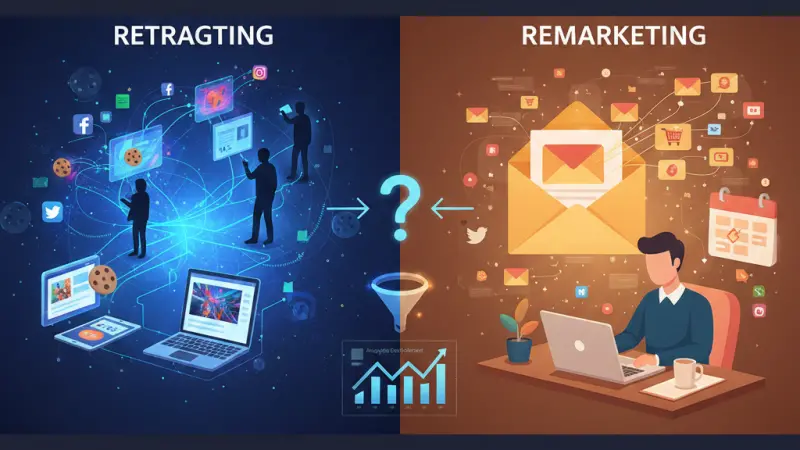
Retargeting is a digital advertising strategy focused on reaching out to "window shoppers"—individuals who have interacted with your brand or website but haven't converted yet.
How Does Retargeting Work?
Retargeting relies primarily on cookies and tracking pixels. When a user visits your site, a small piece of JavaScript code (often called a pixel) is placed in their browser. This pixel is unobtrusive and doesn't affect site performance.
As that user browses the rest of the internet—whether they are on Facebook, reading a news article, or watching YouTube—the pixel notifies retargeting platforms (like Google Ads or Meta Ads) to serve your specific ad to that user.
Key Types of Retargeting
Site Retargeting: Serving ads to users after they leave your website.
Search Retargeting: Targeting users who searched for keywords related to your business but haven't visited your site yet.
Social Media Retargeting: Showing ads on platforms like Instagram or LinkedIn based on website interactions.
Dynamic Retargeting: The "creepy but effective" ads that show the exact product a user left in their cart.
Why You Need a Retargeting Strategy
Brand Recall: It keeps your brand "top of mind."
High ROI: You are spending money on people who already know you exist,
making them 70% more likely to convert than a cold lead.
Precision: You can segment ads. For example, if someone looked at "Running Shoes," don't show them ads for "Hiking Boots." Show them the shoes.
What is Remarketing?
While retargeting is often about anonymous web traffic, Remarketing is typically about re-engaging your existing database. It focuses on people who have already handed over their information (usually an email address) or have made a purchase in the past.
How Does Remarketing Work?
Remarketing is less about "tracking pixels" and more about Customer Relationship Management (CRM). It utilizes email marketing, SMS, or direct mail to reach out to:
Inactive customers who haven't bought in six months.
Users who abandoned a cart (and were logged in).
Current customers who might be interested in an upsell.
Key Types of Remarketing
Email Remarketing: The most common form. Think of "We miss you" emails or "Complete your purchase" reminders.
Customer Lists: Uploading your email list to Facebook or Google to serve specific ads only to your current clients.
Upsell/Cross-sell: Reaching out to someone who bought a camera to offer them a lens.
Why You Need a Remarketing Strategy
Customer Retention: It is five times cheaper to keep an existing customer than to find a new one.
Personalization: Since you have their data, you can address them by name and reference their past purchase history.
Higher Lifetime Value (LTV): Remarketing turns one-time buyers into brand advocates.
Retargeting vs. Remarketing: The Core Differences
To help you decide where to put your budget, let's look at the technical and strategic differences.
| Feature | Retargeting | Remarketing |
|---|---|---|
| Primary Channel | Paid Ads (Display, Social, Search) | Email, SMS, CRM |
| Audience | Anonymous visitors / New leads | Known leads / Existing customers |
| Data Tool | Cookies & Pixels | Email Lists & Databases |
| Main Goal | Brand awareness & Lead acquisition | Retention & Increasing LTV |
| Cost Structure | Usually CPC (Cost-per-click) or CPM | Usually fixed (Email platform fees) |
Should You Prioritize One Over the Other?
The short answer: No. You should use both.
Use Retargeting to fill the top and middle of your sales funnel. It's the "net" that catches people before they disappear into the internet abyss.
Use Remarketing to squeeze every bit of value from your existing audience. It’s the "nurture" phase that builds long-term loyalty.
The Hybrid Approach
In 2026, the lines are blurring. You can now use "Email Retargeting" (showing ads to your email subscribers) or "Social Remarketing" (uploading customer lists to LinkedIn). The most successful brands use a Cross-Channel Synergy approach, ensuring that a user sees a consistent message whether they are in their inbox or on their favorite blog.
Maximize Your Online Presence with Local Page UK
Whether you are focusing on retargeting or remarketing, your digital foundation starts with visibility. If you want to improve your local SEO
and ensure your business is found by the right audience, you need to be listed where it matters.
Local Page UK is the premier uk online business directory designed to bridge the gap between service providers and customers. Whether you are looking for a uk business directory to boost your backlinks or a uk local business directory to capture regional traffic, we have you covered. Our platform allows users to find local businesses uk with ease, offering a comprehensive local businesses list uk for every industry imaginable.
From specialized niches found in a uk small business directory to high-level corporate connections in a uk b2b business directory, we cater to all sectors. We also provide a robust uk b2c business directory for retail and consumer services. As a leading business directory uk online, we pride ourselves on being the go-to uk service providers directory for quality and trust. Getting your uk business listings online has never been more critical; join the local page uk business directory today and stand out in the most reliable uk business directory website.
Ready to grow for free? You can secure a business listing uk and join our business listing uk in minutes. Our business listing uk service is perfect for startups, making us a top-tier business listing uk. Take advantage of our business listing uk to enhance your reach without the overhead. Whether you need a business listing uk or a business listing uk, our business listing uk tier is built to support you. We even offer targeted options like a business listing uk and business listing uk.
Explore our local business listings uk to see why we are the gold standard for uk service listings. We feature uk verified business listings and highlight uk top rated local businesses to help consumers make informed choices. From the uk home services directory to uk professional services listings and uk trade services listings, our data is clean and accurate. If you are looking for a uk local trades directory, look no further than the local page uk listings—the ultimate tool for a uk local business search.
What Professionals Often Want to Know
Does retargeting use personal data?
No, traditional retargeting uses anonymous cookies. You don’t know the user’s name; you just know their browser "ID."
Is remarketing only for email?
While email is the primary channel, remarketing also includes SMS, WhatsApp marketing, and targeted direct mail.
Which is cheaper, retargeting or remarketing?
Generally, remarketing (email) is cheaper because you own the list. Retargeting requires paying an ad platform for every click or impression.
Why are my retargeting ads not showing?
You usually need a minimum "audience size" (e.g., 100 or 1,000 visitors) before Google or Facebook will start serving ads.
Can I retarget people who visited a specific page?
Yes! This is called "URL-based targeting" and is highly effective for showing relevant products.
What is a 'burn pixel'?
A burn pixel is a snippet of code that stops showing ads to a user once they have actually made a purchase.
How long should a retargeting cookie last?
Most marketers set a 30 to 90-day window, depending on the length of their sales cycle.
Is remarketing GDPR compliant?
Yes, provided you have "opt-in" consent from the user to send them marketing emails.
What is the average CTR for retargeting?
Retargeting ads typically have a CTR (Click-Through Rate) 10x higher than standard display ads.
Can I do retargeting without a website?
Yes, you can retarget based on interactions with your Facebook page or videos (Engagement Retargeting).
What is "Ad Fatigue"?
This happens when a user sees your retargeted ad too many times and starts to ignore it or find it annoying. Use frequency caps to prevent this.
What is a "Cart Abandonment" email?
A classic remarketing tactic where you email a user who left items in their cart to encourage them to finish the checkout.
Do I need a big budget for retargeting?
No, you can start with as little as £5 a day on most social platforms.
What is the difference between "Static" and "Dynamic" ads?
Static ads show the same image to everyone; Dynamic ads change the content based on exactly what the user viewed.
How do I measure success?
Look at View-Through Conversions (VTC) and Click-Through Conversions (CTC) to see the full impact of your campaigns.

Disclaimer: The information provided in this article is for general informational and research purposes only. Company details, features, services, and market positions may change over time. Readers are advised to visit official company websites and conduct independent research before making any business decisions or purchasing services.
Most Searchable Keywords
Recent Blogs

Related Listings

Categories
- Accountants (295)
- Advertising Agencies (559)
- Architects (149)
- Automobiles (377)
- Beauty (300)
- Carpenters (146)
- Cleaning Services (386)
- Dentists (189)
- Driving (62)
- Electricians (215)
- Energy (8)
- Event Organiser (685)
- Finance (599)
- Guide (3365)
- Health (2207)
- Information technology (206)
- Legal Services (353)
- Logistics (6)
- Maintenance (65)
- Manufacturing (35)
Sponsored Listings in Locksmith Services

Related Blogs

Gen Z Political Reporters and News Creators i...
Read this insightful article "Gen Z Political Reporters and News Creators in the UK" to expand your knowledge!

Famous Female Social Media Influencers Across...
Read this insightful article "Famous Female Social Media Influencers Across the UK" to expand your knowledge!
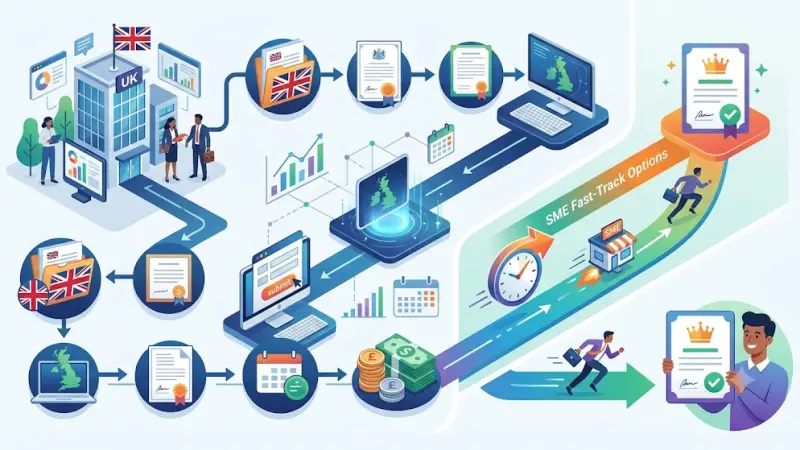
Your UK Sponsor Licence 2026 Step by Step Gui...
Read this insightful article "Your UK Sponsor Licence 2026 Step by Step Guide" to expand your knowledge!
Questions & Answers – Find What
You Need, Instantly!
How can I update my business listing?
Is it free to manage my business listing?
How long does it take for my updates to reflect?
Why is it important to keep my listing updated?
