
The Impact of Customer Reviews on Freight Business Listings
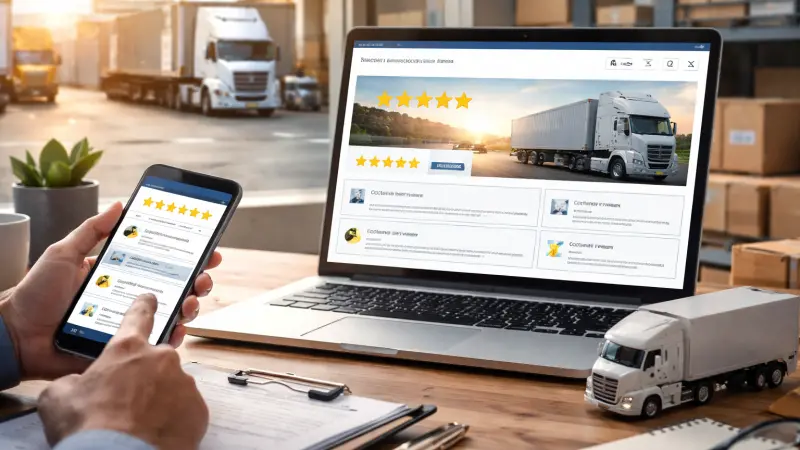
Imagine you need a reliable freight company to ship a consignment of commercial goods across the country. You find two businesses listed in a local business directory UK platform. One has 47 detailed reviews averaging 4.8 stars, with clients praising punctuality and communication. The other has no reviews at all. Which do you contact first?
For the vast majority of buyers, the answer is obvious. Customer reviews have become one of the most powerful forces shaping how freight businesses are discovered, evaluated, and ultimately chosen. In an industry where trust, reliability, and precision matter enormously, what past clients say about a company carries significant weight — both with prospective customers and with the algorithms that determine where a business appears in search results and directory listings.
This article explores precisely how customer reviews impact freight business listings, why they matter more than ever in the UK market, and what freight operators can do to build a review strategy that supports long-term growth.
Why Customer Reviews Matter More Than Ever in Freight
The freight and logistics sector has traditionally relied on word-of-mouth recommendations, long-standing trade relationships, and industry reputation. While those channels remain important, digital discovery has fundamentally changed how businesses find and vet service providers.
According to consistently reported consumer behaviour research, the overwhelming majority of buyers — whether individual consumers or procurement professionals — consult online reviews before committing to a new supplier. In freight and shipping, where the financial and operational stakes can be high, this due diligence is even more pronounced.
Several factors make reviews especially significant in this sector:
- High transaction value: Freight contracts often involve significant sums. Buyers are therefore more motivated to research thoroughly before committing.
- Risk sensitivity: Delayed or damaged shipments have downstream consequences for businesses. Reviews that speak to reliability and handling are scrutinised carefully.
- Limited differentiation: Many freight companies offer broadly similar services. Reviews become one of the few differentiators that feel authentic and trustworthy.
- B2B buying behaviour: Even in business-to-business contexts, individual procurement decision-makers increasingly behave like consumers, checking reviews and online profiles before making recommendations internally.
For freight businesses listed in directories or appearing in local search results, a strong review profile is no longer a bonus — it is a baseline expectation.
How Reviews Influence Search Rankings and Directory Visibility
Customer reviews do not merely influence human decision-making; they directly affect how prominently a business appears in search engine results and on directory platforms. Understanding this mechanism helps freight operators appreciate why review acquisition should be treated as a strategic priority rather than an afterthought.
Google Business Profile and Local SEO
For freight companies targeting local or regional clients, Google Business Profile is often the primary touchpoint. Google uses a range of signals to determine local search rankings, and review quantity, recency, and sentiment are among the most influential factors.
Businesses with a higher volume of recent, positive reviews tend to appear more prominently in the local pack — the map-based results that appear at the top of Google searches for location-based queries. A freight company in Birmingham seeking to attract local manufacturing clients, for instance, will rank more competitively if it has a steady stream of genuine recent reviews compared to a competitor whose review activity has stalled.
The keywords contained within reviews also carry SEO value. When clients naturally mention terms such as "next-day pallet delivery," "temperature-controlled haulage," or "reliable courier for fragile goods," those words contribute to the relevance signals Google uses to match the business to related searches.
Directory Listings and Ranking Algorithms
Beyond Google, many freight businesses are listed across a range of UK business directory sites. These platforms increasingly use review data as a ranking signal within their own search functions. A freight company with a higher star rating and more verified reviews will typically appear higher in directory search results than a competitor with fewer or lower-rated reviews.
This matters because directory platforms often serve as trusted intermediaries — buyers searching a uk business directory list for freight services may encounter your listing before they ever visit your own website. A compelling review profile on these platforms can be the deciding factor in whether a prospect clicks through to learn more or scrolls past to a competitor.
Review Freshness and Consistency
Both search engines and directory algorithms favour businesses whose reviews are recent and consistent rather than clustered at a single point in time. A freight operator who received 30 reviews two years ago but has
accumulated none since will gradually lose ground to competitors who are actively generating new feedback. This reflects a simple truth: consistent review activity signals an active, engaged, and growing business.
The Psychology Behind Reviewing a Freight Company
Understanding why customers leave reviews — and why many do not — is essential for building an effective review strategy. In freight, as in many B2B sectors, clients tend to leave reviews less spontaneously than consumer buyers. Several psychological and practical factors explain this:
- Inertia: Unless prompted, satisfied clients rarely think to leave a review. They are busy professionals with pressing operational priorities.
- Assumed expectations: In B2B relationships, reliable service is often taken as a given. Clients may feel less compelled to comment publicly on something they consider the baseline expectation.
- Negative bias: Customers who experience problems are statistically more likely to leave unsolicited reviews than those who are merely satisfied. This creates a distorted picture unless businesses actively encourage positive feedback.
- Reciprocity: When a freight company has gone above and beyond — resolving a crisis delivery, accommodating an urgent request, communicating proactively during delays — clients feel a stronger motivation to reciprocate through a positive review.
This psychological landscape has practical implications. Freight operators cannot simply wait for reviews to accumulate organically. A proactive, systematic approach to requesting feedback is essential.
Building a Review Acquisition Strategy for Freight Businesses
A well-designed review acquisition strategy does not involve incentivising reviews or manipulating feedback — both practices violate platform guidelines and undermine trust. Instead, it means removing friction, creating the right moments to ask, and making it easy for satisfied clients to share their experience.
Identify the Right Moment to Ask
Timing is everything. The optimal moment to request a review is shortly after a successful delivery or at the close of a well-executed project — when satisfaction is freshest and the client is most likely to respond positively. In a freight context, this might be:
- The day after a consignment is successfully delivered and confirmed.
- At the end of a quarterly review meeting with a regular client.
- Following a positive interaction with your customer service team.
- After resolving a problem or complaint effectively — clients who see issues handled well are often particularly willing to highlight this.
Make the Process Simple
The easier you make it to leave a review, the more likely clients are to follow through. This means providing a direct link to your Google Business Profile review form, your directory listing page, or whichever platform you are prioritising. A generic request to "leave us a review" without a direct link creates unnecessary friction and dramatically reduces conversion rates.
Consider including review links in:
- Post-delivery confirmation emails.
- Monthly or quarterly account communications.
- Email signatures for account managers and customer service staff.
- Printed delivery documentation, using a QR code for easy access.
Train Your Team
Review acquisition should not rest with one person in the business. Account managers, driver liaisons, and customer service staff who build relationships with clients are well-positioned to make natural, conversational requests for feedback. Embedding this as a standard practice — and providing staff with the tools and language to ask comfortably — significantly increases the volume of reviews generated.
Responding to Reviews: A Critical and Often Neglected Step
Acquiring reviews is only half the equation. How a freight business responds to reviews — both positive and negative — sends powerful signals to prospective clients and to the algorithms that rank business listings.
Responding to Positive Reviews
Many businesses make the mistake of ignoring positive reviews, treating them simply as passive endorsements. In fact, responding to positive feedback serves several purposes:
- It demonstrates that the business is engaged and attentive — qualities particularly valued in a logistics context where communication is paramount.
- It reinforces the relationship with the reviewer, increasing the likelihood of repeat business.
- It signals to prospective clients reading the review section that they will be dealing with a responsive, customer-focused organisation.
Responses to positive reviews should be warm, specific, and brief. Reference something particular from the review rather than offering a generic "thank you for your feedback" — this personalisation shows genuine attention.
Responding to Negative Reviews
Negative reviews are inevitable in any service-based business, and freight is no exception. Delays, damaged goods, miscommunications — these things occur even in the best-run operations. What matters most is not the review itself but the response to it.
Research consistently shows that prospective customers are not deterred by the existence of negative reviews per se. Rather, they use negative reviews as a test of how a business handles adversity. A measured, professional, and solution-oriented response to a complaint often reassures readers more effectively than an uninterrupted stream of five-star reviews.
Effective responses to negative reviews should:
- Acknowledge the issue without becoming defensive.
- Apologise sincerely where appropriate.
- Provide context where it is relevant and does not sound like an excuse.
- Outline the steps taken or being taken to resolve the matter.
- Invite the reviewer to continue the conversation offline to reach a satisfactory resolution.
Avoid lengthy public disputes, dismissive language, or any response that could be read as prioritising the business's reputation over the customer's experience.
The Impact of Reviews on Conversion Rates for Freight Listings
Even when a freight business achieves good visibility in search results and directories, reviews play a decisive role in converting that visibility into enquiries and contracts. Several dynamics are worth understanding.
Star Ratings and Click-Through Behaviour
Businesses with higher average star ratings consistently attract higher click-through rates from search results and directory pages. The psychological effect of a 4.7-star rating versus a 3.9-star rating is substantial, even when the absolute difference in service quality may be marginal. In a competitive market where multiple freight providers appear in the same search results, even small differences in rating can significantly shift the distribution of enquiries.
Review Volume as a Trust Signal
A single five-star review carries far less weight than fifty reviews averaging 4.5 stars. Volume signals longevity, consistency, and a track record that can be relied upon. Prospective clients — particularly those looking to establish an ongoing supplier relationship rather than a one-off transaction — pay close attention to the breadth of a review profile.
Review Content and Specificity
Detailed, specific reviews ("They managed our urgent refrigerated delivery to Scotland overnight with zero issues — excellent communication throughout") carry more persuasive weight than brief, generic ones ("Great service, would recommend"). Encouraging clients to share specific details about the service they received — the type of shipment, the route, the challenge involved — produces reviews that are both more trustworthy to readers and more useful for SEO purposes.
Managing Your Reputation Across Multiple Platforms
For freight businesses operating in the UK, reviews can accumulate across a range of platforms: Google, Trustpilot, trade-specific directories, and general uk business directory sites. Managing this landscape effectively requires a clear strategy.
Prioritise the Right Platforms
Not all review platforms are equally valuable for every freight business. Google Business Profile is almost universally the highest priority, given its direct influence on local search visibility. Beyond Google, the most relevant platforms will depend on your specific client profile — whether you primarily serve consumers, SMEs, or large enterprises, and whether you operate locally, regionally, or nationally.
Maintain Consistent Business Information
Across all platforms where your business is listed, consistency of name, address, and contact details is important both for search engine optimisation and for client trust. Inconsistent information across directories can confuse search engines and undermine confidence in the professionalism of your operation. Periodically auditing your listings across a uk business directory list ensures that your profile is accurate and up to date.
Monitor and Respond Regularly
Establish a routine for monitoring new reviews across your key platforms and ensure that responses are provided promptly. A review that goes unanswered for weeks sends a negative signal. Designating a specific team member or using a reputation management tool to flag new reviews for action can help maintain consistency.
Integrating Reviews Into Your Broader Marketing Strategy
Customer reviews should not exist in isolation from the rest of a freight business's marketing activity.
When integrated thoughtfully, they amplify the impact of other channels and activities.
Featuring Reviews on Your Website
Prominently displaying reviews and testimonials on your website — particularly on service pages, the homepage, and contact pages — provides social proof at the precise moments when prospective clients are evaluating whether to get in touch. Embedding Google review widgets or excerpting detailed testimonials are both effective approaches.
Using Reviews in Sales and Tender Processes
For freight companies pursuing larger contracts or responding to formal tenders, a curated selection of detailed client reviews can serve as compelling supporting evidence of capability and reliability. Including a summary of your review profile — star rating, total volume, key themes from client feedback — in proposals reinforces credibility in a way that self-authored marketing copy cannot.
Identifying Service Improvement Opportunities
Beyond their marketing function, customer reviews are a rich source of operational intelligence. Patterns in negative feedback — recurring references to delays on particular routes, communication gaps at specific stages of delivery, or invoicing queries — highlight areas for process improvement. Businesses that treat reviews as a feedback mechanism rather than merely a reputation metric gain a significant operational advantage.
Common Mistakes Freight Businesses Make With Reviews
Several avoidable errors undermine the value of customer reviews for freight operators:
- Ignoring review acquisition entirely: Relying solely on organic, unsolicited reviews results in a slow, uneven accumulation that often overrepresents dissatisfied clients.
- Offering incentives for reviews: Beyond violating platform terms of service, incentivised reviews undermine authenticity and risk damaging trust if discovered.
- Responding defensively to criticism: A combative or dismissive response to a negative review rarely improves the situation and frequently makes it worse in the eyes of onlookers.
- Neglecting non-Google platforms: Many freight clients discover suppliers through specialist directories and trade platforms. Neglecting your presence on these channels leaves potential clients without the social proof they need.
- Treating all reviews as equal: A review from a long-standing enterprise client with complex logistics requirements carries different weight than a review from a one-time parcel sender. Structuring your review acquisition strategy to prioritise high-value client feedback produces a more credible and commercially relevant profile.
The Future of Reviews in the UK Freight Sector
Several trends are likely to shape the role of customer reviews in freight business listings over the coming years.
Artificial intelligence is increasingly being used by search engines and directory platforms to analyse review content for sentiment, specificity, and authenticity. Reviews that are detailed, consistent with a business's verified service offering, and clearly authored by genuine clients will carry increasing weight compared to brief or generic entries.
Video reviews and case studies — while still uncommon in freight — are beginning to emerge as a more immersive form of social proof. A short video testimonial from a logistics manager at a well-known manufacturer carries substantial credibility and differentiation value.
The integration of review data with broader business intelligence platforms means that procurement teams at larger organisations are increasingly able to aggregate and analyse supplier reputations at scale. Freight businesses that have invested in building a robust, authentic review profile will be better positioned as these tools become more widely adopted.
Building Visibility Through the Right Listing Platforms
For freight businesses looking to strengthen their digital presence, the quality of the platforms on which they list is as important as the reviews themselves. Appearing on reputable, well-indexed UK business directory sites ensures that your review profile reaches the right audience and contributes meaningfully to your search visibility.
Platforms that offer free local business directory listings in the UK provide an accessible starting point for freight companies seeking to improve their online reach without significant upfront investment. Ensuring your listing is complete, accurate, and actively maintained — with up-to-date contact details, service descriptions, and a consistent approach to review management — maximises the value of your presence on these platforms. Local Page UK is one such platform where UK businesses across sectors, including freight and logistics, can establish a professional listing and enhance their local online visibility as part of a broader digital strategy.
Questions Clients Commonly Ask
How many reviews does a freight business need to be competitive in UK directory listings?
There is no universal threshold, as competitiveness depends on your specific market and the review profiles of local competitors. As a general guide, a minimum of 20 to 30 recent, verified reviews provides a credible foundation. Beyond that, a consistent rate of new reviews — even a handful per month — is more valuable than a large but static total.
Should freight businesses ask every client for a review?
In principle, yes — provided the request is made at an appropriate moment and through an appropriate channel. Prioritise clients with whom you have a positive relationship and who have recently experienced good service. Avoid requesting reviews in the immediate aftermath of a complaint or unresolved issue.
Can fake reviews damage a freight business?
Fake reviews — whether purchased positive reviews or maliciously placed negative ones — pose significant risks. Platform algorithms are increasingly sophisticated at detecting inauthentic review patterns, and businesses found to be manipulating their review profiles face penalties including delisting. Genuine negative reviews from orchestrated competitor activity can be reported to the relevant platform with supporting evidence.
Do reviews on industry-specific directories carry less SEO value than Google reviews?
Reviews on Google Business Profile have the most direct influence on Google search rankings. However, reviews on reputable directory platforms contribute to overall online reputation and can drive meaningful direct traffic.
For free local SEO listings UK, maintaining a strong presence across multiple directories — including sector-specific ones — maximises overall visibility.
How should a freight company handle a negative review that contains factually incorrect information?
The recommended approach is to respond calmly and professionally, offering a factual and polite clarification of the situation without becoming confrontational. If the review violates platform guidelines — for instance, if it relates to a transaction that never occurred — you may be able to flag it for review removal. However, attempting to suppress legitimate negative feedback is inadvisable and often counterproductive.
Disclaimer: The information provided in this article is for general informational and research purposes only. Company details, features, services, and market positions may change over time. Readers are advised to visit official company websites and conduct independent research before making any business decisions or purchasing services.
Most Searchable Keywords
Recent Blogs


Related Listings

Categories
- Accountants (295)
- Advertising Agencies (559)
- Architects (149)
- Automobiles (377)
- Beauty (300)
- Carpenters (146)
- Cleaning Services (387)
- Dentists (189)
- Driving (62)
- Electricians (215)
- Energy (8)
- Event Organiser (686)
- Finance (602)
- Guide (3374)
- Health (2207)
- Information technology (206)
- Legal Services (354)
- Logistics (6)
- Maintenance (65)
- Manufacturing (35)
Sponsored Listings in Travel Agencies


Related Blogs

Meet the Fair Work Agency Changing UK Work Ru...
Read this insightful article "Meet the Fair Work Agency Changing UK Work Rules in 2026" to expand your knowledge!

Collective Redundancy Errors Now Carry Higher...
Read this insightful article "Collective Redundancy Errors Now Carry Higher 2026 Penalties" to expand your knowledge!

Explore Dog Friendly Walks in the Cotswolds f...
Read this insightful article "Explore Dog Friendly Walks in the Cotswolds for 2026" to expand your knowledge!
Questions & Answers – Find What
You Need, Instantly!
How can I update my business listing?
Is it free to manage my business listing?
How long does it take for my updates to reflect?
Why is it important to keep my listing updated?
