
Understanding Less Than Truckload vs Full Truckload Freight
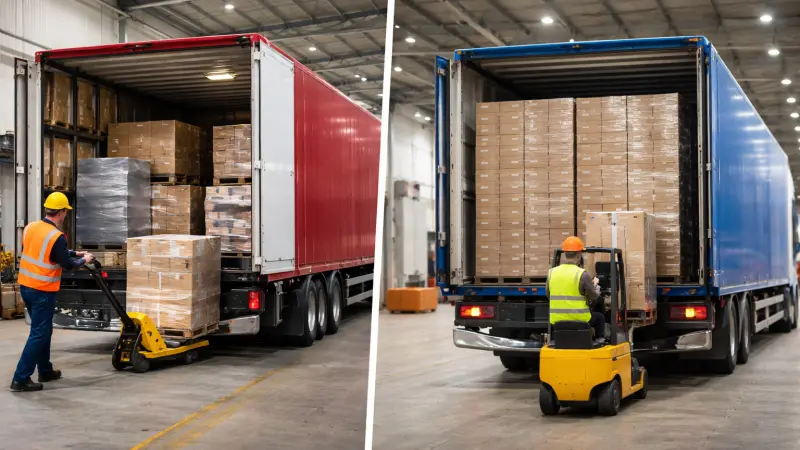
Imagine you need to ship fifty boxes of stock from your warehouse in Birmingham to a distributor in Edinburgh. You have two options: pay for an entire lorry, most of which will travel empty, or share that lorry with other businesses sending their own goods northward. That choice — between Less Than Truckload (LTL) and Full Truckload (FTL) freight — is one that thousands of UK businesses face every week, and making the wrong decision can cost significantly more than necessary.
Understanding LTL freight and FTL shipping is fundamental to building an efficient logistics strategy. Whether you are a small retailer dispatching irregular consignments or a manufacturer moving large volumes of goods, selecting the right freight model directly affects your overheads, delivery timescales, and ultimately your bottom line. This guide explains both options in plain terms, outlines their respective advantages and limitations, and helps you determine which approach best suits your business requirements.
What Is Less Than Truckload (LTL) Freight?
Less Than Truckload freight refers to a shipping arrangement in which your consignment does not fill an entire lorry. Instead, the remaining trailer space is filled with cargo belonging to other businesses. You pay only for the portion of the vehicle your goods occupy — typically calculated by the number of pallets, the total weight, or the cubic footage of the shipment.
LTL is sometimes referred to as shared freight or groupage freight in the UK haulage industry. The carrier consolidates multiple smaller shipments from different senders, all travelling in the same general direction, into a single vehicle. Each business benefits from a proportional share of the transport cost, making it a far more economical option for smaller or irregular loads.
How LTL Freight Works in Practice
When you book an LTL consignment, the carrier collects your goods — usually on a set schedule — and delivers them to a consolidation hub. There, your cargo is sorted and loaded alongside shipments from other businesses. The lorry then follows a planned route, dropping off and collecting goods at various points before your consignment reaches its final destination.
Because of this multi-stop structure, LTL shipments typically take longer to arrive than their FTL counterparts. Transit times of two to five working days are common for UK domestic routes, though express LTL services are available at a premium. Your goods may also be handled more times during transit, as they pass through depots and are reloaded at various stages of the journey.
Typical Uses for LTL Shipping
- Retail businesses replenishing store stock in smaller quantities
- E-commerce companies dispatching B2B orders that are too large for parcel couriers
- Manufacturers shipping sample orders or trial quantities to new customers
- Businesses with seasonal demand fluctuations requiring flexible shipping volumes
- Companies testing new markets without committing to full trailer loads
What Is Full Truckload (FTL) Freight?
Full Truckload freight, sometimes called Full Load or FTL shipping, is the arrangement in which you book an entire lorry exclusively for your consignment. The vehicle travels directly from your collection point to the delivery address, without stopping to collect or deliver other businesses' cargo along the way.
FTL does not necessarily mean the trailer must be physically full. You are, in essence, hiring the entire vehicle and its capacity. Businesses choose FTL when they have a large volume of goods, when they require faster, more predictable delivery times, or when their cargo demands a dedicated vehicle for reasons of security, fragility, or compliance.
How FTL Freight Works in Practice
When you book a full truckload shipment, a lorry is allocated specifically to your consignment. The driver collects your goods and proceeds directly to the destination without intermediate stops. Because there is no consolidation process involved, FTL deliveries are generally faster and subject to fewer handling events — which reduces the risk of damage or loss during transit.
Payment for FTL is typically calculated based on the route distance, the type of vehicle required, and any specialist equipment or handling provisions needed. Unlike LTL, where pricing is tied to the size of your consignment, FTL pricing reflects the cost of the dedicated vehicle and driver regardless of how much space you actually use.
Typical Uses for FTL Shipping
- Large manufacturers moving bulk raw materials or finished goods between facilities
- Retailers restocking entire product ranges ahead of peak trading periods
- Businesses transporting high-value, fragile, or temperature-sensitive goods
- Organisations with time-critical deliveries that cannot accommodate flexible routing
- Companies shipping hazardous materials requiring dedicated vehicle compliance
LTL vs FTL: A Direct Comparison
Choosing between LTL and FTL is rarely straightforward. Both models have clear strengths, and the right choice depends on several interrelated factors: the size and weight of your shipment, your required delivery timescale, the nature of the goods, and your budget. The table below summarises the principal differences to help frame your decision.
Cost
LTL is almost always less expensive for smaller consignments. Because you share the vehicle cost with other shippers, you only pay for what you use. However, for very large shipments — those approaching or exceeding half a trailer in volume — FTL often becomes the more economical option. At that point, the per-pallet cost of LTL can exceed the flat rate of booking a dedicated vehicle outright.
FTL rates are fixed and predictable, making them easier to budget for on regular routes. LTL pricing, while generally lower for small
loads, can vary based on carrier surcharges, fuel levies, and the availability of consolidated services on your specific route.
Transit Time
FTL is the faster option. With no stops for collection or delivery of other cargo, your goods travel directly from origin to destination. For time-sensitive freight — particularly for retail just-in-time replenishment or perishable goods — this directness is a significant advantage.
LTL shipments take longer because of the consolidation process and multi-stop routing. For businesses where speed is not the primary concern, this trade-off is often acceptable. However, when delivery deadlines are firm, the unpredictability of LTL routing can introduce unnecessary risk.
Cargo Handling
One of the less-discussed disadvantages of LTL freight is the increased number of handling events your goods experience. As cargo is sorted, reloaded, and transferred between vehicles at consolidation hubs, the likelihood of minor damage increases — particularly for fragile or awkwardly packaged items.
FTL virtually eliminates intermediate handling. Once loaded, your goods remain on the same vehicle until they reach the delivery address. For businesses shipping delicate electronics, glass, or high-value merchandise, this reduction in handling events is often worth the additional cost of a dedicated vehicle.
Flexibility
LTL offers considerably greater flexibility for businesses with fluctuating shipping volumes. You can book a single pallet one month and six pallets the next without renegotiating contracts or committing to vehicle capacity you may not need. This scalability makes LTL particularly well suited to growing businesses or those with seasonal peaks.
FTL, by contrast, requires you to commit to a full vehicle regardless of whether you fill it. This can result in wasted capacity during quieter periods. That said, some carriers and freight brokers offer partial FTL arrangements, allowing businesses to share a dedicated vehicle with one other shipper travelling a similar route.
Suitability for Different Load Sizes
As a general guide:
- 1 to 6 pallets: LTL is almost always the more cost-effective choice.
- 7 to 12 pallets: The crossover point. Compare LTL and FTL quotes carefully, factoring in transit time requirements.
- 13 pallets or more: FTL typically offers better value and operational efficiency.
These are indicative thresholds only. The specific dimensions, weight, and nature of your cargo will influence which option is genuinely more appropriate for any given shipment.
Key Factors to Consider When Choosing Between LTL and FTL
Shipment Frequency and Volume Consistency
Businesses that ship consistently large volumes benefit most from FTL arrangements, particularly when they can negotiate fixed rates with a preferred haulier. Irregular or smaller-volume shippers, however, will almost always find LTL more economical and operationally simpler.
Consider your average shipment size over the past twelve months. If it varies significantly — perhaps because your business is growing or because demand is seasonal — LTL provides the flexibility to scale your freight spend in proportion with your actual shipping activity.
Nature of the Cargo
The physical characteristics of your goods matter considerably. Fragile items, hazardous materials, temperature-controlled products, and high-value cargo are all better suited to FTL, where handling events are minimised and the vehicle environment can be controlled throughout the journey.
Standard palletised goods — machinery parts, packaged consumer goods, building materials, and similar freight — travel well via LTL.
Provided your goods are robustly packaged and correctly labelled, shared freight is a perfectly reliable option for the vast majority of UK commercial shipments.
Delivery Urgency
If your customer has specified a narrow delivery window, or if production timelines depend on components arriving on a particular day, FTL gives you far greater control over transit time. Direct routing removes the uncertainty inherent in consolidated freight services, where delays at one point in the network can ripple through to your delivery.
For routine replenishment orders where a two to three day delivery window is acceptable, LTL is a pragmatic and cost-efficient solution that most UK carriers deliver reliably.
Packaging and Pallet Configuration
LTL carriers charge partly based on the space your goods occupy in the trailer. Efficient palletisation — stacking goods to maximum safe height, using full pallet footprints, and minimising wasted space — reduces the cost of your LTL shipments. Poor packing, conversely, inflates costs and can lead to reclassification charges from the carrier.
For FTL, packaging standards remain important for the security of your cargo, but the pricing model is less sensitive to how efficiently you fill the trailer. Many FTL customers use this flexibility to include packaging materials, display units, or other bulky items that would attract high LTL surcharges.
The Role of Freight Forwarders and Brokers in the UK
Many UK businesses, particularly those without in-house logistics expertise, use freight forwarders or freight brokers to manage their LTL and FTL shipments. These intermediaries have established relationships with multiple hauliers and can often negotiate better rates than individual businesses could secure independently.
A freight forwarder will typically handle booking, documentation, tracking, and claims management on your behalf. For businesses shipping internationally — particularly post-Brexit, where customs documentation has become considerably more complex — a forwarder's expertise can be invaluable in avoiding costly delays at border crossing points.
When selecting a freight partner, look for carriers or forwarders who are members of recognised UK trade bodies such as the Freight Transport Association (FTA) or the Road Haulage Association (RHA). Membership of these organisations indicates a commitment to industry standards and provides a degree of assurance regarding operational quality and financial stability.
Common Misconceptions About LTL and FTL Freight
Misconception 1: LTL Is Always Cheaper
LTL is cost-effective for smaller consignments, but this is not universally true. Once your shipment reaches a certain volume, the per-unit cost of LTL can exceed that of booking a dedicated vehicle. Always compare both options at your typical shipment size, rather than assuming LTL is automatically the lower-cost solution.
Misconception 2: FTL Guarantees Faster Delivery
While FTL is generally faster due to direct routing, this advantage depends on vehicle availability, traffic conditions, and driver hours regulations. During peak periods — notably in the lead-up to Christmas or major retail events — FTL vehicles can be difficult to secure at short notice, which can itself introduce delays.
Misconception 3: LTL Is Unsuitable for Fragile Goods
Provided goods are packaged correctly and labelled clearly, LTL carriers handle fragile freight successfully every day. Many carriers offer enhanced handling services for items requiring additional care, and specialist
palletised distribution networks in the UK operate to high standards of care. The key is to communicate your requirements clearly at the point of booking.
Misconception 4: FTL Requires a Full Trailer
You do not need to fill an entire trailer to book FTL. The arrangement simply means the vehicle is dedicated to your consignment. Businesses sometimes book FTL with a partially loaded trailer because the benefits of direct routing, reduced handling, or cargo security outweigh the cost of unused trailer capacity.
Practical Tips for Reducing Freight Costs in the UK
Regardless of whether you choose LTL or FTL, there are several practical steps UK businesses can take to keep road freight costs under control.
- Consolidate where possible: Combining multiple small orders into a single, larger consignment often reduces the overall freight cost, even when booking LTL.
- Plan ahead: Last-minute bookings almost always attract premium charges. Where your supply chain allows, book freight at least 48 to 72 hours in advance.
- Review your packaging: Overly large or poorly configured packaging wastes trailer space and inflates LTL charges. Work with your packaging supplier to optimise pallet configurations.
- Negotiate annual contracts: If you have consistent freight volumes, a fixed-rate annual contract with a preferred haulier can provide cost certainty and often lower per-shipment rates.
- Use technology: Transport Management Systems (TMS) and freight comparison platforms allow businesses to compare live rates across multiple carriers, identifying the most competitive option for each individual shipment.
LTL and FTL in the Context of UK Supply Chains
The UK logistics sector is one of the most developed in Europe, with an extensive network of road haulage operators, palletised distribution networks, and express freight services covering every postcode in the country. This depth of provision means that UK businesses have genuine choice when it comes to selecting freight partners, and competitive rates are available for both LTL and FTL services across most domestic routes.
Post-Brexit, cross-border freight between the UK and the European Union has become more complex. Additional customs documentation, including the Commercial Invoice, Packing List, and relevant import/export declarations, is now required for all goods moving between Great Britain and EU member states. Both LTL and FTL shipments crossing this border are subject to these requirements, and delays at customs can affect both shared and dedicated services alike.
For businesses importing goods into the UK from outside the EU, or exporting to markets beyond Europe, the choice between LTL and FTL often needs to be considered in the context of a broader multimodal freight strategy — one that may involve sea freight consolidation (LCL vs FCL) or air freight depending on the urgency and value of the cargo.
Choosing the Right Freight Model for Your Business
There is no single answer to the LTL versus FTL question that applies to every business in every situation. The right model depends on your specific combination of shipment size, frequency, urgency, and cargo type — and for many businesses, the answer is not one or the other, but a considered mix of both depending on the nature of each individual consignment.
Start by auditing your current freight spend. Identify which shipments fall clearly into the LTL bracket and which would benefit from dedicated vehicle arrangements. Work with a reputable freight broker or carrier to benchmark your current rates against the market, and review your packaging and pallet configurations to ensure you are not paying avoidable surcharges.
Over time, as your business grows and your logistics requirements evolve, revisit this analysis regularly. The freight model that served you well as a small business may not be the most efficient solution once your volumes increase — and vice versa during periods of slower growth.
For businesses looking to improve their wider commercial visibility alongside their logistics strategy, listing on reputable UK business directory sites such as Local Page UK can help suppliers, customers, and freight partners find your business more easily. A well-maintained presence across the business directory of UK platforms can complement your operational improvements by ensuring your company remains discoverable to the right audiences — a particularly useful consideration for logistics providers, freight brokers, and hauliers seeking to expand their client base. Keeping your details current across the leading UK business directories requires minimal effort but can yield meaningful improvements in organic visibility over time.
Questions Clients Commonly Ask
What is the main difference between LTL and FTL freight?
LTL (Less Than Truckload) freight means your consignment shares a lorry with goods from other businesses, and you pay only for the space your cargo occupies. FTL (Full Truckload) freight means the entire lorry is dedicated to your consignment, travelling directly from collection to delivery without intermediate stops. LTL is generally more cost-effective for smaller loads, while FTL is better suited to large volumes, time-sensitive deliveries, or cargo requiring reduced handling.
How many pallets do I need before FTL becomes more economical than LTL?
As a general guide, FTL typically becomes more cost-effective when your shipment reaches approximately 13 or more standard pallets, though this threshold varies depending on your route, the specific carriers you use, and the dimensions and weight of your cargo. For shipments of 7 to 12 pallets, it is worth obtaining quotes for both options and comparing total costs including transit time implications.
Is LTL freight reliable for time-sensitive deliveries?
LTL services are generally reliable for deliveries where a two to five working day transit window is acceptable. For same-day or next-day requirements, or where a precise delivery slot is contractually critical, FTL or an express dedicated service is a more appropriate choice. Many UK carriers offer premium LTL services with guaranteed next-day or two-day delivery at an additional cost.
Can I use LTL freight for fragile or high-value goods?
Yes, provided the goods are appropriately packaged and clearly labelled. Many UK pallet network operators handle fragile freight routinely and offer enhanced care options upon request.
However, for extremely high-value or exceptionally fragile items, FTL eliminates intermediate handling entirely and provides a higher degree of control over the cargo environment throughout transit.
How has Brexit affected LTL and FTL freight between the UK and Europe?
Since Brexit, all freight moving between Great Britain and the European Union requires customs documentation that was previously unnecessary. This applies to both LTL and FTL shipments and has introduced additional administrative requirements and, in some cases, longer border transit times. Businesses shipping cross-border freight are strongly advised to work with an experienced freight forwarder familiar with post-Brexit customs procedures to minimise the risk of costly delays.
Disclaimer: The information provided in this article is for general informational and research purposes only. Company details, features, services, and market positions may change over time. Readers are advised to visit official company websites and conduct independent research before making any business decisions or purchasing services.
Most Searchable Keywords
Recent Blogs


Related Listings

Categories
- Accountants (295)
- Advertising Agencies (559)
- Architects (149)
- Automobiles (377)
- Beauty (300)
- Carpenters (146)
- Cleaning Services (387)
- Dentists (189)
- Driving (62)
- Education (1)
- Electricians (215)
- Energy (8)
- Event Organiser (687)
- Finance (602)
- Guide (3482)
- Health (2207)
- Information technology (206)
- Legal Services (361)
- Logistics (6)
- Maintenance (65)
Sponsored Listings in Cleaning Services


Related Blogs

Ghost Brokers Fake Car Insurance Scam Explain...
Read this insightful article "Ghost Brokers Fake Car Insurance Scam Explained" to expand your knowledge!

UK Baby Names Fastest Rising and Falling Name...
Read this insightful article "UK Baby Names Fastest Rising and Falling Names" to expand your knowledge!

How to Claim for Pothole Damage From Your Cou...
Read this insightful article "How to Claim for Pothole Damage From Your Council" to expand your knowledge!
Questions & Answers – Find What You Need, Instantly!
Connect with local business experts, share verified insights, and find trusted answers across the Local Page UK network.
Ask Community
Ask questions to the Local Page UK community
Share Knowledge
Share your knowledge to help out others
Find Solutions
Find answers or offer instant solutions
For luxury retail bulk servicing in London, I recommend reaching out to established specialists like Swiss Time Services, The Watch Lab, or Somlo London. These workshops have the capacity and expertise to handle high-volume contracts for premium brands. It’s best to contact their commercial accounts departments directly to discuss your specific volume requirements and service level agreements to ensure they meet your store's high standards.
Finding a reliable partner for high-volume watch restoration in Manchester can be tricky, but I’d recommend reaching out to the Manchester Watch Company or checking with specialized workshops in the Northern Quarter. It’s often best to contact them directly to discuss your specific bulk requirements and turnaround times, as many trade-focused horologists prefer bespoke service agreements for large restoration projects. Good luck with your search!
Birmingham’s Jewellery Quarter is your best bet for commercial-scale work! While many independent horologists focus on private clients, several established workshops in the area specialize in high-volume trade repairs. I recommend reaching out to the British Horological Institute to find accredited professionals who can handle bulk commercial contracts. Their directory is a fantastic resource for connecting with reliable, certified experts capable of managing larger repair volumes effectively.
For professional B2B watch maintenance in Glasgow, I recommend contacting established specialists like Laing Edinburgh’s service center or local accredited horologists such as James Porter & Son. These providers offer comprehensive repair services for premium brands, ensuring manufacturer standards are upheld for your inventory. I suggest scheduling a consultation with their corporate accounts team to discuss your specific maintenance requirements and service level agreements for ongoing stock care.
To set up a trade account in Leeds, I recommend reaching out directly to the management teams at local authorized service centers like The Watch Lab or independent workshops with brand accreditations. Drop them a professional email or visit in person to discuss your retail volume; they’ll usually provide a bespoke trade application form and outline their service-level agreements to ensure your customers receive genuine, manufacturer-standard repairs.
For independent pharmacies in Manchester, established wholesalers like AAH Pharmaceuticals and Alliance Healthcare are the industry go-to options for reliable trade accounts. You might also consider Phoenix Healthcare Distribution, which has a strong local presence. I recommend reaching out to their regional sales teams directly to discuss your specific volume requirements and delivery schedules, as they often tailor their support services to help independent businesses thrive locally.
Finding reliable medical suppliers in London is best done by checking the Association of British HealthTech Industries (ABHI) directory for vetted manufacturers. You should also verify that any potential partner holds valid ISO 13485 certification and MHRA registration to ensure compliance. Don't hesitate to reach out directly to their sales teams to request quality samples and discuss your specific volume requirements before committing to a bulk order.
Hi there! Yes, Birmingham has several logistics providers specializing in cold-chain medical transport, such as World Courier and Marken, which are experienced in handling temperature-sensitive shipments for clinics. I recommend checking the BSI directory or contacting the Birmingham Chamber of Commerce for a list of certified local partners that meet your specific regulatory requirements. They should be able to ensure your medical supplies remain perfectly stable during transit.