
Too Good To Go How to Get the Best Magic Bags
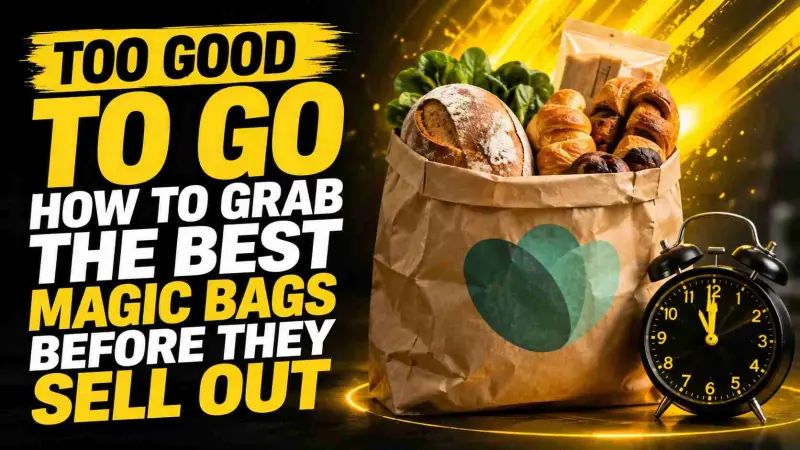
If you have ever opened Too Good To Go, spotted the perfect bakery, supermarket or restaurant bag, and watched it disappear before you could reserve it, you are not alone. The most popular Magic Bags—now generally called Surprise Bags in the app—can sell out remarkably quickly because availability depends on how much surplus food a business has at the end of the day.
The good news is that getting the best Too Good To Go bags is less about endlessly refreshing the app and more about understanding how individual businesses release their surplus. The app lets you favourite stores and receive notifications, while its map and discovery tools can help you spot both available and sold-out bags. Too Good To Go itself recommends checking again shortly after a sold-out collection window because some partners release additional bags around that point.
A successful strategy therefore combines timing, flexibility, preparation and a willingness to try several nearby businesses. You also need to remember what a Surprise Bag actually is: it contains surplus food, so you normally cannot choose the exact products in advance.
This guide explains how Too Good To Go works, when bags are most likely to appear, how to improve your chances of getting popular bags, which mistakes can waste money, and how to decide whether a seemingly cheap bag is genuinely good value.
How to Grab the Best Too Good To Go Magic Bags Before They Sell Out
What is a Too Good To Go Magic Bag?
A Too Good To Go Magic Bag is a discounted collection of surplus food offered by participating businesses through the Too Good To Go app. The company now commonly uses the term Surprise Bag, although many regular users still call them Magic Bags.
The basic idea is simple. A café, restaurant, bakery, supermarket or other food business has food left over that it would rather sell than discard. Instead of knowing exactly what will be left at the end of the day, customers reserve a bag through the app and collect it during the specified collection window.
Too Good To Go says its UK marketplace offers food at around half price or less, with examples including bread, pastries, groceries, sandwiches, sushi, pizza, muffins, burgers, salads and other prepared foods.
The important word is surplus.
You are not ordering a conventional takeaway where you choose every item. You are buying an opportunity to rescue food that the business has available.
That uncertainty is part of the appeal—and also the reason some bags are much better suited to certain people than others.
How does Too Good To Go actually work?
The process is straightforward:
- Open the Too Good To Go app.
- Browse available Surprise Bags near your location.
- Check the business, price and collection window.
- Reserve and pay through the app.
- Arrive during the stated collection period.
- Show the reservation and swipe the in-app confirmation when instructed.
- Collect the bag and discover what is inside.
Too Good To Go confirms that Surprise Bags must be collected in-store within the collection window shown in the listing.
That final point matters more than it might appear. A bag that looks like an incredible bargain is not a bargain if you cannot realistically get to the shop during its collection window.
Before reserving, check the location and time. If the collection period is inconvenient, skip it and wait for another opportunity.
Why do the best bags sell out so quickly?
The best bags tend to combine three things:
- A recognisable or popular business
- A strong perceived value
- A convenient collection time
A bakery bag containing several pastries and loaves can be attractive because the contents are relatively easy to use. A supermarket bag may appeal because it can contain ingredients for several meals. A restaurant bag can be especially popular when customers know the food quality is high.
There is also a scarcity effect.
A business may have only a few bags available on a particular evening. If dozens of people in the same area are watching the listing, those bags can disappear almost immediately.
There is no universal release time for every business. Surplus depends on what is left at that particular location, so trying to find one magic nationwide release time is usually less useful than learning the pattern of your favourite stores.
The first rule: learn each store's release pattern
This is probably the biggest improvement you can make.
Instead of treating the whole Too Good To Go marketplace as one system, treat individual businesses differently.
Suppose a bakery regularly offers bags around 5:30pm. A supermarket might list its surplus later. A restaurant could release bags close to the end of its service.
After using the app for a few weeks, keep track of:
| What to watch | Why it matters |
|---|---|
| Typical listing time | Helps you know when to check |
| Collection window | Determines whether the bag is practical |
| Number of bags | Indicates how competitive it may be |
| Price | Lets you judge genuine value |
| Type of food | Helps you avoid unsuitable surprises |
| Frequency | Shows whether waiting for one business makes sense |
| Sell-out speed | Reveals how competitive the listing is |
You do not need a complicated spreadsheet. A few notes in your phone can be enough.
If a store repeatedly releases bags at roughly the same point in the day, being ready around that period gives you a much better chance than randomly opening the app.
Use the Favourites feature rather than relying on memory
Too Good To Go's official guidance specifically recommends favouriting businesses. The Favourites feature allows users to keep track of preferred Surprise Bags and receive alerts when they become available.
This changes the process considerably.
Instead of opening the app and searching through every nearby business, build a shortlist of places you genuinely want to rescue from.
A useful favourites list might include:
- Two or three bakeries
- A supermarket
- Several independent cafés
- A restaurant you already know
- A convenience store or food outlet
- One or two backup options
The aim is not to collect dozens of favourites. A smaller list of businesses you can actually visit is much more useful.
Turn on notifications
Notifications can make a difference when bags are competitive.
Too Good To Go's own tips recommend enabling push notifications and email notifications, and the platform also offers ways to receive reminders around days that suit you.
If your phone regularly silences notifications, however, the feature will not help much.
Check your phone settings and make sure notifications from the app can reach you.
At the same time, avoid becoming dependent on notifications alone. There can be a delay between a bag becoming available and you seeing it, and availability can change quickly.
The strongest approach is:
Favourite important businesses + enable notifications + learn their normal listing pattern.
Check the app around the collection time
One of Too Good To Go's most useful official tips is surprisingly simple: check again after the collection time.
The company says many stores will have new Surprise Bags available for reservation around 15 minutes after the collection time of their sold-out bags.
This does not mean every store follows the same pattern.
It is a useful opportunity rather than a guaranteed rule.
For example, imagine a store has a sold-out bag with collection from 6:00pm to 6:30pm. If you missed it, checking again around 6:45pm may be worthwhile.
Why could this happen?
The business may have prepared more surplus food than expected, or its actual end-of-day stock may have changed. The app can therefore become more interesting after the original listing has finished.
Use Map View when you are flexible
If you are not committed to one specific business, Map View can be particularly useful.
Too Good To Go says its map allows users to see available and sold-out Surprise Bags around an area. Available bags appear differently from sold-out or unavailable listings, making it easier to scan a neighbourhood quickly.
This is especially valuable when you are already travelling.
Instead of asking, “Can I get the bag from this particular café?”, ask:
“What good options are available within a reasonable distance of me?”
That small change can increase your chances dramatically.
If one bakery sells out, another may have a bag five minutes away.
Don't refresh one listing endlessly
Constantly refreshing one store can feel like the obvious tactic, but it is not necessarily the most efficient.
The better strategy is to create a competition map.
Think of your local area in three groups:
Tier 1: Favourite bags
These are the bags you really want.
Tier 2: Strong alternatives
These are businesses whose food you would happily collect if your first choice disappears.
Tier 3: Backup options
These are cheaper or less exciting bags that still make financial sense.
This prevents the classic Too Good To Go mistake: spending 20 minutes chasing one £4 bag while several perfectly good £3–£5 options appear nearby.
What makes a Too Good To Go bag genuinely good?
Price alone does not determine value.
A £4 bag can be excellent value if you receive food worth considerably more at normal retail prices and you will actually eat it.
But a £6 bag filled with food you dislike is not necessarily a saving.
Consider five factors:
- Expected retail value
- Quantity
- Food quality
- Your ability to use it
- Collection convenience
For example, imagine a bakery bag costs £4.99 and contains several pastries and loaves that would normally cost considerably more. If you eat or freeze most of it, that can be a strong purchase.
On the other hand, a vegetarian might not get much value from a mixed bag dominated by meat products.
The cheapest bag is not always the best bag.
Understand the “surprise” element
One of the biggest mistakes beginners make is expecting predictable contents.
Surprise Bags exist because businesses do not know exactly what surplus they will have until the day progresses.
A bakery might have too many croissants one evening and mostly bread the next.
A restaurant may have several portions left after a quieter service.
A supermarket may have a mixture of products approaching their relevant use-by or best-before dates.
This variability is why reviews can be useful, but they should not be treated as guarantees.
A customer may report receiving a fantastic selection one day. That does not mean your next bag will contain the same items.
Check ratings, but don't treat them as the whole story
Ratings can help identify businesses that consistently provide a good experience.
However, look beyond the number.
Consider:
- How many reviews are there?
- Are recent reviews positive?
- Do customers mention generous quantities?
- Are collection experiences described positively?
- Does the food suit your preferences?
- Are there repeated complaints about poor value?
A five-star business is not automatically right for everyone.
A seafood bag could be fantastic for one customer and practically useless for someone who cannot eat seafood.
Choose bags you can actually use
This sounds obvious, but it is one of the easiest ways to turn a discount into unnecessary spending.
Before ordering, ask yourself:
Would I buy this type of food if it were not discounted?
If the answer is no, think twice.
A bargain is only useful if it replaces something you would otherwise buy or provides food you genuinely want.
For grocery-style bags, think about storage before collecting. For bakery bags, consider whether you can freeze bread or pastries. For prepared meals, consider whether you have enough people at home to eat them promptly.
Build your strategy around your schedule
The best Too Good To Go strategy is not necessarily the one with the biggest discount.
It is the one that fits your routine.
If you commute home at 6pm, focus on businesses along your route.
If you work from home, lunchtime listings may be more practical.
If you shop on Saturday mornings, investigate businesses that offer morning collection windows.
This makes food rescue easier to repeat.
A £4 bag you can collect on your way home every Friday is more useful than a £3 bag that requires a separate 25-minute journey.
Calculate the real cost of a bag
Suppose a bag costs £5.
If you need to spend £3 on transport and then throw away half the food, your effective saving is much smaller.
You can think about the calculation like this:
Real cost = bag price + extra travel cost + unavoidable waste
You do not need to calculate this precisely every time, but it is a useful mental check.
Walking past a shop on your way home is different from making a special car journey across town.
The environmental side matters too. Food rescue has benefits, but unnecessary travel can change the overall picture.
Don't arrive outside the collection window
Too Good To Go states that Surprise Bags are collected within the time window shown in the listing.
That means the collection window should be treated as part of the purchase.
Do not reserve a bag just because it is cheap and assume you can collect it whenever convenient.
Check the time before paying.
Too Good To Go also has an Ask-a-Friend feature that can allow another person to collect your order for you, which may be useful when you unexpectedly cannot attend yourself.
What if a bag sells out while you're looking at it?
Do not assume that the opportunity is permanently gone.
Try these steps:
- Check the same business again later.
- Look around the collection window.
- Check Map View for nearby alternatives.
- Favourite the business.
- Enable notifications.
- Look at similar businesses nearby.
- Try again on another day.
The official Too Good To Go tips specifically recommend checking after a sold-out collection period because additional bags can appear.
The key is to turn one missed bag into information.
If a particular store repeatedly sells out before you can reserve, you now know that its listing is highly competitive. Adjust your timing rather than simply repeating the same behaviour.
The best times are different for different businesses
There is no reliable universal answer such as “all Too Good To Go bags appear at 8pm.”
Businesses control their surplus listings according to their operations.
A bakery may know much earlier that it has excess products.
A restaurant may not know until the end of service.
A supermarket's surplus can depend on stock levels, demand and store procedures.
That means store-specific timing beats internet-wide timing rules.
Track a business for several days before deciding when it is worth watching.
Morning, afternoon or evening: which is best?
Each has advantages.
| Time | Potential advantage | Possible drawback |
| Morning | Fresh bakery or breakfast surplus | Fewer businesses may list |
| Afternoon | Cafés and lunch outlets may have surplus | Collection can clash with work |
| Evening | More restaurants and end-of-day food | Popular bags may sell very quickly |
| After listed collection | Additional bags may appear | Availability is not guaranteed |
If your goal is the highest-quality food rather than simply the cheapest bag, focus on businesses whose normal operating cycle produces the type of food you want.
Supermarket bags require a different strategy
Supermarket Surprise Bags can be especially appealing because they may contain several different products.
But they are also harder to predict.
You could receive fresh produce, chilled items, bakery products, packaged groceries or other surplus stock depending on the store and listing.
Before buying regularly, think about:
- Fridge space
- Freezer space
- Dietary restrictions
- Household size
- Cooking habits
- Date labels
- Whether you can use several ingredients quickly
A family with four people may get more value from a large grocery bag than someone living alone.
Bakery bags are often easier for beginners
Bakery bags can be attractive to newcomers because the food is relatively straightforward to understand.
Bread, rolls, pastries and cakes can often be eaten immediately or frozen for later, depending on the product and storage instructions.
They can also provide a useful test of whether Too Good To Go fits your lifestyle.
If you repeatedly enjoy bakery bags and use everything you collect, you have evidence that the app works for you.
Restaurant bags can offer variety but require flexibility
Restaurant Surprise Bags can be more exciting because you may receive prepared food from a cuisine you already enjoy—or something completely unexpected.
The downside is that restaurant surplus can vary considerably.
If you are very selective about food, restaurant bags may be less suitable than grocery or bakery options.
If you enjoy trying new foods, they can be one of the most enjoyable parts of the app.
Is Too Good To Go actually helping with food waste?
Yes, the underlying model is specifically designed to redirect surplus food to customers rather than leaving it unsold.
Too Good To Go says it has helped save more than 500 million meals globally, with more than 180,000 active business partners according to its current company information.
Its UK operation has also grown substantially. In August 2024, the company said more than 40 million Surprise Bags had been saved in the UK since launch, with more than 40,000 UK businesses having signed up at that point.
The environmental impact calculations should still be interpreted carefully. Too Good To Go's methodology assumes, among other things, that saved food is genuinely surplus, that 90% of the food is consumed and that buying the rescued food avoids purchasing an equivalent amount of replacement food.
The company estimates that saving one kilogram of food through its marketplace avoids approximately 2.7kg of CO2e, 2.8 square metres of land use per year and 810 litres of water under its assessment methodology.
These figures are modelled estimates rather than a promise that every individual bag produces exactly that environmental saving.
That distinction is worth keeping in mind.
How can you get better bags without wasting money?
The most effective users do not simply chase discounts. They develop a repeatable system.
Try this:
Step 1: Find 10 nearby businesses
Start with a manageable radius.
Look for bakeries, cafés, supermarkets, restaurants and convenience stores.
Step 2: Choose your five favourites
Pick places whose food you would actually eat.
Step 3: Turn on alerts
Use the app's notification features so you are not dependent on manually checking every listing.
Step 4: Track release patterns
For a week or two, note roughly when your favourite businesses tend to list.
Step 5: Create backup options
If your first choice sells out, move immediately to your second choice rather than repeatedly refreshing the same page.
Step 6: Check after collection windows
This is an official Too Good To Go tip and can sometimes reveal additional availability.
Step 7: Review what you actually received
After collecting several bags, decide which businesses consistently deliver value for you.
This is how you move from random bargain hunting to a useful routine.
What are the biggest Too Good To Go mistakes?
Mistake 1: Buying simply because something is cheap
A discounted item you do not eat is wasted money.
Mistake 2: Ignoring the collection time
A great bag that you cannot collect is not a great purchase.
Mistake 3: Expecting identical contents
Surplus changes every day.
Mistake 4: Focusing on one popular store
There may be better opportunities nearby.
Mistake 5: Ignoring food preferences
Surprise Bags require flexibility, but you should still respect your own dietary needs.
Mistake 6: Buying too many bags
A £3 bag is not a saving if you spend £15 on several bags simply because they look cheap.
Mistake 7: Forgetting storage
Fresh food can have a limited usable life. Make sure you have a plan for it.
A simple strategy for securing competitive bags
If you want a practical routine, use this sequence:
Before the likely release:
Open the app, check your favourites and make sure notifications are enabled.
At the likely release period:
Watch your highest-priority businesses first.
If the bag disappears:
Do not panic-refresh. Check your backup businesses.
Around the collection period:
Look again for newly released bags.
After several weeks:
Drop businesses that consistently provide poor value and keep the ones that suit you.
This approach is much less stressful than treating every listing like a race.
What does the future of Too Good To Go look like?
The wider food-surplus market is likely to become more data-driven.
Businesses have increasing incentives to understand exactly how much food they are likely to have left, while consumers are becoming more comfortable buying discounted surplus food through apps.
Too Good To Go has also expanded beyond traditional in-store Surprise Bags. Its current platform includes Parcels, where surplus food from manufacturers or wholesalers can be delivered to customers or collected through designated points.
That suggests the future may involve a broader range of surplus-food models rather than simply end-of-day restaurant bags.
For customers, the likely opportunity is greater choice.
For businesses, the challenge will be balancing surplus-food sales with ordinary full-price sales and operational simplicity.
For the food system as a whole, the bigger question is not merely how to sell leftovers. It is how to prevent surplus from being created in the first place.
Too Good To Go is one tool within that larger process.
How should you decide whether a Magic Bag is worth grabbing?
Before pressing reserve, ask four quick questions:
Will I eat it?
If not, the discount does not matter.
Can I collect it?
Check the exact time and location.
Is the price reasonable for the likely quantity?
Remember that contents are unpredictable.
Do I have a backup?
If you are chasing a highly competitive bag, knowing your alternatives prevents frustration.
If the answer to all four is yes, reserve it.
If not, there is probably another bag worth waiting for.
Key Insights
- Learn individual release patterns: There is no single nationwide release time that guarantees success. Each business has its own surplus cycle.
- Favourite your best businesses: Too Good To Go's Favourites and notification features can help you spot availability more quickly.
- Check after collection windows: Too Good To Go says additional bags can sometimes appear around 15 minutes after the collection time of sold-out bags.
- Use Map View: If your preferred bag sells out, nearby alternatives can be easier to find through the map.
- Judge value by what you will actually eat: A cheap bag is not a saving if much of it goes unused.
- Treat collection times seriously: Surprise Bags must be collected within the window specified in the listing.
- Keep several favourites: A shortlist of strong alternatives is more effective than obsessing over one popular business.
- Remember what makes the app work: The contents are surplus food, so flexibility is part of the bargain.
FAQ
1. What is a Too Good To Go Magic Bag?
A Magic Bag, now generally referred to as a Surprise Bag, is a collection of surplus food sold through Too Good To Go at a reduced price. The contents are usually not known in advance because they depend on what the business has left over.
2. How do I get a Too Good To Go bag before it sells out?
Favourite the businesses you want, enable notifications, learn their typical listing patterns and check the app around those periods. Keep backup businesses nearby so you can switch quickly when your first choice disappears.
3. What time do Too Good To Go bags appear?
There is no universal release time. Availability depends on the individual business and its surplus. The most effective approach is to monitor your favourite stores and learn when they normally release bags.
4. Can I choose what is inside a Too Good To Go bag?
Usually, no. Surprise Bags contain surplus food, so the exact contents depend on what the business has available. That uncertainty is part of the model.
5. Are Too Good To Go bags really cheaper?
Too Good To Go says its marketplace offers food at half price or less. Whether a particular bag is good value depends on its contents, the amount you receive and whether you will actually use the food.
6. Why do Too Good To Go bags sell out so quickly?
Popular businesses may have only a small number of bags available while many customers are watching them. High demand combined with limited surplus can make certain listings disappear very quickly.
7. Should I keep refreshing Too Good To Go?
Refreshing can occasionally help, but it is not the best overall strategy. Favourite businesses, use notifications, learn their listing patterns and check nearby alternatives instead of concentrating entirely on one listing.
8. What should I do if my favourite Too Good To Go bag sells out?
Check again around and after the collection period, look at Map View for nearby businesses and keep the store favourited. Too Good To Go specifically suggests checking around 15 minutes after the collection time of sold-out bags because additional bags may become available.
9. Can someone else collect my Too Good To Go bag?
Too Good To Go currently offers an Ask-a-Friend feature that can allow another person to collect a Surprise Bag on your behalf.
10. Can I collect a Surprise Bag outside its collection time?
You should follow the collection window shown in the app. Too Good To Go states that Surprise Bags are collected in-store within the specified collection window.
11. Are supermarket Surprise Bags worth buying?
They can be, particularly if you are flexible about the contents and have enough storage. However, value depends on what the store has available that day, so supermarket bags should not be treated as predictable weekly grocery boxes.
12. Are bakery bags good for beginners?
They can be a good starting point because bread and bakery products are relatively straightforward to use, and some products may be suitable for freezing. You should still check what you receive and follow appropriate storage guidance.
13. How do I know whether a Too Good To Go bag is good value?
Compare the price with the likely retail value, but also consider quantity, quality, your dietary preferences, collection costs and whether you can use the food. The cheapest bag is not necessarily the best purchase.
14. Does Too Good To Go really reduce food waste?
Its business model is specifically designed to sell surplus food that might otherwise go unsold. Too Good To Go reports hundreds of millions of meals saved globally, although its environmental impact figures are based on a defined assessment methodology and assumptions.
15. Is Too Good To Go worth using regularly?
It can be, especially if you live near participating businesses, have flexible food preferences and can collect bags conveniently. The strongest savings usually come from finding a few businesses whose bags consistently fit your household rather than buying every discounted listing you see.
Final Thoughts
Getting the best Too Good To Go Magic Bags is less about being glued to your phone and more about understanding how surplus food actually moves through local businesses.
Start by favouriting the places you genuinely like. Turn on notifications, learn when those businesses tend to release bags and keep several alternatives nearby. If a popular listing sells out, check again around its collection period rather than assuming the opportunity has disappeared. Too Good To Go itself recommends this approach because additional bags can sometimes become available after a sold-out collection window.
Most importantly, judge every bag by real value, not just the headline discount. The best
Surprise Bag is one that is affordable, convenient, enjoyable and largely used.
Once you understand your local patterns, the app becomes much less of a race. Instead of hoping to get lucky, you build a simple routine that gives you a better chance of rescuing good food at a price that genuinely works for you.
Disclaimer: The information provided in this article is for general informational and research purposes only. Company details, features, services, and market positions may change over time. Readers are advised to visit official company websites and conduct independent research before making any business decisions or purchasing services.
Most Searchable Keywords
Recent Blogs
Related Listings
Categories
- Accountants (295)
- Advertising Agencies (559)
- Architects (149)
- Automobiles (377)
- Beauty (300)
- Carpenters (146)
- Cleaning Services (387)
- Dentists (189)
- Driving (62)
- Education (1)
- Electricians (215)
- Energy (8)
- Event Organiser (687)
- Finance (602)
- Guide (3477)
- Health (2207)
- Information technology (206)
- Legal Services (361)
- Logistics (6)
- Maintenance (65)
Sponsored Listings in Locksmith Services

Related Blogs
Greggs App Rewards Birthday Treats and Free S...
Read this insightful article "Greggs App Rewards Birthday Treats and Free Stamps" to expand your knowledge!
B and M vs Home Bargains Which Is Cheaper
Read this insightful article "B and M vs Home Bargains Which Is Cheaper" to expand your knowledge!
Too Good To Go How to Get the Best Magic Bags
Read this insightful article "Too Good To Go How to Get the Best Magic Bags" to expand your knowledge!
Questions & Answers – Find What
You Need, Instantly!
How can I update my business listing?
Is it free to manage my business listing?
How long does it take for my updates to reflect?
Why is it important to keep my listing updated?
