
UK Train Strike Survival Guide: Your Rights, Refunds, and Travel Workarounds
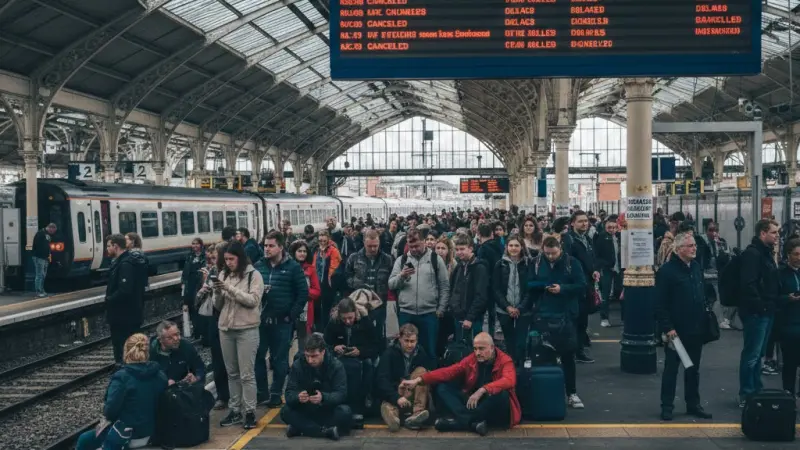
Train strikes in the UK currently represent a significant challenge for millions of commuters, business travellers, and leisure seekers relying on the national rail network. Industrial action, primarily driven by disputes over pay, working conditions, and job security involving unions like RMT and ASLEF, often leads to severe service reductions or total network shutdowns. To navigate these disruptions, passengers must stay informed through official rail operators and National Rail enquiries. Generally, a strike day results in only about twenty per cent of services running, usually between half-past seven in the morning and half-past six in the evening. If your journey is cancelled or delayed due to strike action, you are legally entitled to a full refund or a fee-free change of ticket, provided you do not travel. Understanding your rights and planning forty-eight hours in advance is essential for mitigating the impact of these recurring disruptions.

The Current Landscape of Industrial Action on British Railways
The British rail industry is currently navigating its most turbulent period in decades. A complex web of negotiations between the Department for Transport, private train operating companies, and various trade unions has created a cycle of intermittent industrial action. These strikes are not merely about hourly rates; they encompass broader concerns regarding the modernisation of the railway, the future of ticket offices, and the preservation of safety-critical roles. For the passenger, this means that even on days when strikes are not actively taking place, "action short of a strike"—such as overtime bans—can cause sudden cancellations and a lack of late-night services. The impact is felt most acutely in major hubs like London Euston, Manchester Piccadilly, and Birmingham New Street, where the density of travellers makes any reduction in capacity immediately chaotic.
The Motivation Behind Persistent Trade Union Disputes
At the heart of the current unrest are the trade unions representing thousands of railway workers. These organisations argue that their members have faced multi-year pay freezes during a period of significant inflation, effectively resulting in a real-terms pay cut. Furthermore, proposed changes to working practices, which the government deems necessary for a "sustainable" railway, are viewed by unions as a threat to job security and passenger safety. This ideological divide between the need for fiscal efficiency and the protection of worker rights remains the primary obstacle to a long-term resolution. Consequently, the stalemate continues to dictate the rhythm of British travel, forcing the public to adapt to a "new normal" of transport uncertainty.
The Role of Collective Bargaining in Public Transport
Collective bargaining remains the primary tool for rail staff to influence their professional future. When negotiations fail, the legal right to strike is exercised as a last resort to bring employers back to the table. In the UK, this process is governed by strict balloting laws, meaning strikes are often announced with at least two weeks' notice, giving the public some window to prepare.
Navigating the Refund Process for Cancelled Journeys
One of the most vital pieces of information for any rail user is how to reclaim their money when the system fails. Under the National Rail Conditions of Travel, if your train is cancelled, delayed, or rescheduled by the operator for any reason—including strike action—you are entitled to a full refund. This applies to all ticket types, including Advance tickets which are usually non-refundable. The process typically involves returning to the original point of purchase. If you bought your ticket online via a third-party app or a specific operator’s website, the refund can often be processed with a few clicks. However, it is essential to initiate this process promptly, as there are often time limits, usually within twenty-eight days of the scheduled travel date.
Understanding Delay Repay Schemes During Disruption
Even when trains are running, strikes often cause significant delays. Most UK train operating companies participate in the "Delay Repay" scheme. This allows passengers to claim compensation if their journey is delayed by fifteen or thirty minutes or more, depending on the specific company’s policy. The amount of compensation is usually calculated as a percentage of the fare paid. For instance, a delay of over an hour typically results in a hundred per cent refund of the single ticket price or half the cost of a return. It is important to keep your physical ticket or a screenshot of your e-ticket, as these are required as evidence when submitting your claim through the operator's digital portal.
The Nuance of Season Ticket Compensation
Season ticket holders are treated slightly differently during strike periods. Rather than claiming for individual delays, they are often eligible for "pro-rata" compensation. This means they receive a refund based on the value of a single day's travel for each day that the strike prevents them from using their pass. Frequent travellers should check if their operator offers "Automatic Delay Repay" to simplify this.
Strategic Planning for Travel on Strike Days
Surviving a strike day requires more than just checking a timetable; it requires a comprehensive backup plan. Experts suggest that travellers should avoid the "last train" of the day on the evening before a strike and the morning after, as these are frequently affected by the displacement of rolling stock.
If travel is essential, aim to reach your destination by mid-afternoon. Furthermore, it is wise to consider the "ripple effect." Even if your specific branch line isn't on strike, if the main line it feeds into is affected, your local service may be suspended to prioritise resources elsewhere. Using multi-modal transport apps can provide real-time alternatives that the standard rail apps might miss during the chaos of a disrupted schedule.
Alternative Transport Solutions Beyond the Tracks
When the rails go silent, the roads often become the primary alternative. National express and Megabus often see a surge in bookings the moment strike dates are announced, so securing a seat early is paramount. Car-sharing platforms and traditional coach services become the lifeline for those needing to travel between major cities. However, be prepared for increased congestion on motorways like the M1 and M6, as thousands of people switch from rail to road simultaneously. For shorter distances within cities, cycling or using e-scooter schemes can be more reliable than buses, which often get stuck in the resulting gridlock. Planning for a journey time of at least double the usual duration is a sensible precaution during these periods.
The Benefits of Pre-booking Coach Travel
Coaches offer a guaranteed seat, which is a luxury not always found on strike-day trains. By booking a coach as soon as a strike is mooted, you can often lock in lower prices before the inevitable surge pricing kicks in. Most major UK coach stations are located centrally, making them a viable door-to-door alternative for many.
Common Mistakes to Avoid During Rail Disruption
The most frequent error passengers make is assuming that a "non-strike" day will feature a perfect service. In reality, the days immediately following industrial action are often plagued by "delayed starts" while trains and crews are moved back into their correct positions. Another common pitfall is attempting to travel on an "Alternative Route" without checking if your ticket is valid for that specific operator. While some operators agree to "ticket acceptance" during strikes, this is not a universal rule. Always confirm through official social media channels or station staff before boarding a different brand of train, or you may find yourself facing a hefty penalty fare on top of an already stressful journey.
Overlooking Local Bus Connections and Tram Networks
Many travellers focus solely on the national rail network and forget that local municipal transport often remains unaffected. In cities like Manchester, Sheffield, or Nottingham, tram networks frequently operate a full service even when the heavy rail is at a standstill. Similarly, London Overground and the Elizabeth Line may have different strike schedules compared to the main intercity operators. Checking the specific status of your local Transport for London or regional transport body can reveal "hidden" routes that bypass the main strike impact. Failing to check these local options often results in unnecessary cancellations of meetings or social events that could have been reached with a bit of creative routing.
The Risk of Relying on Unverified Social Media Updates
While social media is fast, it is often filled with speculation. Relying on a tweet from a frustrated commuter rather than the official National Rail feed can lead to misinformation. Always verify any "service resumption" news through the official operator's app to ensure that the information is accurate and reflects the current safety protocols in place.
The Future Outlook for the UK Rail Network
Looking ahead, the resolution of these disputes likely hinges on a fundamental restructuring of the British railway system. The proposed transition to "Great British Railways"—a new public body designed to oversee both infrastructure and services—aims to reduce the fragmentation that currently complicates negotiations. However, until this transition is complete, the friction between cost-cutting and worker demands is likely to persist. Technological advancements, such as automated signalling and digital ticketing, will continue to be flashpoints for industrial tension. For the long-term commuter, the strategy must remain one of flexibility. The trend suggests that while the frequency of strikes may ebb and flow, the underlying issues will take years to fully resolve, necessitating a permanent shift in how we approach professional and personal travel planning.
Technological Adaptations in the Face of Uncertainty
The rise of remote working has acted as a safety valve for the UK economy during rail strikes. Businesses have become increasingly adept at pivoting to digital meetings when the transport network fails. This shift has arguably reduced the leverage of rail strikes compared to the pre-pandemic era, as the "total shutdown" of the city no longer occurs.
Consequently, we may see a shift in union strategy or a move towards more targeted, shorter disruptions designed to cause maximum administrative headache with minimum public backlash. As the network becomes more digitised, the focus of disputes may also shift from physical presence to the management of automated systems and data-driven scheduling.
The Evolution of Passenger Communication Systems
Operators are investing heavily in Al-driven communication tools to provide more accurate "load weighing" and real-time carriage occupancy data. In the future, this could help passengers identify which few trains are least crowded during strike windows. This transparency is becoming a key metric for customer satisfaction in an increasingly unreliable transport environment.
Step by Step Guide to Managing Your Strike Day Travel
To successfully manage a journey during a strike, start by checking the National Rail website exactly fourteen days before your travel date, as this is when the "strike timetable" is usually confirmed. Second, if your train is cancelled, decide immediately whether to claim a refund or use the ticket on an alternative day. Most tickets for strike days are made valid for use on the day before or up to two days after the strike. Third, if you must travel, arrive at the station at least thirty minutes earlier than the revised departure time, as platforms will be exceptionally crowded. Fourth, ensure your mobile devices are fully charged and you have downloaded the offline version of your route, as network congestion can sometimes slow down data speeds at major stations.
Essential Documentation for Seamless Compensation Claims
When things go wrong, documentation is your best friend. Take a photograph of the departure board showing your cancelled or delayed train. If a member of staff gives you verbal permission to use your ticket on another route, try to note their name or staff ID. When submitting your claim online, provide a clear scan of the paper ticket or the original PDF of your e-ticket. Most systems now allow for "one-click" compensation if you have a digital account with the operator. Staying organised throughout the disruption ensures that while you may lose time, you do not lose your hard-earned money to a system failure.
Effective Use of Customer Service Channels
During major strikes, phone lines are often overwhelmed with hour-long wait times. Using the "Live Chat" feature on an operator's website or reaching out via their official "X" (formerly Twitter) handle can often yield faster results. These digital teams are frequently reinforced during strike periods to handle the surge in passenger queries and refund requests.
Frequently Asked Questions
Can I use my ticket on another train company if there is a strike?
This depends on whether a "mutual ticket acceptance" agreement is in place for that specific strike day. Often, nearby operators will allow you to use your ticket on their services if they are running a near-normal schedule, but this is not guaranteed.
You should always check the "Latest Travel News" section on the operator's website or ask a member of station staff before boarding.
What happens if I get stranded halfway through my journey?
If you are travelling on a through-ticket and a strike causes you to become stranded, the train operator has a "duty of care" to get you to your destination or provide overnight accommodation. However, this primarily applies to disruptions that occur after you have started your journey. If the strike was announced in advance, the operator may argue you should have planned differently, so always check the last connections.
Is it better to get a refund or wait for the next train?
If the next train is more than an hour away and likely to be dangerously overcrowded, seeking a full refund and arranging alternative transport is often the wiser choice. Strike-day trains are frequently "declassified," meaning first-class tickets lose their value as everyone piles in. If comfort and timing are essential for your trip, abandoning the rail journey for a coach or car is usually the better option.
Does my travel insurance cover costs incurred by train strikes?
Most standard travel insurance policies do not cover industrial action if the strike dates were already public knowledge when you booked the trip or purchased the policy. However, some premium policies include "abandonment" cover which might reimburse you for pre-paid hotels or event tickets if the rail strike makes reaching your destination impossible. Always read the "General Exclusions" section of your insurance document carefully.
How far in advance are strike dates usually announced?
By law, trade unions must provide at least fourteen days' notice to the train operating companies before taking industrial action. This gives passengers a two-week window to adjust their plans. While "wildcat strikes" are rare and illegal in the UK, the formal announcement of a strike is usually preceded by several days of media speculation, so keeping an eye on the news can give you even more lead time.

Disclaimer: The information provided in this article is for general informational and research purposes only. Company details, features, services, and market positions may change over time. Readers are advised to visit official company websites and conduct independent research before making any business decisions or purchasing services.
Most Searchable Keywords

Recent Blogs


Related Listings


Categories
- Accountants (295)
- Advertising Agencies (559)
- Architects (149)
- Automobiles (377)
- Beauty (300)
- Carpenters (146)
- Cleaning Services (386)
- Dentists (189)
- Driving (62)
- Electricians (215)
- Energy (8)
- Event Organiser (685)
- Finance (599)
- Guide (3365)
- Health (2207)
- Information technology (206)
- Legal Services (353)
- Logistics (6)
- Maintenance (65)
- Manufacturing (35)

Sponsored Listings in Locksmith Services


Related Blogs

Gen Z Political Reporters and News Creators i...
Read this insightful article "Gen Z Political Reporters and News Creators in the UK" to expand your knowledge!

Famous Female Social Media Influencers Across...
Read this insightful article "Famous Female Social Media Influencers Across the UK" to expand your knowledge!

Your UK Sponsor Licence 2026 Step by Step Gui...
Read this insightful article "Your UK Sponsor Licence 2026 Step by Step Guide" to expand your knowledge!
Questions & Answers – Find What
You Need, Instantly!
How can I update my business listing?
Is it free to manage my business listing?
How long does it take for my updates to reflect?
Why is it important to keep my listing updated?
