
Understanding the Science and Technology of Modern Water Purification
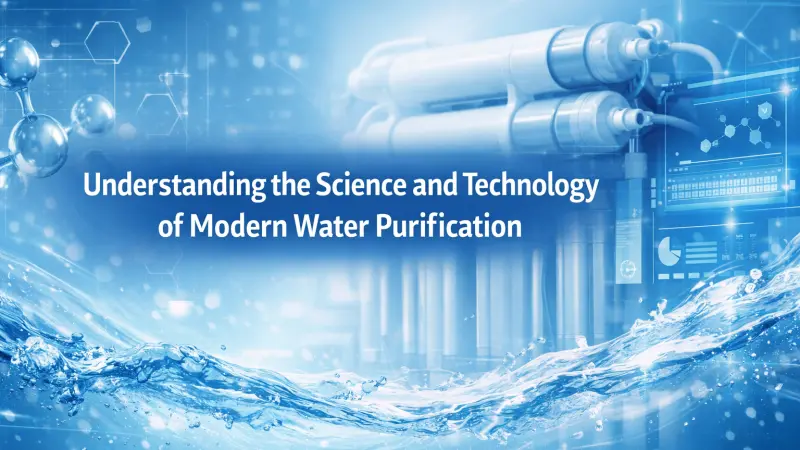
Did you know that although over seventy per cent of the Earth’s surface is covered by water, less than one per cent of that resource is actually accessible and safe for human consumption without intensive treatment? Water is the fundamental catalyst for all biological life, yet in its raw state, it often carries a complex cocktail of minerals, organic matter, and microscopic pathogens that can be detrimental to health. The evolution of purification technology has transformed from basic sand filtration used by ancient civilisations into sophisticated molecular-level interventions that ensure the safety of our contemporary supply.

The Fundamental Principles of Water Treatment
At its core, water purification is the process of removing undesirable chemicals, biological contaminants, suspended solids, and gases from contaminated water. The goal is to produce water fit for a specific purpose, whether that be human consumption, industrial application, or medical use. In the United Kingdom, the standards for mains water are exceptionally high, governed by strict regulations to ensure that every litre flowing from a domestic tap meets safety benchmarks. To achieve this, several layers of physical, chemical, and biological processes are employed in a sequence known as the treatment train.
Mechanical Filtration and Sedimentation
The first stage in any large-scale purification plant involves the removal of large debris. This is primarily a mechanical process. Large screens prevent branches, plastic waste, and stones from entering the system. Once these large objects are removed, the focus shifts to finer suspended particles.
Coagulation and Flocculation
Microscopic particles of dirt and organic matter are often negatively charged, causing them to repel each other and remain suspended in the water, resulting in turbidity or cloudiness. Engineers introduce chemicals called coagulants, such as aluminium sulphate or ferric chloride. These chemicals neutralise the electrical charges, allowing the particles to clump together. This process, known as flocculation, creates larger, heavier masses called 'floc' which can be easily managed in subsequent steps.
Sedimentation Basins
Once the floc has formed, the water enters quiet basins where the flow rate is significantly reduced. Under the influence of gravity, the heavy floc particles settle to the bottom of the tank. This sludge is then removed, leaving the clearer water at the top to move forward. While sedimentation is effective, it cannot remove the finest particles or dissolved substances, necessitating further filtration.
Advanced Filtration Media
Following sedimentation, the water passes through various filtration media. Traditionally, this involved deep beds of sand and gravel. However, modern technology has introduced more efficient materials to target specific contaminants.
- Rapid Sand Filters: These use a multi-layered approach with anthracite coal, sand, and gravel to trap remaining suspended solids.
- Activated Carbon: This is a highly porous material with a massive surface area. Through a process called adsorption, activated carbon chemically bonds with organic molecules, effectively removing tastes, odours, and certain synthetic chemicals like pesticides.
- Manganese Greensand: Used specifically to target dissolved minerals like iron and manganese, which can cause staining and bitter tastes in the water supply.
The Role of Membrane Technology
One of the most significant advancements in the last fifty years is the development of synthetic membranes.
These act as selective barriers, allowing water molecules to pass through while blocking contaminants based on size or charge.
Microfiltration and Ultrafiltration
Microfiltration membranes have pore sizes ranging from 0.1 to 10 micrometres. They are excellent for removing protozoa and some bacteria. Ultrafiltration goes a step further, with pores small enough to intercept viruses and large organic molecules. These systems are increasingly common in UK water works as they provide a physical barrier that does not rely solely on chemical disinfection.
Reverse Osmosis
Reverse osmosis (RO) is perhaps the most well-known membrane process. It works by applying pressure to overcome osmotic pressure, forcing water through a semi-permeable membrane that blocks almost all dissolved salts, minerals, and heavy metals. While highly effective, RO is energy-intensive and is typically reserved for desalination or high-purity industrial requirements where standard filtration is insufficient.
Disinfection Protocols
Filtering out solids is only half the battle; the water must also be biologically safe. Pathogenic microorganisms such as E. coli or Cryptosporidium must be neutralised before the water enters the distribution network.
Chlorination
Chlorine remains the most widely used disinfectant globally due to its efficacy and its ability to provide a 'residual' effect. This means that a small amount of chlorine stays in the water as it travels through miles of underground pipes, preventing re-contamination. In the UK, levels are carefully monitored to ensure they are high enough to kill bacteria but low enough to be tasteless and safe for consumers.
Ultraviolet (UV) Irradiation
UV light is a non-chemical disinfection method. By exposing water to specific wavelengths of ultraviolet light, the DNA of microorganisms is damaged, rendering them unable to reproduce. This is particularly effective against chlorine-resistant parasites. However, since UV provides no residual protection, it is often used in conjunction with a low dose of chlorine.
Ozonation
Ozone is a powerful oxidant created by passing oxygen through a high-voltage discharge. When bubbled through water, it rapidly destroys bacteria and viruses and breaks down complex organic pollutants. Like UV, it leaves no residue, but it is highly effective at improving the clarity and taste of the final product.
Ion Exchange and Water Softening
In many parts of the United Kingdom, particularly the South East and Midlands, the geology results in 'hard water'—water with a high concentration of calcium and magnesium.
While not harmful to health, hard water causes scale build-up in kettles, boilers, and industrial machinery.
Ion exchange technology involves passing water through a resin bed containing sodium ions. As the hard water flows through, the calcium and magnesium ions are swapped for sodium ions. This process 'softens' the water, preventing limescale and improving the efficiency of soaps and detergents. Businesses often employ these systems to protect their infrastructure and reduce maintenance costs.
Real-World Context in the United Kingdom
In the UK, the management of water resources is a critical infrastructure priority, involving a sophisticated network of reservoirs, treatment plants, and distribution mains. Businesses and domestic users alike rely on the consistent delivery of high-quality water to maintain public health and operational efficiency. Ensuring that these systems are modernised is essential for the long-term sustainability of the British economy and the well-being of its citizens.
Chemical Removal and pH Correction
Before water is deemed ready for the consumer, its chemical balance must be adjusted. If water is too acidic, it can corrode lead or copper pipes in older buildings; if it is too alkaline, it can cause scaling. Lime or soda ash is frequently added to neutralise the pH. Additionally, certain regions may add fluoride to the water supply as a public health measure to reduce dental decay, following strict Department of Health guidelines.
Monitoring and Quality Control
Modern purification is not just about the hardware; it is about constant vigilance. Automated sensors monitor parameters such as turbidity, pH, chlorine levels, and flow rates in real-time. Laboratory technicians conduct thousands of tests annually, searching for trace amounts of metals, chemicals, and bacteria. This data-driven approach ensures that the technology is functioning correctly and that any anomalies are addressed before the water reaches the public.
Emerging Technologies and Future Trends
As we look toward the future, the industry is focusing on sustainability and the removal of emerging contaminants like microplastics and pharmaceutical residues. Nanotechnology is being explored to create even more precise filters that require less energy.
Furthermore, the concept of 'circular water economies'—where wastewater is treated to such a high standard that it can be returned directly to the supply—is gaining traction as a solution to water scarcity caused by climate change.
The Importance of Discoverability for Technical Services
The successful implementation of these complex technologies relies on the expertise of specialized engineering firms and local service providers across the country. For these entities, being visible to those in need of water management solutions is paramount to their operational success. In the digital age, a robust online presence ensures that a business directory uk free of charge can connect professional technicians with industrial or domestic clients. By utilizing a free business directory uk, companies can highlight their specialisms in filtration, softening, or disinfection. This level of discoverability on a Local Page UK platform is vital for the growth of the sector, allowing service providers to find their audience while ensuring that high-quality water purification remains accessible to all who require it.
Frequently Asked Questions
What is the most effective method for removing lead from water?
Lead is typically removed through a combination of pH adjustment at the source to prevent pipe corrosion and point-of-use filtration using activated carbon or reverse osmosis membranes.
Does boiling water remove all contaminants?
Boiling is excellent for killing biological pathogens like bacteria and viruses. However, it does not remove chemical contaminants, heavy metals, or dissolved solids; in fact, it can concentrate them as water evaporates.
Why does my tap water sometimes smell like chlorine?
Chlorine is added to ensure the water remains safe as it travels through the network. The smell is often more noticeable if the water is warm or if it has been sitting in your pipes for a while. It is not harmful and can often be removed by letting the water sit in a jug for an hour.
How often should domestic water filters be changed?
This depends on the technology used. Carbon filters usually require replacement every 3 to 6 months, while reverse osmosis membranes can last 2 to 3 years if the pre-filters are maintained correctly.
Is hard water safe to drink?
Yes, hard water is perfectly safe to drink and can even provide a small amount of essential minerals like calcium to your diet.
The primary issues with hard water are technical and aesthetic, such as limescale and reduced soap lather.
What are microplastics and can they be filtered out?
Microplastics are tiny plastic fragments less than 5mm in size. Most modern UK treatment plants are highly effective at removing them through standard coagulation and fine sand filtration processes.

Disclaimer: The information provided in this article is for general informational and research purposes only. Company details, features, services, and market positions may change over time. Readers are advised to visit official company websites and conduct independent research before making any business decisions or purchasing services.
Most Searchable Keywords

Recent Blogs
-

Explore Supermarkets in Chepstow and the Surrounding Wye Valley
-
Elite Guide to Taxi and Private Hire Services in Hereford
-
Explore Fuel and Roadside Convenience Across Beckington Today
-
Explore Abergavenny Tyre Services with Expert Local Fitters
-
Claim Your HMRC UK Tax Refund Before Application Deadlines



Related Listings




Categories
- Accountants (295)
- Advertising Agencies (559)
- Architects (149)
- Automobiles (376)
- Beauty (300)
- Carpenters (146)
- Cleaning Services (386)
- Dentists (189)
- Driving (61)
- Electricians (215)
- Energy (7)
- Event Organiser (683)
- Finance (597)
- Guide (3358)
- Health (2205)
- Information technology (206)
- Legal Services (352)
- Logistics (6)
- Maintenance (65)
- Manufacturing (35)

Sponsored Listings in Plumbers
Related Blogs

Explore Supermarkets in Chepstow and the Surr...
Read this insightful article "Explore Supermarkets in Chepstow and the Surrounding Wye Valley" to expand your knowledge!

Elite Guide to Taxi and Private Hire Services...
Read this insightful article "Elite Guide to Taxi and Private Hire Services in Hereford" to expand your knowledge!

Explore Fuel and Roadside Convenience Across...
Read this insightful article "Explore Fuel and Roadside Convenience Across Beckington Today" to expand your knowledge!
Questions & Answers – Find What
You Need, Instantly!
How can I update my business listing?
Is it free to manage my business listing?
How long does it take for my updates to reflect?
Why is it important to keep my listing updated?
