
Unfair UK Parking Fine? The Step-by-Step Guide to Winning Your Appeal
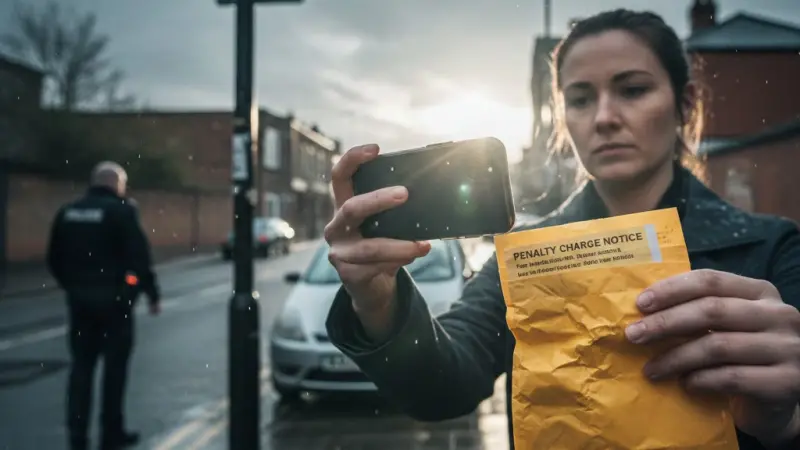
Dealing with parking fines in the United Kingdom requires a clear understanding of the distinction between statutory penalties and private invoices. If you receive a Penalty Charge Notice (PCN) from a local council, it is a legal requirement issued under civil law, usually for parking on public land or contravening traffic signals. To manage a parking fine effectively, you should first identify the issuing authority, check the validity of the evidence provided—such as timestamps and photographic records—and decide whether to pay at a discounted rate within fourteen days or lodge a formal appeal. Ignoring these notices often leads to increased costs and potential debt recovery action. Understanding your rights is the first step toward a successful resolution.
For most motorists in Britain, the sight of a yellow plastic envelope on the windscreen triggers immediate stress. However, the UK’s regulatory framework for parking is designed to be fair, provided you follow the correct procedures. Whether you are dealing with a local authority or a private landowner, there are specific grace periods and signage requirements that must be met for a fine to be enforceable. This guide explores the intricacies of the British parking system, ensuring you have the knowledge to challenge unfair charges and navigate the complex legal landscape with confidence and clarity.
The Essential Distinction Between Council and Private Penalties
In the UK, the terminology used on your ticket tells you exactly who you are dealing with and what your legal standing is. A Penalty Charge Notice issued by a local authority is backed by primary legislation. These are typically issued for overstaying in council-run car parks or parking on restricted public roads. On the other hand, a Parking Charge Notice issued by a private company is technically an invoice for a perceived breach of contract. While both can lead to court action if ignored, the routes for appeal and the governing bodies differ significantly.
Understanding Statutory Enforcement Authority
Local councils operate under the Traffic Management Act, which grants them the power to enforce parking restrictions to keep traffic flowing and ensure safety. When a civil enforcement officer identifies a contravention, they issue a PCN that is tracked through a centralised government system. These fines are fixed and have clear, legally mandated discount periods. If you believe the council has erred, you have a statutory right to make an informal representation before a formal notice to the owner is served.
Public Land Jurisdiction
The jurisdiction of local councils extends to almost all public highways, including residential permit zones and high-street loading bays. Their primary focus is maintaining public order and safety rather than generating profit for shareholders.
Identifying Common Validity Flaws in Issued Tickets
Before reaching for your wallet, it is vital to scrutinise the ticket for technical errors that could render it void. Under UK law, a parking notice must contain specific information, including the date and time of the alleged contravention, the vehicle registration mark, and the reason for the fine. If any of these details are incorrect, the notice may be unenforceable. Furthermore, the physical state of the road markings and the visibility of the signage play a crucial role in determining whether a driver could reasonably have known about the restrictions in place.
Assessing Signage and Road Marking Clarity
Signage must be clear, legible, and placed at regular intervals according to Department for Transport standards. If a sign is obscured by foliage, faded by the sun, or placed too high to be read from a vehicle, you have strong grounds for a challenge. Similarly, yellow lines that are broken, faded, or terminated without the correct T-bar marking can be cited as evidence that the restriction was not properly communicated. Photographic evidence of these flaws is your most powerful tool during the appeals process.
Technical Data Accuracy
Check the timestamp against your own records. Occasionally, synchronisation errors between handheld devices and central servers can
result in incorrect timings, which can be used to invalidate the claim of an overstay.
The Grace Period Protections for British Motorists
Many drivers are unaware that they are legally entitled to a small window of leniency when parking in designated bays. In England, government guidelines suggest that a ten-minute grace period should be applied after the expiry of a paid parking session before a fine is issued. This protection applies to both council-run car parks and private land, provided the vehicle is parked in a marked bay. Understanding this rule can prevent unnecessary payments for those who return to their vehicles just a few minutes after their ticket has expired.
Applying the Ten Minute Rule Correctly
The grace period specifically covers the time after a legitimate parking period has ended. It does not apply to parking in restricted areas such as double yellow lines or where parking is prohibited entirely. If you are issued a ticket within this ten-minute window, you should immediately cite the relevant government guidance in your appeal. This rule was introduced to stop "predatory" enforcement and to acknowledge that minor delays, such as slow-moving queues or traffic, can occasionally occur.
Documenting Your Arrival
Keep your original parking ticket or a screenshot of your digital payment app. These prove when your session was supposed to end and verify that you fall within the protected timeframe.
How to Construct a Robust Formal Appeal
Losing an appeal often happens because drivers rely on emotional pleas rather than factual evidence. A successful challenge should be structured logically, addressing the specific legal grounds for cancellation. Start by clearly stating the PCN number and your vehicle details. Use a firm but professional tone, and avoid admitting liability prematurely. Instead, frame your argument around "procedural impropriety" or "mitigating circumstances" depending on the situation. Providing a clear narrative backed by evidence significantly increases your chances of a successful outcome.
Gathering Supporting Physical Evidence
Your appeal is only as strong as your evidence. This includes photographs of the scene from various angles, showing the position of your car in relation to signs and lines. If your car broke down, provide a receipt from a recovery service or a garage invoice. If you were delayed due to a medical emergency, a redacted letter from a GP or hospital can be used as mitigating evidence. In the UK, adjudicators are often reasonable if they can see that the driver acted in good faith but was prevented from complying.
Professional Tone and Language
Avoid aggressive language or threats of legal action. A calm, evidence-based approach that references specific sections of the Highway Code or local bylaws is far more effective in achieving a cancellation.
Common Mistakes That Invalidate Your Rights
One of the most frequent errors motorists make is paying the fine while simultaneously trying to appeal it. In the UK, paying the fine is usually seen as an admission of liability, and the case is closed immediately, leaving you with no further right to challenge. Another mistake is ignoring the notice entirely, hoping it will go away. This is particularly dangerous with council fines, as the debt can be passed to bailiffs, significantly inflating the original cost. Always engage with the process, even if you are only asking for more time to gather evidence.
Avoiding the Admission of Liability
When communicating with a parking company or council, be careful with your phrasing. Do not say "I am sorry I parked there," as this is an admission. Instead, use phrases like "The alleged contravention did not occur" or "The signage was inadequate for
the purposes of informing the driver." This keeps the burden of proof on the issuer. Maintaining this boundary is essential for keeping your legal options open should the case progress to an independent tribunal or court.
Meeting Deadlines and Timelines
The UK system operates on strict clocks. Missing the fourteen-day window for a discounted payment or the twenty-eight-day window for a formal representation can lead to the loss of your right to appeal.
Dealing with Private Land and Contract Law
Private parking enforcement is governed by the principles of contract law rather than criminal or civil statute. When you enter a private car park, you are essentially entering into a contract with the landowner. The terms of this contract are displayed on the signs. If you breach these terms, the operator can claim "liquidated damages." However, these charges must be proportionate and not punitive. The Supreme Court has ruled on this, but there are still many instances where private firms overstep their authority with aggressive tactics.
The Role of Accredited Trade Associations
Most reputable private parking firms are members of either the British Parking Association (BPA) or the International Parking Community (IPC). These organisations have codes of practice that members must follow. If a firm is not a member of an Accredited Trade Association (ATA), they cannot access the DVLA database to find your address, making it much harder for them to pursue you. If you receive a letter from a private firm, check their credentials on their respective trade association website to ensure they are following the industry standard.
Standardised Independent Appeals
If your initial appeal to a private firm is rejected, you can take the matter to POPLA (Parking on Private Land Appeals) or the IAS (Independent Appeals Service). These services are free for motorists and offer a second chance at resolution.
Practical Steps for Immediate Resolution
If you have just discovered a ticket on your car, your priority should be information gathering. Before driving away, take high-quality photos of everything: the ticket itself, your car's position, the nearest signs, and any obscured markings. Look for cameras in the area, as these may be used for ANPR (Automatic Number Plate Recognition) enforcement. Once home, check the council's website for their specific appeals portal, as most UK authorities now require online submissions. This digital trail ensures your appeal is logged and prevents documents from being lost in the post.
Initial Assessment of the Charge
Decide quickly if the fight is worth the effort. If the fine is clearly valid and the discount brings it down to a manageable amount (£25 to £35), paying early might be the most stress-free option.
However, if the charge is high or clearly unfair, start your digital folder immediately. Researching local forum posts about that specific car park can also reveal if others have successfully challenged tickets there for similar reasons, providing you with a pre-tested argument.
Organising Your Documentation
Keep a log of all correspondence, including dates and times of sent emails. If you must use the post, always use a "Signed For" service to provide proof of delivery to the enforcement authority.
The Future Outlook for UK Parking Regulation
The landscape of parking enforcement in Britain is currently undergoing significant changes. A new Code of Practice is being developed by the government to unify the rules for private parking across the country. This is expected to cap fine amounts, simplify the appeals process, and introduce a more transparent system for motorists. While these changes have faced delays, the trend is moving toward greater consumer protection and less aggressive enforcement. Staying informed about these legislative shifts will help you understand your future rights as a vehicle owner.
Technological Advancements in Enforcement
Expect to see a continued shift toward digital-first enforcement. Mobile apps, ANPR technology, and virtual permits are replacing traditional paper systems. While this reduces human error in issuing tickets, it introduces new challenges regarding data privacy and software glitches. Motorists will need to be increasingly diligent about ensuring their digital accounts are up to date and that they receive notifications promptly. The era of the paper ticket on the windscreen may soon be a relic of the past as smart city infrastructure expands.
Environmental and Access Restrictions
New types of fines are emerging, such as those related to Low Emission Zones (LEZ) and school streets. These operate similarly to parking fines but focus on vehicle type and time-of-day access, requiring drivers to be even more vigilant.
Frequently Asked Questions
Should I ignore a parking ticket from a private company?
You should never ignore a private parking charge notice. While they are technically invoices, ignoring them can lead to the company taking you to the County Court to recover the debt. If they win, you could face significantly higher costs and a mark on your credit file. It is always better to appeal through the proper channels or pay the discounted rate early.
What is the difference between a PCN and a Fixed Penalty Notice?
A Penalty Charge Notice (PCN) is a civil matter usually dealt with by the council for parking or minor traffic offences. A Fixed Penalty Notice (FPN) is a criminal matter issued by the police for more serious offences like speeding or dangerous parking. FPNs can result in points on your driving licence, whereas a standard parking PCN does not affect your licence.
Can I appeal a fine if the ticket fell off my windscreen?
Yes, you can appeal if your ticket was not visible but you had actually paid for parking. Most councils and private firms will cancel the fine as a gesture of goodwill for a first-time offence if you can provide proof of the valid ticket. Send a copy of your paid ticket with your appeal to prove that you had fulfilled your side of the contract.
How long does a council have to send a ticket in the post?
If the contravention was caught on camera (CCTV or ANPR) rather than by a warden in person, the council usually has twenty-eight days to send the notice to the registered keeper of the vehicle.
If the notice arrives later than this without a valid reason for the delay, you may have grounds to have the ticket cancelled due to procedural error.
Are the yellow lines enforceable on private property?
Yellow lines on private property are often used to indicate where you should not park, but they do not hold the same legal weight as those on public highways. Instead, they are part of the terms and conditions of the site. Enforcement relies on the signs in the car park rather than the lines themselves. Always check the signs for the actual rules of the land.
Disclaimer: The information provided in this article is for general informational and research purposes only. Company details, features, services, and market positions may change over time. Readers are advised to visit official company websites and conduct independent research before making any business decisions or purchasing services.
Most Searchable Keywords
Recent Blogs


Related Listings


Categories
- Accountants (295)
- Advertising Agencies (559)
- Architects (149)
- Automobiles (377)
- Beauty (300)
- Carpenters (146)
- Cleaning Services (387)
- Dentists (189)
- Driving (62)
- Education (1)
- Electricians (215)
- Energy (8)
- Event Organiser (689)
- Finance (602)
- Guide (3492)
- Health (2207)
- Information technology (207)
- Legal Services (361)
- Logistics (6)
- Maintenance (65)
Sponsored Listings in Health and Wellbeing

Related Blogs

Creamfields Daresbury: Impact on Local Reside...
Read this insightful article "Creamfields Daresbury: Impact on Local Residents" to expand your knowledge!

UK High Street Businesses in 2026-27: Which S...
Read this insightful article "UK High Street Businesses in 2026-27: Which Sectors Are Growing?" to expand your knowledge!

Why Complete Business Listings Matter More Th...
Read this insightful article "Why Complete Business Listings Matter More Than You Think" to expand your knowledge!
Questions & Answers – Find What You Need, Instantly!
Connect with local business experts, share verified insights, and find trusted answers across the Local Page UK network.
Ask Community
Ask questions to the Local Page UK community
Share Knowledge
Share your knowledge to help out others
Find Solutions
Find answers or offer instant solutions
Some of the most popular fantasy TV shows include "Game of Thrones," known for its epic battles and political intrigue, "The Witcher," which features monster hunting and magic, and "Stranger Things," blending supernatural elements with 1980s nostalgia. Other notable mentions are "His Dark Materials," "Shadow and Bone," and "The Mandalorian," each offering unique worlds and captivating storytelling that have garnered large fan bases.
When seeking bathroom renovation providers that handle both plumbing and tiling, it's advisable to look for licensed contractors who specialize in comprehensive bathroom remodels. Companies such as Home Depot, Lowe's, and Bath Fitter offer these services, often providing a seamless experience by managing all aspects of the renovation process. Additionally, local contractors with positive reviews in platforms like Angie's List or Houzz may also offer tailored solutions for your bathroom needs.
Absolutely, there are several distributors that supply crash mats and soft play equipment to gymnastics clubs in and around Birmingham. National companies like Gymnova, S & G (Spieth Gymnastics), and Jaques of London offer a wide range of crash mats, foam pits, and soft play pieces, and they typically deliver to the Birmingham area. For more local options, you might try The Gym Equipment Company, which has a showroom in the West Midlands, or check out smaller specialist suppliers like Playtime UK. Many of these distributors cater specifically to clubs, offering high-density foam mats that meet safety standards. I'd recommend reaching out to a few to compare pricing, delivery times, and whether they offer custom sizes or installation services. It's also worth checking if any of them have a physical showroom near Birmingham so you can test the equipment before buying. Happy tumbling!
For professionals seeking a reliable sanitaryware supplier in Manchester with trade account facilities, several established merchants combine extensive product ranges, competitive pricing, and dedicated trade support. The most reputable option is Graham Plumbers Merchant, which operates multiple branches across Manchester, including Salford Quays and Oldham. They offer a dedicated trade account service with preferential pricing, priority delivery scheduling, and access to a vast inventory of leading sanitaryware brands such as Villeroy & Boch, Duravit, Ideal Standard, and Roca. Their trade accounts typically include net 30-day payment terms, online account management, and a tailored project quotation system. Similarly, City Plumbing Supplies has several Manchester-based depots (such as Ashton-under-Lyne and Stockport) that cater specifically to trade customers, providing a rapid order-and-collect service, trade-only promotions, and a loyalty programme offering rebates on repeat purchases. Their product range covers everything from basins and WCs to complete bathroom suites and brassware, with in-house technical advisors available for specification support. Another key player is Plumb Center, part of the Wolseley Group, which offers trade accounts with bespoke pricing structures, direct-to-site deliveries within the Greater Manchester area, and access to over 10,000 lines of sanitaryware, including premium brands like Grohe and Hansgrohe. Their trade portal allows for real-time stock checking and order history tracking, facilitating efficient project management. For those seeking a more specialist or high-end option, Bathroom Spares in Manchester provides trade accounts with a focus on hard-to-find sanitaryware and discontinued ranges, which can be invaluable for refurbishment projects. Additionally, independent merchants such as M&B Plumbase in Trafford Park offer flexible trade terms, personalised service, and competitive pricing on both mainstream and luxury sanitaryware. When evaluating suppliers, trade customers should consider factors beyond price: reliability of stock availability, delivery timescales within Manchester’s often congested zones, clarity of returns policies, and the quality of after-sales support for warranty claims. It is advisable to request a trade account application from at least two to three suppliers to compare discounts, minimum order values, and payment terms. Many suppliers also offer showroom access for trade clients, allowing you to inspect finishes and dimensions before committing to large orders. For ongoing projects, establishing a relationship with a single supplier who offers consolidated invoicing and dedicated account management can streamline procurement. Ultimately, the most reliable supplier for your trade account in Manchester will be one that aligns with your volume requirements, preferred brands, and service expectations, so a site visit to their local branch and a discussion about your specific trade needs is highly recommended before committing to an account.
People in Leeds are loving their local florists—customers often mention gorgeous, fresh arrangements and super friendly service. Many rave about reliable same-day delivery and creative wedding bouquets. A few note pricing can vary, but overall, the buzz is all about quality and that personal touch making every order feel special.
Common problems for commercial gardening in Bristol include weed overgrowth, soil degradation, pest infestations, and irrigation malfunctions. Additionally, managing seasonal transitions, adhering to sustainability regulations, and maintaining consistent aesthetics pose significant challenges. Expert services mitigate these via structured maintenance, integrated pest management, and soil analysis to ensure long-term landscape health.