Have you ever considered the complex journey that water takes before it reaches a remote countryside home. Water purification in rural areas is a fundamental necessity for thousands of households across the United Kingdom that do not rely on a centralised mains supply. While urban dwellers often take clean running water for granted those living in isolated regions must take personal responsibility for the quality and safety of their own liquid resources. Ensuring that every drop is free from contaminants requires a deep understanding of filtration methods and biological safety standards. This guide explores the vital mechanisms of treating private water supplies to maintain a healthy and thriving rural community.
The importance of safe drinking water in the countryside
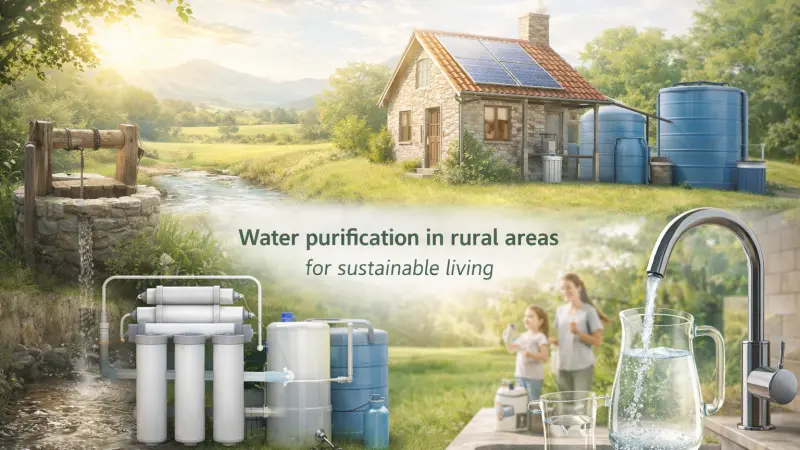
The health of a rural household depends heavily on the integrity of its water source. Many properties in the British countryside draw their water from boreholes wells or springs rather than the national grid. While these natural sources appear pristine they are often vulnerable to various forms of environmental pollution. Agricultural runoff containing fertilisers and pesticides can easily seep into groundwater systems. Furthermore the presence of livestock near water sources increases the risk of bacterial contamination from animal waste. Without robust purification systems these hidden dangers can lead to significant health issues for residents and their families.
Modern water purification in rural areas involves multiple layers of protection. Physical filtration removes large particles such as silt and sand while chemical treatments or ultraviolet light neutralise invisible pathogens. The goal is to produce water that is not only clear to the eye but also chemically balanced and biologically safe. For many rural inhabitants the peace of mind that comes with a reliable purification system is invaluable. It allows them to enjoy the benefits of country living without compromising on the basic human right to clean and safe hydration.
Common sources of rural water supplies
Understanding the origin of your water is the first step in determining the correct treatment protocol. In the United Kingdom rural water typically comes from one of three primary sources.
- Boreholes which are deep narrow holes drilled into the ground to access aquifers
- Shallow wells that collect water from the upper layers of the soil
- Natural springs where groundwater flows onto the surface naturally
Each of these sources presents unique challenges. Boreholes are generally more protected from surface pollution but may contain higher levels of minerals like iron and manganese. Shallow wells are highly susceptible to seasonal changes and surface contamination from heavy rainfall. Springs are often beautiful features of the landscape but they are the most exposed to environmental factors. Identifying the specific characteristics of the source allows for the selection of the most effective purification technologies.
Types of contaminants found in remote locations
The variety of pollutants found in rural water supplies is surprisingly broad. Biological contaminants include bacteria such as E coli and parasites like Cryptosporidium. These organisms can cause severe gastrointestinal illness and are a primary concern for anyone using an untreated supply. Chemical contaminants often stem from human activity or natural geological processes. Nitrates from farming practices are a common issue in agricultural regions. Lead and copper can leach into the water from old pipework in historic cottages. Additionally natural elements like arsenic or fluoride may be present in certain geological formations at levels that exceed safety guidelines.
Physical sediment is another concern particularly after periods of high rainfall. Turbidity or cloudiness in the water is caused by suspended particles that can damage household appliances and interfere with disinfection processes.
Effective water purification in rural areas must address all three categories of contamination to ensure a comprehensive safety profile. Regular testing is the only way to confirm which specific threats are present in a particular supply.
Advanced filtration techniques for country homes
Mechanical filtration serves as the primary barrier against physical debris. Multi stage systems often begin with a coarse sediment filter to remove large grit and sand. This is followed by finer filters made of pleated fabric or spun polypropylene that can trap microscopic particles. For even greater precision ceramic filters are used to block bacteria based on their physical size. These systems are highly effective at improving the clarity and taste of the water while protecting downstream equipment.
Activated carbon filtration is another essential component of rural water treatment. Carbon filters are excellent at removing organic chemicals and improving the odour of the water. They work through a process called adsorption where contaminants stick to the surface of the carbon. This technology is particularly useful for removing chlorine if any has been used in treatment as well as various pesticides and volatile organic compounds that may have entered the groundwater. Combining mechanical and carbon filtration creates a robust foundation for a clean water supply.
The role of ultraviolet disinfection
Ultraviolet or UV light is perhaps the most critical technology for biological safety in rural settings. Unlike chemical disinfectants UV light does not change the taste or smell of the water. It works by exposing the water to a specific wavelength of light that damages the DNA of microorganisms. This prevents them from reproducing and renders them harmless. A UV system is relatively simple to maintain and provides a continuous shield against bacteria and viruses.
For a UV system to be effective the water must be clear before it enters the chamber. If the water is turbid particles can provide a shadow for bacteria to hide in which is known as shadowing. This is why a high quality sediment filter is always installed before the UV lamp. Monitoring the intensity of the lamp and replacing it annually ensures that the system remains operational. It is a reliable and eco friendly solution for maintaining a sterile water supply without the need for harsh chemicals.
Dealing with hard water and mineral deposits
Many rural areas in the United Kingdom suffer from hard water which contains high levels of calcium and magnesium. While not harmful to health hard water causes significant problems in the home. It leads to the build up of limescale in kettles and boilers and reduces the efficiency of heating systems. It also makes it difficult to achieve a good lather with soap and can leave hair and skin feeling dry. Water softeners use an ion exchange process to replace calcium and magnesium ions with sodium ions resulting in soft water throughout the property.
High levels of iron and manganese are also common in borehole water. These minerals cause unsightly staining on bathroom fixtures and can give the water a metallic taste. Specialist oxidation filters are used to precipitate these minerals so they can be filtered out. Managing mineral content is not just about aesthetics but also about preserving the longevity of the plumbing infrastructure. Integrated water purification in rural areas often includes specific modules for mineral management alongside safety treatments.
Regulation and compliance for private supplies
In the United Kingdom private water supplies are subject to specific regulations to protect public health. Local authorities are responsible for monitoring these supplies and ensuring they meet certain standards.
Property owners have a legal obligation to ensure their water is safe for consumption especially if the property is rented out or used for a business such as a bed and breakfast. Regular risk assessments and laboratory testing are part of the compliance framework.
Failure to maintain a safe water supply can result in enforcement notices from the council. It is therefore vital for rural residents to keep detailed records of their purification system maintenance and any water test results. Understanding the local regulations helps property owners stay on the right side of the law while ensuring the well being of everyone who uses the water. Professional advice from water treatment experts can help in designing a system that meets all legal requirements.
Sustainable water management practices
Purification is only one side of the coin for rural residents. Sustainable management also involves water conservation and the protection of the source. Reducing water waste through the use of low flow fixtures and rainwater harvesting can take the pressure off a private supply. Rainwater can be used for gardening or flushing toilets while the high quality purified water is reserved for drinking and cooking. Protecting the area around a well or borehole from livestock and chemical storage is equally important to prevent contamination before it starts.
Climate change is also affecting water availability in rural areas. Longer periods of drought can cause shallow wells to run dry while intense storms can increase the risk of surface contamination. Building resilience into a rural water system may involve increasing storage capacity or upgrading purification technology to handle higher levels of turbidity. A holistic approach to water management ensures a consistent supply even in the face of environmental challenges.
Maintenance and monitoring for long term safety
A water purification system is not a set and forget solution. Regular maintenance is the key to ensuring its continued effectiveness. Filters need to be changed every six to twelve months depending on the volume of water used and the quality of the raw source. UV lamps have a finite lifespan and must be replaced even if they still appear to be glowing. Failure to perform these simple tasks can lead to a sudden decline in water quality and a corresponding increase in health risks.
Digital monitoring systems are becoming increasingly popular in rural homes. These devices can alert homeowners to a drop in UV intensity or a pressure change that suggests a clogged filter. Regular professional servicing is also recommended to check for leaks and ensure all components are functioning correctly.
By staying proactive about maintenance rural residents can avoid the inconvenience and danger of a compromised water supply. Investing time in care today prevents expensive repairs and health scares tomorrow.
Frequently Asked Questions
How often should I test my rural water supply
It is recommended to have your water professionally tested at least once a year. However you should also test it if you notice any changes in the taste smell or appearance of the water or after any major local flooding events.
Is UV light better than chlorine for rural water
UV light is often preferred for private supplies because it does not require the handling of chemicals and does not affect the flavour of the water. Chlorine is effective but can leave a chemical taste and requires precise dosing equipment.
Can I install a purification system myself
While some simple point of use filters can be installed by a competent DIY enthusiast a whole house system for a private supply should generally be installed by a professional. This ensures the system is correctly sized and compliant with local regulations.
What should I do if my well runs dry
If your well runs dry you may need to deepen it or look for an alternative source such as a new borehole. In the short term you can have water delivered by tanker to a storage tank on your property.
Are there grants available for water purification in rural areas
In some parts of the UK local councils offer grants to help improve private water supplies particularly if the supply is found to be a risk to health. You should contact your local environmental health department to enquire about current schemes.
Will a water softener make my water safe to drink
No a water softener is designed only to remove minerals that cause hardness. It does not remove bacteria or chemical pollutants.
A softener should be used as part of a wider purification system that includes filtration and disinfection.
Community support and local visibility
Living in the countryside requires a strong sense of community and the ability to find reliable local experts for maintenance and support. When searching for specialists to help with water systems it is helpful to use a business listing uk to locate qualified professionals in your specific region. These platforms allow homeowners to connect with local businesses that understand the unique geological challenges of their area. For businesses that specialise in water treatment or other rural services using free business directories uk can significantly help with improving online visibility for local residents. Engaging with an online business directory uk free of charge provides a way for small enterprises to reach those in need of their skills. By supporting local expertise we ensure that the infrastructure for water purification in rural areas remains strong and accessible for everyone. Local page UK serves as a valuable resource for connecting communities with the services they require for a healthy rural life.