
Eurovision’s Unlikely Origins: How a Post-WWII Song Contest United a Divided Continent
 Previous

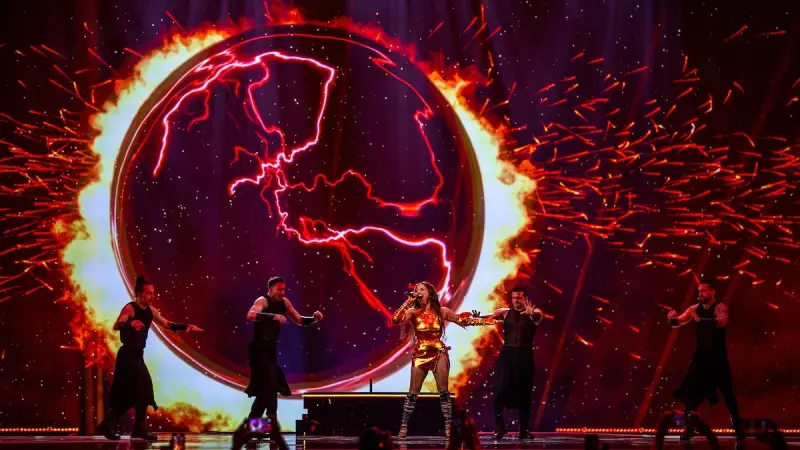
What’s campy, glitter-drenched, and capable of drawing 162 million viewers while igniting political debates across borders? If you guessed the Eurovision Song Contest, you’re right. But beneath the sequins and key changes lies a story that begins not in a recording studio, but in the ashes of World War II. The annual competition—often dismissed as a glorified kitsch-fest—is actually one of the most resilient and improbable pan-European institutions ever created. This year, 37 nations are battling for the glass microphone trophy in Malmö, Sweden, but the route to that stage was paved by war, diplomacy, and a desperate need for peace.
The Congress of Vienna to the Airwaves
Historian Dean Vuletic traces Eurovision’s DNA all the way back to the Congress of Vienna (1814–1815), where European powers redrew borders after the Napoleonic Wars. Those marathon treaty sessions weren’t all politics—attendees waltzed at Austrian royal balls, sparking an international dance craze. More importantly, the congress birthed new intergovernmental organizations that eventually regulated telegraphy and radio. By 1925, the International Broadcasting Union (IBU) was helping radio signals cross borders. But the IBU couldn’t survive the rise of Nazism; after the Soviet Union accused it of Nazi influence, the union collapsed in 1950.
World War II decimated Europe—physically, politically, and emotionally. Trust between nations was shattered, and the continent’s infrastructure lay in ruins. Yet from that destruction came an unexpected opportunity: the chance to rebuild not just cities, but cultural connections. In 1950, 23 Western European nations formed the European Broadcasting Union (EBU), a direct successor to the IBU but with a new mission—using television to foster unity.
Television Crosses Borders
Television had been a pre-war experiment, but after 1945, countries began launching their own broadcasts. France and the UK led a bold test: the Calais experiments of 1950 proved that TV signals could leap across the English Channel. The first true showcase of this cross-border potential came in 1953, when the coronation of Queen Elizabeth II was broadcast live across Western Europe via what BBC publicist George Campey dubbed the “Eurovision” network. The term stuck—and so did the dream of a regular multinational program.
The EBU needed more than royal ceremonies to keep audiences tuned in. In 1955, they approved a plan inspired by Italy’s Sanremo Music Festival, a wildly popular televised competition where songwriters battled for the best new Italian tune. Why not scale that idea across Europe? The result was a song contest designed to showcase national talent while transcending old enmities. The EBU later explained, “Europe wanted to turn its back on the war. People were starting to travel again, to cross borders, to trade. Television reflected this new atmosphere.”
The First Eurovision Song Contest
On May 24, 1956, viewers in seven nations—Belgium, France, West Germany, Italy, Luxembourg, the Netherlands, and Switzerland—tuned in to the first Eurovision Song Contest, held in Lugano, Switzerland. Each country submitted two songs (a rule that quickly changed). The winner was Switzerland’s Lys Assia with “Refrain,” a string-laden ballad about lost love. It wasn’t a viral hit, but it was a success—and Eurovision has been held every year since.
The contest’s rules evolved rapidly. The “Big Five” nations (France, Germany, Italy, Spain, and the United Kingdom) earned automatic spots in the final, joined by the host country and qualifiers from semi-finals. Voting became a two-tier system: national juries and televoters each award points. The camp factor grew over decades, with acts like ABBA (who won in 1974 and launched a global career) and Celine Dion (who won for Switzerland in 1988) proving that Eurovision could be a springboard to stardom.
More Than Just Music: A Political Stage
Eurovision was never purely about harmony. Early debates raged over whether dictatorships like Franco’s Spain could participate. The contest initially excluded Eastern Bloc nations, prompting the Soviet Union to launch a rival competition, Intervision, behind the Iron Curtain. Only after the fall of the Berlin Wall did former Soviet republics and satellite states join Eurovision, expanding its reach to 37 and sometimes 40-plus nations.
Political messaging is officially banned, but artists have found creative loopholes. Past performances have highlighted persecuted minorities, criticized authoritarian regimes, or simply used the stage to challenge stereotypes. The culture wars over race, sexuality, and national identity play out under the glare of glitter balls. Yet the contest endures—a testament to its ability to absorb conflict and still deliver a show.
Eurovision Today: Still Uniting, Still Dividing
In 2024, the contest draws 162 million viewers worldwide. The host city, Malmö, sees protests and parties in equal measure. The competition has launched countless hits—from “Waterloo” to “Euphoria” to “Arcade”—and continues to shape pop culture. But its deepest legacy may be the simple act of nations sitting together in an arena, watching each other’s performances, and then voting—sometimes generously, sometimes spitefully.
Eurovision’s future faces new challenges: streaming fragmentation, geopolitical tensions, and the question of whether a song contest can still foster unity in an increasingly fractured Europe. But if history tells us anything, it’s that Europe’s most improbable tradition isn’t going anywhere. As long as there’s a stage, a microphone, and a ballad about lost love (or a techno dance track about vegetables), the world will keep watching.
Disclaimer - All celebrity-related content, information, and images on this website are based on publicly available online sources and AI-generated insights/data. Information such as biography, age, career, personal details, and images may change without notice over time. While we strive for accuracy, we do not guarantee the accuracy, completeness, reliability, or timeliness of any information or imagery displayed on this website. This content is provided for general informational purposes only.
Top Trending News of Music Events
 👁️ 182 views
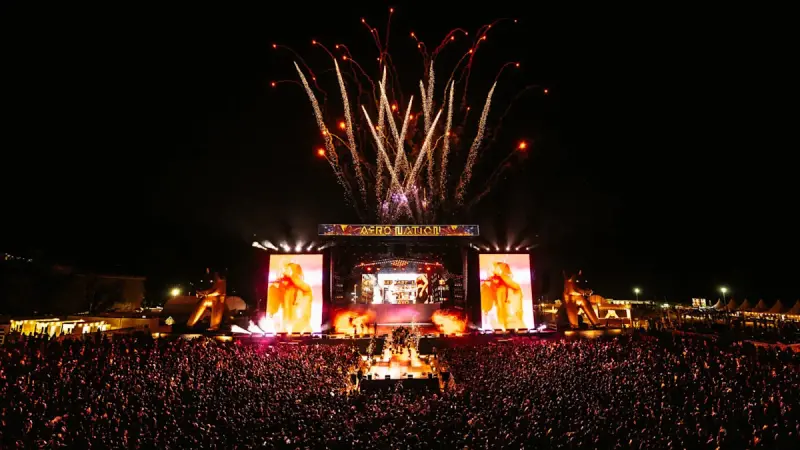
🔥 Afro Nation Portugal 2026: The Essential First-Timer’s Guide to the World’s Biggest Afrobeats Festival
Get the ultimate first-timer's guide to Afro Nation Portugal 2026 – the world's largest Afrobeats festival. Dates, tickets, travel tips, and what to expect in Portimão this July.
 👁️ 149 views
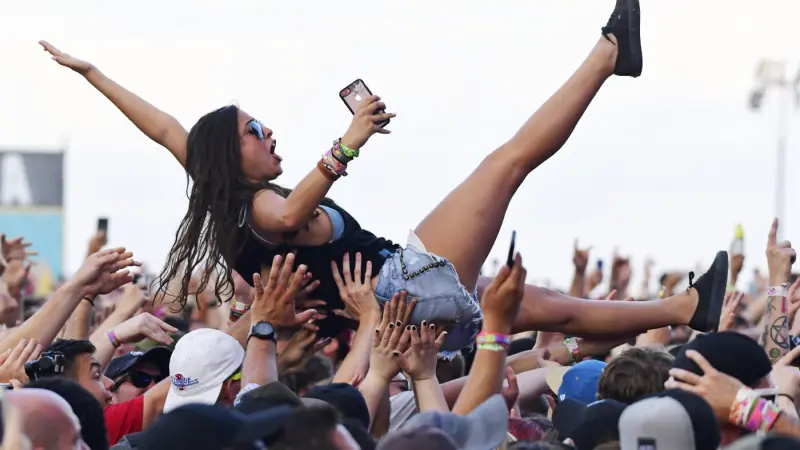
🔥 The Great Festival Cancellation of 2024: Why So Many Music Events Are Biting the Dust
Discover why over 60 music festivals canceled in 2024 alone—from rising costs and streaming algorithms to Gen Z's changing habits. Inside the festival recession.







Details
Send Us an Enquiry
We'll get back to you as soon as possible.
Thank You!
Your enquiry has been submitted. We'll be in touch shortly.