
Live Nation CEO Insists Concerts Are ‘Underpriced’ – But Are Fans Paying the Price?
 Previous

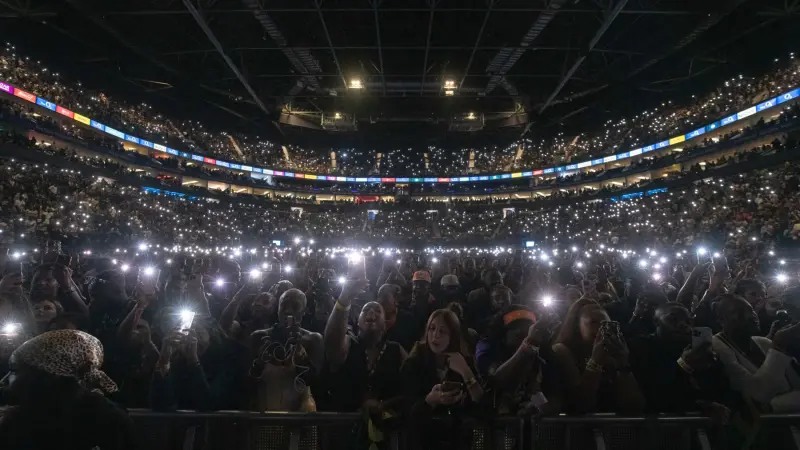
The live entertainment industry in 2025 is a study in contrasts. On one hand, concert demand has never been hotter; on the other, a wave of high-profile tour cancellations suggests the economics are fraying. At the center of this tension stands Live Nation CEO Michael Rapino, who recently declared tickets are still “underpriced” even as fans face skyrocketing costs.
The CEO’s Bold Claim
Speaking at CNBC and Boardroom’s Game Plan conference, Rapino painted a rosy picture of the concert business. “Music has been underappreciated,” he said, comparing it unfavorably to sports. “In sports, I joke it’s like a badge of honor to spend 70 grand for a Knicks courtside seat. They beat me up if we charge $800 for Beyoncé.”
He further argued that the average concert ticket costs just $72. “Try going to a Laker game for that, and there’s 80 of them. The concert is underpriced and has been for a long time,” Rapino insisted, adding that “we have a lot of runway left.”
The Real Price of a Ticket
Rapino’s $72 figure quickly drew skepticism. Pollstar’s 2024 year-end report put the average ticket price for the top 100 worldwide tours at $135.92; in North America, it was $136.45. Drilling down by venue type reveals a more nuanced picture:
- Stadium shows: $128.64
- Arena shows: $98.78
- Amphitheater shows: $70.72
- Theater shows: $75.09
- Club shows: $43.95
Averaging those venue-level figures yields roughly $83—closer to Rapino’s estimate, but still a far cry from the $72 he touted. More importantly, the trend is upward: in 2024, North American ticket prices rose slightly to $136.45 from $135.88 the previous year, even as other metrics declined.
Behind the Rising Costs: Production and Scalping
Rapino acknowledged that production costs are a major driver. He noted Beyoncé’s recent tour relied on “62 transport trucks,” calling it “a Super Bowl she’s putting on every night.” He added that “ten years ago, there might’ve been 10 trucks,” and that artists are “forfeiting margin for the experience,” often spending 70% of gross revenue on show production.
But production is only part of the equation. Dynamic pricing, sky-high service fees, and pervasive scalping have become endemic. Ticketmaster’s own resale platforms have been accused of allowing scalpers to exceed purchase limits and then resell tickets at massive markups—a practice now under federal scrutiny.
Antitrust Storm: DOJ and FTC Lawsuits
The regulatory heat on Live Nation and its Ticketmaster subsidiary is intensifying. Last year, the Department of Justice filed an antitrust suit accusing the company of monopolistic practices. (Live Nation has denied the allegations.) Just one day after Rapino’s conference appearance, the Federal Trade Commission filed its own suit, claiming Ticketmaster hid fees, let scalpers bypass ticket limits, and facilitated price gouging on its resale marketplace. Live Nation has yet to respond to the FTC’s action.
These legal challenges could reshape the live entertainment landscape. If successful, they might force the 2010 merger to be unwound—a move that would fundamentally alter the relationship between artists, venues, and fans.
The Fragile Boom: Cancellations and Declining Metrics
Despite Rapino’s optimism, the numbers tell a cautionary tale. Pollstar reported that 2024 saw “more festival and tour cancellations than at any time since the Covid-19 shutdown and the Great Recession.” The top 100 touring artists collectively grossed $6.18 billion, down 6.79% from $6.63 billion in 2023. Average gross per concert fell 8.78% to $1.86 million, and average tickets sold per show dropped 9.16% to 13,634.
These declines suggest a market reaching its ceiling. While wealthy fans continue to spend—dynamic pricing and secondary sales prove that—the middle class is being squeezed. Record wealth inequality means that for every sold-out suite, there are empty seats in the upper levels of once-bustling arenas.
What This Means for Fans
Rapino sees the surge in premium pricing as proof of value: “No matter what you bring to that table that day, you unite around that one shared experience.” Yet for many concertgoers, that unity comes at a steep cost. The average ticket price may be $72 for a club show, but anyone hoping to see a major pop star in a stadium is likely paying well over $100—before fees.
The industry’s reliance on a shrinking pool of high-income consumers may be unsustainable. As the FTC and DOJ pursue their cases, and as artists themselves voice frustration with Live Nation’s dominance, the status quo is wobbling. The question isn’t whether concerts are underpriced; it’s whether the current business model can survive its own contradictions.
One thing is certain: the music isn’t stopping. But the price of admission—both for fans and for the industry—has never been higher.
Disclaimer - All celebrity-related content, information, and images on this website are based on publicly available online sources and AI-generated insights/data. Information such as biography, age, career, personal details, and images may change without notice over time. While we strive for accuracy, we do not guarantee the accuracy, completeness, reliability, or timeliness of any information or imagery displayed on this website. This content is provided for general informational purposes only.
Top Trending News of Music Events
 👁️ 182 views
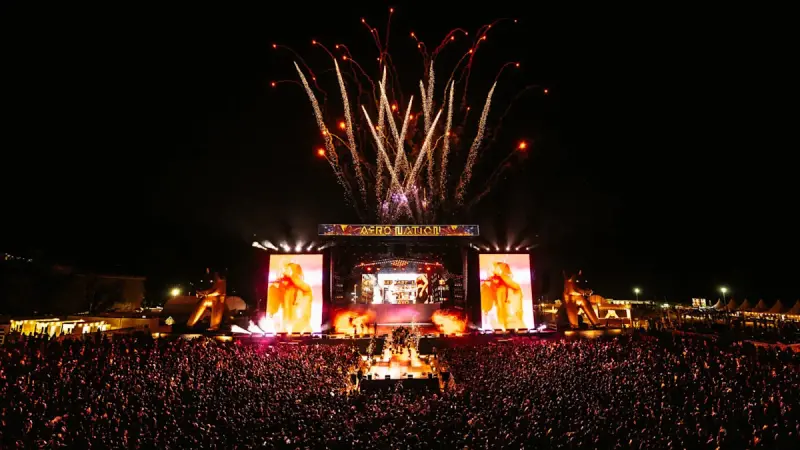
🔥 Afro Nation Portugal 2026: The Essential First-Timer’s Guide to the World’s Biggest Afrobeats Festival
Get the ultimate first-timer's guide to Afro Nation Portugal 2026 – the world's largest Afrobeats festival. Dates, tickets, travel tips, and what to expect in Portimão this July.
 👁️ 148 views
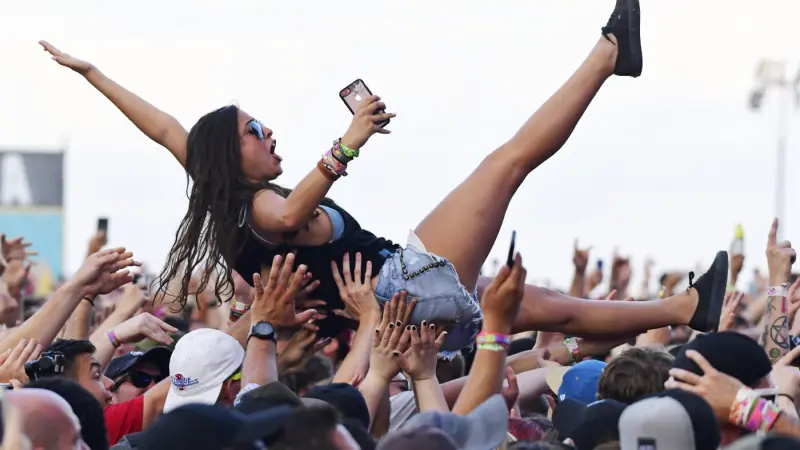
🔥 The Great Festival Cancellation of 2024: Why So Many Music Events Are Biting the Dust
Discover why over 60 music festivals canceled in 2024 alone—from rising costs and streaming algorithms to Gen Z's changing habits. Inside the festival recession.






Details
Send Us an Enquiry
We'll get back to you as soon as possible.
Thank You!
Your enquiry has been submitted. We'll be in touch shortly.