
Why a New Tomorrowland is Overdue at Disneyland – And What It Needs to Succeed
 Previous

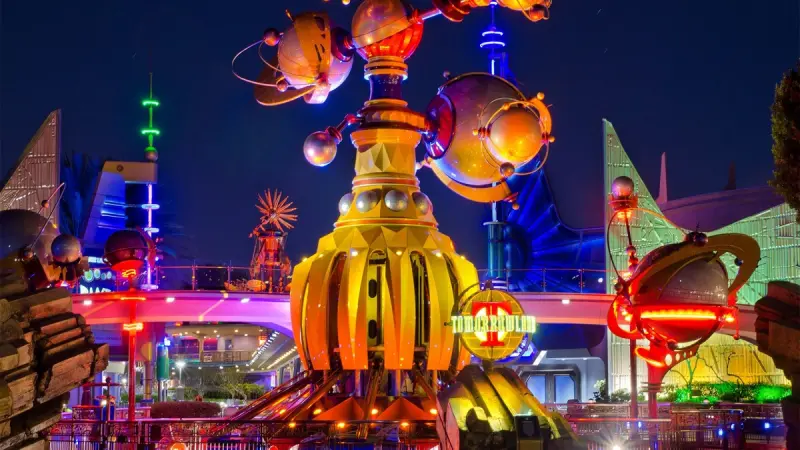
For decades, Disneyland’s Tomorrowland has been the park’s most paradoxical land: a space meant to embody the future, yet increasingly trapped in a cobweb of outdated themes and broken infrastructure. While fans have remained steadfastly loyal, the patience of even the most devoted Disney Parks enthusiasts is wearing thin. Every major fan gathering, from D23 Expo to Destination D, stirs rumors of a long-overdue Tomorrowland overhaul—only for hopes to be dashed when no announcement materializes. The most recent D23 Expo was no exception; whispers of a TRON Lightcycle Power Run coaster for Anaheim or a full land reboot went unanswered, leaving the fanbase frustrated and the land in limbo.
Disneyland’s Tomorrowland desperately needs the same level of thoughtful, immersive investment that transformed a barren backlot into Star Wars: Galaxy’s Edge. But to understand why the land has become a thorn in Disney’s side, one must first appreciate its fraught history—a story almost as old as the park itself.
A Legacy in Need of Revival
Tomorrowland was one of the five original lands when Disneyland opened in 1955. Walt Disney envisioned it as a living showcase of the future—a place where guests could glimpse tomorrow’s technology, from space travel to home automation. Unlike Fantasyland or Frontierland, which draw from timeless pasts, Tomorrowland’s content is inherently perishable. As Yoda might say, “always in motion is the future.” That temporal vulnerability has plagued the land from day one.
The original iteration featured corporate-sponsored pavilions like the House of the Future and the Monsanto Hall of Chemistry. By 1959, the Submarine Voyage and the Disneyland Monorail had joined the lineup. Yet, within just over a decade, these attractions felt hopelessly dated. The first major overhaul came in 1967, giving fans a gleaming, NASA-inspired “New Tomorrowland” with Journey Into Inner Space, the Rocket Jets, and the PeopleMover. This era, capped by Space Mountain’s 1977 debut, is often considered the land’s golden age.
The Failed 1998 Redesign
By the 1990s, Tomorrowland had earned the derisive nickname “Yesterdayland.” The Rocket Jets and Submarine Voyage looked hopelessly retro in the age of the Space Shuttle. Disney decided to act, but the result was a half-measure that still haunts the land today. Instead of a full rebuild, executives opted for a superficial steampunk overlay inspired by Disneyland Paris’s Discoveryland. They slapped a brown-and-gold paint job on existing structures, replaced the PeopleMover with the ill-fated Rocket Rods, and swapped Captain EO for ‘Honey, I Shrunk the Audience.’
The 1998 redesign was a disaster from the start. The Rocket Rods destroyed the PeopleMover track due to insufficient structural support, closing within a year. The brown color scheme clashed with Space Mountain’s pristine white exterior, which was painted over in an ugly copper hue that fans loathed. Innoventions—essentially an interactive tech showroom—couldn’t compete with the real Apple Store in every mall. Within a few years, Disney quietly began reverting much of the color scheme, but the damage was done. Tomorrowland became a hodgepodge of conflicting aesthetics, a constant reminder of a failed vision.
Today’s Tomorrowland: A Hot Mess
Walk into Disneyland’s Tomorrowland today, and you’re greeted by a landscape of peeling paint, dead infrastructure, and missed potential. The PeopleMover tracks still snake overhead, rusting and empty—a skeletal monument to a better time. The Rocket Jets platform sits abandoned, while Autopia, once a rite of passage for kids, now feels like a relic from a smoggier era. Cars Land in California Adventure has rendered Autopia obsolete. Innoventions, currently housing the Star Wars Launch Bay, squanders valuable real estate on a glorified meet-and-greet. Even the Finding Nemo Submarine Voyage, while an improvement, can’t mask the fact that the entire land is a patchwork of band-aids.
Magic Kingdom’s Tomorrowland in Florida fares slightly better, thanks to the presence of TRON Lightcycle Run (still under construction) and a more cohesive 1990s sci-fi theme. But Anaheim’s version remains the park’s biggest eyesore—a land that violates Disney’s own standards of immersion and storytelling. It’s a hot mess that demands a clean slate.
What Needs to Go
To save Tomorrowland, Disney must let go of the past—almost entirely. Space Mountain is too iconic to touch, but nearly everything else should be bulldozed. That includes:
- The rotting PeopleMover tracks and abandoned Rocket Jets platform, which only remind guests of what was lost.
- Autopia, which has no place in a futuristic land when a better car ride exists across the park.
- Star Tours, which, while beloved, could easily relocate to Galaxy’s Edge as a simulator attraction.
- Innoventions/Star Wars Launch Bay, which wastes prime space on passive exhibits.
- The Submarine Voyage lagoon, which could be repurposed for a new, cutting-edge attraction.
The land needs to be gutted, not just re-skinned. A new Tomorrowland must be built from the ground up, with the same ambition and budget that birthed Galaxy’s Edge.
What Should Replace It
The most obvious anchor for a revitalized Tomorrowland is the TRON Lightcycle Power Run coaster. It has been a massive hit in Shanghai Disneyland, and a version is already coming to Walt Disney World. Anaheim deserves one too. Placed where the lagoon and Autopia currently sit, it could form a kinetic duo alongside Space Mountain. Beyond that, Imagineering has ample opportunities to embrace new technology: think augmented reality dark rides, drone shows, and interactive walkthroughs that make guests feel like pioneers of tomorrow.
Shanghai’s Tomorrowland offers a blueprint: a sleek, white-and-silver aesthetic with neon accents, combined with attractions that feel genuinely futuristic rather than retro. The use of advanced LED lighting could make the land come alive at night in ways no previous iteration has. Even the food offerings could be reimagined with sci-fi-themed dining experiences that rival those in Galaxy’s Edge.
Why It Matters for Disney’s Future
Disney is in a golden age of theme park investment, with multibillion-dollar expansions across its resorts. Galaxy’s Edge, Avengers Campus, and the upcoming Zootopia land show that the company is willing to spend big on IP-driven lands. But Tomorrowland has no major IP attachment—and that’s precisely its strength. It represents a blank canvas for original storytelling, a chance for Walt Disney Imagineering to flex its creative muscles without franchise constraints. The 2014 film Tomorrowland may have flopped, but the land shouldn’t be held hostage to that failure.
With Disneyland’s 70th anniversary approaching in 2025, the time is ripe for a grand declaration of a new Tomorrowland. Fans don’t want another band-aid—they want a visionary reboot that honors Walt’s original promise to make the future tangible. If Disney can deliver, Tomorrowland will once again be the place where dreams of tomorrow take flight.
Disclaimer - All celebrity-related content, information, and images on this website are based on publicly available online sources and AI-generated insights/data. Information such as biography, age, career, personal details, and images may change without notice over time. While we strive for accuracy, we do not guarantee the accuracy, completeness, reliability, or timeliness of any information or imagery displayed on this website. This content is provided for general informational purposes only.
Top Trending News of Music Events
 👁️ 182 views
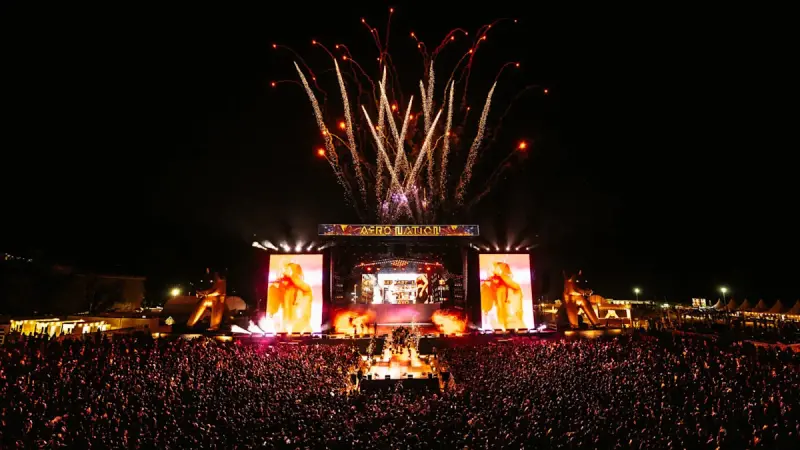
🔥 Afro Nation Portugal 2026: The Essential First-Timer’s Guide to the World’s Biggest Afrobeats Festival
Get the ultimate first-timer's guide to Afro Nation Portugal 2026 – the world's largest Afrobeats festival. Dates, tickets, travel tips, and what to expect in Portimão this July.
 👁️ 148 views
🔥 The Great Festival Cancellation of 2024: Why So Many Music Events Are Biting the Dust
Discover why over 60 music festivals canceled in 2024 alone—from rising costs and streaming algorithms to Gen Z's changing habits. Inside the festival recession.








Details
Send Us an Enquiry
We'll get back to you as soon as possible.
Thank You!
Your enquiry has been submitted. We'll be in touch shortly.