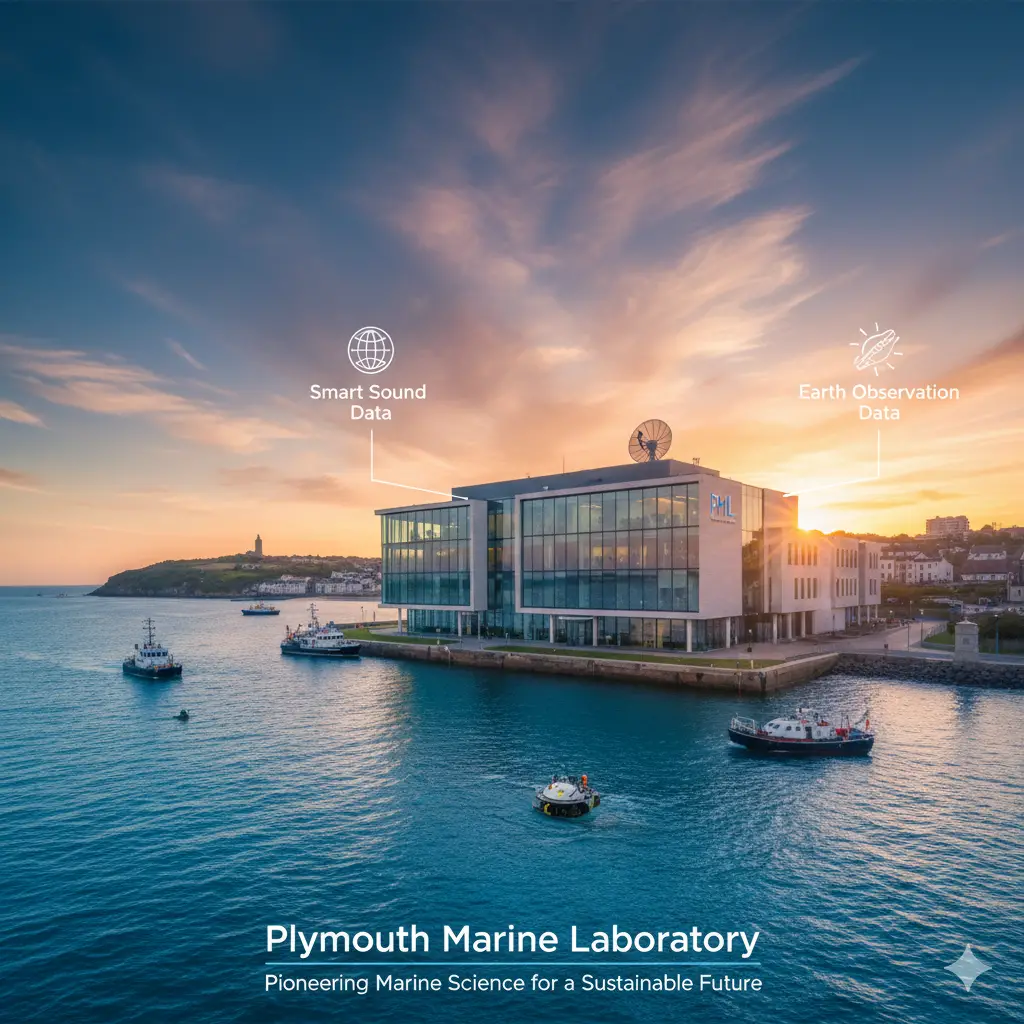
In the heart of Britain’s Ocean City, the Plymouth Marine Laboratory (PML) stands as a beacon of scientific excellence and environmental stewardship. As a world-leading, independent international centre of excellence in marine science and technology, PML has dedicated decades to understanding the complexities of our oceans. With its headquarters in Prospect Place, West Hoe, Plymouth, the laboratory operates at the intersection of biology, chemistry, physics, and social science to address the most pressing challenges of our time: climate change, biodiversity loss, and marine pollution.
A Legacy of Independence and Excellence
While PML’s roots trace back to its original formation in 1988 under the Natural Environment Research Council (NERC), its current identity as an independent research institution was solidified on March 13, 2001. Under the leadership of Professor Icarus Allen, Chief Executive, PML has evolved into a powerhouse of marine innovation. Today, it remains a collaborative centre of NERC, blending the stability of national partnership with the agility of an independent charity.
Core Mission: Impactful Science for a Healthy Ocean
The mission of Plymouth Marine Laboratory is clear: to deliver impactful, cutting-edge environmental and social science in support of a healthy and sustainable ocean. This is not merely an academic pursuit. PML turns complex marine data into actionable insights, providing knowledge-based solutions that inform government policy, support industrial sustainability, and safeguard marine ecosystems worldwide.
Marine Ecosystem Modelling and Earth Observation
One of PML’s greatest strengths lies in its ability to simulate the future of our oceans. Marine Ecosystem Modelling is a cornerstone of their work, allowing scientists to predict how oceans will react to rising temperatures and acidification.
By leveraging Earth Observation Data through satellite remote sensing, PML monitors ocean health on a global scale. This "eye in the sky" approach enables the detection of harmful algal blooms, the tracking of marine plastic pollution, and the monitoring of carbon sequestration—crucial for meeting global net-zero targets.
Environmental Intelligence and AI
In the era of Big Data, PML is a pioneer in Environmental Intelligence. By integrating artificial intelligence (AI) with traditional observational data, the laboratory creates sophisticated models that map vulnerable marine ecosystems in the Atlantic and beyond. These AI-enabled tools allow for high-speed analysis of biodiversity, helping researchers identify shifts in species distribution long before they become visible to the naked eye.
Technological Innovation and Smart Sound Plymouth
PML is not just a laboratory; it is a proving ground for the future of maritime technology. Smart Sound Plymouth is the UK’s premier testing facility for marine autonomy and uncrewed systems. Managed by PML, this unique stretch of water provides a controlled environment for testing:
-
Autonomous Underwater Vehicles (AUVs)
-
Uncrewed Surface Vessels (USVs)
-
Advanced underwater sensors and 5G connectivity
This infrastructure supports the "Blue Economy," ensuring that new maritime technologies are safe, efficient, and environmentally friendly.
Addressing Global Challenges
Climate Change and Ocean Acidification
PML is at the forefront of researching the "other CO2 problem"—ocean acidification. By studying how the absorption of carbon dioxide changes sea chemistry, PML provides vital data to the UK government and international bodies, helping to predict the impact on shellfish, coral reefs, and the broader food web.
Marine Plastic and Pollution
From microplastics in zooplankton to oil spill detection, PML’s research on marine pollution is world-renowned. They were among the first to identify the devastating impact of microplastics on the foundation of the marine food chain, leading to significant shifts in global environmental policy.
The Business of Science: PML Applications Ltd
To bridge the gap between pure research and commercial utility, the laboratory operates PML Applications Ltd. This wholly-owned subsidiary provides consultancy services, helping industries—from offshore wind farms to shipping—understand and minimize their environmental footprint. Through corporate invoicing and research grants, PML ensures that its scientific findings are practically applied to support "Blue Growth."
Amenities and Infrastructure
Supporting a team of over 160 specialists, PML offers state-of-the-art facilities, including:
-
High-Performance Computing (HPC) for complex climate simulations.
-
The Marine Autonomy Hub.
-
Advanced Research Laboratories.
-
Modern waiting lounges and high-speed free Wi-Fi for visiting collaborators.
Strategic Partnerships and Certifications
PML is a proud member of Marine Research Plymouth, the UK’s largest cluster of marine science researchers. The institution holds the ISO 9001:2015 certification for Quality Management, ensuring that every data point and research paper meets the highest international standards.
Securing the Future of the Blue Planet
As we navigate the uncertainties of the 21st century, the role of institutions like Plymouth Marine Laboratory becomes increasingly vital. By combining observational, experimental, and modelling activity, PML provides the deep understanding necessary to manage our oceans responsibly. Whether it is through AI-enabled mapping or testing the next generation of autonomous ships, PML remains dedicated to securing a resilient future for the oceans in the UK and worldwide.
Frequently Asked Questions
1. What is the primary focus of Plymouth Marine Laboratory?
PML focuses on marine research and environmental science, specializing in ecosystem modelling, satellite remote sensing, and addressing global challenges like climate change and marine pollution.
2. Is PML a government agency?
No, PML is an independent international centre of excellence with charitable status, though it is a collaborative centre of the Natural Environment Research Council (NERC).
3. Who leads the Plymouth Marine Laboratory?
The institution is led by Chief Executive Professor Icarus Allen, a renowned expert in marine ecosystem modelling.
4. What is Smart Sound Plymouth?
Smart Sound Plymouth is a world-class testing range for marine autonomy and advanced ocean technologies, managed and operated by PML.
5. Does PML offer commercial services?
Yes, through its subsidiary PML Applications Ltd, it provides environmental consultancy, marine impact analysis, and technology testing for commercial clients.
6. How many people work at PML?
PML employs over 160 staff members, including scientists, technicians, and support personnel.
7. Where is PML located?
PML is headquartered in Prospect Place, West Hoe, Plymouth, United Kingdom, near The Hoe and Plymouth Sound.
8. Can I visit the laboratory?
While primarily a research facility, PML hosts various scientific events and collaborations. It features a waiting lounge and amenities for registered visitors and partners.
9. What payment methods are accepted for their services?
PML and its subsidiary accept bank transfers, research grants, corporate invoicing, and credit/debit cards.
10. How does PML contribute to the fight against climate change?
PML provides essential data on ocean carbon storage, acidification, and ecosystem shifts, which help governments and international organizations develop climate adaptation strategies.
Business Contact Information
-
Phone: 01752 633100
-
Email: [email protected]
-
Website: https://www.pml.ac.uk
-
Address: Prospect Place, West Hoe, Plymouth, Devon, PL1 3DH, UK
Top Categories
Top Viewed Articles
-
 Nottingham Trent University: Reimagining Higher Education
Apr 06 122
Nottingham Trent University: Reimagining Higher Education
Apr 06 122 -
Event Partners Ltd: Global B2B Exhibition Experts
Apr 08 114
-
Top Rated and Most Reliable Parking in London
Jul 09 114
-
Top Rated and Most Reliable Dentists in London
Jul 20 109
-
Top Rated and Most Reliable Doctors in London
Jul 20 102




Spread the Word
Know someone who would love this? Share it with them!