
Affordable Housing Projects UK
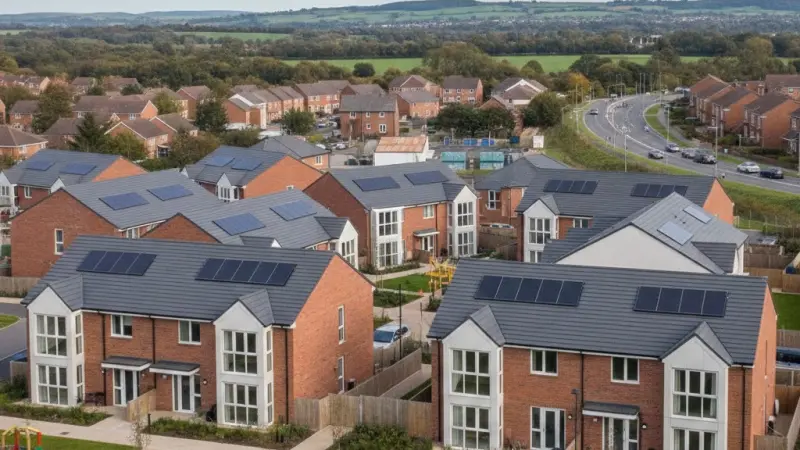
The landscape of the United Kingdom’s property market is undergoing a seismic shift. As we navigate through 2025, the focus has moved from mere "house building" to the delivery of genuine, sustainable affordable housing projects across the UK. With the government’s commitment to a "social rent revolution," the stakes have never been higher for developers, local authorities, and residents alike.
In this comprehensive guide, we explore the current state of affordable housing supply, the innovative projects winning architectural awards, and the strategic funding pipelines that are set to redefine British communities over the next decade. Whether you are a policy-maker or a prospective tenant, understanding these developments is essential to grasping the future of UK living.
The Current State of Affordable Housing Supply in England
Analysing Recent Completions and Delivery Targets
The 2024-25 Statistical Breakthrough in Social Rent
Recent data from the Ministry of Housing, Communities and Local Government (MHCLG) indicates a significant uptick in delivery. In the 2024-25 period, England saw the completion of 64,762 affordable homes—the highest number since the 2014-15 financial year. This 1% year-on-year increase might seem modest, but the underlying tenure split reveals a more profound change.
Specifically, social rent completions reached 12,198 units, marking the highest level in over a decade. This shift suggests a move away from "Affordable Rent" (which can be up to 80% of market rates) toward "Social Rent," which typically sits around 50-60% of local market values. For families trapped in expensive private rentals, this is a vital lifeline.
- 66% of new affordable homes were for rent (Social, Affordable, or Intermediate).
- 92% of these completions were brand new builds rather than acquisitions.
- Local authorities delivered 10,480 homes, their highest contribution since 1991.
Government Funding and the Social Rent Revolution
The £39 Billion Social and Affordable Homes Programme
Delivering a Decade of Renewal for Housing Stock
The UK government has recently confirmed an ambitious £39 billion investment via the new Social and Affordable Homes Programme. The headline target is to deliver 300,000 homes, with a strict mandate that at least 60% must be designated for social rent. This represents a six-fold increase compared to the average social housing output of the last ten years.
This funding isn't just about quantity; it is intrinsically linked to the "Decent Homes Standard." The goal is to ensure that while we build new projects, we also drive up the safety and quality of existing stock. This is particularly relevant following the focus on damp, mould, and electrical safety within the sector.
Innovative Affordable Housing Projects and Design Awards
Celebrating Excellence in Social Housing Architecture
RIBA Neave Brown Award Winners and Sustainability Trends
Affordable housing projects in the UK are no longer synonymous with grey, uninspired blocks. The 2024-25 period has seen remarkable projects like "Chowdhury Walk" in Hackney and "North Gate Social Housing" in Glasgow gaining national acclaim. These projects prove that high-density, low-cost living can coexist with world-class architectural design.
A key trend in these new projects is the "Passivhaus" standard. For instance, the Hammersmith & Fulham Council is currently delivering 134 energy-efficient homes at the former Hartopp and Lannoy Point site.
By using air-source heat pumps and solar panels, these developments significantly reduce energy bills for lower-income tenants, addressing both the housing and cost-of-living crises simultaneously.
Challenges Facing the UK Housing Sector in 2025
Navigating Economic Pressures and Construction Costs
The Struggle of Traditional Registered Providers
Despite the influx of government cash, the sector faces stiff headwinds. Traditional Housing Associations (Registered Providers) are currently caught between the need to build new homes and the urgent requirement to retrofit existing ones. Maintenance costs across the sector have risen by an estimated £1.5 billion in just four years.
Furthermore, interest rates and the high cost of debt have slowed some development pipelines. While "For-Profit" providers are stepping in to fill some gaps, they often lack the long-term community ties that traditional councils maintain. Balancing these economic realities is the primary challenge for the 1.5 million homes target pledged by the current administration.
Section 106 and the Role of Private Developers
How Planning Obligations Shape Affordable Supply
The Debate Over Nil-Grant vs Funded Units
Section 106 (S106) agreements remain a cornerstone of affordable housing delivery in the UK. This mechanism requires private developers to include a percentage of affordable units within their market-rate schemes. However, recent surveys suggest that 65% of sector stakeholders believe S106 is not working effectively in its current form.
One major issue is the "pepper-potting" of affordable units within luxury developments, which can lead to high service charges that low-income tenants cannot afford. There is a growing call for more flexibility, allowing developers to provide land or funding for dedicated social housing sites rather than token units within luxury blocks.
The Rise of Shared Ownership and Rent-to-Buy
Alternative Routes Into Home Ownership
Updating the Shared Ownership Model for 2025
For those squeezed out of the mortgage market but not eligible for social rent, Shared Ownership remains a popular middle ground. Recent reforms have made this model more accessible, allowing buyers to purchase as little as a 10% share in a property. In London, the "London Living Rent" helps tenants save for a deposit by offering sub-market rents on a fixed-term basis.
However, the sector is also seeing a shift in how these homes are managed. New regulations have capped rent increases at CPI + 1%, providing more certainty for residents who previously faced RPI-linked hikes. This ensures that "affordable" home ownership remains affordable throughout the lifetime of the mortgage.
The Future of Affordable Housing: Technology and Community
Digital Integration and Tenant Empowerment
Smart Homes and the New Decent Homes Standard
Looking toward the 2030s, the UK’s affordable housing projects are becoming "smarter." IoT (Internet of Things) devices are now being used to monitor humidity and temperature in social housing to prevent mould before it starts. This proactive maintenance not only saves the landlord money but ensures a healthier environment for the tenant.
Community building is also at the heart of new projects. We are seeing a return to "community-led housing" and land trusts, where residents have a direct say in how their estates are managed.
This shift from "tenant" to "stakeholder" is vital for the long-term success of large-scale affordable housing projects in the UK.
Key Statistics for 2025:
- 64,762 affordable homes completed in England (2024-25).
- 12,198 social rent homes delivered—a 10-year high.
- £39 Billion earmarked for the Social and Affordable Homes Programme.
- 1.5 Million total new homes target for the current parliament.
The UK is at a crossroads in its approach to housing. The shift toward social rent and the massive injection of funding via the £39 billion programme suggest a genuine political will to tackle the crisis. However, the success of these affordable housing projects in the UK will depend on more than just money. It requires architectural innovation, a reform of the planning system (S106), and a commitment to maintaining existing stock to a high standard.
As we move through 2025, the focus on sustainable, energy-efficient, and community-focused developments offers a glimmer of hope. By prioritising quality alongside quantity, the UK can ensure that the next generation of affordable housing isn't just a roof over someone's head, but a foundation for a better life.
Frequently Asked Questions
What counts as "affordable housing" in the UK?
Affordable housing includes Social Rent (roughly 50-60% of market rate), Affordable Rent (up to 80% of market rate), and intermediate options like Shared Ownership or London Living Rent.
How do I apply for an affordable housing project in my area?
Most affordable housing is allocated via your local council’s housing register (waiting list) or through specific providers for Shared Ownership. You should check your local authority's website for "Housing Options."
Is the government building more social housing in 2025?
Yes, the government has launched a £39 billion programme with the specific aim of boosting
social rent delivery, targeting approximately 300,000 new affordable homes over the coming years.
What is the "Right to Shared Ownership"?
This is a scheme that allows tenants in new-build housing association homes to buy a share of their property (starting from 10%), even if it was originally built for rent.
How does Section 106 help affordable housing?
Section 106 is a legal agreement where developers must provide a certain percentage of affordable homes as a condition for receiving planning permission for a larger site.
What is a Passivhaus social home?
Passivhaus is a rigorous voluntary standard for energy efficiency in a building, which reduces the building's ecological footprint. It results in ultra-low energy buildings that require little energy for heating or cooling.
Can I get affordable housing if I am a first-time buyer?
Yes, schemes like Shared Ownership and First Homes are specifically designed to help first-time buyers get onto the property ladder with smaller deposits.
Why is there a shortage of affordable housing in the UK?
The shortage is caused by a combination of high land prices, planning restrictions, a decline in council house building over several decades, and rising construction costs.
What is the difference between Social Rent and Affordable Rent?
Social Rent is set by a national formula and is usually much lower (around 50% of market rates). Affordable Rent is higher, capped at 80% of local market rents.
What is the New Decent Homes Standard?
It is a set of criteria that ensures all social and private rented homes are safe,
warm, and have modern facilities, with a new focus on tackling damp and mould.
Is there funding available for brownfield affordable housing?
Yes, the government provides specific grants to help developers decontaminate and prepare brownfield (previously developed) land for new affordable housing projects.
Disclaimer: The information provided in this article is for general informational and research purposes only. Company details, features, services, and market positions may change over time. Readers are advised to visit official company websites and conduct independent research before making any business decisions or purchasing services.
Most Searchable Keywords
Recent Blogs


Related Listings

Categories
- Accountants (295)
- Advertising Agencies (559)
- Architects (149)
- Automobiles (377)
- Beauty (300)
- Carpenters (146)
- Cleaning Services (387)
- Dentists (189)
- Driving (62)
- Electricians (215)
- Energy (8)
- Event Organiser (686)
- Finance (602)
- Guide (3372)
- Health (2207)
- Information technology (206)
- Legal Services (353)
- Logistics (6)
- Maintenance (65)
- Manufacturing (35)
Sponsored Listings in Travel Agencies


Related Blogs

How Much Do UK Actors Really Earn Full Indust...
Read this insightful article "How Much Do UK Actors Really Earn Full Industry Breakdown" to expand your knowledge!

Blue Light Card UK 2026 Check Eligibility and...
Read this insightful article "Blue Light Card UK 2026 Check Eligibility and Claim" to expand your knowledge!

BBC Radio 1 DJs Net Worth Ranking Revealed
Read this insightful article "BBC Radio 1 DJs Net Worth Ranking Revealed" to expand your knowledge!
Questions & Answers – Find What
You Need, Instantly!
How can I update my business listing?
Is it free to manage my business listing?
How long does it take for my updates to reflect?
Why is it important to keep my listing updated?
