
Upcoming Housing Developments UK: 2026 New Build Guide
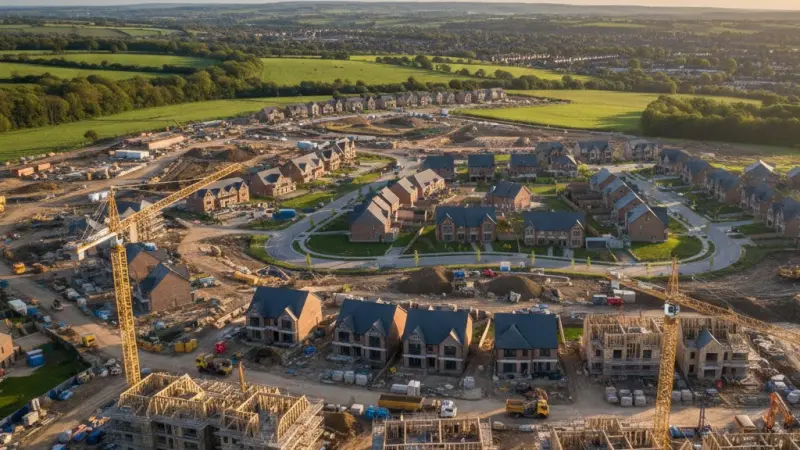
The UK housing market is entering a transformative era. With a national mandate to deliver 1.5 million homes over the current Parliament, the landscape of "upcoming housing developments UK" has moved from mere speculation to a high-priority industrial surge. For prospective homeowners, investors, and urban planners, staying informed about where the next cranes will appear is essential.

In 2026, we are seeing a pivot toward infrastructure-led housing. This means new communities aren't just rows of houses; they are integrated hubs connected by high-speed rail, green corridors, and digital connectivity. From the "Grey Belt" reclassifications to massive city-centre regenerations, the British skyline is being redrawn with a focus on sustainability and density.
The Impact of Planning Reform on UK Housing Supply
How the Revamped NPPF Accelerates New Build Delivery
Streamlining Approvals for Large-Scale Residential Projects
The latest updates to the National Planning Policy Framework (NPPF) have introduced a "presumption in favour of sustainable development." This change is designed to bypass the traditional "treacle" of local planning bureaucracy that has historically stalled major projects for years.
By making the system more predictable, the government aims to empower SME builders alongside the "Big Five" developers. In practice, this means more sites are being greenlit for 2026 starts, particularly those that align with the "Brownfield First" policy. Local authorities are now under stricter pressure to meet their mandatory housing targets, or risk losing control over their local planning decisions.
- Mandatory housing targets reinstated for every local council.
- Priority given to developments on previously developed land.
- Enhanced powers for mayors to designate Strategic Development Areas.
Sustainable Living: The Rise of Eco-Friendly Developments
Integrating the Future Homes Standard into 2026 Projects
The Shift Towards Zero-Carbon Ready Construction Methods
Upcoming housing developments in the UK are no longer just about brick and mortar; they are about energy efficiency. The introduction of the Future Homes Standard means that from 2025/2026, new builds will be expected to produce 75-80% less carbon emissions than those built under previous regulations.
We are seeing an explosion in the use of Heat Pumps, solar arrays as standard, and Mechanical Ventilation with Heat Recovery (MVHR) systems. Developers like Berkeley Group and Barratt are already trialling "Active Homes" that generate more energy than they consume. This shift isn't just environmental; it's a response to the long-term energy security concerns of British buyers.
Regional Hotspots: Where the Big Builds are Happening
The Golden Triangle and the Northern Powerhouse Projects
Oxford North and Manchester’s Greengate Regeneration
While London remains a hub for luxury apartments, the real volume of "upcoming housing developments UK" is shifting North and West. Manchester continues to dominate the high-rise residential sector, with the Greengate Skyscraper and Viadux projects set to provide thousands of new homes by late 2026.
In the South, the "Golden Triangle" (London, Oxford, Cambridge) is seeing massive life-science-led housing growth. The Oxford North District, a £500 million project, is a prime example of how employment hubs are driving residential demand.
These aren't just dormitories for workers; they are self-contained ecosystems with shops, schools, and parks.
Research Insight: Northern regions saw a 5.1% growth in house prices in late 2025, significantly outperforming the London market.
Affordable Housing and Social Rent Initiatives
The £39bn Social and Affordable Homes Programme
Bridging the Affordability Gap for First-Time Buyers
Affordability remains the Achilles' heel of the UK market. To combat this, the Social and Affordable Homes Programme (SAHP) is ramping up its delivery. By 2026, the government expects a significant percentage of all new housing starts to fall under affordable tenures, including Social Rent and Shared Ownership.
Public-private partnerships, such as the Habiko initiative, are targeting the delivery of 3,000 low-carbon, low-energy affordable homes. These projects often utilise Modern Methods of Construction (MMC)—modular homes built in factories and assembled on-site—to reduce costs and speed up delivery times without compromising on quality.
The Build-to-Rent (BTR) Revolution
Institutional Investment in Professionalised Rental Communities
The Growth of Single-Family Rental Estates in Suburbia
A major trend in upcoming developments is the professionalisation of the rental sector. Build-to-Rent (BTR) is no longer confined to city-centre glass towers. In 2026, we are seeing a surge in "Single Family BTR"—whole estates of semi-detached and detached houses owned by institutional investors like Legal & General or Canadian pension funds.
These developments offer long-term security of tenure and high-quality management, appealing to families who are priced out of buying but want the stability of a new-build community. This sector is expected to grow by 13% annually over the next five years, filling the gap left by departing private "buy-to-let" landlords.
Infrastructure-Led Housing: Beyond the Front Door
Connecting New Communities via High-Speed Rail and Green Links
Lower Thames Crossing and HS2 Impact on Local Housing
Transport infrastructure is the greatest catalyst for housing. The Lower Thames Crossing, a £9 billion project, is set to unlock thousands of homes in Kent and Essex by improving connectivity to the M25. Similarly, regions around HS2 hubs in the West Midlands are seeing a "pre-emptive" building boom.
Smart developers are looking at "Transit-Oriented Development" (TOD). By building high-density housing within walking distance of rail stations, planners can reduce car dependency.
This is a core pillar of the government's strategy to build "around train stations," ensuring that upcoming housing developments in the UK are truly sustainable.
Modern Methods of Construction (MMC) and AI Integration
Technological Innovation in the 2026 Construction Sector
Using Digital Twins and Modular Frameworks for Efficiency
The construction industry is finally embracing its digital revolution. In 2026, many of the UK's most significant upcoming developments are being planned using "Digital Twins"—virtual replicas of buildings that allow for precise energy modelling before a single brick is laid.
Modular construction is also reaching a tipping point. Factories in the North of England are now capable of producing high-performance apartment modules that can be stacked on-site in days. This reduces local disruption, minimises waste, and ensures that the 1.5 million home target isn't just a political promise, but a logistical reality.
Navigating the UK New Build Market
As we look toward the remainder of 2026, the UK housing market is defined by a "flight to quality." Buyers and investors are increasingly prioritising energy efficiency, digital infrastructure, and community amenities over square footage alone. The government's aggressive planning reforms are finally starting to clear the backlog, but challenges remain in the form of skilled labour shortages and high material costs.
Whether you are looking at the massive regeneration projects in Manchester and Birmingham or the eco-communities in the South East, the opportunities in "upcoming housing developments UK" are vast. By focusing on areas with strong infrastructure links and sustainable credentials, you can ensure that your property journey is both future-proof and financially sound.
Frequently Asked Questions
Where are the biggest housing developments in the UK for 2026?
Major hotspots include Manchester (Greengate and Viadux), Oxford (Oxford North), and London (Wembley and the Silvertown Legacy sites). Additionally, the West Midlands is seeing significant growth due to HS2-related infrastructure works.
What is the 1.5 million homes target?
The UK government has committed to building 1.5 million new homes over the current five-year Parliament.
This involves reforming the planning system and reclassifying some "Grey Belt" land to speed up delivery.
Are new build homes in 2026 more energy-efficient?
Yes, developments starting in 2026 must adhere to the Future Homes Standard, which requires a 75-80% reduction in carbon emissions compared to older standards, often including heat pumps and solar power.
How can I find upcoming housing developments in my local area?
You can check the local authority's "Local Plan" or "Planning Portal." Alternatively, major developers like Taylor Wimpey, Persimmon, and Barratt list their "coming soon" sites on their websites.
What is the 'Grey Belt'?
The Grey Belt refers to lower-quality Green Belt land—such as disused car parks or wasteland—that the government has earmarked for housing redevelopment to protect high-quality green spaces.
Is now a good time to buy a new build in the UK?
With mortgage rates stabilising and many developers offering high incentives (such as deposit contributions), 2026 is considered a "buyer's market" for those looking at the new build sector.
What are the benefits of Build-to-Rent?
Build-to-Rent offers professional management, long-term security, and often includes amenities like gyms, workspaces, and communal gardens, making it a popular choice for modern tenants.
What are Modern Methods of Construction (MMC)?
MMC involves off-site manufacturing where parts of a home are built in a factory and then transported to the site. It is faster, more sustainable, and increasingly used in the UK to meet housing targets.
Will there be more affordable housing in 2026?
The £39bn Social and Affordable Homes Programme is specifically designed to increase the number
of homes available for social rent and shared ownership across the country.
How does infrastructure impact property prices?
Properties near major new infrastructure projects, like the Lower Thames Crossing or new rail links, typically see higher capital appreciation than those in less connected areas.

Disclaimer: The information provided in this article is for general informational and research purposes only. Company details, features, services, and market positions may change over time. Readers are advised to visit official company websites and conduct independent research before making any business decisions or purchasing services.
Most Searchable Keywords

Recent Blogs



Related Listings


Categories
- Accountants (295)
- Advertising Agencies (559)
- Architects (149)
- Automobiles (377)
- Beauty (300)
- Carpenters (146)
- Cleaning Services (386)
- Dentists (189)
- Driving (62)
- Electricians (215)
- Energy (8)
- Event Organiser (685)
- Finance (599)
- Guide (3365)
- Health (2207)
- Information technology (206)
- Legal Services (353)
- Logistics (6)
- Maintenance (65)
- Manufacturing (35)

Sponsored Listings in Locksmith Services


Related Blogs

Gen Z Political Reporters and News Creators i...
Read this insightful article "Gen Z Political Reporters and News Creators in the UK" to expand your knowledge!

Famous Female Social Media Influencers Across...
Read this insightful article "Famous Female Social Media Influencers Across the UK" to expand your knowledge!

Your UK Sponsor Licence 2026 Step by Step Gui...
Read this insightful article "Your UK Sponsor Licence 2026 Step by Step Guide" to expand your knowledge!
Questions & Answers – Find What
You Need, Instantly!
How can I update my business listing?
Is it free to manage my business listing?
How long does it take for my updates to reflect?
Why is it important to keep my listing updated?
