
Exploring the Environmental Impact of Different Freight Shipping Methods
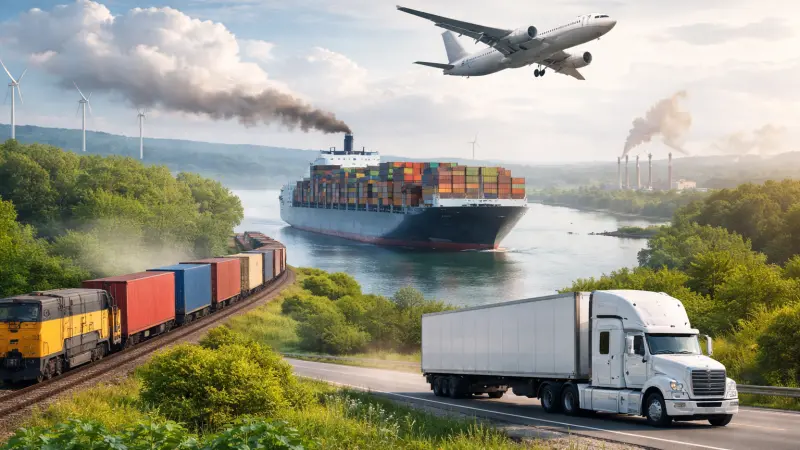
Every parcel, pallet, and container that moves across the country or around the world leaves behind a carbon footprint. Yet most businesses rarely stop to consider which freight shipping method causes the most harm — or how choosing differently could make a meaningful difference. With climate commitments tightening and consumers increasingly demanding greener supply chains, understanding the environmental impact of freight shipping has never been more important for UK businesses of all sizes.
This article examines the four principal modes of freight transport — road, rail, air, and sea — comparing their carbon emissions, energy consumption, and broader ecological effects. It also explores practical steps businesses can take to reduce their logistics-related environmental footprint.
Why Freight Emissions Matter in the UK
The transport sector is the largest contributor to greenhouse gas emissions in the United Kingdom, accounting for roughly a quarter of all domestic carbon output. Within that figure, freight transport — the movement of goods by road, rail, air, and sea — constitutes a substantial and growing share.
As e-commerce continues to expand and supply chains grow more complex, demand for freight services is rising. This makes it all the more urgent for logistics operators, retailers, and manufacturers to evaluate the environmental consequences of how they move goods. Reducing freight emissions is not simply a regulatory requirement; it is increasingly a commercial and reputational imperative.
Road Freight: Convenient but Carbon-Intensive
Road freight is by far the most widely used mode of freight transport in the UK. Lorries, vans, and articulated vehicles carry the vast majority of goods that move domestically, offering door-to-door delivery, flexibility, and relatively low costs. However, road freight is also one of the most environmentally damaging options available.
Carbon Emissions from Road Transport
Heavy goods vehicles (HGVs) are powered almost exclusively by diesel engines, making them significant emitters of carbon dioxide (CO₂), nitrogen oxides (NOₓ), and particulate matter. On average, a diesel-powered HGV emits approximately 62–150 grams of CO₂ per tonne-kilometre, depending on load efficiency and vehicle age.
Traffic congestion compounds the problem. Vehicles idling in traffic consume fuel without moving goods, increasing emissions per unit of cargo transported. Urban last-mile delivery — the final leg of a product's journey to the consumer — is particularly inefficient in this regard.
Air Pollution and Noise
Beyond CO₂, road freight vehicles contribute significantly to localised air pollution, particularly in towns and cities. Diesel particulates are linked to respiratory conditions, cardiovascular disease, and premature death. Communities situated near motorways or urban distribution hubs are disproportionately affected.
Road freight also generates considerable noise pollution, which affects quality of life for residents near busy freight corridors and distribution centres.
Progress Towards Cleaner Road Freight
There are, however, encouraging developments. The UK government has committed to phasing out the sale of new diesel-only HGVs by 2040. Electric vans are already commercially available and increasingly cost-effective for last-mile delivery. Hydrogen-powered trucks are being trialled by major logistics operators, offering the potential for zero-tailpipe-emission long-haul freight.
In the near term, optimising load factors — ensuring lorries travel full rather than partially laden — and adopting route planning software to reduce mileage can meaningfully cut emissions without requiring new vehicles.
Rail Freight: A Lower-Carbon Alternative
Rail freight is significantly more environmentally efficient than road transport for bulk and long-distance cargo. Trains can carry far greater volumes per journey and, when powered by electricity, produce a fraction of the emissions generated by diesel HGVs.
Emissions Comparison
According to the Rail Freight Group and figures from the Department for Transport, rail freight produces approximately 76% fewer carbon emissions per tonne-kilometre compared to road freight. On electrified routes — which account for a growing proportion of the UK network — this advantage is even more pronounced, particularly as the electricity grid becomes greener.
A single freight train can remove up to 76 HGVs from UK roads, reducing not only carbon
emissions but also congestion, road wear, and the associated maintenance costs borne by the public.
Limitations of Rail Freight
Despite its environmental advantages, rail freight has meaningful limitations. The UK's rail network is not universally accessible; many businesses are not located near freight terminals, which necessitates road-based first- and last-mile movements. These add emissions and complexity to otherwise efficient rail journeys.
Rail freight is also less flexible than road transport. Timetables must be coordinated with passenger services, and terminal capacity can be a constraint during peak periods. For time-sensitive or smaller consignments, rail may not always be practical.
The Case for Modal Shift
Despite these challenges, there is a compelling environmental case for shifting more freight from road to rail, particularly for long-haul domestic journeys. The UK government's Integrated Rail Plan and various freight growth targets reflect an ambition to increase the modal share of rail freight. Businesses that engage with multimodal logistics — combining rail for the trunk haul with efficient road connections at either end — can achieve substantial reductions in their carbon footprints.
Air Freight: Fast, Flexible, and Highly Polluting
Air freight is the fastest way to move goods across long distances, but it is also the most environmentally damaging mode of transport per unit of cargo. Its use should be reserved for genuinely time-critical shipments, as the environmental cost is considerable.
The Carbon Footprint of Air Freight
Air freight emits between 500 and 1,500 grams of CO₂ per tonne-kilometre — an order of magnitude higher than road freight and vastly more than rail or sea. When the non-CO₂ warming effects of aviation are factored in — including contrail formation and the release of water vapour at altitude — the total climate impact is estimated to be two to four times greater than CO₂ alone.
A single transatlantic air freight journey can generate more greenhouse gas emissions than several months of equivalent sea freight movement. For businesses serious about reducing their carbon footprint, the choice between air and sea freight is one of the most impactful decisions they can make.
When Air Freight Is Unavoidable
There are circumstances in which air freight is genuinely necessary: perishable goods, medical supplies, high-value components in time-sensitive manufacturing processes, and emergency situations may all require rapid air delivery. In such cases, businesses should seek to use more fuel-efficient aircraft, explore sustainable aviation fuel (SAF) options where available, and offset emissions through credible, verified carbon reduction programmes.
However, using air freight as a default simply because it is faster or more convenient — particularly for non-urgent goods — is increasingly difficult to justify from an environmental standpoint.
Sea Freight: The Greenest Option for International Cargo
For international shipments, sea freight is by far the most environmentally efficient mode of transport. Container ships carry enormous volumes of cargo and, per tonne-kilometre, produce a fraction of the emissions associated with air freight.
Emissions per Tonne-Kilometre
Ocean freight typically generates between 10 and 40 grams of CO₂ per tonne-kilometre, depending on vessel size, speed, and fuel type. This makes it roughly 20 to 30 times more efficient than air freight and significantly more efficient than road transport for comparable distances.
The sheer scale of container vessels means that even modest improvements in fuel efficiency — such as slow steaming (reducing vessel speed) — deliver substantial reductions in total emissions. Many shipping lines have adopted slow steaming as standard practice, cutting fuel consumption and associated greenhouse gas output considerably.
Environmental Challenges in Shipping
Sea freight is not without its environmental problems, however. The global shipping industry is responsible for approximately 2.5% of global greenhouse gas emissions, and ships historically ran on heavy fuel oil — one of the dirtiest fossil fuels available — which also releases sulphur oxides harmful to human health and marine ecosystems.
Regulations introduced by the International Maritime Organisation (IMO) now limit sulphur content in marine fuels, and the IMO has set targets to cut total shipping emissions by at least 50% by 2050 compared to 2008 levels.
Newer vessels are being designed to run on liquefied natural gas (LNG), ammonia, methanol, or hydrogen — all of which offer significantly lower emissions than conventional bunker fuel.
Additionally, shipping routes pass through ecologically sensitive ocean areas, and ballast water discharge — the release of water taken on to stabilise empty vessels — can introduce invasive species to new marine environments, with potentially serious consequences for biodiversity.
Ports and Shore-Based Emissions
The environmental impact of sea freight does not end at the vessel. Port operations — cranes, vehicles, refrigeration units, and auxiliary power for berthed ships — generate significant local air pollution. UK ports are increasingly investing in shore power systems, which allow ships to plug into the electrical grid whilst docked rather than running their diesel generators.
Comparing Freight Modes: A Summary
To provide a clear overview, the following summarises the approximate CO₂ emissions per tonne-kilometre for each freight mode:
- Air freight: 500–1,500 g CO₂/tonne-km (highest emissions)
- Road freight (HGV): 62–150 g CO₂/tonne-km
- Sea freight: 10–40 g CO₂/tonne-km
- Rail freight (electrified): 10–30 g CO₂/tonne-km (lowest emissions for land-based transport)
These figures are approximate and vary based on vehicle type, load factor, route, and fuel source. However, the relative hierarchy is consistent: air freight is the most polluting option for long-distance shipments, whilst rail and sea freight — particularly when powered by clean energy — represent the most sustainable choices available today.
Reducing the Environmental Impact of Your Freight Operations
For UK businesses seeking to reduce the environmental footprint of their logistics operations, the following strategies offer practical starting points.
1. Conduct a Freight Carbon Audit
Before making changes, it is essential to understand the current emissions profile of your supply chain. Many freight carriers now provide emissions reporting tools, and third-party logistics consultants can help map the carbon footprint of your operations in detail. This baseline assessment enables targeted, evidence-based improvements.
2. Prioritise Modal Shift Where Possible
Where timescales allow, shifting from road to rail for long-distance UK movements — or from air to sea for international shipments — offers the greatest emissions savings. This is not always straightforward logistically, but even partial modal shift delivers meaningful results.
3. Optimise Load Efficiency
Shipping goods in partially filled vehicles or containers significantly increases emissions per unit of cargo. Consolidating shipments, coordinating with other businesses to share load space, and using software to optimise packing and routing can all reduce wasted capacity.
4. Choose Carriers with Strong Environmental Credentials
Not all freight operators are equally committed to sustainability. When selecting logistics partners, consider their investment in low-emission vehicles, their use of renewable energy at depots and warehouses, and their participation in verified carbon reduction schemes. Many carriers now publish annual sustainability reports and hold accreditations such as ISO 14001.
5. Plan Ahead to Avoid Air Freight
A significant proportion of air freight shipments could be moved by sea if better supply chain planning were in place. Ordering earlier, maintaining appropriate stock levels, and building buffer time into procurement cycles reduces reliance on fast, high-emission air transport.
6. Invest in Electric and Low-Emission Vehicles for Last-Mile Delivery
For businesses operating their own delivery fleets — particularly for urban last-mile logistics — transitioning to electric vans is one of the most impactful steps available.
Government grants and the expanding public charging infrastructure are making this transition more accessible for small and medium-sized enterprises.
7. Use Carbon Offsetting as a Complement, Not a Substitute
Verified carbon offsetting schemes — such as those certified by Gold Standard or Verra — can help businesses compensate for unavoidable freight emissions. However, offsetting should complement genuine emissions reductions, not replace them. Relying solely on offsets without changing operational practices is increasingly viewed as insufficient by regulators, investors, and consumers alike.
The Role of Technology in Greener Freight
Technological innovation is accelerating the decarbonisation of freight across all modes. Route optimisation algorithms reduce unnecessary mileage for road freight. Real-time tracking minimises failed deliveries — a significant source of wasted emissions. Autonomous vehicles, though still in development, promise greater energy efficiency through smoother driving patterns.
In the aviation sector, sustainable aviation fuels — produced from waste materials, agricultural residues, or synthetic processes — can reduce lifecycle emissions by up to 80% compared to conventional jet fuel. In shipping, wind-assisted propulsion systems are being retrofitted to existing vessels, whilst new designs incorporate rigid sails, rotors, and kite systems to harness natural energy.
Digital freight platforms are also making it easier to compare the carbon footprints of different shipping options at the point of booking, empowering businesses to make greener choices without sacrificing commercial efficiency.
Regulatory Context in the UK
UK businesses operating in the freight and logistics sector face a growing body of environmental regulation. The UK Emissions Trading Scheme (UK ETS) places a price on carbon, incentivising businesses to reduce emissions. Proposed extensions to the scheme — including potential inclusion of maritime transport — signal a direction of travel towards broader carbon pricing across freight modes.
The Environment Act 2021 and Net Zero Strategy set out legally binding commitments that will shape transport policy for decades. Local authorities are introducing Clean Air Zones in cities such as Birmingham, Bristol, and Bath, with direct implications for road freight operators running older, more polluting vehicles.
Businesses that proactively adapt to this regulatory environment — rather than waiting for compliance deadlines — are better positioned to avoid penalties, retain contracts with sustainability-conscious clients, and access green finance options.
Green Freight and Business Reputation
Environmental credentials are increasingly influential in procurement decisions. Large retailers, manufacturers, and public sector bodies are scrutinising the sustainability performance of their suppliers and logistics partners more closely than ever. Businesses that can demonstrate measurable reductions in freight-related emissions gain a competitive advantage in tenders and long-term supply chain relationships.
Consumer awareness of supply chain sustainability is also growing. Transparent communication about the steps a business is taking to reduce its freight footprint — whether through greener carrier choices, modal shift, or carbon reporting — builds trust and loyalty among environmentally conscious customers.
Finding Local Freight and Logistics Providers
Choosing the right logistics partner is a critical step in building a more sustainable supply chain. Many businesses benefit from working with local or regional freight providers who have a strong understanding of UK routes, regulations, and green transport options. If you are looking to connect with reputable freight, transport, or logistics businesses in your area, exploring a business directory in UK such as Local Page UK can help you identify vetted local operators. Local business directories uk are particularly useful for small and medium-sized enterprises seeking to compare providers, check credentials, and find businesses committed to sustainable practices. Whether you are searching within a small business directory uk or browsing an all uk business directory, connecting with the right logistics partner at a local level can make a meaningful difference to both your operations and your environmental footprint. Local Page UK supports businesses in improving their online visibility, making it easier for organisations seeking greener freight solutions to find the partners they need.
Questions Clients Commonly Ask
Which freight shipping method has the lowest carbon emissions?
For land-based transport, electrified rail freight produces the lowest carbon emissions per tonne-kilometre. For international shipments, sea freight is the most environmentally efficient option by a considerable margin, generating significantly less CO₂ per unit of cargo than air freight.
Why is air freight so much worse for the environment than other modes?
Air freight produces between 500 and 1,500 grams of CO₂ per tonne-kilometre — far higher than road, rail, or sea freight. Aircraft also emit pollutants at altitude, where they have a disproportionately large warming effect. The combination of CO₂, contrails, and other high-altitude emissions makes aviation freight the most climate-damaging mode of transport currently available.
Can small businesses realistically reduce their freight carbon footprint?
Yes. Even without large capital investment, small businesses can reduce freight emissions by consolidating shipments, planning orders further in advance to avoid air freight, choosing carriers with strong environmental credentials, and optimising packaging to reduce weight and volume. Many of these measures also reduce costs, making them commercially as well as environmentally beneficial.
Is sea freight always greener than road freight?
For long international distances, sea freight is almost always greener than road freight per tonne-kilometre. However, the total environmental impact of a sea shipment must also account for the road freight required at either end of the journey —
the first- and last-mile movements that connect ports to origin and destination points. When these are included, the advantage of sea freight remains significant but is somewhat reduced for shorter total distances.
What is sustainable aviation fuel (SAF) and does it make air freight greener?
Sustainable aviation fuel is produced from renewable or waste-based feedstocks — such as used cooking oil, agricultural residues, or synthetic processes — rather than fossil fuels. SAF can reduce lifecycle greenhouse gas emissions by up to 80% compared to conventional jet fuel. However, SAF remains expensive and is not yet available at scale across the UK. It represents a promising long-term solution but does not currently negate the environmental advantage of sea or rail freight for most cargo.
Disclaimer: The information provided in this article is for general informational and research purposes only. Company details, features, services, and market positions may change over time. Readers are advised to visit official company websites and conduct independent research before making any business decisions or purchasing services.
Most Searchable Keywords
Recent Blogs


Related Listings

Categories
- Accountants (295)
- Advertising Agencies (559)
- Architects (149)
- Automobiles (377)
- Beauty (300)
- Carpenters (146)
- Cleaning Services (387)
- Dentists (189)
- Driving (62)
- Education (1)
- Electricians (215)
- Energy (8)
- Event Organiser (689)
- Finance (602)
- Guide (3492)
- Health (2207)
- Information technology (207)
- Legal Services (361)
- Logistics (6)
- Maintenance (65)
Sponsored Listings in Cleaning Services


Related Blogs

Creamfields Daresbury: Impact on Local Reside...
Read this insightful article "Creamfields Daresbury: Impact on Local Residents" to expand your knowledge!

UK High Street Businesses in 2026-27: Which S...
Read this insightful article "UK High Street Businesses in 2026-27: Which Sectors Are Growing?" to expand your knowledge!

Why Complete Business Listings Matter More Th...
Read this insightful article "Why Complete Business Listings Matter More Than You Think" to expand your knowledge!
Questions & Answers – Find What You Need, Instantly!
Connect with local business experts, share verified insights, and find trusted answers across the Local Page UK network.
Ask Community
Ask questions to the Local Page UK community
Share Knowledge
Share your knowledge to help out others
Find Solutions
Find answers or offer instant solutions
Some of the most popular fantasy TV shows include "Game of Thrones," known for its epic battles and political intrigue, "The Witcher," which features monster hunting and magic, and "Stranger Things," blending supernatural elements with 1980s nostalgia. Other notable mentions are "His Dark Materials," "Shadow and Bone," and "The Mandalorian," each offering unique worlds and captivating storytelling that have garnered large fan bases.
When seeking bathroom renovation providers that handle both plumbing and tiling, it's advisable to look for licensed contractors who specialize in comprehensive bathroom remodels. Companies such as Home Depot, Lowe's, and Bath Fitter offer these services, often providing a seamless experience by managing all aspects of the renovation process. Additionally, local contractors with positive reviews in platforms like Angie's List or Houzz may also offer tailored solutions for your bathroom needs.
Absolutely, there are several distributors that supply crash mats and soft play equipment to gymnastics clubs in and around Birmingham. National companies like Gymnova, S & G (Spieth Gymnastics), and Jaques of London offer a wide range of crash mats, foam pits, and soft play pieces, and they typically deliver to the Birmingham area. For more local options, you might try The Gym Equipment Company, which has a showroom in the West Midlands, or check out smaller specialist suppliers like Playtime UK. Many of these distributors cater specifically to clubs, offering high-density foam mats that meet safety standards. I'd recommend reaching out to a few to compare pricing, delivery times, and whether they offer custom sizes or installation services. It's also worth checking if any of them have a physical showroom near Birmingham so you can test the equipment before buying. Happy tumbling!
For professionals seeking a reliable sanitaryware supplier in Manchester with trade account facilities, several established merchants combine extensive product ranges, competitive pricing, and dedicated trade support. The most reputable option is Graham Plumbers Merchant, which operates multiple branches across Manchester, including Salford Quays and Oldham. They offer a dedicated trade account service with preferential pricing, priority delivery scheduling, and access to a vast inventory of leading sanitaryware brands such as Villeroy & Boch, Duravit, Ideal Standard, and Roca. Their trade accounts typically include net 30-day payment terms, online account management, and a tailored project quotation system. Similarly, City Plumbing Supplies has several Manchester-based depots (such as Ashton-under-Lyne and Stockport) that cater specifically to trade customers, providing a rapid order-and-collect service, trade-only promotions, and a loyalty programme offering rebates on repeat purchases. Their product range covers everything from basins and WCs to complete bathroom suites and brassware, with in-house technical advisors available for specification support. Another key player is Plumb Center, part of the Wolseley Group, which offers trade accounts with bespoke pricing structures, direct-to-site deliveries within the Greater Manchester area, and access to over 10,000 lines of sanitaryware, including premium brands like Grohe and Hansgrohe. Their trade portal allows for real-time stock checking and order history tracking, facilitating efficient project management. For those seeking a more specialist or high-end option, Bathroom Spares in Manchester provides trade accounts with a focus on hard-to-find sanitaryware and discontinued ranges, which can be invaluable for refurbishment projects. Additionally, independent merchants such as M&B Plumbase in Trafford Park offer flexible trade terms, personalised service, and competitive pricing on both mainstream and luxury sanitaryware. When evaluating suppliers, trade customers should consider factors beyond price: reliability of stock availability, delivery timescales within Manchester’s often congested zones, clarity of returns policies, and the quality of after-sales support for warranty claims. It is advisable to request a trade account application from at least two to three suppliers to compare discounts, minimum order values, and payment terms. Many suppliers also offer showroom access for trade clients, allowing you to inspect finishes and dimensions before committing to large orders. For ongoing projects, establishing a relationship with a single supplier who offers consolidated invoicing and dedicated account management can streamline procurement. Ultimately, the most reliable supplier for your trade account in Manchester will be one that aligns with your volume requirements, preferred brands, and service expectations, so a site visit to their local branch and a discussion about your specific trade needs is highly recommended before committing to an account.
People in Leeds are loving their local florists—customers often mention gorgeous, fresh arrangements and super friendly service. Many rave about reliable same-day delivery and creative wedding bouquets. A few note pricing can vary, but overall, the buzz is all about quality and that personal touch making every order feel special.
Common problems for commercial gardening in Bristol include weed overgrowth, soil degradation, pest infestations, and irrigation malfunctions. Additionally, managing seasonal transitions, adhering to sustainability regulations, and maintaining consistent aesthetics pose significant challenges. Expert services mitigate these via structured maintenance, integrated pest management, and soil analysis to ensure long-term landscape health.