
High Street Store Openings UK
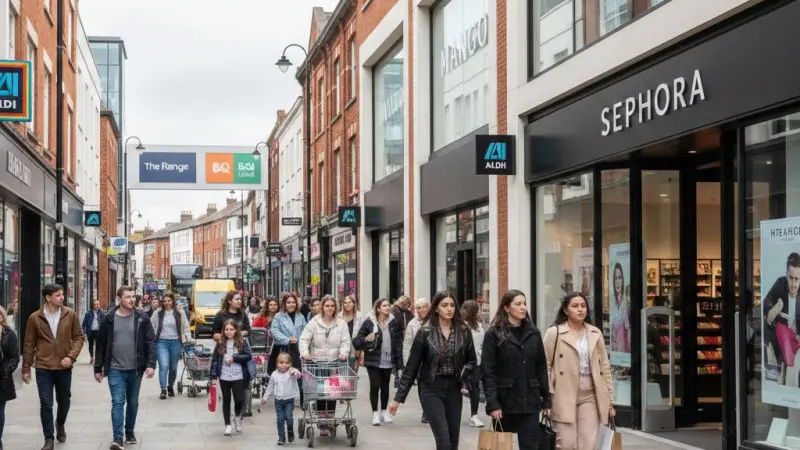
For several years, the narrative surrounding the British high street was one of terminal decline. However, as we move through 2025, a different story is emerging. Physical retail is not just surviving; it is actively evolving. Major brands are reinvesting in bricks-and-mortar locations, proving that the "death of the high street" was greatly exaggerated.

From the rapid expansion of discount giants like Aldi and Lidl to the strategic return of beauty powerhouses like Sephora, the landscape is shifting. In this authoritative guide, we examine the major high street store openings in the UK, the strategies behind these moves, and what the future holds for the British shopper.
The Current State of the UK High Street Revival
How Physical Retail is Bouncing Back
Analysing the 80% Physical Sales Forecast
Recent data from Forrester suggests that despite the ubiquity of online shopping, physical retail will still account for nearly 80% of global retail sales in 2025. In the UK, this manifests as a "retail rebirth" where brands are integrating digital and physical experiences.
Consumers are increasingly seeking "experiential retail"—places where they can touch, feel, and try products before buying. This shift has encouraged retailers to move away from purely functional shops toward social hubs that offer unique services, such as in-store cafes or repair clinics.
- 85% of retail leaders expect sales to grow in 2025 compared to 2024.
- Rental growth for high street properties has stabilised at roughly 1.6%.
- Vacancy rates are holding steady at 14%, showing a plateau in shop closures.
Major Grocery Expansion Plans Dominating the Market
Aldi and Lidl Lead the Discount Revolution
Targeting 1,100 Stores by Year End
The "Big Four" are feeling the heat as Aldi and Lidl continue their aggressive expansion. Aldi has revealed a massive £1.6bn investment plan, aiming to open dozens of new stores across the UK, specifically targeting underserved areas in London and the South East.
Lidl is not far behind, inching closer to its 1,100-store milestone. These discount retailers are capitalising on the ongoing cost-of-living concerns, drawing in middle-class shoppers who have permanently shifted their loyalty away from traditional premium supermarkets.
Beyond the discounters, the Co-op has announced plans for 75 new stores, focusing on "quick commerce" hubs. These locations serve as both walk-in convenience shops and rapid-delivery nodes for online orders, bridging the gap between digital and physical.
Fashion and Beauty Powerhouses Returning to the High Street
The Sephora Effect and Luxury Expansion
Double-Digit Store Growth for Beauty Brands
Perhaps the most exciting news for shoppers is the return of Sephora. After a long hiatus from the UK market, the beauty giant is targeting 20 stores nationwide. Following successful launches in Westfield London and Manchester’s Trafford Centre, new openings in Liverpool One are setting the pace for 2025.
In the fashion sector, Mango is pursuing a "4E" strategic plan, opening 20 new stores across the UK. Their focus includes flagship locations on Oxford
Street and expansion into Scotland and Northern Ireland. These stores use a "New Med" concept, emphasising handcrafted materials and architectural integration.
Primark is also bucking the trend of pure-play digital competition. While they have introduced click-and-collect, their primary focus remains on massive, high-footfall physical locations that offer "pennies-to-pounds" value that simply cannot be replicated online with shipping costs.
The Rise of the "Miniples" and Independent Resilience
How Small Chains are Capturing Market Share
Miniples and the Shift to Market Towns
We are seeing the rise of the "miniple"—smaller chains with 5 to 50 outlets that are more agile than national giants. Brands like Jo Malone are specifically targeting affluent market towns like Wilmslow and Farnham, moving away from high-rent city centres.
Independent retailers are also finding new life through diversification. By leveraging platforms like Shopify alongside their physical presence, small shops are surviving the business rate hikes. Success in 2025 is defined by "omnichannel" capability—selling on Instagram while offering a warm, personal service in-store.
- Market towns are seeing higher footfall recovery than major metropolitan hubs.
- Local loyalty schemes are driving 15% more repeat visits for independent shops.
- "Click and collect" now accounts for 30% of footfall in certain convenience formats.
Retail Parks vs. Traditional High Streets
Why Retail Parks are the New Shopping Destination
Resilience Through Parking and Convenience
While the traditional high street struggles with accessibility, retail parks are flourishing. With vacancy rates as low as 6.8%, these locations offer the "plentiful parking and convenience" that modern families demand. Major brands like B&Q and The Range are doubling down on retail park footprints.
The Range, following its acquisition of Homebase units, is rapidly converting large-format DIY spaces into "superstores" that sell everything from garden furniture to groceries. This "everything under one roof" model is highly resilient to the fluctuations of the wider economy.
B&Q is also innovating with its "B&Q Local" format. By opening smaller shops on high streets while maintaining massive warehouses in retail parks, they are capturing two different types of customer missions: the quick "emergency" fix and the larger home renovation project.
The Role of Tech in New Store Openings
Artificial Intelligence and the In-Store Experience
Using Data to Map Customer Missions
Retailers are no longer opening stores based on gut feeling. AI is now used to map "customer missions"—understanding exactly why a person visits a specific location at a specific time. This data informs everything from shelf height to the type of lighting used in changing rooms.
For example, H&M and Zara have integrated "smart mirrors" in their new flagship openings. These mirrors suggest matching accessories and allow customers to request different sizes without leaving the cubicle.
This tech-heavy approach makes the physical store feel as efficient as an app but as tactile as a boutique.
Digital payment services are also evolving. Many new store openings in 2025 feature "just walk out" technology or enhanced self-checkout systems that reduce friction, addressing one of the biggest complaints about physical shopping: the queue.
Regional Winners and Losers in the Retail Race
Tracking Openings from London to Aberdeen
The North-South Divide in Store Openings
While London remains a magnet for international brands like IKEA (with its highly anticipated Oxford Street opening), the North of England is seeing a significant boost. Manchester, Leeds, and Liverpool are becoming the secondary hubs for major fashion and beauty rollouts.
However, Wales and certain parts of the East Midlands have seen slower growth in chain openings. The recovery is uneven, often driven by the presence of a strong local "anchor" store or a refurbished shopping centre. Cities like Bristol have seen a resurgence thanks to massive investment in new M&S flagship locations.
Scotland is also a key target for expansion in 2025. Brands like Mango and B&M are focusing on Glasgow and Aberdeen, capitalising on the relatively lower commercial rents compared to the South East of England while still accessing high-spending populations.
The Future of British Retail
The high street is not dying; it is being "right-sized." The store openings we are witnessing in 2025 are strategic, data-driven, and focused on value and experience. While the total number of stores may be lower than a decade ago, the quality of the remaining outlets is significantly higher.
For the consumer, this means better service, more integrated technology, and a renewed sense of community in our town centres. For the investor, it represents a stabilising market where "bricks-and-mortar" is once again a crown jewel of the retail strategy. As we look ahead, the brands that win will be those that treat their physical shops not just as points of sale, but as the heart of their brand identity.
Frequently Asked Questions
Which major stores are opening in the UK in 2025?
Major openings include IKEA on Oxford Street, Sephora in Liverpool and Manchester, and significant
expansions from Aldi, Lidl, Mango, and The Range (converting former Homebase sites).
Is the UK high street still in decline?
No, the narrative has shifted toward a "revival." While some traditional chains have closed, they are being replaced by discount retailers, beauty brands, and experiential leisure outlets.
Why is Sephora opening more stores in the UK?
Sephora’s return has been highly successful due to the massive demand for exclusive beauty brands and the "theatrical" in-store experience that online shopping cannot provide.
Are discount stores like B&M still expanding?
Yes, B&M is on track to open roughly 45 new stores this year, focusing on both high street and retail park locations to capture value-conscious shoppers.
What is happening to the old Homebase stores?
Many have been acquired by B&Q or CDS Superstores (The Range/Wilko). These are being converted into modern, multi-category retail spaces.
Is London the only place seeing new shop openings?
No, while London is a hub for flagships, there is significant growth in Northern cities like Manchester and Leeds, and expansion into market towns by luxury brands.
How is AI being used in new UK shops?
AI is used for footfall tracking, inventory management, and "smart" fitting rooms to improve the customer journey and reduce operational waste.
Will business rates affect store openings in 2025?
Yes, the reduction in business rate relief from 75% to 40% is a challenge, but major retailers are offsetting this through increased efficiency and automation.
Are retail parks performing better than high streets?
Generally, yes. Retail parks have lower vacancy rates (around 6.8%) due to
their convenience, free parking, and ability to house large-format "destination" stores.
What is "experiential retail"?
It refers to shops that offer more than just products—such as cafes, beauty treatments, workshops, or interactive tech displays—to encourage longer visits.

Disclaimer: The information provided in this article is for general informational and research purposes only. Company details, features, services, and market positions may change over time. Readers are advised to visit official company websites and conduct independent research before making any business decisions or purchasing services.
Most Searchable Keywords

Recent Blogs


Related Listings


Categories
- Accountants (295)
- Advertising Agencies (559)
- Architects (149)
- Automobiles (377)
- Beauty (300)
- Carpenters (146)
- Cleaning Services (386)
- Dentists (189)
- Driving (62)
- Electricians (215)
- Energy (8)
- Event Organiser (685)
- Finance (599)
- Guide (3365)
- Health (2207)
- Information technology (206)
- Legal Services (353)
- Logistics (6)
- Maintenance (65)
- Manufacturing (35)

Sponsored Listings in Locksmith Services


Related Blogs

Gen Z Political Reporters and News Creators i...
Read this insightful article "Gen Z Political Reporters and News Creators in the UK" to expand your knowledge!

Famous Female Social Media Influencers Across...
Read this insightful article "Famous Female Social Media Influencers Across the UK" to expand your knowledge!

Your UK Sponsor Licence 2026 Step by Step Gui...
Read this insightful article "Your UK Sponsor Licence 2026 Step by Step Guide" to expand your knowledge!
Questions & Answers – Find What
You Need, Instantly!
How can I update my business listing?
Is it free to manage my business listing?
How long does it take for my updates to reflect?
Why is it important to keep my listing updated?
