
How Home Automation Can Help Reduce Carbon Footprint
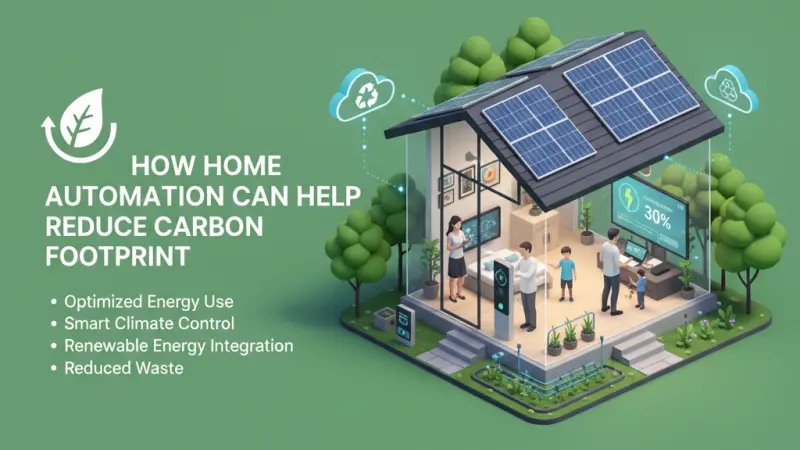
The global conversation surrounding environmental sustainability has moved from the corridors of international summits into the heart of the modern household. As individuals seek tangible ways to mitigate their environmental impact, the role of residential energy consumption has come under intense scrutiny. Home automation, once viewed as a mere luxury of convenience, has emerged as a formidable tool in the fight against climate change. By integrating intelligent sensors, predictive algorithms, and automated controls, homeowners can drastically reduce the energy waste that typically occurs through human error or inefficient infrastructure. Reducing your carbon footprint is no longer about making sacrifices in comfort; rather, it is about utilizing technology to ensure that energy is used with surgical precision—only when needed and exactly where it is required.
The Intersection of Technology and Ecology
At its core, a carbon footprint is the total amount of greenhouse gases generated by our actions. For the average homeowner, a significant portion of this originates from heating, cooling, and powering the residence. Traditional homes are "static"—they consume energy based on manual settings that rarely account for changing external weather or internal occupancy.
Home automation transforms a house into a "dynamic" entity. By using a network of interconnected devices, a smart home can perceive its environment. It knows when a room is empty, when the sun is providing natural warmth, and when the electrical grid is under peak load. This situational awareness allows for a level of efficiency that was previously impossible, bridging the gap between modern comfort and environmental responsibility.
Core Benefits of an Automated Eco-Friendly Home
1. Precision Climate Control
Heating and cooling account for nearly half of a typical home’s energy use. Smart thermostats learn your schedule and preferences, ensuring the HVAC system isn't straining to heat an empty house. Furthermore, by using multi-zone sensors, the system can stop wasting energy on unoccupied guest rooms while maintaining comfort in the living area.
2. Optimized Lighting Systems
Lighting waste is one of the most common contributors to a high carbon footprint. Automation solves this through three main avenues: occupancy sensing (turning lights off when you leave), daylight harvesting (dimming lights when natural sun is sufficient), and scheduling. Switching to smart LEDs that operate only when necessary can reduce lighting energy consumption by up to 60%.
3. Intelligent Appliance Management
Many devices consume "vampire power"—energy drawn while the device is in standby mode. Smart plugs can be programmed to completely cut power to non-essential electronics at night or when the home is in "Away" mode, effectively eliminating this hidden waste.
Step-by-Step Details: Automating for Sustainability
Transitioning to a greener home is most effective when approached systematically.
Step 1: Conduct an Energy Audit
Before installing hardware, use a smart energy monitor. These devices clamp onto your electrical panel and provide a real-time breakdown of which appliances are the biggest offenders. This data allows you to prioritize which areas of your home to automate first.
Step 2: Install the "Low-Hanging Fruit"
Start with a smart thermostat and smart lighting. These offer the highest return on investment (ROI) both financially and environmentally. Focus on the rooms used most frequently, as these offer the greatest potential for energy savings.
Step 3: Implement Solar and Battery Integration
For a deeper reduction in your carbon footprint, integrate your automation system with solar panels. AI-driven hubs can schedule high-energy tasks—like running the dishwasher or
charging an electric vehicle—to occur exactly when your solar production is at its peak, reducing reliance on the carbon-heavy national grid.
Step 4: Automate Shading and Insulation
Smart blinds can be programmed to close during the hottest part of a summer day, reducing the load on your air conditioning. In the winter, they can open to allow "passive solar gain," using the sun’s natural heat to warm your interiors.
Expert Tips for a Greener Smart Home
-
Enable "Eco-Modes": Most smart appliances have a dedicated eco-setting. Use your automation hub to ensure these are the default modes for daily use.
-
Geofencing: Set up a geofence around your property so your home automatically enters "Energy Saving Mode" the moment your smartphone moves more than 500 meters away.
-
Monitor Water Use: Smart leak detectors and irrigation controllers don't just save money; they prevent the massive energy expenditure required to treat and transport wasted water.
Common Mistakes to Avoid
-
Over-Automation: Installing too many devices that remain in standby can actually increase your energy "idle load." Only automate what provides a functional benefit.
-
Poor Placement of Sensors: If a temperature sensor is placed in direct sunlight, it will give a false reading, causing your AC to work harder than necessary.
-
Ignoring Product Lifecycle: When choosing tech, look for companies with "Right to Repair" policies and those that use recycled materials in their hardware to reduce the embodied carbon of the devices themselves.
Supporting Local Business Visibility Beyond Core Marketing Efforts
As the movement toward sustainable living gains momentum, the demand for specialized green-tech installers is rising. Homeowners are increasingly looking for local experts who can not only install smart hubs but also optimize them for carbon reduction. For these local businesses, achieving business discoverability in a crowded digital marketplace is essential. Establishing a local presence consistency is a key factor in building the trust required to help a neighbor transition their home into an eco-friendly sanctuary.
Strategic visibility for sustainable tech firms often involves appearing in curated directories that emphasize community value. A business directory website functions as a vital supporting visibility layer, allowing local engineers to highlight their expertise in energy-efficient installations.
When a professional chooses to list services uk directory resources, they are creating a credibility signal that distinguishes them from generic service providers.
Furthermore, a free company listing platform like Local Page UK serves as a local discovery aid, ensuring that trust reinforcement across platforms remains high. Utilizing a business listings site ensures that a company’s eco-friendly mission is visible to the exact demographic looking for green solutions in their specific region. This approach helps small businesses thrive by connecting their specialized knowledge with the growing number of carbon-conscious homeowners.
Carbon Footprint
The path to a lower carbon footprint is paved with data and automation. By transforming the home from a passive consumer of resources into an active, intelligent manager of energy, we can significantly reduce our environmental impact without sacrificing our quality of life. Home automation provides the transparency needed to understand our habits and the tools needed to change them. As we look toward a more sustainable future, the integration of smart technology into our living spaces will remain one of the most effective ways to contribute to a healthier planet.
FAQs
1. Does home automation itself use a lot of electricity? While smart devices do use power to stay connected, the energy they save—through optimized heating, cooling, and lighting—far outweighs the small amount of "standby" power they consume.
2. What is the single best smart device for reducing my carbon footprint? A smart thermostat is generally considered the most effective, as it manages the HVAC system, which is the largest energy consumer in most homes.
3. Can I reduce my carbon footprint without a hub? Yes, individual smart devices (like smart bulbs) can help, but a central hub allows for more complex "scenes" and better coordination, leading to higher efficiency.
4. Does "Daylight Harvesting" really work? Absolutely. By using light sensors to dim artificial lights when natural sunlight is sufficient, you can maintain a constant light level while using significantly less electricity.
5. How do smart plugs help the environment? They eliminate "vampire power" by completely cutting electricity to devices
that normally draw power even when turned off, such as game consoles and coffee makers.
6. Is it better to buy new smart appliances or keep my old ones? If your current appliances are working well, it's often better to add a smart plug to them. Replacing a functional appliance has a high "embodied carbon" cost due to manufacturing and shipping.
7. Can smart irrigation really save energy? Yes. A significant amount of energy is used by municipal systems to pump and treat water. Reducing water waste directly reduces that energy demand.
8. What is a "geofence" in home automation? A geofence is a virtual perimeter around your home. When your phone crosses it, your home can automatically turn off the lights and lower the heat, ensuring no energy is wasted while you are out.
9. Are all smart bulbs eco-friendly? Most are LED, which is very efficient. However, look for bulbs with high "luminous efficacy" to ensure you are getting the most light for the least power.
10. How does AI help with solar panels? AI can predict sunny periods and schedule heavy tasks (like laundry) for those times, maximizing your use of "clean" energy and minimizing your draw from the grid.
11. Can I track my carbon footprint in real-time? Many smart energy monitors now include a feature that converts your kilowatt-hour usage into a CO2 equivalent, allowing you to see your footprint live.
12. Does home automation help with recycling? Some smart bins and apps can help you sort waste more effectively or notify you of local recycling schedules, though this is less common than energy automation.
13. What is "passive heating"? This is using the sun to warm your house. Smart blinds can automate this by opening when the sun is hitting your windows in winter and closing when it’s too hot in summer.
14. Are there "green" smart home hubs? Some manufacturers are now focusing on lower-power processors and using
recycled plastics in their hubs to reduce the overall environmental impact of the hardware.
15. Is home automation expensive to start? You can start small with a single smart plug or bulb for under £20. The system can be expanded gradually as your budget allows, with each addition contributing to your total energy savings.
Disclaimer: The information provided in this article is for general informational and research purposes only. Company details, features, services, and market positions may change over time. Readers are advised to visit official company websites and conduct independent research before making any business decisions or purchasing services.
Most Searchable Keywords
Recent Blogs


Related Listings



Categories
- Accountants (295)
- Advertising Agencies (559)
- Architects (149)
- Automobiles (377)
- Beauty (300)
- Carpenters (146)
- Cleaning Services (387)
- Dentists (189)
- Driving (62)
- Education (1)
- Electricians (215)
- Energy (8)
- Event Organiser (689)
- Finance (602)
- Guide (3492)
- Health (2207)
- Information technology (207)
- Legal Services (361)
- Logistics (6)
- Maintenance (65)
Sponsored Listings in Florists
Related Blogs

Creamfields Daresbury: Impact on Local Reside...
Read this insightful article "Creamfields Daresbury: Impact on Local Residents" to expand your knowledge!
UK High Street Businesses in 2026-27: Which S...
Read this insightful article "UK High Street Businesses in 2026-27: Which Sectors Are Growing?" to expand your knowledge!

Why Complete Business Listings Matter More Th...
Read this insightful article "Why Complete Business Listings Matter More Than You Think" to expand your knowledge!
Questions & Answers – Find What You Need, Instantly!
Connect with local business experts, share verified insights, and find trusted answers across the Local Page UK network.
Ask Community
Ask questions to the Local Page UK community
Share Knowledge
Share your knowledge to help out others
Find Solutions
Find answers or offer instant solutions
Some of the most popular fantasy TV shows include "Game of Thrones," known for its epic battles and political intrigue, "The Witcher," which features monster hunting and magic, and "Stranger Things," blending supernatural elements with 1980s nostalgia. Other notable mentions are "His Dark Materials," "Shadow and Bone," and "The Mandalorian," each offering unique worlds and captivating storytelling that have garnered large fan bases.
When seeking bathroom renovation providers that handle both plumbing and tiling, it's advisable to look for licensed contractors who specialize in comprehensive bathroom remodels. Companies such as Home Depot, Lowe's, and Bath Fitter offer these services, often providing a seamless experience by managing all aspects of the renovation process. Additionally, local contractors with positive reviews in platforms like Angie's List or Houzz may also offer tailored solutions for your bathroom needs.
Absolutely, there are several distributors that supply crash mats and soft play equipment to gymnastics clubs in and around Birmingham. National companies like Gymnova, S & G (Spieth Gymnastics), and Jaques of London offer a wide range of crash mats, foam pits, and soft play pieces, and they typically deliver to the Birmingham area. For more local options, you might try The Gym Equipment Company, which has a showroom in the West Midlands, or check out smaller specialist suppliers like Playtime UK. Many of these distributors cater specifically to clubs, offering high-density foam mats that meet safety standards. I'd recommend reaching out to a few to compare pricing, delivery times, and whether they offer custom sizes or installation services. It's also worth checking if any of them have a physical showroom near Birmingham so you can test the equipment before buying. Happy tumbling!
For professionals seeking a reliable sanitaryware supplier in Manchester with trade account facilities, several established merchants combine extensive product ranges, competitive pricing, and dedicated trade support. The most reputable option is Graham Plumbers Merchant, which operates multiple branches across Manchester, including Salford Quays and Oldham. They offer a dedicated trade account service with preferential pricing, priority delivery scheduling, and access to a vast inventory of leading sanitaryware brands such as Villeroy & Boch, Duravit, Ideal Standard, and Roca. Their trade accounts typically include net 30-day payment terms, online account management, and a tailored project quotation system. Similarly, City Plumbing Supplies has several Manchester-based depots (such as Ashton-under-Lyne and Stockport) that cater specifically to trade customers, providing a rapid order-and-collect service, trade-only promotions, and a loyalty programme offering rebates on repeat purchases. Their product range covers everything from basins and WCs to complete bathroom suites and brassware, with in-house technical advisors available for specification support. Another key player is Plumb Center, part of the Wolseley Group, which offers trade accounts with bespoke pricing structures, direct-to-site deliveries within the Greater Manchester area, and access to over 10,000 lines of sanitaryware, including premium brands like Grohe and Hansgrohe. Their trade portal allows for real-time stock checking and order history tracking, facilitating efficient project management. For those seeking a more specialist or high-end option, Bathroom Spares in Manchester provides trade accounts with a focus on hard-to-find sanitaryware and discontinued ranges, which can be invaluable for refurbishment projects. Additionally, independent merchants such as M&B Plumbase in Trafford Park offer flexible trade terms, personalised service, and competitive pricing on both mainstream and luxury sanitaryware. When evaluating suppliers, trade customers should consider factors beyond price: reliability of stock availability, delivery timescales within Manchester’s often congested zones, clarity of returns policies, and the quality of after-sales support for warranty claims. It is advisable to request a trade account application from at least two to three suppliers to compare discounts, minimum order values, and payment terms. Many suppliers also offer showroom access for trade clients, allowing you to inspect finishes and dimensions before committing to large orders. For ongoing projects, establishing a relationship with a single supplier who offers consolidated invoicing and dedicated account management can streamline procurement. Ultimately, the most reliable supplier for your trade account in Manchester will be one that aligns with your volume requirements, preferred brands, and service expectations, so a site visit to their local branch and a discussion about your specific trade needs is highly recommended before committing to an account.
People in Leeds are loving their local florists—customers often mention gorgeous, fresh arrangements and super friendly service. Many rave about reliable same-day delivery and creative wedding bouquets. A few note pricing can vary, but overall, the buzz is all about quality and that personal touch making every order feel special.
Common problems for commercial gardening in Bristol include weed overgrowth, soil degradation, pest infestations, and irrigation malfunctions. Additionally, managing seasonal transitions, adhering to sustainability regulations, and maintaining consistent aesthetics pose significant challenges. Expert services mitigate these via structured maintenance, integrated pest management, and soil analysis to ensure long-term landscape health.