
How to Check Crime Rate in My Area
How to Check Crime Rate in My Area: A Strategic Guide for UK Businesses
Published: February 2026 | Author: LocalPage.uk Content Architecture Team | Expertise: UK Business Intelligence
In the current economic climate, understanding the safety and security profile of a business location is no longer a luxury—it is a fundamental component of due diligence. Whether you are a retail start-up in Manchester, a hospitality venture in Edinburgh, or a professional services firm in Belfast, crime data influences everything from insurance premiums to staff retention and customer footfall. As of early 2026, the UK's landscape of recorded crime continues to shift, influenced by digital transformation and evolving socio-economic pressures.
5.6m private sector businesses operate in the UK as of 2025. For these entities, particularly the 99.3% classified as SMEs, the cost of crime can be disproportionately high, making proactive area monitoring essential.
Reliable Public Data Sources for Local Crime Statistics
The primary portal for most businesses in England and Wales remains the official Police.uk website. This platform provides granular data, allowing users to drill down to specific street-level reports. However, for a truly authoritative view, one must look toward the Office for National Statistics (ONS) and the specific regional bodies that manage data for the devolved nations.
Navigating Police.uk for Street-Level Intelligence
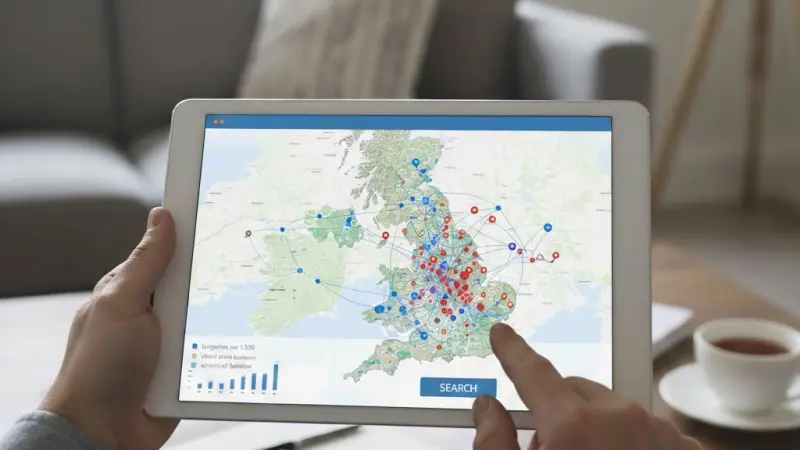
Using the search functionality on Police.uk allows you to input a postcode and view a map-based representation of crimes recorded in the last month. For a business, the most valuable feature is the "Trends" tab, which helps identify whether a specific type of crime—such as burglary or criminal damage—is increasing in your immediate vicinity. This is particularly relevant for retail operations where external vulnerabilities are higher.
Accessing ONS and Devolved Government Reports
Whilst Police.uk provides "snapshot" data, the ONS Crime in England and Wales bulletins offer the "gold standard" of statistical analysis. In Scotland, the Scottish Government's "Recorded Crime in Scotland" reports are the definitive source. Similarly, the Police Service of Northern Ireland (PSNI) maintains its own statistical branch, providing monthly updates on anti-social behaviour and theft. Accessing these ensures your business is looking at verified, long-term trends rather than anomalous monthly spikes.
Focus on Data Consistency
When comparing different sources, ensure you are distinguishing between "Police Recorded Crime" and "Crime Survey Data." Recorded crime tells you what the police have on file, whilst survey data captures the broader experience of the public, including crimes that go unreported.
Analysing the Impact of Crime Trends on Business Operations
Raw data is only useful if it is interpreted through a commercial lens. A high rate of anti-social behaviour might affect a restaurant's evening trade more than a high rate of white-collar fraud, whereas a professional services firm might be more concerned with cyber-crime trends and physical office security.
Understanding the Weighted Cost of Local Incidents
Not all crimes carry the same weight for a business. For a micro-business in Wales—where 94% of companies are micro-enterprises—a single instance of burglary can be catastrophic. Analysing crime rates allows you to calculate the "expected loss" and adjust your security budget accordingly. In the South West of England, for instance, rural theft and plant machinery crime are often more prevalent concerns for trades and construction firms than in dense urban centres like London.
Insurance Premiums and Risk Assessments
Insurers use postcode-based crime data to calculate premiums. By checking your area's crime rate proactively, you can identify if your business is in a "high-risk" zone before renewing your policy. If your area has seen a 10% increase in vehicle crime, and you operate a fleet of vans, installing additional security measures like trackers or secure compounds can help mitigate the inevitable premium hike.
Insurance Mitigation Tip
Document the security improvements you make in response to local crime data. Presenting this to your broker can
often lead to "risk-improvement" discounts, particularly if you are aligned with "Secured by Design" standards.
76% of UK consumers now research local businesses online. If your area is perceived as unsafe due to visible anti-social behaviour, it can significantly impact your digital "footfall" and conversion rates.
Regional Variations in Crime Reporting and Support
The UK is not a monolith when it comes to crime or business support. The mechanisms for checking rates and seeking assistance vary significantly between England, Scotland, Wales, and Northern Ireland.
Scotland: The Role of Scottish Enterprise and Local Police
In Scotland, businesses benefit from a closely integrated network between Police Scotland and Scottish Enterprise. When checking crime rates in Scottish cities, it is worth looking at the "Local Police Plans" which outline specific priorities for each ward. This provides context to the numbers; for example, a high number of recorded incidents in Glasgow city centre may reflect proactive policing of night-time economy issues rather than a general lack of safety for daytime retail.
Wales: Bilingual Support and Business Wales Resources
For businesses in Wales, Business Wales provides bilingual resources to help companies understand and mitigate local risks. When checking crime data through the Welsh Government’s portal, businesses can also access "Community Safety Partnership" reports, which offer a multi-agency view of local safety, often including insights from local authorities and fire services.
Northern Ireland: Cross-Border Context and the PSNI
In Northern Ireland, crime data often needs to be viewed in the context of cross-border trade, which has seen a 12% increase since 2024. The PSNI's crime mapping tools are highly developed, but businesses should also engage with local "Policing and Community Safety Partnerships" (PCSPs). These bodies provide a platform for businesses to influence how crime is tackled in their specific districts.
Devolved Authority Insight
Remember that "Anti-Social Behaviour" (ASB) definitions can vary slightly across borders. In England, the ICO and local authorities work closely on CCTV compliance, while in Northern Ireland, different legislative frameworks may apply to public space monitoring.
Using Digital Tools and Apps for Real-Time Monitoring
Beyond the official government portals, a new generation of digital tools allows UK business owners to stay informed about local incidents as they happen. This is crucial for managing staff safety and operational continuity.
Hyper-Local Apps and Community Alerts
Apps like Nextdoor or local Facebook "Crime Watch" groups, whilst anecdotal, can offer early warnings about "smash and grab" spates or aggressive begging in a high street. However, for professional services, more formal tools like "Business Crime Reduction Partnerships" (BCRPs) are essential. These digital networks allow businesses to share intelligence about known shoplifters or fraudsters in real-time, often via secure apps like Disc.
Integrating Data with Security Technology
Modern security systems can now be integrated with local crime data feeds. For example, if your local area sees a spike in "distraction thefts," you can immediately update your staff training protocols or increase front-of-house presence. With 82% of UK adults owning a smartphone, real-time alerts are the most effective way to keep a distributed workforce safe.
Tech Implementation Tip
Encourage staff to use apps that provide "safe route" planning for late-night shifts, particularly in major hubs like London or Birmingham where night-time crime patterns differ significantly from daytime stats.
Crime Data and the Future of Your Business Premises
If you are looking to expand or relocate, crime data should be a primary factor in your site selection matrix.
The "cost of doing business" includes the hidden costs of crime, from broken windows to lost inventory and employee stress.
Evaluating Potential Sites for Low-Risk Expansion
When reviewing a new lease, do not just look at the internal condition of the property. Check the crime rate for the past 24 months. Is crime decreasing due to local regeneration, or is there a persistent issue with fly-tipping and vandalism that could damage your brand? In Northern Ireland, Invest Northern Ireland often provides site-specific advice that includes community safety profiles for new investors.
The Role of Local Enterprise Partnerships (LEPs)
In England, although the structure of LEPs is evolving, local authorities and Chambers of Commerce remain vital for understanding the "planned" safety of an area. A high-crime area today might be the focus of a multi-million-pound "Safer Streets" grant tomorrow. Engaging with these bodies ensures you aren't just looking at where crime is now, but where the local authority is investing to reduce it.
"What is the safest area for a small business in the UK?"
Safety varies by sector and specific street, but generally, rural areas in the South West and parts of North East Scotland report the lowest rates of business-related crime. However, urban centres often offer better BCRP support networks.
"How do I find out about commercial burglaries near me?"
Visit Police.uk, enter your postcode, and filter the map markers for 'Burglary'. For more specific commercial data, contact your local Business Crime Reduction Partnership or your local Chamber of Commerce.
Implementing a Proactive Crime Mitigation Strategy
Once you have checked the crime rates and understood the risks, the final step is implementation. A measured, professional approach to security is better for business reputation than a "fortress" mentality.
Staff Training and Situational Awareness
Your employees are your first line of defence. Use local crime data to inform your health and safety briefings. If "theft from person" is high in your area, train staff on how to handle cash and personal belongings securely. In hospitality, where staffing shortages affect 64% of premises, ensuring a safe working environment is a key factor in recruitment and retention.
Physical and Cyber Security Synergy
Physical crime often precedes or accompanies cyber-crime. A stolen laptop from an office in Leeds is a data breach risk. Ensure your physical security (locks, CCTV, alarms) is as robust as your firewalls.
The ICO provides clear guidance on how to manage data security in the event of physical theft, which is essential for maintaining compliance with UK GDPR.
Final Strategy Note
Regularly review your area's crime data. A quarterly check is recommended to ensure your risk assessment remains current and your security measures are proportionate to the actual threat level.
Conclusion: Turning Data into Resilience
Checking the crime rate in your area is not about inducing fear; it is about building a resilient, informed, and profitable UK business. By utilizing the official channels of the ONS, Police.uk, and regional bodies like Business Wales or Scottish Enterprise, you empower yourself to make strategic decisions that protect your assets, your staff, and your customers. In 2026, the most successful businesses will be those that treat community safety as a core metric of their operational success.
How often is the UK crime map updated?
Official data on Police.uk is typically updated once a month, usually with a lag of one to two months to allow for verification. For businesses, this means the 'current' view reflects the situation approximately eight weeks ago. For real-time updates, joining a local Business Crime Reduction Partnership (BCRP) is often more effective.
Does a high crime rate affect my business valuation?
Potentially, yes. If a business is located in an area with persistently high crime and no mitigation strategy, it can affect the 'goodwill' and asset value. Surveyors and investors often look at the long-term ONS trends for an area during the due diligence process for commercial property acquisitions or business sales.
Is the crime rate process different in Scotland?
Yes, Scotland operates under a separate legal and policing system. While England and Wales use Police.uk, Scottish data is primarily accessed through the Police Scotland website and the Scottish Government's statistical publications. The categories of crime also differ slightly due to variations in Scottish Law.
Can I see which specific businesses were victims of crime?
No, for privacy and security reasons, public crime maps do not identify specific business names or house numbers. Crimes are mapped to 'anonymised' points, usually in the centre of a street or a specific landmark. Detailed victim information is only available to relevant authorities or through official BCRP intelligence sharing.
What is a 'Business Crime Reduction Partnership' (BCRP)?
A BCRP is a subscription-based partnership between businesses, the police, and local authorities. They share intelligence about local offenders, provide exclusion schemes, and often use digital platforms to alert members to active threats. They are highly recommended for retail and hospitality businesses in high-footfall areas.
How do I report a crime if the rate in my area is rising?
Always dial 999 in an emergency. For non-emergencies, use the 101 service or report online via your local force's website. If you are reporting a business-specific crime like fraud, Action Fraud (the UK's national reporting centre) is the correct body to contact, as these incidents are often tracked nationally.
Does 'Anti-Social Behaviour' count as a crime on these maps?
Yes, ASB is recorded on most UK crime maps. While it may not always lead to a criminal conviction, it is a vital metric for businesses as it impacts customer perception and the physical environment (e.g., graffiti, loitering). High ASB rates often correlate with higher costs for external maintenance.
Can checking crime rates help lower my insurance?
Checking the rate itself won't lower your premium, but the actions you take because of it will. Demonstrating to your insurer that you have analysed local risks and implemented specific, evidence-based security measures (like BS-standard locks or monitored CCTV) is a key way to negotiate lower premiums.
Is cyber-crime included in local area statistics?
Usually not. Because cyber-crime has no physical 'location,' it isn't mapped to specific streets. However, the ONS publishes national and regional cyber-crime trends.
Businesses should check these alongside local physical crime rates to get a full picture of their risk profile.
I'm in Northern Ireland - is the data updated as often?
Yes, the Police Service of Northern Ireland (PSNI) provides regular, monthly statistical updates. Their 'Crime in Northern Ireland' reports are very detailed and provide breakdowns by district council and policing area, making it easy for NI business owners to stay informed.
Disclaimer: The information provided in this article is for general informational and research purposes only. Company details, features, services, and market positions may change over time. Readers are advised to visit official company websites and conduct independent research before making any business decisions or purchasing services.
Most Searchable Keywords
Recent Blogs


Related Listings


Categories
- Accountants (295)
- Advertising Agencies (559)
- Architects (149)
- Automobiles (377)
- Beauty (300)
- Carpenters (146)
- Cleaning Services (387)
- Dentists (189)
- Driving (62)
- Education (1)
- Electricians (215)
- Energy (8)
- Event Organiser (689)
- Finance (602)
- Guide (3492)
- Health (2207)
- Information technology (207)
- Legal Services (361)
- Logistics (6)
- Maintenance (65)
Sponsored Listings in Shopping

Related Blogs

Creamfields Daresbury: Impact on Local Reside...
Read this insightful article "Creamfields Daresbury: Impact on Local Residents" to expand your knowledge!
UK High Street Businesses in 2026-27: Which S...
Read this insightful article "UK High Street Businesses in 2026-27: Which Sectors Are Growing?" to expand your knowledge!

Why Complete Business Listings Matter More Th...
Read this insightful article "Why Complete Business Listings Matter More Than You Think" to expand your knowledge!
Questions & Answers – Find What You Need, Instantly!
Connect with local business experts, share verified insights, and find trusted answers across the Local Page UK network.
Ask Community
Ask questions to the Local Page UK community
Share Knowledge
Share your knowledge to help out others
Find Solutions
Find answers or offer instant solutions
Some of the most popular fantasy TV shows include "Game of Thrones," known for its epic battles and political intrigue, "The Witcher," which features monster hunting and magic, and "Stranger Things," blending supernatural elements with 1980s nostalgia. Other notable mentions are "His Dark Materials," "Shadow and Bone," and "The Mandalorian," each offering unique worlds and captivating storytelling that have garnered large fan bases.
When seeking bathroom renovation providers that handle both plumbing and tiling, it's advisable to look for licensed contractors who specialize in comprehensive bathroom remodels. Companies such as Home Depot, Lowe's, and Bath Fitter offer these services, often providing a seamless experience by managing all aspects of the renovation process. Additionally, local contractors with positive reviews in platforms like Angie's List or Houzz may also offer tailored solutions for your bathroom needs.
Absolutely, there are several distributors that supply crash mats and soft play equipment to gymnastics clubs in and around Birmingham. National companies like Gymnova, S & G (Spieth Gymnastics), and Jaques of London offer a wide range of crash mats, foam pits, and soft play pieces, and they typically deliver to the Birmingham area. For more local options, you might try The Gym Equipment Company, which has a showroom in the West Midlands, or check out smaller specialist suppliers like Playtime UK. Many of these distributors cater specifically to clubs, offering high-density foam mats that meet safety standards. I'd recommend reaching out to a few to compare pricing, delivery times, and whether they offer custom sizes or installation services. It's also worth checking if any of them have a physical showroom near Birmingham so you can test the equipment before buying. Happy tumbling!
For professionals seeking a reliable sanitaryware supplier in Manchester with trade account facilities, several established merchants combine extensive product ranges, competitive pricing, and dedicated trade support. The most reputable option is Graham Plumbers Merchant, which operates multiple branches across Manchester, including Salford Quays and Oldham. They offer a dedicated trade account service with preferential pricing, priority delivery scheduling, and access to a vast inventory of leading sanitaryware brands such as Villeroy & Boch, Duravit, Ideal Standard, and Roca. Their trade accounts typically include net 30-day payment terms, online account management, and a tailored project quotation system. Similarly, City Plumbing Supplies has several Manchester-based depots (such as Ashton-under-Lyne and Stockport) that cater specifically to trade customers, providing a rapid order-and-collect service, trade-only promotions, and a loyalty programme offering rebates on repeat purchases. Their product range covers everything from basins and WCs to complete bathroom suites and brassware, with in-house technical advisors available for specification support. Another key player is Plumb Center, part of the Wolseley Group, which offers trade accounts with bespoke pricing structures, direct-to-site deliveries within the Greater Manchester area, and access to over 10,000 lines of sanitaryware, including premium brands like Grohe and Hansgrohe. Their trade portal allows for real-time stock checking and order history tracking, facilitating efficient project management. For those seeking a more specialist or high-end option, Bathroom Spares in Manchester provides trade accounts with a focus on hard-to-find sanitaryware and discontinued ranges, which can be invaluable for refurbishment projects. Additionally, independent merchants such as M&B Plumbase in Trafford Park offer flexible trade terms, personalised service, and competitive pricing on both mainstream and luxury sanitaryware. When evaluating suppliers, trade customers should consider factors beyond price: reliability of stock availability, delivery timescales within Manchester’s often congested zones, clarity of returns policies, and the quality of after-sales support for warranty claims. It is advisable to request a trade account application from at least two to three suppliers to compare discounts, minimum order values, and payment terms. Many suppliers also offer showroom access for trade clients, allowing you to inspect finishes and dimensions before committing to large orders. For ongoing projects, establishing a relationship with a single supplier who offers consolidated invoicing and dedicated account management can streamline procurement. Ultimately, the most reliable supplier for your trade account in Manchester will be one that aligns with your volume requirements, preferred brands, and service expectations, so a site visit to their local branch and a discussion about your specific trade needs is highly recommended before committing to an account.
People in Leeds are loving their local florists—customers often mention gorgeous, fresh arrangements and super friendly service. Many rave about reliable same-day delivery and creative wedding bouquets. A few note pricing can vary, but overall, the buzz is all about quality and that personal touch making every order feel special.
Common problems for commercial gardening in Bristol include weed overgrowth, soil degradation, pest infestations, and irrigation malfunctions. Additionally, managing seasonal transitions, adhering to sustainability regulations, and maintaining consistent aesthetics pose significant challenges. Expert services mitigate these via structured maintenance, integrated pest management, and soil analysis to ensure long-term landscape health.