
How to Check Universal Credit Payment
How to Check Universal Credit Payment Date: A Professional UK Guide
Last updated: February 2026 | UK Policy & Compliance | LocalPage.uk Architect
Understanding the architecture of Universal Credit (UC) is no longer solely the domain of the Department for Work and Pensions (DWP); it is a critical operational insight for UK business owners, payroll managers, and professional service providers. As we move through the 2025-2026 fiscal year, the interaction between earned income and UC payment schedules has become more complex, particularly with the rise of Real Time Information (RTI) reporting.
7.2 Million People in the UK are currently claiming Universal Credit as of January 2026, including 2.4 million people who are in work.
Identifying Your Assessment Period and Payment Cycle
The fundamental building block of a Universal Credit payment is the 'Assessment Period'. Unlike legacy benefits, UC is calculated every month based on the circumstances reported during a specific 30-day window. Your payment date is inextricably linked to the day your first claim was submitted.
The Link Between Claim Date and Payment Schedule
Your payment date is usually seven days after your monthly assessment period ends. For example, if your assessment period runs from the 15th of one month to the 14th of the next, your payment date would typically be the 21st of each month. This cycle is automated, yet for businesses employing staff on UC, understanding this lag is vital for managing employee financial wellbeing during payroll shifts.
Using the Online Journal to Verify Dates
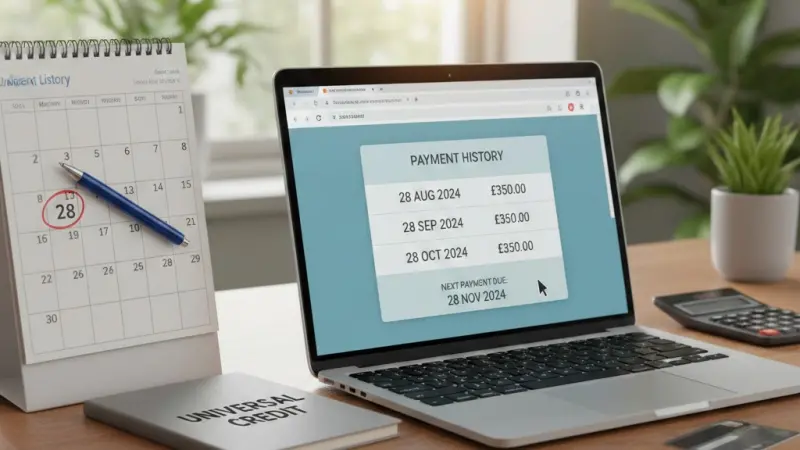
The most direct method to check a payment date is via the 'Universal Credit Online Journal'. This secure portal serves as the primary communication channel between the claimant and the DWP. Within the portal, the 'Payments' section provides a detailed breakdown of upcoming transfers, including the exact date the funds will be cleared in the nominated bank account.
Digital Verification for Self-Employed Directors
Small business owners who operate as limited companies but claim UC must be particularly diligent. You should check your journal at least three days before the assessment period closes to ensure all monthly income and expenses (MID) have been correctly logged, as this directly affects the generated payment date and amount.
Navigating the Universal Credit Online Portal Effectively
The UK digital infrastructure has been significantly upgraded for 2026, allowing for smoother interactions via the GOV.UK gateway. For hospitality or retail businesses with high staff turnover, helping employees navigate this portal can reduce administrative queries directed at the HR department.
Accessing Statement Summaries for Future Planning
Within the portal, statements are usually generated two to three days before the actual payment date. These statements do not just list the date; they provide the calculation logic. This is crucial for workers in England and Wales who may see fluctuations in their UC due to seasonal overtime or bonus structures.
Managing Sign-in Credentials and Security
Security protocols overseen by the ICO and DWP require multi-factor authentication. Users should ensure their mobile devices are linked correctly to avoid being locked out of their journals during critical payment windows. Losing access to the journal is the most common reason for missed payment date checks in the UK.
Impact of RTI Data on Your Statement Date
HMRC's Real Time Information system feeds directly into UC. If a business in Scotland submits payroll data early due to a bank holiday, this can sometimes trigger an 'early' assessment, potentially moving the perceived payment date or altering the award amount. Vigilance during festive periods is essential.
Professional Tip: Businesses should endeavour to keep payroll dates consistent. Whilst the DWP has implemented "easements" for twice-monthly pay, consistency remains the best way to ensure an employee's UC payment date doesn't shift unexpectedly.
Calculating Payment Dates During Bank Holidays and Weekends
The DWP does not process payments on Saturdays, Sundays, or Bank Holidays. This is a common point of confusion for small businesses in Northern Ireland and Wales where local holidays may differ from those in London.
The "Early Payment" Rule for UK Public Holidays
If a payment date falls on a weekend or a bank holiday, the DWP typically issues the payment on the last working day before. For instance, if the 25th of the month is a Sunday, the payment will be checked and cleared on Friday the 23rd.
This requires businesses to be aware of their employees' schedules to prevent cash-flow issues at the end of the month.
Regional Variations: Scotland and Northern Ireland
In Scotland, Social Security Scotland works alongside the DWP. Scottish claimants can choose to have their UC paid twice monthly rather than once. This fundamentally changes the payment date logic, creating two distinct dates to check. In Northern Ireland, similar flexibilities exist, and the Department for Communities handles the local oversight of these schedules.
The Christmas and Easter Adjustment Period
During major UK holidays, the payment window can shift by up to four days. In 2025-2026, the DWP will publish a revised schedule for the December period by late October. Employers are encouraged to share these "early pay" dates with staff to assist with household budgeting.
The Impact of Monthly Earnings on Payment Accuracy
For the 5.6 million private sector businesses in the UK, understanding how their payroll affects UC is a matter of compliance and employee retention. The 'Taper Rate'—currently set at 55%—means for every £1 earned after the work allowance, UC is reduced by 55p.
How Reporting Lags Can Shift Payment Windows
If income is reported late via HMRC, the DWP may suspend a payment date until the data is verified. This is common amongst micro-businesses (0-9 employees) that may still be using manual reporting or older software. Upgrading to HMRC-recognised cloud accounting is a strategic necessity in 2026.
Work Allowances and Their Role in Schedule Stability
Certain claimants have a 'Work Allowance', allowing them to earn a set amount before their UC is affected. If a claimant moves between having a work allowance and not (for example, due to changes in disability status), the date of the payment remains the same, but the reliability of the amount may fluctuate, necessitating more frequent checks of the online journal.
Surplus Earnings and Re-application Dates
If an employee in the North East or Midlands receives a significant bonus that wipes out their UC for one month, they must understand the 'Surplus Earnings' rule. This may require them to 'check' a re-application date rather than a payment date the following month.
68% Of UK SMEs now offer financial wellness support, which includes helping staff interpret their DWP payment schedules to reduce workplace stress.
When to Contact the Universal Credit Helpline
While the digital journal is the preferred method, there are instances where the system fails or dates become obscured. The UC helpline remains an authoritative source for resolving complex payment discrepancies.
Navigating the DWP Telephony System
The helpline (0800 328 5644) is typically busiest on Mondays and the first of the month. Professionals advising clients should recommend calling at 8:00 AM GMT to avoid lengthy wait times. In 2026, AI-driven voice assistants now handle basic "When is my payment?" queries, speeding up the process for those without internet access.
Escalation Procedures for Missing Payments
If a payment date has passed and funds have not arrived, this is an emergency. Claimants should first check for a 'Notification of Requirement' in their journal. If none exists, the helpline can issue a 'Same Day Fast Payment' in specific hardship cases, though this is subject to strict DWP criteria.
Role of the Independent Case Examiner (ICE)
For persistent issues where payment dates are consistently missed or incorrectly calculated, businesses may help employees escalate the matter to the ICE. This is a last-resort measure for systemic failure but ensures accountability within the DWP infrastructure.
Strategies for Managing Fixed Costs Around UC Dates
For startups and small businesses, employees on UC may request specific shift patterns to align with their payment dates. Whilst businesses must maintain operational efficiency, a measured approach to these requests can foster loyalty.
Aligning Direct Debits with Payment Schedules
Advice from the Federation of Small Businesses (FSB) suggests that individuals should set their direct debits for at least three days after their expected UC payment date.
This provides a buffer for the "early payment" rules during bank holidays and prevents overdraft fees.
Alternative Payment Arrangements (APAs)
In cases where tenants or employees struggle with budgeting, the DWP can arrange for the housing element of UC to be paid directly to a landlord. This changes the 'check' requirement, as the landlord now becomes responsible for verifying the receipt of funds on the designated date.
Financial Tools and Budgeting Apps in 2026
Many UK fintech banks now offer "Paid Early" features that allow users to access their UC payment a day early. If a user's payment date is a Tuesday, some banks can clear the funds by 4:00 PM on Monday. This is a significant trend in consumer behaviour that businesses should be aware of when discussing financial health with staff.
Voice Search Assistance: Quick Answers
"Hey Google, when is my Universal Credit paid this month?"
Your payment is usually made 7 days after your assessment period ends. You can check the exact date in the 'Payments' section of your online Universal Credit account.
"Alexa, what happens if my UC payment date is a bank holiday?"
If your payment date falls on a bank holiday or weekend, you will typically be paid on the last working day before the holiday starts.
Understanding the "Five-Week Wait" Architecture
For new businesses or those hiring staff for the first time, the initial "five-week wait" is a critical period. This wait occurs because the first assessment period must conclude before the first payment date is set.
The Advance Payment Option
To bridge this gap, claimants can check their eligibility for an 'Advance Payment'. This is effectively a loan from the DWP, and the repayments are deducted from future UC payments. Checking the 'repayment schedule' is just as important as checking the payment date, as it affects net income for up to 24 months.
Impact on Professional Services and Credit Scoring
The FCA-regulated lending market in the UK has become more sophisticated in how it views UC. Consistent payment dates, verified through bank statements or the UC portal, are often required for small personal loans or car finance, making the ability to check and prove these dates vital for economic mobility.
Alternative Support from Local Authorities
In England, local councils provide Discretionary Housing Payments (DHPs) for those whose UC housing element doesn't cover their rent. The payment dates for DHPs are separate from UC dates and must be checked directly with the local authority (e.g., Birmingham City Council or Manchester City Council).
Future-Proofing Your Knowledge of DWP Systems
As we approach the end of the 2025-2026 period, further digitisation is expected. The 'Move to Universal Credit' (Managed Migration)
is nearly complete, meaning almost all legacy benefit recipients have now transitioned to the UC payment logic.
Changes to Thresholds and Tapers
Government budgets in late 2025 may alter the taper rate or the Administrative Earnings Threshold (AET). While these changes don't usually shift the *date* of payment, they shift the *intensity* of the check, as more people may find their payments reduced to zero if they earn above certain limits.
Working with British Chambers of Commerce (BCC)
The BCC and other professional bodies provide regular updates on welfare-to-work schemes. Staying informed through these channels ensures that your business remains an authoritative and helpful environment for workers navigating the UC system.
Summary of Essential Checks for Payment Dates
To conclude, the ability to check a Universal Credit payment date is a foundational skill for the modern UK workforce. Whether you are a sole trader in Wales or a large employer in London, the logic remains: the date is born from the claim day, adjusted by the calendar, and verified through the digital journal.
Need to List Your Professional Services?
Join thousands of UK businesses providing professional advice and services on our platform.
Frequently Asked Questions
Why hasn't my Universal Credit payment date appeared in my journal yet?
Your payment statement usually only appears in your online journal 48 to 72 hours before the actual payment date. If your assessment period has only just ended, the DWP systems are likely still calculating your award based on HMRC payroll data. If it hasn't appeared 2 days before you expect it, contact your work coach via the journal immediately.
Can I change my Universal Credit payment date to match my rent due date?
Generally, you cannot change your UC payment date as it is fixed to the date of your original claim. However, in Scotland and Northern Ireland, you can request more frequent payments. In England and Wales, if you are struggling, you can ask for an 'Alternative Payment Arrangement' where rent is paid directly to your landlord, which may help align your finances.
What time of day does the money actually enter my bank account?
Most UK banks (like Barclays, Lloyds, and NatWest) clear DWP payments between midnight and 3:00 AM on the morning of the payment date. If you use a neo-bank like Monzo or Revolut, you may be able to see the payment as 'pending' the day before or even access it early via specific app features.
I'm self-employed in Wales - how do I check my payment date?
The process is the same across the UK. You must log in to your GOV.UK journal. However, as a self-employed person, your payment date may be delayed if you fail to report your monthly income and expenses by the end of your assessment period. Business Wales offers guidance for those struggling with the digital reporting aspect of UC.
Does a pay rise at work change my UC payment date?
No, a pay rise will not change the date you are paid, but it will likely change the amount you receive. HMRC will notify the DWP of your new earnings via the RTI system, and your next statement (visible 2-3 days before your payment date) will reflect the reduction based on the current 55% taper rate.
What should I do if my payment date falls on Good Friday?
Good Friday is a bank holiday across the UK. Therefore, your payment should be moved forward to the Thursday before. You do not need to do anything; the DWP's BACS system automates this adjustment. You can verify this in your journal's 'Payments' section a few days prior.
Is the payment date different for the 'Limited Capability for Work' element?
No, all elements of your Universal Credit—including housing, child, and disability elements—are paid together in a single lump sum on the same monthly payment date. Even if you are awarded a new element, it will be integrated into your existing assessment period and payment cycle.
How does the Northern Ireland "Double Payment" affect my date check?
In Northern Ireland, the default is to be paid twice monthly. This means you will have two payment dates to check in your journal. These are typically 15 days apart. You can opt-out and choose a single monthly payment if that better suits your household budgeting needs.
Will my payment date change if I move from London to Scotland?
Your actual payment date usually remains the same based on your original claim date. However, once your address is updated, you will be given the option
of 'Scottish Choices', which includes the ability to switch to twice-monthly payments, which would introduce a second payment date into your schedule.
Can an employer check an employee's UC payment date?
No. Due to GDPR and DWP privacy rules, an employer has no right to access an employee's Universal Credit information or payment dates. Any information shared must be done so voluntarily by the employee, for instance, if they are providing a statement to prove income for a reference or internal support scheme.
Disclaimer: The information provided in this article is for general informational and research purposes only. Company details, features, services, and market positions may change over time. Readers are advised to visit official company websites and conduct independent research before making any business decisions or purchasing services.
Most Searchable Keywords
Recent Blogs


Related Listings


Categories
- Accountants (295)
- Advertising Agencies (559)
- Architects (149)
- Automobiles (377)
- Beauty (300)
- Carpenters (146)
- Cleaning Services (387)
- Dentists (189)
- Driving (62)
- Education (1)
- Electricians (215)
- Energy (8)
- Event Organiser (689)
- Finance (602)
- Guide (3492)
- Health (2207)
- Information technology (207)
- Legal Services (361)
- Logistics (6)
- Maintenance (65)
Sponsored Listings in Plumbers

Related Blogs

Creamfields Daresbury: Impact on Local Reside...
Read this insightful article "Creamfields Daresbury: Impact on Local Residents" to expand your knowledge!

UK High Street Businesses in 2026-27: Which S...
Read this insightful article "UK High Street Businesses in 2026-27: Which Sectors Are Growing?" to expand your knowledge!

Why Complete Business Listings Matter More Th...
Read this insightful article "Why Complete Business Listings Matter More Than You Think" to expand your knowledge!
Questions & Answers – Find What You Need, Instantly!
Connect with local business experts, share verified insights, and find trusted answers across the Local Page UK network.
Ask Community
Ask questions to the Local Page UK community
Share Knowledge
Share your knowledge to help out others
Find Solutions
Find answers or offer instant solutions
Some of the most popular fantasy TV shows include "Game of Thrones," known for its epic battles and political intrigue, "The Witcher," which features monster hunting and magic, and "Stranger Things," blending supernatural elements with 1980s nostalgia. Other notable mentions are "His Dark Materials," "Shadow and Bone," and "The Mandalorian," each offering unique worlds and captivating storytelling that have garnered large fan bases.
When seeking bathroom renovation providers that handle both plumbing and tiling, it's advisable to look for licensed contractors who specialize in comprehensive bathroom remodels. Companies such as Home Depot, Lowe's, and Bath Fitter offer these services, often providing a seamless experience by managing all aspects of the renovation process. Additionally, local contractors with positive reviews in platforms like Angie's List or Houzz may also offer tailored solutions for your bathroom needs.
Absolutely, there are several distributors that supply crash mats and soft play equipment to gymnastics clubs in and around Birmingham. National companies like Gymnova, S & G (Spieth Gymnastics), and Jaques of London offer a wide range of crash mats, foam pits, and soft play pieces, and they typically deliver to the Birmingham area. For more local options, you might try The Gym Equipment Company, which has a showroom in the West Midlands, or check out smaller specialist suppliers like Playtime UK. Many of these distributors cater specifically to clubs, offering high-density foam mats that meet safety standards. I'd recommend reaching out to a few to compare pricing, delivery times, and whether they offer custom sizes or installation services. It's also worth checking if any of them have a physical showroom near Birmingham so you can test the equipment before buying. Happy tumbling!
For professionals seeking a reliable sanitaryware supplier in Manchester with trade account facilities, several established merchants combine extensive product ranges, competitive pricing, and dedicated trade support. The most reputable option is Graham Plumbers Merchant, which operates multiple branches across Manchester, including Salford Quays and Oldham. They offer a dedicated trade account service with preferential pricing, priority delivery scheduling, and access to a vast inventory of leading sanitaryware brands such as Villeroy & Boch, Duravit, Ideal Standard, and Roca. Their trade accounts typically include net 30-day payment terms, online account management, and a tailored project quotation system. Similarly, City Plumbing Supplies has several Manchester-based depots (such as Ashton-under-Lyne and Stockport) that cater specifically to trade customers, providing a rapid order-and-collect service, trade-only promotions, and a loyalty programme offering rebates on repeat purchases. Their product range covers everything from basins and WCs to complete bathroom suites and brassware, with in-house technical advisors available for specification support. Another key player is Plumb Center, part of the Wolseley Group, which offers trade accounts with bespoke pricing structures, direct-to-site deliveries within the Greater Manchester area, and access to over 10,000 lines of sanitaryware, including premium brands like Grohe and Hansgrohe. Their trade portal allows for real-time stock checking and order history tracking, facilitating efficient project management. For those seeking a more specialist or high-end option, Bathroom Spares in Manchester provides trade accounts with a focus on hard-to-find sanitaryware and discontinued ranges, which can be invaluable for refurbishment projects. Additionally, independent merchants such as M&B Plumbase in Trafford Park offer flexible trade terms, personalised service, and competitive pricing on both mainstream and luxury sanitaryware. When evaluating suppliers, trade customers should consider factors beyond price: reliability of stock availability, delivery timescales within Manchester’s often congested zones, clarity of returns policies, and the quality of after-sales support for warranty claims. It is advisable to request a trade account application from at least two to three suppliers to compare discounts, minimum order values, and payment terms. Many suppliers also offer showroom access for trade clients, allowing you to inspect finishes and dimensions before committing to large orders. For ongoing projects, establishing a relationship with a single supplier who offers consolidated invoicing and dedicated account management can streamline procurement. Ultimately, the most reliable supplier for your trade account in Manchester will be one that aligns with your volume requirements, preferred brands, and service expectations, so a site visit to their local branch and a discussion about your specific trade needs is highly recommended before committing to an account.
People in Leeds are loving their local florists—customers often mention gorgeous, fresh arrangements and super friendly service. Many rave about reliable same-day delivery and creative wedding bouquets. A few note pricing can vary, but overall, the buzz is all about quality and that personal touch making every order feel special.
Common problems for commercial gardening in Bristol include weed overgrowth, soil degradation, pest infestations, and irrigation malfunctions. Additionally, managing seasonal transitions, adhering to sustainability regulations, and maintaining consistent aesthetics pose significant challenges. Expert services mitigate these via structured maintenance, integrated pest management, and soil analysis to ensure long-term landscape health.