
How to Mitigate Risks in Cross Border Freight Transportation
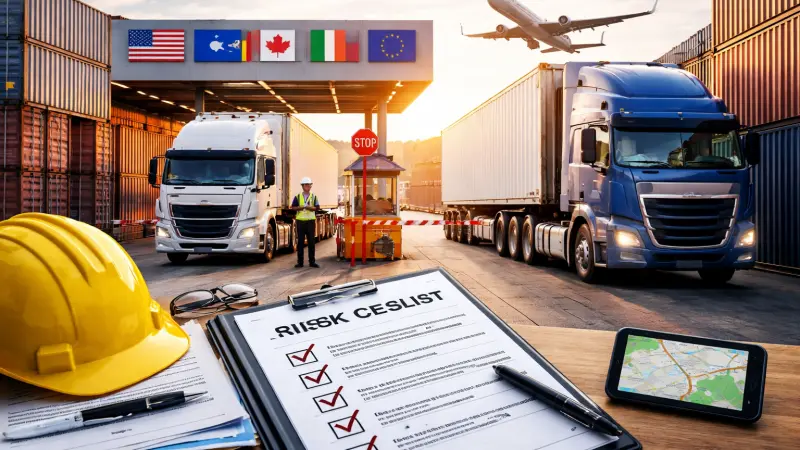
Imagine your shipment clears the warehouse on time, the carrier departs as scheduled, and then — nothing. Days pass. You receive a notification that cargo is held at customs, the documentation is incomplete, and demurrage charges are accumulating by the hour. For businesses that rely on cross-border freight transportation, this scenario is far from uncommon. It is, in fact, one of many operational risks that can quietly erode profit margins and damage client relationships.
Cross-border freight transportation is the backbone of international trade, yet it exposes businesses to a complex web of risks: regulatory non-compliance, cargo damage, route disruptions, currency fluctuations, and more. For UK-based importers, exporters, and logistics providers — particularly in the post-Brexit landscape — understanding and mitigating these risks is no longer optional. It is a commercial imperative.
Understanding the Risk Landscape in Cross-Border Freight
Before implementing any mitigation strategy, it is essential to understand the categories of risk that apply to cross-border freight movements. These risks are not uniform; they vary by trade lane, cargo type, carrier, and geopolitical environment.
Regulatory and Customs Compliance Risks
One of the most significant risks in international freight transportation is failing to meet the customs and regulatory requirements of either the exporting or importing country. These requirements can change with little warning, especially in markets with unstable trade policy environments.
For UK businesses, customs compliance has become considerably more complex since Brexit. Imports and exports between Great Britain and the European Union now require full customs declarations, commodity codes, rules of origin documentation, and in many cases, health and safety certificates. Errors in any of these areas can lead to delays, fines, or outright seizure of goods.
Common compliance failures include:
- Incorrect or missing commodity codes (HS codes)
- Inaccurate commercial invoices or packing lists
- Failure to obtain import licences for controlled goods
- Non-compliance with country-specific labelling or safety standards
- Insufficient proof of preferential origin for duty relief
Cargo Damage and Loss
Physical risks to freight are ever-present during transit. Whether goods are being transported by road, sea, air, or rail, they are exposed to the risk of damage caused by improper handling, inadequate packaging, adverse weather conditions, or accidents during loading and unloading.
Cargo loss — through theft, misdelivery, or damage so severe goods become unsalvageable — represents a significant financial risk. According to industry data, cargo theft remains a persistent issue across European road networks, with hotspots at motorway rest stops, freight hubs, and border crossing points.
Carrier and Operational Risks
The reliability and capability of your carrier is critical to successful freight operations. Engaging an under-resourced or poorly vetted carrier increases the risk of delayed delivery, loss of cargo traceability, or non-adherence to agreed handling procedures.
Operational risks also include breakdowns, port congestion, industrial action, and border crossing delays — all of which can cascade through a supply chain and cause significant disruption to downstream operations.
Financial and Currency Risks
Cross-border transactions often involve multiple currencies. Fluctuations in exchange rates can materially affect the cost of freight, duties, and supplier payments. In addition, businesses face financial risk if a carrier or freight forwarder becomes insolvent mid-shipment, leaving cargo stranded and insurance claims complex to resolve.
Geopolitical and Environmental Risks
Geopolitical instability — including trade disputes, sanctions, border closures, and conflict — can render entire trade lanes unviable at short notice. Environmental risks such as extreme weather events, flooding, and port infrastructure failures can also cause severe disruption to freight schedules.
Key Strategies to Mitigate Cross-Border Freight Risks
1. Invest in Robust Customs Compliance Procedures
Customs compliance should be treated as a core business function, not an administrative afterthought. For businesses involved in frequent or high-value international
freight movements, this means investing in dedicated compliance expertise — either in-house or through a reputable customs broker.
Practical steps include:
- Maintaining an up-to-date tariff classification database to ensure all goods are correctly coded
- Establishing a document management system that captures and archives all customs declarations, certificates of origin, and licences
- Conducting regular compliance audits to identify gaps before they result in penalties
- Training internal teams on current import and export regulations relevant to the markets you trade with
- Engaging a licensed customs broker for complex or high-risk shipments
UK businesses trading with the EU should also explore whether they qualify for authorised economic operator (AEO) status, which can significantly streamline customs processing and reduce the likelihood of physical inspections.
2. Implement Comprehensive Cargo Insurance
Relying solely on a carrier's standard liability cover is a common and costly mistake. Standard carrier liability under the CMR Convention (for road freight) or the Hague-Visby Rules (for sea freight) is limited and often inadequate to cover the full commercial value of a consignment.
Businesses should instead arrange all-risks cargo insurance that provides cover for:
- Physical loss or damage during transit
- Theft and pilferage
- General average contributions (in the case of sea freight)
- Delay-related financial losses (where available)
When arranging cargo insurance, it is important to accurately declare the full insured value (including freight costs and duties), understand any exclusions, and ensure the policy applies to the specific modes of transport and trade lanes being used.
For businesses with high shipment volumes, an open cargo policy — which automatically covers all shipments within agreed parameters — may offer both cost savings and administrative efficiency.
3. Conduct Thorough Carrier Due Diligence
The vetting of carriers and logistics partners is a critical risk mitigation measure that is frequently underestimated. A carrier's poor performance, financial instability, or inadequate equipment can expose your business to cargo loss, delivery failure, and reputational damage with your own clients.
A robust carrier vetting process should assess:
- Licencing and accreditation — ensuring carriers hold the appropriate operating licences for the routes and cargo types involved
- Insurance coverage — verifying the carrier holds adequate liability and cargo insurance
- Financial stability — checking credit ratings and business history to assess insolvency risk
- Track record and references — obtaining references from existing clients and reviewing performance data
- Vehicle and equipment standards — ensuring vehicles meet the required condition, temperature control, or security specifications for your cargo
Where possible, build relationships with a small panel of pre-approved carriers rather than relying on spot-market arrangements, which inherently carry higher risk.
4. Use Technology for Shipment Visibility and Tracking
One of the most effective ways to reduce operational risk is to maintain real-time visibility over your freight at every stage of its journey. Modern logistics technology platforms offer GPS tracking, geofencing alerts, electronic proof of delivery, and predictive analytics that can identify potential delays before they escalate.
Benefits of enhanced shipment visibility include:
- Early identification of border crossing delays, enabling proactive communication with customers
- Rapid response to cargo exceptions such as unexpected route deviations or unscheduled stops
- Improved accuracy of estimated delivery times, reducing customer service pressure
- Evidence capture for insurance and liability claims in the event of loss or damage
Many freight management systems also integrate with customs platforms, enabling electronic pre-lodgement
of declarations and reducing border dwell time significantly.
5. Develop a Robust Risk Assessment and Contingency Planning Framework
Effective risk management in cross-border freight transportation requires a structured approach to identifying, assessing, and planning for potential disruptions. This should be documented in a formal freight risk management policy that is reviewed and updated at regular intervals.
Key elements of a freight risk management framework include:
- Route risk assessment — evaluating the geopolitical, infrastructural, and environmental risks associated with specific trade lanes
- Supplier and carrier dependency mapping — identifying single points of failure in your supply chain and developing contingency arrangements
- Business continuity planning — establishing alternative routing options, backup carriers, and emergency inventory protocols
- Incident response procedures — defining clear escalation paths and responsibilities in the event of a cargo incident, delay, or compliance issue
6. Understand and Manage Incoterms Correctly
Incoterms — the internationally recognised trade terms published by the International Chamber of Commerce — define the division of responsibility for freight costs, insurance, and risk between buyer and seller. Misunderstanding or misapplying Incoterms is a surprisingly common source of commercial disputes and unexpected costs in cross-border freight.
For example, a seller operating under DDP (Delivered Duty Paid) terms is responsible for all costs and risks, including import duties and customs clearance in the buyer's country. This is a high-liability position that requires careful consideration. Conversely, EXW (Ex Works) places the majority of responsibility on the buyer from the moment goods leave the seller's premises.
Businesses should ensure that their chosen Incoterms are:
- Clearly specified in all contracts and commercial invoices
- Appropriate for the mode of transport being used
- Understood by all parties in the transaction
- Aligned with the capabilities and risk appetite of each party
7. Monitor and Manage Currency and Payment Risk
For businesses trading across multiple currencies, the financial risk associated with exchange rate movements can be material. A freight contract quoted in euros or US dollars may cost significantly more in sterling by the time payment is due, particularly during periods of currency volatility.
Strategies to manage currency risk include:
- Using forward exchange contracts to lock in rates for future payments
- Invoicing in sterling wherever commercially possible
- Holding multi-currency accounts to avoid unnecessary conversion costs
- Setting up payment terms that reduce the window of currency exposure
8. Build Strong Relationships with Freight Forwarders
A skilled and experienced freight forwarder is one of the most valuable risk mitigation tools available to any business involved in international freight transportation. A good freight forwarder does far more than book transport; they manage documentation, navigate customs requirements, source appropriate insurance, and provide contingency options when disruption occurs.
When selecting a freight forwarder, look for membership of recognised trade associations such as the British International Freight Association (BIFA)
or the Freight Transport Association (now Logistics UK), which set professional and ethical standards for their members.
Sector-Specific Considerations
Perishable and Temperature-Sensitive Cargo
Businesses transporting food, pharmaceuticals, or other temperature-sensitive goods face additional risks related to cold chain integrity. Any breach of required temperature ranges — even briefly — can render an entire consignment unsellable or unsafe. Mitigation in this sector requires temperature-controlled vehicles, data loggers, pre-shipment condition assessments, and clear contractual responsibilities for cold chain maintenance throughout transit.
Dangerous Goods
The transportation of hazardous materials is governed by strict international regulations, including the ADR agreement for road transport, the IMDG Code for sea freight, and IATA regulations for air cargo. Non-compliance with these frameworks carries severe legal penalties and safety consequences. Businesses must ensure appropriate training, packaging, labelling, and documentation are in place before any dangerous goods shipment is attempted.
High-Value and Luxury Goods
Cargo theft is disproportionately concentrated in high-value sectors such as electronics, pharmaceuticals, and luxury goods. Businesses in these sectors should consider enhanced security measures including covert tracking devices, secure parking requirements, sealed vehicle protocols, and two-driver requirements for long-distance routes through high-risk territories.
The Role of Documentation in Freight Risk Management
Accurate, complete, and timely documentation is the foundation of risk-free cross-border freight transportation. Documentation errors are among the most common causes of customs delays, carrier liability disputes, and insurance claim rejections.
Core freight documentation for international shipments typically includes:
- Commercial invoice
- Packing list
- Bill of lading or airway bill
- Certificate of origin
- Customs entry or export declaration
- Dangerous goods declaration (where applicable)
- Phytosanitary or health certificates (for food and agricultural products)
- Import licences (for controlled goods)
Investing in a document management system that automates document generation, validates data accuracy, and maintains a full audit trail significantly reduces the risk of documentation-related delays and disputes.
Cross-border freight transportation will always carry an element of risk — that is the nature of moving goods across jurisdictions, borders, and complex logistics networks. However, the businesses that manage these risks most effectively are not those that avoid international trade, but those that approach it with rigour, preparation, and the right partners in place.
From customs compliance and cargo insurance to carrier vetting and contingency planning, each strategy outlined in this guide contributes to a more resilient and reliable freight operation. The upfront investment in risk management pays dividends in reduced delays, fewer disputes, lower insurance claims, and stronger relationships with clients and partners.
For logistics businesses, freight forwarders, and independent operators looking to strengthen their visibility and credibility within the UK market, maintaining a presence on reputable business directories in UK platforms can also be a practical step. Services such as Local Page UK help freight and logistics businesses improve their online discoverability, making it easier for potential clients to find vetted, professional operators — whether through general online business directory UK listings or more specialist directories catering to specific sectors. In an industry where trust and reputation are everything, visibility through credible UK business directory websites can complement broader risk management efforts and support long-term business growth.
Questions Clients Commonly Ask
What are the most common risks in cross-border freight transportation?
The most common risks include customs non-compliance, cargo damage or theft, carrier unreliability, border crossing delays, geopolitical disruption, and financial risks such as currency fluctuation. Each of these can be mitigated through proper planning, carrier vetting, insurance, and compliance procedures.
Do I need specialist cargo insurance for international freight?
Yes. Standard carrier liability cover under frameworks such as the CMR Convention is typically limited and will not cover the full commercial value of your goods in the event of loss or damage. All-risks cargo insurance arranged separately provides much more comprehensive protection and is strongly recommended for any significant international shipment.
How has Brexit affected cross-border freight risk for UK businesses?
Brexit has added considerable regulatory complexity to UK-EU freight movements. Full customs declarations, rules of origin requirements, and additional veterinary and phytosanitary checks are now required for many goods crossing the GB-EU border. This has increased the risk of documentation errors, customs delays, and compliance failures, making expert customs support more important than ever for UK businesses trading with Europe.
What is the role of a freight forwarder in managing transport risks?
A freight forwarder acts as an intermediary between the shipper and various transport and customs services. They manage documentation, book transport, coordinate customs clearance, arrange cargo insurance, and provide expert advice on regulatory requirements.
A reputable freight forwarder significantly reduces the administrative and compliance burden and can often identify and resolve issues before they cause disruption.
How can technology help reduce freight risk?
Modern logistics technology platforms provide real-time shipment tracking, customs pre-lodgement, automated documentation, and predictive analytics. These tools improve visibility across the supply chain, enable faster responses to disruptions, reduce documentation errors, and provide evidence to support insurance claims. Investing in a freight management system is increasingly considered best practice for businesses with significant international freight volumes.
Disclaimer: The information provided in this article is for general informational and research purposes only. Company details, features, services, and market positions may change over time. Readers are advised to visit official company websites and conduct independent research before making any business decisions or purchasing services.
Most Searchable Keywords
Recent Blogs


Related Listings
Categories
- Accountants (295)
- Advertising Agencies (559)
- Architects (149)
- Automobiles (377)
- Beauty (300)
- Carpenters (146)
- Cleaning Services (387)
- Dentists (189)
- Driving (62)
- Electricians (215)
- Energy (8)
- Event Organiser (686)
- Finance (602)
- Guide (3374)
- Health (2207)
- Information technology (206)
- Legal Services (354)
- Logistics (6)
- Maintenance (65)
- Manufacturing (35)
Sponsored Listings in Travel Agencies



Related Blogs

Meet the Fair Work Agency Changing UK Work Ru...
Read this insightful article "Meet the Fair Work Agency Changing UK Work Rules in 2026" to expand your knowledge!

Collective Redundancy Errors Now Carry Higher...
Read this insightful article "Collective Redundancy Errors Now Carry Higher 2026 Penalties" to expand your knowledge!

Explore Dog Friendly Walks in the Cotswolds f...
Read this insightful article "Explore Dog Friendly Walks in the Cotswolds for 2026" to expand your knowledge!
Questions & Answers – Find What
You Need, Instantly!
How can I update my business listing?
Is it free to manage my business listing?
How long does it take for my updates to reflect?
Why is it important to keep my listing updated?
