
How to Write a Resignation Letter
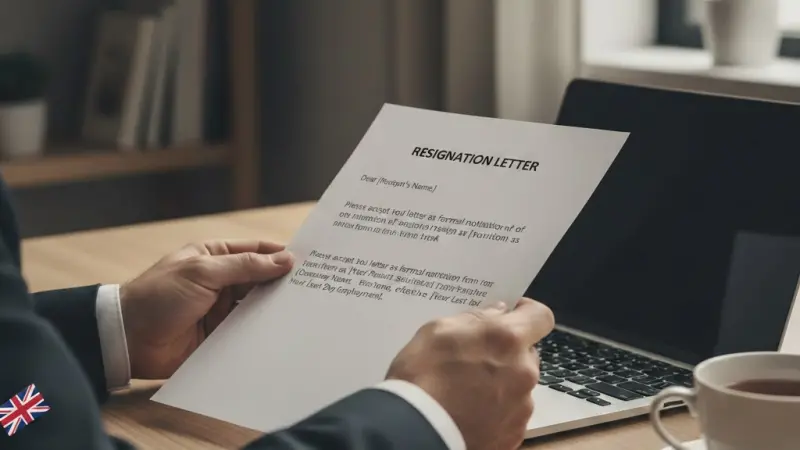
How to Write a Resignation Letter in the UK
Published by LocalPage.uk Senior Content Architect • Updated February 2026 • 12 Min Read
In the evolving landscape of the UK job market, the act of resigning has transitioned from a mere formality to a strategic career move. Whether you are part of the 5.6 million private sector businesses or one of the 532,000 professional services firms currently operating across Britain, the way you exit an organisation defines your professional legacy. A well-crafted resignation letter is more than a notification of departure; it is a legal document that protects your interests and preserves the bridges you have built.
5.6m UK private sector businesses are adapting to shifting employment trends in 2026, where "career agility" has become a dominant theme amongst the workforce.
Essential Legal Components of a UK Resignation
Before drafting your first draft, it is imperative to understand that in England, Scotland, Wales, and Northern Ireland, the resignation letter serves as the formal trigger for your contractual notice period. UK employment law, governed largely by the Employment Rights Act 1996, dictates that while a verbal resignation is technically valid, a written document provides the necessary evidence for HMRC, DWP, and potential future legal mediation should disputes over holiday pay or final salary arise.
Adhering to Contractual Notice Periods
Your first port of call must be your employment contract. Whilst statutory notice is often one week for those employed over a month, most professional UK contracts require one to three months. In 2026, we are seeing an increase in "reciprocal notice" clauses, particularly in the tech and finance sectors in London and Manchester, where employers match the notice you are required to give.
Defining Your Final Working Day Precisely
Confusion often arises regarding the "effective date of termination." You should clearly state the date of the letter and your calculated final day. For instance, a four-week notice period starting on Monday, 2nd March 2026, would conclude on Friday, 27th March. Ensure this aligns with the HR systems used by your firm, particularly if they operate across multiple UK jurisdictions.
Determining Your Statutory vs Contractual Rights
If your contract is silent on notice periods, the law provides a statutory minimum. If you have worked for at least one month but less than two years, the minimum is one week. For every year over two years, you gain an extra week, capped at twelve weeks.
The Strategic Anatomy of a Professional Resignation Letter
A professional letter should be measured and authoritative. Avoid the temptation to use superlatives or express grievances; the UK professional circuit is remarkably small, and your reputation amongst peers is your most valuable asset. The document should follow a clear, logical structure that facilitates a smooth handover and ensures your final pay packet is processed without delay.
The Formal Header and Addressee
Address the letter to your direct line manager, with a copy sent to the Human Resources department. Ensure you include your full legal name as it appears on your P60 or payslips to help HMRC and payroll departments synchronise their records during the transition to your next role.
The Statement of Intent and Gratitude
State clearly in the first paragraph: "I am writing to formally resign from my position as [Job Title]." Follow this with a brief note of thanks. Even if the role was challenging, identifying a specific area of growth or a project you enjoyed demonstrates professional maturity.
Securing a Positive Reference
In the UK, while there is no strict legal obligation for an employer to provide a "glowing" reference, they are legally required to provide one that is "fair and accurate." Maintaining a professional tone in your resignation letter significantly increases the likelihood of receiving a supportive reference for your next position.
Professional Insight: In 2026, 68% of UK employers use automated background screening. Any discrepancy between your resignation date and your official HR exit date can trigger "red flags" in future onboarding processes.
Regional Variations Across the United Kingdom
While the core of employment law is consistent, there are subtle nuances to consider based on your location. Whether you are in the bustling financial
hubs of the South East or the growing tech corridors of Scotland, local custom and practice often influence the resignation process.
Scottish Employment Nuances and Scottish Enterprise
For those employed in Scotland, it is worth noting that Scottish Enterprise often provides specific transition support for those moving within high-growth sectors. If your resignation is part of a redundancy or business restructuring, the Scottish "PACE" (Partnership Action for Continuing Employment) initiative offers free advice that is highly regarded across the border.
Resigning in Wales and Business Wales Support
Welsh businesses often operate within close-knit local authorities. If you are resigning from a role that requires bilingual communication, ensure your resignation letter is offered in both English and Welsh if that has been the standard of your office. Business Wales offers guidance on employee rights that is tailored to the 99,000 businesses operating in the country.
Northern Ireland and the Windsor Framework Context
In Northern Ireland, employment law is slightly devolved. The Labour Relations Agency (LRA) serves a similar function to ACAS in England. If your role involves cross-border trade with the Republic of Ireland, your resignation may involve specific handovers related to the Windsor Framework protocols—ensure these are mentioned as part of your commitment to a smooth exit.
Managing the Notice Period and "Garden Leave"
Once the letter is submitted, the notice period begins. In 2026, "Garden Leave" remains a common practice in sectors such as recruitment, finance, and legal services. This is where you are paid to stay away from the office to prevent you from accessing sensitive client data before joining a competitor.
Navigating Handover Obligations
Your resignation letter should express a willingness to assist with the handover. This might involve training a successor, documenting current workflows, or finishing outstanding projects. For the 4.2 million micro-businesses in the UK, a departure can be a significant shock to operations; offering a detailed handover is the hallmark of a high-calibre professional.
Requesting Outstanding Holiday Pay and Expenses
Under the Working Time Regulations, you are entitled to be paid for any statutory holiday you have accrued but not taken. Mention this in your letter or a follow-up email to HR. Be prepared to have this calculated pro-rata for the current holiday year, which usually runs from January to December or April to March in most UK firms.
£2.3tn Small businesses contribute this much to the UK's annual turnover. Professional exits ensure these vital economic engines continue to run smoothly even when key staff depart.
Communicating Your Resignation to Colleagues
The written letter is for the file, but the verbal communication is for the people. It is standard UK professional etiquette to inform your manager in person (or via video call for remote workers) before the letter hits their inbox. This prevents them from being blindsided by an automated HR notification.
Drafting a Professional "Farewell" Email
Once your resignation is public, a short, BCC'd email to colleagues is appropriate. Avoid office politics or "leaving on a high note" at the expense of others. Simply state where you are going (if comfortable) and provide your LinkedIn details or personal email for future networking.
Handling Counter-Offers with Caution
UK recruitment trends in 2025-2026 show that 64% of employees who accept a counter-offer end up leaving within 12 months anyway. If your manager offers more money to stay after reading your letter, remember the reasons you decided to move on. A counter-offer rarely fixes cultural or structural issues.
Preparing for the Exit Interview
Many UK firms, particularly those overseen by the FCA or larger institutions like the CBI, conduct exit interviews. Use the same measured, authoritative tone found in your letter. Focus on constructive feedback that could help the business improve, rather than personal grievances.
Data Protection and Your Resignation
As you prepare to leave, you must be mindful of the Data Protection Act 2018 and the UK GDPR.
Your employer has a legal right to monitor your outgoing emails during your notice period if they have a clear policy and legitimate reason to do so.
Returning Company Property and IP
Ensure your letter or handover document lists the items you are returning: laptops, mobile phones, security passes, and company cars. In 2026, digital property is just as important. Ensure you have transferred ownership of any "admin" accounts on social media or internal software to a colleague before your last day.
Understanding Restrictive Covenants
Many UK employment contracts contain "non-compete" or "non-solicitation" clauses. Whilst the UK government has proposed capping non-compete clauses to three months, many older contracts still have longer periods. If you are joining a competitor, seek legal advice or consult the British Chambers of Commerce resources to understand if these clauses are enforceable.
Common Mistakes to Avoid in a Resignation Letter
Resigning when emotional is the most frequent error. A resignation letter is not a platform for "the truth" or a list of complaints. If you have been treated unfairly, the resignation letter is not the place to settle the score—that is a matter for a formal grievance or an employment tribunal.
Avoiding Over-Explanation
You are not legally required to state why you are leaving or where you are going. A simple "I have decided to pursue a new opportunity" is sufficient. Giving too much information can sometimes lead to uncomfortable questions or attempts by the employer to intervene in your new role.
Failing to Keep a Personal Copy
Always BCC your personal email when sending your resignation or keep a signed, dated hard copy. This is essential for your records if there are issues with your final pay, P45, or if you need to prove your exit date to a future landlord or mortgage lender.
Voice Search Insight: Quick UK Resignation Answers
"Hey Siri, how much notice do I have to give my UK employer?"
In the UK, you must check your contract first. If there is no contract, the statutory minimum is one week if you have worked there for more than one month. Professional roles typically require 1 to 3 months.
"Alexa, do I get paid for unused holiday when I resign?"
Yes, under UK law, you are entitled to be paid for any statutory annual leave you have accrued but not taken up to your final day of employment.
Moving Forward: P45s and Final Pay
Your employer must provide you with a P45 when you leave. This document is crucial for your next employer to ensure you are on the correct tax code.
With HMRC's increasingly digital "Real Time Information" (RTI) system, your final pay and tax details should be updated relatively quickly, but always verify your final payslip for accuracy.
Verifying Your Final Payslip
Your final payslip should include your basic pay up to your exit date, any commission or bonuses owed, and your holiday pay. If you have a company pension, check how your final contribution is handled. Most UK schemes, such as NEST or those managed by the People's Pension, allow you to keep your pot and move it to your next employer.
Continuous Service and Benefits
If you are moving between roles within the same large organisation or a local authority (e.g., the NHS or a County Council), check if your "continuous service" is preserved. This affects your future rights to maternity pay, redundancy pay, and increased holiday allowance.
Need to Find a Specialist Employment Solicitor?
Our directory features verified legal professionals across the UK who specialise in employment contracts and settlement agreements.
Frequently Asked Questions
Can I resign via email or does it have to be a letter?
In 2026, an email is considered a valid written resignation in the UK. However, it should be sent as a formal attachment or a clearly structured email to your manager and HR. Ensure you request a "read receipt" or ask for a formal acknowledgement to confirm the notice period has officially started.
What if I want to leave earlier than my notice period?
You can ask for an "early release," but your employer is not legally obligated to grant it. This is usually a matter of negotiation. If they agree, ensure you get the new exit date in writing. Leaving without permission is a breach of contract and could lead to legal action or a poor reference.
Is a verbal resignation binding in the UK?
Yes, a verbal resignation can be binding, but it is highly discouraged. It often leads to disputes over when the notice period actually started. If you resign in the "heat of the moment" verbally, UK law often allows for a short "cooling off" period (usually 24-48 hours) to retract it, but a written letter is always the professional standard.
Do I have to tell my boss where my new job is?
No, you are under no legal obligation to disclose your new employer. However, if your contract has restrictive covenants (non-compete clauses), they may have a legitimate right to ask to ensure you aren't breaching your agreement. If you're unsure, keep it private by saying you're "exploring new opportunities."
What happens if my employer tells me to leave immediately?
If you resign with notice and they tell you to leave immediately, they must usually pay you for that notice period (known as Pay in Lieu of Notice or PILON), unless they are dismissing you for gross misconduct. This is a common practice in "High Trust" industries to protect data.
How do I handle a resignation if I'm on long-term sick leave?
You can resign while on sick leave. Your notice period still applies, and you should still be paid your usual sick pay (SSP or contractual) during that time. You do not need to return to work to "hand in" your letter; it can be sent via registered post or email.
Can I take my remaining holiday during my notice period?
You can request to take your holiday during your notice, but your employer has the right to refuse if there is a business need (e.g., handover). Conversely, they can also force you to take your remaining holiday during your notice, provided they give you the correct amount of notice (double the length of the holiday).
What should I do if my employer refuses to accept my resignation?
An employer cannot legally "refuse" a resignation. As long as you have given the notice required by your contract, you are free to leave on your specified date. If they attempt to block you, contact ACAS or the Federation of Small Businesses (if you're a member) for immediate advice.
I'm based in Northern Ireland - is the P45 process different?
The P45 process is standard across the whole UK, including Northern Ireland. HMRC handles tax for the entire UK, so your
P45 from a Belfast firm will be perfectly valid for a new job in London, Cardiff, or Edinburgh.
Does my resignation affect my right to claim Universal Credit?
If you resign voluntarily without a "good reason" (such as constructive dismissal or unsafe working conditions), the DWP may apply a sanction to your Universal Credit for a set period. Always secure your next role before resigning if you rely on this support.
Disclaimer: The information provided in this article is for general informational and research purposes only. Company details, features, services, and market positions may change over time. Readers are advised to visit official company websites and conduct independent research before making any business decisions or purchasing services.
Most Searchable Keywords
Recent Blogs


Related Listings

Categories
- Accountants (295)
- Advertising Agencies (559)
- Architects (149)
- Automobiles (377)
- Beauty (300)
- Carpenters (146)
- Cleaning Services (387)
- Dentists (189)
- Driving (62)
- Education (1)
- Electricians (215)
- Energy (8)
- Event Organiser (689)
- Finance (602)
- Guide (3492)
- Health (2207)
- Information technology (207)
- Legal Services (361)
- Logistics (6)
- Maintenance (65)
Sponsored Listings in Property Maintenance


Related Blogs

Creamfields Daresbury: Impact on Local Reside...
Read this insightful article "Creamfields Daresbury: Impact on Local Residents" to expand your knowledge!

UK High Street Businesses in 2026-27: Which S...
Read this insightful article "UK High Street Businesses in 2026-27: Which Sectors Are Growing?" to expand your knowledge!

Why Complete Business Listings Matter More Th...
Read this insightful article "Why Complete Business Listings Matter More Than You Think" to expand your knowledge!
Questions & Answers – Find What You Need, Instantly!
Connect with local business experts, share verified insights, and find trusted answers across the Local Page UK network.
Ask Community
Ask questions to the Local Page UK community
Share Knowledge
Share your knowledge to help out others
Find Solutions
Find answers or offer instant solutions
Some of the most popular fantasy TV shows include "Game of Thrones," known for its epic battles and political intrigue, "The Witcher," which features monster hunting and magic, and "Stranger Things," blending supernatural elements with 1980s nostalgia. Other notable mentions are "His Dark Materials," "Shadow and Bone," and "The Mandalorian," each offering unique worlds and captivating storytelling that have garnered large fan bases.
When seeking bathroom renovation providers that handle both plumbing and tiling, it's advisable to look for licensed contractors who specialize in comprehensive bathroom remodels. Companies such as Home Depot, Lowe's, and Bath Fitter offer these services, often providing a seamless experience by managing all aspects of the renovation process. Additionally, local contractors with positive reviews in platforms like Angie's List or Houzz may also offer tailored solutions for your bathroom needs.
Absolutely, there are several distributors that supply crash mats and soft play equipment to gymnastics clubs in and around Birmingham. National companies like Gymnova, S & G (Spieth Gymnastics), and Jaques of London offer a wide range of crash mats, foam pits, and soft play pieces, and they typically deliver to the Birmingham area. For more local options, you might try The Gym Equipment Company, which has a showroom in the West Midlands, or check out smaller specialist suppliers like Playtime UK. Many of these distributors cater specifically to clubs, offering high-density foam mats that meet safety standards. I'd recommend reaching out to a few to compare pricing, delivery times, and whether they offer custom sizes or installation services. It's also worth checking if any of them have a physical showroom near Birmingham so you can test the equipment before buying. Happy tumbling!
For professionals seeking a reliable sanitaryware supplier in Manchester with trade account facilities, several established merchants combine extensive product ranges, competitive pricing, and dedicated trade support. The most reputable option is Graham Plumbers Merchant, which operates multiple branches across Manchester, including Salford Quays and Oldham. They offer a dedicated trade account service with preferential pricing, priority delivery scheduling, and access to a vast inventory of leading sanitaryware brands such as Villeroy & Boch, Duravit, Ideal Standard, and Roca. Their trade accounts typically include net 30-day payment terms, online account management, and a tailored project quotation system. Similarly, City Plumbing Supplies has several Manchester-based depots (such as Ashton-under-Lyne and Stockport) that cater specifically to trade customers, providing a rapid order-and-collect service, trade-only promotions, and a loyalty programme offering rebates on repeat purchases. Their product range covers everything from basins and WCs to complete bathroom suites and brassware, with in-house technical advisors available for specification support. Another key player is Plumb Center, part of the Wolseley Group, which offers trade accounts with bespoke pricing structures, direct-to-site deliveries within the Greater Manchester area, and access to over 10,000 lines of sanitaryware, including premium brands like Grohe and Hansgrohe. Their trade portal allows for real-time stock checking and order history tracking, facilitating efficient project management. For those seeking a more specialist or high-end option, Bathroom Spares in Manchester provides trade accounts with a focus on hard-to-find sanitaryware and discontinued ranges, which can be invaluable for refurbishment projects. Additionally, independent merchants such as M&B Plumbase in Trafford Park offer flexible trade terms, personalised service, and competitive pricing on both mainstream and luxury sanitaryware. When evaluating suppliers, trade customers should consider factors beyond price: reliability of stock availability, delivery timescales within Manchester’s often congested zones, clarity of returns policies, and the quality of after-sales support for warranty claims. It is advisable to request a trade account application from at least two to three suppliers to compare discounts, minimum order values, and payment terms. Many suppliers also offer showroom access for trade clients, allowing you to inspect finishes and dimensions before committing to large orders. For ongoing projects, establishing a relationship with a single supplier who offers consolidated invoicing and dedicated account management can streamline procurement. Ultimately, the most reliable supplier for your trade account in Manchester will be one that aligns with your volume requirements, preferred brands, and service expectations, so a site visit to their local branch and a discussion about your specific trade needs is highly recommended before committing to an account.
People in Leeds are loving their local florists—customers often mention gorgeous, fresh arrangements and super friendly service. Many rave about reliable same-day delivery and creative wedding bouquets. A few note pricing can vary, but overall, the buzz is all about quality and that personal touch making every order feel special.
Common problems for commercial gardening in Bristol include weed overgrowth, soil degradation, pest infestations, and irrigation malfunctions. Additionally, managing seasonal transitions, adhering to sustainability regulations, and maintaining consistent aesthetics pose significant challenges. Expert services mitigate these via structured maintenance, integrated pest management, and soil analysis to ensure long-term landscape health.