
Professional Water Purification Solutions for Schools and Hospitals in the UK
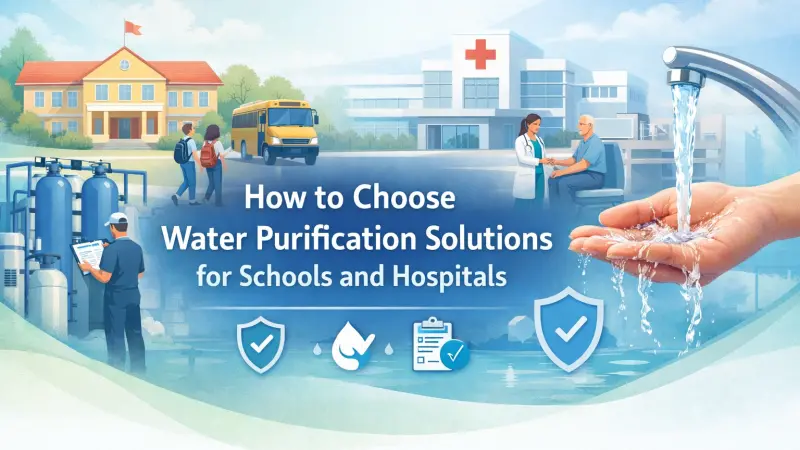
Did you know that the average secondary school in the United Kingdom consumes thousands of litres of water daily while a large NHS hospital can require a constant supply of ultra-pure water for clinical procedures and patient hydration? Ensuring the safety and chemical integrity of this water is not merely a matter of taste but a fundamental requirement for public health and operational efficiency. When managing large-scale public institutions, the transition from standard mains supply to specialised purified water involves understanding complex filtration technologies, local geological factors affecting water hardness, and the stringent microbiological standards required to prevent healthcare-associated infections.

The Critical Importance of Water Quality in Public Institutions
In the United Kingdom, water quality is strictly regulated, yet the requirements for a primary school classroom differ significantly from those of a hospital's renal dialysis unit or a high school chemistry laboratory. Water serves multiple roles: it is a primary beverage for children, a cleaning agent for medical instruments, and a medium for heating systems. Poor water quality can lead to the build-up of limescale in pipes, the proliferation of Legionella bacteria in cooling towers, and the presence of unwanted trace minerals that can interfere with sensitive medical equipment. For schools, the priority often lies in removing chlorine tastes and lead contaminants, whereas hospitals must focus on absolute sterility and the removal of endotoxins.
Evaluating Source Water and Contaminant Profiles
Before selecting a purification system, a thorough audit of the incoming mains water is essential. UK water varies significantly by region; for instance, water in the South East is typically "hard" due to high concentrations of calcium and magnesium carbonates, while water in Scotland and the North West is generally "soft" but may contain higher levels of organic matter from peatlands. A comprehensive site survey identifies common issues such as high turbidity, excessive mineral content, or the presence of microplastics. By understanding what is already in the water, facility managers can avoid over-specifying equipment, ensuring they only invest in the technologies necessary to address their specific local challenges.
Common Contaminants in Institutional Settings
- Microorganisms: Bacteria such as Pseudomonas and Legionella are of primary concern in hospital plumbing systems where stagnant water or warm temperatures may encourage growth.
- Chemical Additives: While chlorine is necessary for disinfection at the municipal level, it can affect the taste of drinking water in schools and damage sensitive membranes in medical filters.
- Particulate Matter: Silt, rust from aging pipes, and sediment can clog fine filters and cause mechanical wear on boilers and washing machines.
- Heavy Metals: In older school buildings, lead piping remains a concern, requiring specific filtration media to ensure student safety.
Primary Purification Technologies for Large-Scale Use
The selection of technology depends on the desired end-use. Most institutions employ a multi-stage approach, combining various methods to achieve the highest possible purity levels with maximum reliability. This "train" of treatment ensures that if one component requires maintenance, the others continue to provide a baseline level of protection.
Mechanical and Carbon Filtration
Mechanical filtration acts as the first line of defence, physically straining out large particles and sediment. This is followed by activated carbon filtration, which is highly effective at removing organic compounds and chlorine through a process called adsorption.
In schools, point-of-use carbon filters on drinking fountains are a cost-effective way to encourage hydration by improving the palatability of the water.
Reverse Osmosis Systems
Reverse Osmosis (RO) is the gold standard for high-purity applications. It forces water through a semi-permeable membrane, removing up to 99% of dissolved solids, bacteria, and viruses. Hospitals rely on industrial-scale RO units to produce the water used in sterile service departments for instrument decontamination. However, RO systems generate "reject water," so modern installations must be designed with water recovery systems to meet UK sustainability targets.
Ultraviolet Disinfection
UV sterilisation uses specific wavelengths of light to scramble the DNA of microorganisms, rendering them harmless. Unlike chemical treatments, UV does not leave a residue or alter the taste of the water. It is an excellent secondary safeguard in hospitals, particularly in areas serving immunocompromised patients, as it provides a chemical-free barrier against pathogens.
Tailoring Solutions for Educational Environments
In the UK school context, the focus is on providing accessible, chilled, and clean drinking water while maintaining the integrity of building services. Schools must balance initial capital expenditure with long-term maintenance costs. Modern bottle-filling stations with integrated filtration are becoming the standard, replacing traditional fountains to reduce the risk of cross-contamination and plastic waste. These systems should be easy to maintain, with "plug-and-play" filter cartridges that can be swapped by onsite site managers without requiring specialist engineering every time.
Specialised Requirements for Healthcare Facilities
Hospitals operate under the Health Technical Memorandum (HTM) guidelines, specifically HTM 04-01, which outlines the design and management of water systems. Pure water is essential for lab diagnostics, pharmacy compounding, and surgical irrigation. The complexity here is not just in the purification but in the distribution. Avoiding "dead legs" in piping and ensuring constant circulation at specific temperatures is as important as the filtration unit itself. High-purity water is aggressive and can leach minerals from standard copper or plastic pipes, requiring high-grade stainless steel or PVDF distribution loops.
The Role of Water Softening in Infrastructure Longevity
For institutions in hard water areas, ion-exchange water softeners are a critical investment. By replacing calcium and magnesium ions with sodium ions, these systems prevent the formation of scale.
In a hospital, scale can reduce the efficiency of steam sterilisers and laundry equipment by over 30%. In schools, softeners protect heating systems and commercial kitchen equipment, significantly extending the lifecycle of the building's infrastructure and reducing emergency repair costs.
Maintenance, Compliance, and Monitoring
A "fit and forget" mentality is dangerous in the context of water purification. Regular sampling and laboratory testing are required to ensure that systems are performing to their specified standards. In schools, this might mean annual testing for lead or bacteria, while hospitals may require weekly microbiological assays in high-risk wards. Digital monitoring systems are now available that track flow rates and filter life in real-time, sending alerts to facility managers before a failure occurs.
Across the United Kingdom, the implementation of advanced water treatment is a vital component of modern building management. Schools benefit from improved student concentration and health, while hospitals ensure patient safety and regulatory compliance. Engaging with professional consultants and certified installers allows these institutions to navigate the complexities of water chemistry and engineering. This collaborative approach ensures that the bespoke needs of every facility are met through robust, scalable, and sustainable purification technologies.
Enhancing Institutional Visibility and Professional Connectivity
In the modern landscape, the successful implementation of large-scale infrastructure projects relies heavily on the ability of public bodies to connect with expert service providers. For specialist engineering firms and water treatment consultants, maintaining a high level of digital discoverability is essential to reaching the procurement officers who manage these essential upgrades. Ensuring that your company appears on a free listing uk business index allows smaller, highly specialised technical firms to compete with larger conglomerates.
By utilizing uk free listing sites, professionals can showcase their expertise in niches such as hospital-grade filtration or school water safety audits. Ultimately, a strong online presence on a Local Page UK helps bridge the gap between technical excellence and the institutions that require these life-enhancing purification solutions, fostering a more transparent and accessible marketplace for essential public services.
Frequently Asked Questions
How often should school water filters be replaced? Generally, filters in high-traffic school environments should be replaced every six months or after a specific volume of water has passed through, whichever comes first, to prevent bacterial growth.
Is Reverse Osmosis water safe for daily drinking in schools? Yes, it is safe, though some systems include a remineralisation stage to add back trace amounts of beneficial minerals like calcium and magnesium for better taste and health profiles.
What is the main difference between HTM 04-01 and standard water regulations? HTM 04-01 is a specific healthcare standard that imposes much stricter controls on water temperature, storage, and microbiological monitoring to protect vulnerable patients.
Can purification systems help reduce a school's carbon footprint? By installing high-quality bottle-filling stations, schools
can significantly reduce the consumption of single-use plastic bottles, contributing to environmental sustainability goals.
Are UV systems better than chlorine for hospital water? UV is often preferred for specific point-of-use protection as it does not create chemical by-products, though a residual level of chlorine is often maintained in the wider building pipes to prevent biofilm.

Disclaimer: The information provided in this article is for general informational and research purposes only. Company details, features, services, and market positions may change over time. Readers are advised to visit official company websites and conduct independent research before making any business decisions or purchasing services.
Most Searchable Keywords

Recent Blogs
-

Explore Supermarkets in Chepstow and the Surrounding Wye Valley
-
Elite Guide to Taxi and Private Hire Services in Hereford
-
Explore Fuel and Roadside Convenience Across Beckington Today
-
Explore Abergavenny Tyre Services with Expert Local Fitters
-
Claim Your HMRC UK Tax Refund Before Application Deadlines



Related Listings


Categories
- Accountants (295)
- Advertising Agencies (559)
- Architects (149)
- Automobiles (376)
- Beauty (300)
- Carpenters (146)
- Cleaning Services (386)
- Dentists (189)
- Driving (61)
- Electricians (215)
- Energy (7)
- Event Organiser (683)
- Finance (597)
- Guide (3358)
- Health (2205)
- Information technology (206)
- Legal Services (352)
- Logistics (6)
- Maintenance (65)
- Manufacturing (35)

Sponsored Listings in Plumbers

Related Blogs

Explore Supermarkets in Chepstow and the Surr...
Read this insightful article "Explore Supermarkets in Chepstow and the Surrounding Wye Valley" to expand your knowledge!

Elite Guide to Taxi and Private Hire Services...
Read this insightful article "Elite Guide to Taxi and Private Hire Services in Hereford" to expand your knowledge!

Explore Fuel and Roadside Convenience Across...
Read this insightful article "Explore Fuel and Roadside Convenience Across Beckington Today" to expand your knowledge!
Questions & Answers – Find What
You Need, Instantly!
How can I update my business listing?
Is it free to manage my business listing?
How long does it take for my updates to reflect?
Why is it important to keep my listing updated?
