Is the quality of the water in your home or laboratory beginning to decline despite regular filter changes? For many households and technical facilities across the United Kingdom, reverse osmosis systems serve as the primary line of defence against dissolved solids and chemical contaminants. However, the efficacy of these systems rests almost entirely on a single, sophisticated component known as the semi-permeable membrane. Understanding when and how to replace this vital element is essential for maintaining the purity and safety of your water supply.
The Science of Reverse Osmosis Filtration
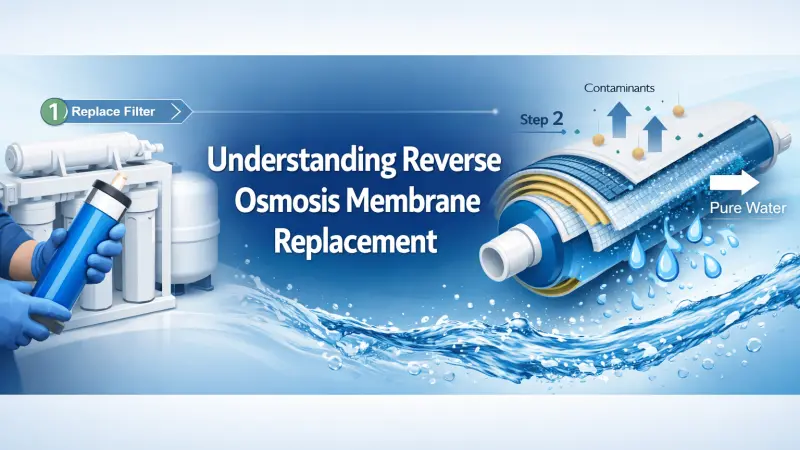
Reverse osmosis is a complex physical process that utilizes pressure to push water through a synthetic membrane. Unlike standard sediment filters that trap large particles, this membrane operates at a molecular level. It is designed to allow water molecules to pass through while rejecting up to ninety-nine percent of dissolved salts, heavy metals, and organic pollutants. In a typical British setting, where water hardness and mineral content vary significantly by region, the membrane acts as a critical barrier that ensures consistency in water quality.
The structure of the membrane usually consists of a thin-film composite. This material is incredibly dense, with pores so small they are measured in angstroms. To put this in perspective, most bacteria and viruses are far too large to pass through these microscopic openings. However, because the membrane is so fine, it is also susceptible to fouling and degradation over time. Factors such as chlorine exposure, mineral scaling, and biological growth can all impact the longevity of the component.
Identifying the Need for Membrane Replacement
One of the most frequent questions regarding water purification is how often a membrane should be changed. While pre-filters typically require attention every six to twelve months, a high-quality membrane can last between two and five years. However, this timeframe is a general estimate and depends heavily on the volume of water processed and the initial quality of the source water. In areas of the UK with particularly hard water, such as East Anglia or the South East of England, the lifespan may be shorter due to the high concentration of calcium and magnesium.
Monitoring Total Dissolved Solids
The most accurate method for determining the health of a membrane is by measuring the Total Dissolved Solids (TDS) in the product water. By using a handheld meter, users can compare the reading of the tap water with the reading of the filtered water.
If the rejection rate drops below eighty-five percent, it is a clear indication that the membrane has reached the end of its functional life. Relying solely on the taste of the water is often misleading, as many harmful contaminants are odourless and tasteless.
Observing Water Pressure and Flow Rates
Another physical indicator of a failing membrane is a significant decrease in water production. If the storage tank takes considerably longer to fill than it did when the system was new, the pores of the membrane may be clogged with scale or "biofilm." Conversely, if the system is producing water too quickly, it could suggest that the membrane has ruptured or "telescoped" due to high pressure, allowing unfiltered water to bypass the barrier entirely.
The Impact of UK Water Conditions
In the United Kingdom, the geological makeup of the land directly influences the demands placed on residential purification systems. In regions where the water passes through limestone and chalk, the resulting "hard water" contains high levels of mineral ions. Without adequate pre-treatment, these ions precipitate out of the water and form a hard crust on the surface of the membrane. This scaling process is one of the primary reasons for premature membrane failure in British households.
Furthermore, the disinfection processes used by water utility companies often involve the addition of chlorine or chloramines. While essential for biological safety, these chemicals are highly oxidative and can chemically "burn" the delicate layers of a thin-film composite membrane. This is why the maintenance of carbon pre-filters is so critical; they must remove these oxidants before the water reaches the membrane stage. Failure to maintain the pre-filters will invariably lead to an expensive membrane replacement much sooner than expected.
Technical Steps for Successful Replacement
Replacing the membrane is a task that requires precision and hygiene. Because the membrane handles the most sensitive stage of filtration, any contamination introduced during the replacement process can lead to bacterial growth within the system. It is advisable to wear gloves and ensure that the housing unit is thoroughly cleaned before the new element is inserted.
The process generally involves isolating the water supply, depressurising the system, and removing the housing cap. The old membrane must be extracted using pliers, as the O-rings often create a tight seal. When inserting the new membrane, it is vital to ensure it is seated correctly; if it is not pushed in far enough, the system will not function, and wastewater may leak into the pure water line.
Once installed, the system must be flushed. This involves running the water for several hours to remove the food-grade preservatives used by manufacturers to keep the membrane moist during storage.
Real World Context and Business Utility
The reliability of water purification systems is a cornerstone of modern infrastructure in the UK, impacting everything from domestic health to the operations of specialized laboratories and dental practices. By ensuring that these systems are maintained with high-quality components, individuals protect their appliances from scale damage and ensure the safety of their drinking water. For businesses, maintaining these standards is not just a matter of preference but often a regulatory requirement to ensure that the water used in industrial or medical processes meets specific purity grades. High-performance filtration remains a vital service sector, supported by technicians and suppliers who ensure that pure water remains accessible to all.
Maximising System Efficiency
To extend the interval between replacements, several preventative measures can be taken. The installation of a water softener can drastically reduce the mineral load on the membrane in hard water areas. Additionally, ensuring that the system's "auto-flush" valve is working correctly will help sweep away concentrated salts from the membrane surface during the filtration cycle. Regular maintenance of the flow restrictor is also essential, as this component maintains the necessary back-pressure required for the osmosis process to occur efficiently.
Discoverability and Professional Visibility in the Modern Era
In the contemporary landscape, the ability for specialists in water treatment and local plumbing to reach their audience is intrinsically linked to their digital footprint. As consumers increasingly turn to the internet to find technical expertise, the role of professional networks becomes paramount. For those providing these essential services, being part of a uk small business directory free of charge allows for greater connection with local communities. Enhancing visibility through a small business directory uk free registration ensures that homeowners can easily find the specific expertise required for complex tasks like reverse osmosis maintenance. Ultimately, the growth of a local service provider depends on their presence within a uk business listing free from unnecessary barriers, allowing them to showcase their skills on a Local Page UK that serves as a bridge between technical solutions and the people who need them most.
Frequently Asked Questions
How long does a reverse osmosis membrane typically last?
In most standard domestic applications, a membrane lasts between two and five
years, depending on water quality and the frequency of pre-filter changes.
Can I wash or clean an old membrane instead of replacing it?
While industrial membranes can be chemically cleaned, domestic membranes are generally "throw-away" items. The microscopic scale and fouling are usually too deep within the layers to be removed effectively at home.
Why is my system making a constant trickling noise?
This often indicates that the membrane is clogged or that the check valve is failing, causing the system to constantly send water to the drain as it struggles to fill the tank.
Does the membrane remove fluoride from British tap water?
Yes, reverse osmosis is one of the few filtration methods highly effective at removing fluoride, typically achieving rejection rates of over ninety percent.
What happens if I don't change the membrane?
The water quality will gradually degrade until it is virtually identical to tap water, and
the system may eventually stop producing water altogether as the pores become completely blocked.
Is it difficult to change the membrane myself?
It is a straightforward task for most people, though it requires attention to detail regarding the orientation of the membrane and the cleanliness of the housing.