
The Growing Role of Automation in Freight and Logistics Operations
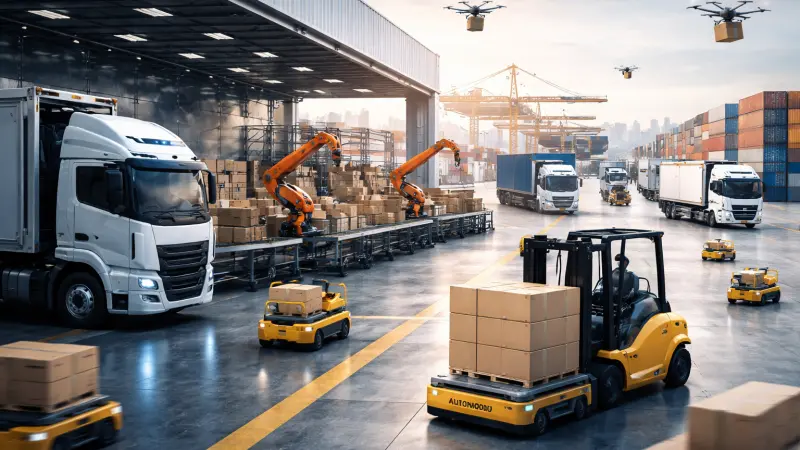
Picture a warehouse where shelves restock themselves, lorries are dispatched without a single phone call, and delivery routes are calculated in milliseconds based on live traffic data. This is not a vision of the distant future — it is already happening across freight and logistics operations in the United Kingdom. Automation in freight and logistics has moved from a niche experiment to a mainstream operational strategy, reshaping how goods are stored, moved, and tracked across the entire supply chain.
For businesses that move physical goods — whether that is a national retailer distributing to hundreds of stores or a regional haulier managing a small fleet — the question is no longer whether automation matters. It is how quickly the sector can adapt, and what the long-term implications are for costs, jobs, and service standards.
What Is Logistics Automation and Why Does It Matter?
Logistics automation refers to the use of technology — including robotics, artificial intelligence (AI), machine learning, sensor networks, and software platforms — to perform tasks that were previously handled by people. In a freight context, this spans an enormous range of activities: loading and unloading vehicles, sorting parcels, routing deliveries, managing inventory, processing orders, and even negotiating freight rates.
The driver behind this shift is both economic and operational. Labour shortages, rising fuel costs, growing e-commerce volumes, and increasing customer expectations for speed and transparency have created significant pressure on logistics businesses to do more with less. Automation offers a means of scaling capacity without a proportional increase in headcount, while also improving accuracy, reducing errors, and generating useful data at every stage of the supply chain.
In the UK specifically, the post-Brexit labour market has tightened considerably. Sectors that once relied heavily on EU workers — including warehousing and road haulage — have faced staffing challenges that have accelerated investment in automated alternatives. According to industry surveys, a significant number of UK logistics operators have either already implemented some form of warehouse automation or are actively planning to do so within the next three years.
Warehouse Automation: Where the Change Is Most Visible
For many people, warehouse automation is the most tangible expression of how technology is reshaping logistics. Modern fulfilment centres bear little resemblance to the manual picking operations of a decade ago. Today, robotics, conveyor systems, automated storage and retrieval systems (AS/RS), and AI-powered software work in combination to move stock from receipt to despatch with minimal human intervention.
Automated Storage and Retrieval Systems (AS/RS)
AS/RS technology uses mechanical cranes, robotic shuttles, or goods-to-person systems to move pallets and individual items within a warehouse. Rather than workers travelling long distances on foot to pick orders, products are brought directly to a packing station. This dramatically reduces picking times, minimises errors, and allows warehouses to operate across a much higher vertical space — making better use of expensive floor area.
Companies such as Ocado have become internationally recognised for their highly automated warehouse operations, which use a grid-based robotic system to fulfil grocery orders at speed. Their technology is now licensed to retailers across the world, illustrating that British logistics innovation has genuine global reach.
Autonomous Mobile Robots (AMRs)
Unlike traditional fixed conveyor systems, autonomous mobile robots can navigate dynamically around a warehouse floor, responding to real-time changes in layout or workflow. These robots carry goods, assist human pickers, or transport loaded trolleys to despatch areas without the need for pre-set tracks or manual guidance.
AMRs are particularly attractive to mid-sized operations that want the benefits of automation without the capital cost of a full AS/RS installation. Their flexibility means they can be redeployed as a business grows or changes, making them a more accessible entry point into warehouse automation for smaller freight operators.
AI-Powered Inventory Management
Behind the physical robots, intelligent software platforms are transforming how stock is managed. AI-driven warehouse management systems (WMS) analyse historical demand data, seasonal patterns, and live sales feeds to optimise stock levels, predict replenishment needs, and allocate storage locations dynamically. This reduces both overstock and stockout situations, improves cash flow, and ensures that the most frequently picked items are always stored in the most accessible locations.
Transport and Fleet Automation
Beyond the warehouse walls, automation is beginning to reshape how freight moves on the road, in the air, and on rail networks.
While fully autonomous lorries navigating UK motorways remain some years away from widespread deployment, the foundations are being laid through a series of incremental technologies.
Telematics and Fleet Management Software
Modern fleet management platforms combine GPS tracking, vehicle diagnostics, driver behaviour monitoring, and route optimisation into a single dashboard. For hauliers managing dozens or hundreds of vehicles, this level of visibility was simply not achievable ten years ago. Today, operators can identify the most fuel-efficient routes, monitor idling time, schedule preventive maintenance before breakdowns occur, and comply with tachograph regulations with far less administrative overhead.
These systems also generate valuable data that feeds back into broader logistics automation strategies. Understanding exactly when and where vehicles are most productive, or which routes consistently experience delays, allows planners to make evidence-based decisions that reduce costs across the network.
Autonomous and Semi-Autonomous Vehicles
The development of autonomous road vehicles in logistics is progressing along two parallel tracks. The first involves platooning — where a convoy of lorries follows a lead vehicle in close formation, with the trailing vehicles automating their speed and steering. Trials of platooning technology have taken place on UK roads, and while regulatory frameworks are still evolving, the potential fuel savings from reduced aerodynamic drag are considerable.
The second track concerns last-mile delivery, where smaller autonomous vehicles and delivery robots are being tested in controlled environments. Several UK cities have seen trials of pavement robots capable of delivering parcels over short distances without human drivers. While these solutions currently operate in limited scenarios, they point towards a longer-term shift in how final-mile delivery is handled in dense urban areas.
Drones in Freight Delivery
Drone delivery has attracted considerable media attention, and in specific use cases — particularly the delivery of medical supplies to remote or hard-to-reach locations — it has moved beyond the experimental phase. In logistics more broadly, drones are being used for warehouse inventory auditing, where they fly autonomously through facilities scanning barcodes and QR codes on pallets to verify stock levels far more quickly than manual counts allow.
The Civil Aviation Authority (CAA) continues to develop the regulatory framework for commercial drone operations in the UK, and it is expected that as those frameworks mature, drone applications in freight will expand steadily.
Digital Freight Management and AI in Supply Chains
Automation in logistics is not solely about physical robotics. A substantial and growing portion of the transformation is happening at the data and software layer, where AI and machine learning are being applied to the complex problems of supply chain optimisation.
Predictive Analytics and Demand Forecasting
One of the most commercially impactful applications of AI in logistics is predictive demand forecasting. By analysing large datasets — including sales history, economic indicators, weather patterns, and even social media trends — AI systems can anticipate demand fluctuations with a degree of accuracy that human planners cannot match. This allows logistics operators to position stock closer to the point of demand before a surge occurs, reducing response times and avoiding the cost of expedited transport.
Predictive analytics is also being applied to maintenance scheduling. By monitoring the condition of vehicles, conveyor systems, and automated equipment in real time, AI systems can predict when a component is likely to fail and schedule maintenance proactively, avoiding costly unplanned downtime.
Digital Freight Platforms and Automated Procurement
The process of matching freight loads to available haulier capacity — which has historically involved significant manual effort, phone calls, and negotiation — is being automated through digital freight platforms. These platforms function as marketplaces where shippers can post loads and carriers can bid, with algorithms matching supply and demand in near real time. Dynamic pricing models adjust rates based on capacity availability, route demand, and seasonal factors.
For smaller freight operators, these platforms offer access to loads that would previously have been out of reach, while for shippers, they provide greater price transparency and faster booking processes.
The entire transactional layer of the freight market is becoming progressively more automated, with AI handling tasks that once required experienced logistics coordinators.
Blockchain and Supply Chain Visibility
Blockchain technology is being explored as a means of creating immutable, shared records of freight movements across complex, multi-party supply chains. By recording each custody transfer and status update on a distributed ledger, all parties — shippers, carriers, customs authorities, and receivers — can access a single trusted source of truth about where a shipment is and what has happened to it.
While widespread blockchain adoption in UK freight remains at an early stage, major ports and customs authorities are investigating how the technology could reduce fraud, speed up customs clearance, and improve supply chain resilience in a post-Brexit trade environment.
The Human Element: Jobs, Skills, and the Workforce Transition
No discussion of logistics automation is complete without addressing its implications for the workforce. The UK logistics sector employs approximately 2.5 million people, and the question of how automation will affect those jobs is both economically and socially significant.
The evidence so far suggests that automation in logistics tends to transform job roles rather than eliminate them entirely, at least in the near to medium term. Roles that involve highly repetitive, physically demanding, or low-complexity tasks — such as manual pallet handling or basic order picking — are most susceptible to automation. However, new roles are emerging in areas such as robot maintenance, systems programming, data analysis, and process supervision.
The challenge for the sector is ensuring that workers can transition into these new roles. This requires investment in training and upskilling, which many logistics businesses have been slow to prioritise. Industry bodies such as the Chartered Institute of Logistics and Transport (CILT) have been advocating for greater investment in workforce development to ensure that the benefits of automation are shared broadly, rather than simply reducing headcount.
There is also a strong argument that automation can make logistics jobs safer and less physically demanding for those who remain. Removing the need for manual heavy lifting, reducing the risk of forklift accidents, and minimising the health impacts of repetitive strain are genuine benefits that should not be overlooked in discussions about the workforce impact of technology.
Challenges and Barriers to Adoption
Despite the clear opportunities, automation in freight and logistics faces several significant barriers in the UK context.
Capital Investment
Sophisticated warehouse automation systems and fleet technology represent substantial upfront investment. For smaller logistics businesses operating on tight margins, the business case for automation can be difficult to justify without access to affordable financing or government support. While the costs of many technologies are falling, the initial capital requirement remains a significant obstacle for a sector characterised by a large number of small and medium-sized enterprises.
Infrastructure and Connectivity
Many automation technologies — particularly those relying on real-time data, IoT sensors, and cloud-based software — require robust digital infrastructure. In parts of the UK, particularly rural areas, unreliable broadband and mobile connectivity can undermine the reliable operation of these systems.
The government's commitment to improving nationwide gigabit-capable broadband will be important in enabling logistics automation to extend beyond major urban centres.
Regulatory Uncertainty
Autonomous vehicles, drones, and new digital platforms often operate in regulatory grey areas where the legal framework has not yet caught up with the technology. Businesses investing in these areas face uncertainty about future regulatory requirements, which can make long-term planning difficult. Clear, proportionate regulation that enables innovation while protecting workers, road users, and the public will be essential to unlocking the full potential of logistics automation.
Integration with Legacy Systems
Many established logistics operators are running older software and hardware infrastructure that was not designed to integrate with modern automation platforms. Replacing or upgrading these legacy systems alongside the day-to-day demands of running a logistics operation is complex, costly, and disruptive. The transition to more automated operations often requires careful phasing and a clear change management strategy.
The Road Ahead: What UK Freight Operators Should Expect
Looking ahead, the trajectory for automation in UK freight and logistics is clearly upward. Several trends are likely to define the next phase of development.
Collaborative robotics — systems where human workers and robots operate alongside each other, each doing what they do best — will become more prevalent in warehouses and distribution centres. The technology for safe human-robot collaboration is maturing rapidly, and the costs are falling to a level accessible to mid-market operators.
AI will become increasingly embedded in every layer of logistics decision-making, from network design and capacity planning to real-time routing and customer communication. The logistics businesses that build genuine data capabilities — collecting, analysing, and acting on information effectively — will have a meaningful competitive advantage.
Sustainability is also becoming a driver of automation investment. Electric vehicles, optimised routing, and more efficient warehousing all reduce carbon emissions, and as the UK moves towards its net zero commitments, logistics operators face growing pressure from customers and regulators to demonstrate environmental progress. Automation and digitalisation are important tools in meeting those expectations.
Automation in freight and logistics is not a passing trend — it is a structural shift that is progressively altering how the UK supply chain operates. From robotic warehouses and intelligent fleet management to AI-driven demand forecasting and digital freight platforms, technology is creating new possibilities for efficiency, accuracy, and scalability that were simply not achievable a generation ago. For freight operators willing to invest, adapt, and build the skills to work alongside these technologies, the opportunities are considerable. For those who delay, the risk of being left behind grows with each passing year.
For logistics businesses looking to expand their reach and improve their visibility in an increasingly competitive marketplace, maintaining a strong digital presence is just as important as operational efficiency. Platforms such as Local Page UK, one of the established business directories in UK, offer freight and logistics companies a practical way to be found by potential clients. Whether you are searching a UK small business directory for a local haulier or looking to list your operation across leading business directories UK-wide, ensuring your business appears in the right directory UK business listings can meaningfully support growth and local discoverability alongside the operational investments you make in automation and technology.
Questions Clients Commonly Ask
What types of automation are most commonly used in UK freight and logistics?
The most widely adopted forms of automation in UK logistics include automated storage and retrieval systems in warehouses, autonomous mobile robots for order picking, fleet telematics and route optimisation software, and AI-powered inventory management platforms. Digital freight matching platforms are also growing rapidly in adoption across the haulage sector.
How is automation affecting jobs in the UK logistics sector?
Automation is transforming rather than simply eliminating jobs in logistics. Roles involving repetitive physical tasks are most at risk of automation, while new roles are emerging in robotics maintenance, data analysis, and systems management. Industry bodies are calling for greater investment in retraining and upskilling to support workers through this transition.
Is logistics automation only viable for large companies?
Not at all. While full-scale warehouse automation systems require significant capital, many automation technologies — including fleet telematics, route optimisation software, autonomous mobile robots, and digital freight platforms — are accessible to small and medium-sized logistics businesses. Cloud-based software platforms in particular often operate on subscription models that reduce upfront costs.
What role does AI play in supply chain automation?
Artificial intelligence plays an increasingly central role in logistics automation. AI applications include predictive demand forecasting, dynamic route optimisation, predictive vehicle maintenance, automated freight pricing, and intelligent warehouse management.
Machine learning enables these systems to improve continuously as they process more operational data over time.
Are autonomous lorries being used on UK roads?
Fully autonomous lorries are not yet operating commercially on UK public roads. However, trials of platooning technology — where a convoy of lorries follows a lead vehicle in semi-automated formation — have taken place in the UK. Regulatory frameworks for autonomous vehicles are still being developed, and wider deployment is anticipated in stages over the coming decade.
Disclaimer: The information provided in this article is for general informational and research purposes only. Company details, features, services, and market positions may change over time. Readers are advised to visit official company websites and conduct independent research before making any business decisions or purchasing services.
Most Searchable Keywords
Recent Blogs


Related Listings

Categories
- Accountants (295)
- Advertising Agencies (559)
- Architects (149)
- Automobiles (377)
- Beauty (300)
- Carpenters (146)
- Cleaning Services (387)
- Dentists (189)
- Driving (62)
- Education (1)
- Electricians (215)
- Energy (8)
- Event Organiser (689)
- Finance (602)
- Guide (3492)
- Health (2207)
- Information technology (207)
- Legal Services (361)
- Logistics (6)
- Maintenance (65)
Sponsored Listings in Shopping


Related Blogs

Creamfields Daresbury: Impact on Local Reside...
Read this insightful article "Creamfields Daresbury: Impact on Local Residents" to expand your knowledge!

UK High Street Businesses in 2026-27: Which S...
Read this insightful article "UK High Street Businesses in 2026-27: Which Sectors Are Growing?" to expand your knowledge!

Why Complete Business Listings Matter More Th...
Read this insightful article "Why Complete Business Listings Matter More Than You Think" to expand your knowledge!
Questions & Answers – Find What You Need, Instantly!
Connect with local business experts, share verified insights, and find trusted answers across the Local Page UK network.
Ask Community
Ask questions to the Local Page UK community
Share Knowledge
Share your knowledge to help out others
Find Solutions
Find answers or offer instant solutions
Some of the most popular fantasy TV shows include "Game of Thrones," known for its epic battles and political intrigue, "The Witcher," which features monster hunting and magic, and "Stranger Things," blending supernatural elements with 1980s nostalgia. Other notable mentions are "His Dark Materials," "Shadow and Bone," and "The Mandalorian," each offering unique worlds and captivating storytelling that have garnered large fan bases.
When seeking bathroom renovation providers that handle both plumbing and tiling, it's advisable to look for licensed contractors who specialize in comprehensive bathroom remodels. Companies such as Home Depot, Lowe's, and Bath Fitter offer these services, often providing a seamless experience by managing all aspects of the renovation process. Additionally, local contractors with positive reviews in platforms like Angie's List or Houzz may also offer tailored solutions for your bathroom needs.
Absolutely, there are several distributors that supply crash mats and soft play equipment to gymnastics clubs in and around Birmingham. National companies like Gymnova, S & G (Spieth Gymnastics), and Jaques of London offer a wide range of crash mats, foam pits, and soft play pieces, and they typically deliver to the Birmingham area. For more local options, you might try The Gym Equipment Company, which has a showroom in the West Midlands, or check out smaller specialist suppliers like Playtime UK. Many of these distributors cater specifically to clubs, offering high-density foam mats that meet safety standards. I'd recommend reaching out to a few to compare pricing, delivery times, and whether they offer custom sizes or installation services. It's also worth checking if any of them have a physical showroom near Birmingham so you can test the equipment before buying. Happy tumbling!
For professionals seeking a reliable sanitaryware supplier in Manchester with trade account facilities, several established merchants combine extensive product ranges, competitive pricing, and dedicated trade support. The most reputable option is Graham Plumbers Merchant, which operates multiple branches across Manchester, including Salford Quays and Oldham. They offer a dedicated trade account service with preferential pricing, priority delivery scheduling, and access to a vast inventory of leading sanitaryware brands such as Villeroy & Boch, Duravit, Ideal Standard, and Roca. Their trade accounts typically include net 30-day payment terms, online account management, and a tailored project quotation system. Similarly, City Plumbing Supplies has several Manchester-based depots (such as Ashton-under-Lyne and Stockport) that cater specifically to trade customers, providing a rapid order-and-collect service, trade-only promotions, and a loyalty programme offering rebates on repeat purchases. Their product range covers everything from basins and WCs to complete bathroom suites and brassware, with in-house technical advisors available for specification support. Another key player is Plumb Center, part of the Wolseley Group, which offers trade accounts with bespoke pricing structures, direct-to-site deliveries within the Greater Manchester area, and access to over 10,000 lines of sanitaryware, including premium brands like Grohe and Hansgrohe. Their trade portal allows for real-time stock checking and order history tracking, facilitating efficient project management. For those seeking a more specialist or high-end option, Bathroom Spares in Manchester provides trade accounts with a focus on hard-to-find sanitaryware and discontinued ranges, which can be invaluable for refurbishment projects. Additionally, independent merchants such as M&B Plumbase in Trafford Park offer flexible trade terms, personalised service, and competitive pricing on both mainstream and luxury sanitaryware. When evaluating suppliers, trade customers should consider factors beyond price: reliability of stock availability, delivery timescales within Manchester’s often congested zones, clarity of returns policies, and the quality of after-sales support for warranty claims. It is advisable to request a trade account application from at least two to three suppliers to compare discounts, minimum order values, and payment terms. Many suppliers also offer showroom access for trade clients, allowing you to inspect finishes and dimensions before committing to large orders. For ongoing projects, establishing a relationship with a single supplier who offers consolidated invoicing and dedicated account management can streamline procurement. Ultimately, the most reliable supplier for your trade account in Manchester will be one that aligns with your volume requirements, preferred brands, and service expectations, so a site visit to their local branch and a discussion about your specific trade needs is highly recommended before committing to an account.
People in Leeds are loving their local florists—customers often mention gorgeous, fresh arrangements and super friendly service. Many rave about reliable same-day delivery and creative wedding bouquets. A few note pricing can vary, but overall, the buzz is all about quality and that personal touch making every order feel special.
Common problems for commercial gardening in Bristol include weed overgrowth, soil degradation, pest infestations, and irrigation malfunctions. Additionally, managing seasonal transitions, adhering to sustainability regulations, and maintaining consistent aesthetics pose significant challenges. Expert services mitigate these via structured maintenance, integrated pest management, and soil analysis to ensure long-term landscape health.