
The Growth of E Commerce and Its Influence on Freight Shipping
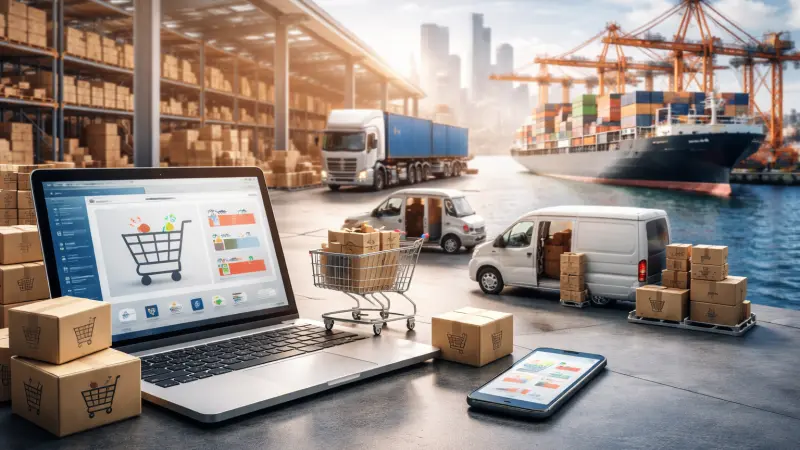
What happens to the logistics industry when millions of people decide they would rather shop from their sofas than visit the high street? The answer, unfolding over the past decade and accelerating dramatically since 2020, is a fundamental transformation of freight shipping in the United Kingdom. The growth of e-commerce has not merely increased parcel volumes — it has redefined how goods move, where warehouses are built, how carriers operate, and what customers expect from delivery services.
E-commerce freight shipping in the UK is no longer a secondary consideration for retailers. It has become the central nervous system of online retail, touching every stage from order placement to doorstep delivery. Understanding this evolution is essential for businesses, logistics professionals, and anyone seeking to make sense of the modern supply chain.
The Scale of E-Commerce Growth in the UK
The United Kingdom is one of the most mature and active e-commerce markets in the world. According to industry data, the UK consistently ranks among the top three countries globally for online retail penetration relative to total retail sales. The shift was already well underway before the COVID-19 pandemic, but the disruptions of 2020 and 2021 compressed years of gradual adoption into a matter of months.
Consumers who had never previously ordered groceries, clothing, or household goods online suddenly found themselves doing so out of necessity. Many of those habits stuck. Post-pandemic, online retail as a share of total UK retail has remained significantly elevated compared to pre-2020 levels, with sectors such as fashion, electronics, health and beauty, and home furnishings experiencing particularly strong online demand.
This sustained growth has placed extraordinary pressure on freight and logistics networks. The number of parcels processed annually in the UK now runs into the billions, and peak trading periods such as Black Friday, Cyber Monday, and the Christmas season place acute strain on carrier capacity, sorting facilities, and delivery fleets.
How E-Commerce Has Changed Freight Shipping Demand
From Bulk to Individual: The Shift in Shipment Profiles
Traditional freight shipping was largely built around bulk consignments — pallets of goods moving from manufacturer to distributor to retailer. E-commerce has inverted much of this logic. Instead of a single large shipment going to one destination, logistics providers now manage thousands of individual parcels, each heading to a different address, often within a tight delivery window.
This shift has necessitated an entirely new infrastructure. Parcel sortation hubs have grown in number and scale. Automated conveyor and scanning systems have become standard. Carrier networks have expanded their local delivery capacity, and the role of the final mile — the last leg of a journey from distribution centre to customer — has become the most critical and costly part of the entire process.
The Rise of Last-Mile Delivery
Last-mile delivery is, without question, the defining challenge of e-commerce logistics. It accounts for a disproportionate share of total shipping costs — industry estimates typically place it at 40 to 53 per cent of the overall delivery expense — yet it is also the part of the journey most visible to the customer and most subject to their scrutiny.
Delivering to residential addresses introduces complications that bulk freight largely avoids: recipients who are not at home, narrow urban streets, parking restrictions, and the logistical overhead of managing hundreds of individual stops per driver per day. Carriers in the UK have responded with a range of strategies:
- Parcel lockers and click-and-collect points: Networks of secure parcel boxes in supermarkets, petrol stations, and other convenient locations allow recipients to collect parcels at a time that suits them, reducing failed delivery attempts.
- Neighbour and safe-place delivery: Authorised alternatives to direct handover reduce the cost and carbon footprint of re-delivery attempts.
- Delivery windows and real-time tracking: Giving customers greater visibility and control over when and where their parcel arrives has improved first-attempt success rates considerably.
- Crowdsourced and gig-economy delivery: Platforms employing independent couriers have expanded carrier capacity during peak periods, though they have also raised questions around employment rights and service consistency.
Same-Day and Next-Day Expectations
Consumer expectations around delivery speed have escalated rapidly. What was once considered an impressive service — next-day delivery — is now a baseline expectation for many online shoppers.
Major retailers and marketplaces operating in the UK have invested heavily in fulfilment networks designed to guarantee next-day or even same-day delivery in large parts of the country.
For freight carriers, this means operating under much tighter cut-off times, maintaining larger fleets with more flexible routing, and positioning inventory closer to population centres. The pressure to meet these expectations has driven significant capital investment across the logistics sector, from automated picking systems in warehouses to sophisticated route-optimisation software for last-mile fleets.
Warehousing and Fulfilment: Infrastructure Under Pressure
The growth of e-commerce freight shipping has triggered a warehouse construction boom across the UK. Demand for large-scale distribution centres — particularly those with high levels of automation — has outpaced supply in many regions, pushing rental prices for industrial and logistics space to record levels in locations such as the Midlands, the South East, and parts of the North West.
The geography of warehousing has shifted too. Proximity to motorway networks, rail freight terminals, and major population centres has become paramount. The so-called "golden triangle" of logistics — roughly the area bounded by the M1, M6, and M69 motorways — has attracted a disproportionate share of new distribution centre investment owing to its ability to reach a large proportion of the UK population within a single working day.
Automation in the Warehouse
To handle the sheer volume and complexity of e-commerce fulfilment, logistics operators have turned increasingly to automation. Robotic picking systems, automated guided vehicles, conveyor networks, and AI-driven inventory management software are now common features of the largest and most advanced distribution centres.
These technologies offer compelling advantages: higher throughput, reduced error rates, lower dependency on manual labour, and the ability to operate around the clock during peak periods. However, the capital cost of implementation is significant, and the transition raises important questions around workforce planning and reskilling that the logistics sector is still actively grappling with.
Micro-Fulfilment and Urban Logistics
For retailers competing on delivery speed in densely populated cities, macro-scale distribution centres on the urban periphery are sometimes insufficient. Micro-fulfilment centres — smaller facilities positioned within or very close to city centres — have emerged as a solution for ultra-fast delivery propositions.
These sites, which may occupy former retail units, basement spaces, or purpose-built urban logistics hubs, hold a curated selection of fast-moving goods and enable delivery times measured in hours rather than days. They represent a significant departure from conventional freight logistics and signal a continuing blurring of the boundary between retail and logistics.
Cross-Border E-Commerce and International Freight
E-commerce has also internationalised freight flows in ways that would have been difficult to anticipate two decades ago. British consumers routinely purchase goods from sellers in Europe, Asia, and North America, while UK-based retailers sell to customers across the globe. This cross-border activity creates both opportunities and challenges for freight carriers.
Post-Brexit Complexity
The UK's departure from the European Union introduced a new layer of customs administration to cross-border e-commerce between the UK and EU member states. Where goods once moved freely across borders with minimal documentation, they now require customs declarations, import duty assessments, and compliance with import VAT rules on both sides.
For small and medium-sized retailers, these requirements have added cost and administrative burden. Some businesses initially saw a decline in EU-to-UK or UK-to-EU parcel volumes as both consumers and sellers navigated the new requirements.
Over time, however, adaptation has occurred: specialist customs brokers, improved carrier software, and clearer HMRC guidance have helped to smooth cross-border freight flows, though friction remains higher than in the pre-Brexit era.
The Growth of Asian Marketplace Sellers
A notable feature of the current UK e-commerce landscape is the significant presence of sellers based in China and other parts of Asia, operating through platforms such as Amazon, eBay, and newer entrants. These sellers have developed sophisticated logistics operations capable of delivering goods to UK consumers at competitive prices, often using a combination of consolidated air freight, bonded warehouses, and domestic last-mile carriers.
This international dimension of e-commerce freight shipping adds further complexity to an already intricate logistics ecosystem, and it has prompted debate around customs compliance, product safety standards, and the competitive dynamics of the UK retail market.
Sustainability and Green Freight
As e-commerce freight volumes have grown, so too has scrutiny of the environmental impact of all that movement. Delivery vans circulating through residential streets, aircraft carrying air-freighted parcels, and the packaging waste generated by online orders have all attracted attention from regulators, consumers, and the logistics industry itself.
Electrification of Delivery Fleets
The electrification of last-mile delivery vehicles is perhaps the most visible sustainability initiative currently underway across the UK logistics sector. Major parcel carriers have committed to transitioning significant portions of their fleets to electric vehicles, supported by investments in charging infrastructure at depots. Cities including London, Birmingham, and Manchester have introduced or are planning clean air zones that create financial incentives — or outright requirements — for the use of zero-emission delivery vehicles.
The transition is not without challenges. Range limitations, charging time, the upfront cost of electric commercial vehicles, and the pace of charging infrastructure development all present practical obstacles. Nevertheless, the direction of travel is clear, and the electrification of freight delivery is expected to accelerate considerably over the coming decade.
Packaging Reduction and the Circular Economy
Online retail has historically been associated with excessive packaging — oversized boxes, excessive void fill, and multiple layers of protective material. Growing consumer awareness and regulatory pressure have begun to shift this. Retailers and carriers are increasingly investing in right-sized packaging systems, compostable and recycled materials, and returnable packaging schemes for certain product categories.
The circular economy also intersects with e-commerce freight through reverse logistics — the management of product returns. Online retail generates significantly higher return rates than in-store purchasing, particularly in categories such as fashion and footwear. Processing, inspecting, and restocking or disposing of returned goods creates a parallel logistics flow that adds cost and complexity, and which the industry continues to work to optimise.
Technology Driving the Future of E-Commerce Freight
Artificial Intelligence and Predictive Logistics
Artificial intelligence is increasingly embedded in the logistics operations that underpin e-commerce freight shipping. Machine learning algorithms analyse historical order data, weather patterns, traffic conditions, and carrier performance to optimise routing decisions, predict demand surges, and allocate capacity more efficiently.
These tools enable carriers and retailers to anticipate problems before they occur and respond to disruptions with greater agility.
Drone and Autonomous Vehicle Delivery
While still in relatively early stages of commercial deployment, drone delivery and autonomous ground vehicles represent potential long-term shifts in how the last mile is served. Regulatory frameworks in the UK are evolving to accommodate these technologies, and several pilot programmes have tested drone delivery in rural and suburban settings. The economics and scalability of these approaches remain subjects of active development, but their potential to reduce the cost and carbon footprint of last-mile delivery is significant.
Real-Time Visibility and Customer Communication
One of the most impactful technological developments in e-commerce freight has been the democratisation of real-time parcel tracking. Customers now expect to know precisely where their order is at every stage of its journey, and carriers that cannot provide this level of visibility are at a competitive disadvantage. Integration between retailer order management systems, carrier platforms, and consumer-facing apps has improved enormously, and push notifications, live tracking maps, and proactive exception alerts have become standard features.
Challenges Facing UK Freight Carriers
Despite the opportunities presented by e-commerce growth, UK freight carriers face a range of serious and ongoing challenges:
- Driver shortages: The HGV driver shortage that came to widespread public attention in 2021 has eased somewhat but has not been fully resolved. An ageing driver workforce, the cost and time involved in obtaining HGV licences, and competition from other sectors for workers continue to constrain carrier capacity.
- Fuel and operating cost inflation: Rising diesel prices, increased vehicle insurance costs, and higher wage expectations have squeezed margins for carriers at a time when pricing pressure from large retail clients remains intense.
- Infrastructure strain: Road congestion in and around major urban centres adds time and cost to delivery operations. Investment in road, rail, and logistics infrastructure has not always kept pace with the demands placed upon it by e-commerce growth.
- Regulatory complexity: From clean air zones and low-emission vehicle mandates to changes in customs procedures and employment law affecting gig-economy delivery workers, freight carriers must navigate an increasingly complex regulatory environment.
The Broader Economic Significance of E-Commerce Freight
The freight and logistics sector is a vital component of the UK economy, employing hundreds of thousands of people in roles ranging from warehouse operatives and HGV drivers to software engineers and supply chain analysts. The growth of e-commerce has amplified the sector's economic importance, creating demand for new skills, new facilities, and new forms of service delivery.
For smaller businesses seeking to compete with larger retailers online, access to reliable and cost-effective freight shipping is often a decisive factor. Third-party logistics providers, fulfilment-as-a-service platforms, and carrier aggregator tools have made it easier for SMEs to access competitive shipping rates and professional logistics capabilities without the need to build their own infrastructure.
Businesses looking to strengthen their digital presence alongside their logistics capability may also find value in platforms that improve their visibility to customers searching online. Resources such as online business directory UK platforms can help companies across the freight, retail, and logistics sectors ensure they are discoverable by the right audiences — whether those are B2B clients, local customers, or sector-specific buyers. For businesses in sectors as competitive as freight and logistics, appearing in reputable business directories in uk can form a useful part of a broader strategy for building credibility and generating enquiries. Local Page UK is one such platform, supporting businesses seeking improved local and sector-specific visibility through established UK business directory websites and related online tools.
Questions Clients Commonly Ask
How has e-commerce affected freight shipping volumes in the UK?
E-commerce has driven a dramatic increase in parcel volumes across the UK, with billions of individual consignments now processed annually. The shift from bulk B2B freight to high-frequency individual deliveries has required carriers to invest heavily in sortation technology, driver capacity, and last-mile infrastructure. Peak trading periods such as Black Friday generate extraordinary spikes in demand that test the limits of carrier networks.
What is last-mile delivery, and why is it so important for e-commerce logistics?
Last-mile delivery refers to the final stage of a parcel's journey — from the local distribution centre or depot to the customer's address. It is the most complex and expensive part of the delivery process, typically accounting for more than 40 per cent of total shipping costs. For e-commerce businesses, last-mile performance directly affects customer satisfaction, repeat purchase behaviour, and brand reputation, making it a critical area of investment and operational focus.
How has Brexit affected cross-border e-commerce freight between the UK and EU?
Brexit introduced customs declarations, import duty requirements, and VAT obligations for goods moving between the UK and EU member states. This increased administrative complexity and cost for both retailers and carriers, and initially led to some reduction in cross-border parcel flows. While the industry has adapted considerably, cross-border e-commerce freight between the UK and EU remains more complex and costly than it was before the UK's departure from the single market.
What are UK freight carriers doing to reduce their environmental impact?
UK freight carriers are pursuing a range of sustainability initiatives, including transitioning delivery fleets to electric vehicles, optimising delivery routes to reduce mileage, investing in right-sized and recycled packaging, and developing carbon offset programmes.
Regulatory pressure from clean air zones in major cities is also accelerating the shift to zero-emission last-mile delivery vehicles. Reverse logistics — the efficient management of product returns — is another area where sustainability improvements are being actively pursued.
What does the future of e-commerce freight shipping look like in the UK?
The future of UK e-commerce freight is likely to be shaped by continued growth in online retail volumes, further automation in warehousing and sorting, the expansion of electric delivery fleets, the gradual introduction of drone and autonomous vehicle delivery in suitable geographies, and greater use of AI-driven logistics optimisation. Consumer expectations around speed, transparency, and sustainability will continue to raise the bar for carriers and retailers alike, driving ongoing innovation across the entire supply chain.
Disclaimer: The information provided in this article is for general informational and research purposes only. Company details, features, services, and market positions may change over time. Readers are advised to visit official company websites and conduct independent research before making any business decisions or purchasing services.
Most Searchable Keywords
Recent Blogs


Related Listings

Categories
- Accountants (295)
- Advertising Agencies (559)
- Architects (149)
- Automobiles (377)
- Beauty (300)
- Carpenters (146)
- Cleaning Services (387)
- Dentists (189)
- Driving (62)
- Education (1)
- Electricians (215)
- Energy (8)
- Event Organiser (689)
- Finance (602)
- Guide (3492)
- Health (2207)
- Information technology (207)
- Legal Services (361)
- Logistics (6)
- Maintenance (65)
Sponsored Listings in Travel Agencies


Related Blogs

Creamfields Daresbury: Impact on Local Reside...
Read this insightful article "Creamfields Daresbury: Impact on Local Residents" to expand your knowledge!
UK High Street Businesses in 2026-27: Which S...
Read this insightful article "UK High Street Businesses in 2026-27: Which Sectors Are Growing?" to expand your knowledge!

Why Complete Business Listings Matter More Th...
Read this insightful article "Why Complete Business Listings Matter More Than You Think" to expand your knowledge!
Questions & Answers – Find What You Need, Instantly!
Connect with local business experts, share verified insights, and find trusted answers across the Local Page UK network.
Ask Community
Ask questions to the Local Page UK community
Share Knowledge
Share your knowledge to help out others
Find Solutions
Find answers or offer instant solutions
Some of the most popular fantasy TV shows include "Game of Thrones," known for its epic battles and political intrigue, "The Witcher," which features monster hunting and magic, and "Stranger Things," blending supernatural elements with 1980s nostalgia. Other notable mentions are "His Dark Materials," "Shadow and Bone," and "The Mandalorian," each offering unique worlds and captivating storytelling that have garnered large fan bases.
When seeking bathroom renovation providers that handle both plumbing and tiling, it's advisable to look for licensed contractors who specialize in comprehensive bathroom remodels. Companies such as Home Depot, Lowe's, and Bath Fitter offer these services, often providing a seamless experience by managing all aspects of the renovation process. Additionally, local contractors with positive reviews in platforms like Angie's List or Houzz may also offer tailored solutions for your bathroom needs.
Absolutely, there are several distributors that supply crash mats and soft play equipment to gymnastics clubs in and around Birmingham. National companies like Gymnova, S & G (Spieth Gymnastics), and Jaques of London offer a wide range of crash mats, foam pits, and soft play pieces, and they typically deliver to the Birmingham area. For more local options, you might try The Gym Equipment Company, which has a showroom in the West Midlands, or check out smaller specialist suppliers like Playtime UK. Many of these distributors cater specifically to clubs, offering high-density foam mats that meet safety standards. I'd recommend reaching out to a few to compare pricing, delivery times, and whether they offer custom sizes or installation services. It's also worth checking if any of them have a physical showroom near Birmingham so you can test the equipment before buying. Happy tumbling!
For professionals seeking a reliable sanitaryware supplier in Manchester with trade account facilities, several established merchants combine extensive product ranges, competitive pricing, and dedicated trade support. The most reputable option is Graham Plumbers Merchant, which operates multiple branches across Manchester, including Salford Quays and Oldham. They offer a dedicated trade account service with preferential pricing, priority delivery scheduling, and access to a vast inventory of leading sanitaryware brands such as Villeroy & Boch, Duravit, Ideal Standard, and Roca. Their trade accounts typically include net 30-day payment terms, online account management, and a tailored project quotation system. Similarly, City Plumbing Supplies has several Manchester-based depots (such as Ashton-under-Lyne and Stockport) that cater specifically to trade customers, providing a rapid order-and-collect service, trade-only promotions, and a loyalty programme offering rebates on repeat purchases. Their product range covers everything from basins and WCs to complete bathroom suites and brassware, with in-house technical advisors available for specification support. Another key player is Plumb Center, part of the Wolseley Group, which offers trade accounts with bespoke pricing structures, direct-to-site deliveries within the Greater Manchester area, and access to over 10,000 lines of sanitaryware, including premium brands like Grohe and Hansgrohe. Their trade portal allows for real-time stock checking and order history tracking, facilitating efficient project management. For those seeking a more specialist or high-end option, Bathroom Spares in Manchester provides trade accounts with a focus on hard-to-find sanitaryware and discontinued ranges, which can be invaluable for refurbishment projects. Additionally, independent merchants such as M&B Plumbase in Trafford Park offer flexible trade terms, personalised service, and competitive pricing on both mainstream and luxury sanitaryware. When evaluating suppliers, trade customers should consider factors beyond price: reliability of stock availability, delivery timescales within Manchester’s often congested zones, clarity of returns policies, and the quality of after-sales support for warranty claims. It is advisable to request a trade account application from at least two to three suppliers to compare discounts, minimum order values, and payment terms. Many suppliers also offer showroom access for trade clients, allowing you to inspect finishes and dimensions before committing to large orders. For ongoing projects, establishing a relationship with a single supplier who offers consolidated invoicing and dedicated account management can streamline procurement. Ultimately, the most reliable supplier for your trade account in Manchester will be one that aligns with your volume requirements, preferred brands, and service expectations, so a site visit to their local branch and a discussion about your specific trade needs is highly recommended before committing to an account.
People in Leeds are loving their local florists—customers often mention gorgeous, fresh arrangements and super friendly service. Many rave about reliable same-day delivery and creative wedding bouquets. A few note pricing can vary, but overall, the buzz is all about quality and that personal touch making every order feel special.
Common problems for commercial gardening in Bristol include weed overgrowth, soil degradation, pest infestations, and irrigation malfunctions. Additionally, managing seasonal transitions, adhering to sustainability regulations, and maintaining consistent aesthetics pose significant challenges. Expert services mitigate these via structured maintenance, integrated pest management, and soil analysis to ensure long-term landscape health.