
The History of Shipping Containers From Wooden Boxes to Global Trade
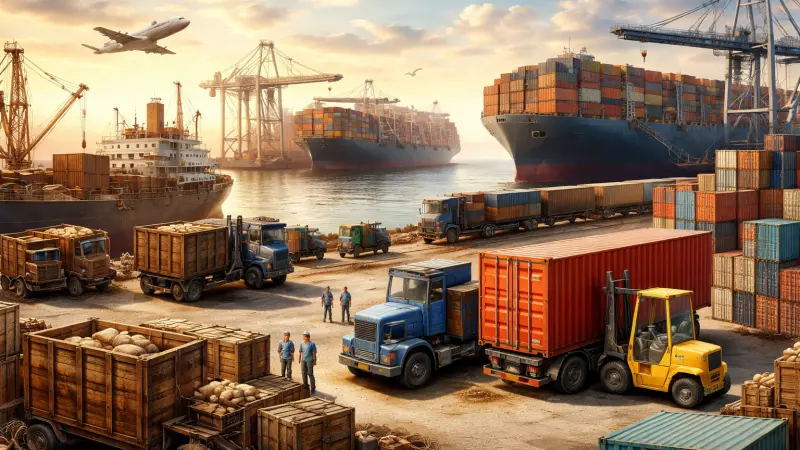
What single invention has done more for global commerce than any trade agreement of the past century? According to leading economists, the answer is the humble shipping container — a steel box so deceptively simple that it is easy to overlook the extraordinary transformation it brought about. From cramped British coal barges in the 1760s to the vast container vessels you see docked at Felixstowe or Southampton today, the history of the shipping container is the history of how the modern world was built.
For UK businesses — whether you are a manufacturer exporting goods, a freight forwarder managing supply chains, or a logistics contractor working at one of Britain's major ports — understanding the origins and evolution of the intermodal container helps explain why today's global trade infrastructure operates the way it does. This comprehensive guide traces the full history of shipping containers, from their earliest predecessors to the International Organisation for Standardisation (ISO) regulations that now govern the industry worldwide.
Before the Container: Break Bulk Cargo and the Burden of Manual Labour
To appreciate the significance of the shipping container, it is first necessary to understand the system it replaced. For centuries, goods moved around the world as break bulk cargo — a term describing individual items or packages that were loaded and unloaded one piece at a time. Barrels, sacks, crates, and loose goods would be transported by cart from factory or warehouse to a port, where teams of dockworkers, known in Britain as stevedores, would haul each item on board a vessel by hand.
This process was not only physically exhausting but also extremely time-consuming and costly. Ships could spend as long in port being loaded and unloaded as they did at sea. Cargo was frequently damaged during handling, pilferage was rampant, and the sheer complexity of managing hundreds of different consignments aboard a single vessel created endless administrative headaches. The system was, in short, a bottleneck that placed a hard ceiling on how efficiently goods could move around the world.
Across Britain, the growth of the canal network during the 18th century placed pressure on freight operators to find smarter ways of moving goods between waterways, mines, and industrial centres. It was in this context that the earliest precursor to the modern shipping container appeared.
The Earliest Origins: James Brindley's Starvationer (1766)
The first documented use of a container in freight transport dates to 1766, when English engineer and canal builder James Brindley devised a wooden box he called the Starvationer. Constructed from ten simple wooden containers, the Starvationer was designed for a very specific purpose: to carry coal from a quarry near Worsley, Greater Manchester, to the Bridgewater Canal.
By placing coal into fixed wooden containers that could be lifted directly from the mine carts and transferred to barges without the need to unload and reload the coal itself, Brindley demonstrated a principle that would come to define modern logistics — that the container, not the cargo within it, should be the unit that moves through the supply chain.
Although the Starvationer was rudimentary by any modern standard, its conceptual importance is profound. For the first time, a freight operator had recognised that separating the cargo vessel from the cargo-carrying unit could radically reduce the time and labour involved in transhipment. It was a prototype of intermodalism centuries before the term was coined.
The 20th Century: Demountable Bodies and the Push for Standardisation
Benjamin Franklin Fitch and the Demountable Body (1917)
The next significant milestone in shipping container history came more than a century later. In May 1917, American inventor Benjamin Franklin Fitch, based in Cincinnati, Ohio, designed what he termed demountable bodies — freight containers that could be detached from a road vehicle and transferred onto a railway flatcar without disturbing their contents.
This innovation addressed a critical inefficiency in the freight network: the cost and time of transferring goods between road and rail. By 1919, Fitch's system had expanded to more than 21 railway stations and 14 freight trucks — a remarkable uptake in just two years. The concept spread across Europe during and after the First World War, as governments and logistics operators sought ways to move military supplies and civilian goods more efficiently.
Post-War Standardisation Efforts
Following the First World War, international bodies — including the forerunner organisations of what would become the United Nations — recognised that the proliferation of incompatible container designs was creating its own set of inefficiencies. Containers of different sizes could not be stacked together, transferred between different operators' equipment, or carried on the same vessels without significant adaptation. The push for a standardised system began in earnest.
In 1947, the United States Transportation Corps developed a container it called the Transporter — a rigid, corrugated steel box with a carrying capacity of 9,000 lb (approximately 4,082 kg). Whilst the dimensions were not yet aligned to what the international community would later agree upon, the Transporter established several principles that endure to this day:
1947 Transporter — Key Specifications
- Constructed from corrugated steel for strength and rigidity
- Double doors fitted at one end to facilitate loading and unloading
- Mounted skids for ground clearance and forklift access
- Fitted lifting rings for crane transfer between transport modes
- Maximum carrying capacity of 9,000 lb (approx. 4,082 kg)
- Standardised external dimensions to allow consistent stacking
The Transporter demonstrated to the logistics industry that a well-engineered steel container could withstand the rigours of multi-modal freight transport — by road, rail, and sea — without requiring special handling for each stage of the journey. It was the most sophisticated prototype the industry had yet seen, and it laid the foundations for the revolution that Malcolm McLean would trigger a decade later.
Malcolm McLean: The Man Who Transformed Global Freight
Early Life and the Growth of a Trucking Empire
No account of shipping container history is complete without a thorough examination of Malcolm McLean (1914–2001), the North Carolina-born entrepreneur widely credited as the father of the modern intermodal container. McLean's journey from a small-town school leaver to a figure who fundamentally reshaped world trade is one of the most compelling stories in the history of commerce.
After leaving school, McLean worked a series of manual jobs, saving meticulously until he could afford a second-hand lorry. In 1934, he founded what would become McLean Trucking — a road haulage business that grew, through a combination of shrewd management and relentless reinvestment, to become one of the five largest trucking companies in the United States. By the early 1950s, McLean Trucking operated more than 1,750 lorries and ran operations across 37 transport terminals throughout the country.
The Observation That Changed Everything
The seed of McLean's revolution was planted in 1937, when, waiting at a port in New Jersey for his lorry to be unloaded onto a cargo vessel, he watched in frustration as dockworkers laboriously moved individual items of cargo from vehicle to quayside and then from quayside to ship. The process took hours. Most of that time, McLean's lorry — and his driver — sat idle, generating no revenue.
McLean found himself asking a simple but radical question: why unload the cargo at all? Why not simply lift the entire container — or at least the trailer body — directly from the lorry onto the ship?
The answer, he realised, lay in standardisation. If every trailer were built to the same dimensions and fitted with universal locking mechanisms, the entire process of loading and unloading could be mechanised, reducing port turnaround times from days to hours.
It would take him nearly two decades to act on that insight, but when he did, the impact was immediate and irreversible.
The Birth of the Modern Intermodal Container (1955–1956)
McLean and Tantlinger: Engineering the Revolution
In 1955, McLean — having sold his trucking business and taken out a bank loan of $42 million — acquired a shipping company called the Pan-Atlantic Steamship Company, paying $7 million of the loan for the purchase. Pan-Atlantic already held docking rights at numerous US port cities, giving McLean an immediate operational base.
He then engaged Keith Tantlinger, one of the leading structural engineers of the day, to help him design a container that could meet the demands of modern intermodal freight. Together, they developed a unit built from corrugated steel that was strong enough to be stacked multiple units high, secure enough to withstand the motion and moisture of ocean voyages, and fitted with a patented twist-lock corner casting mechanism that allowed containers to be locked to one another and to the deck of a vessel without additional lashing equipment.
Crucially, once the design was proven, McLean and Tantlinger donated the patent to the industry rather than exploiting it commercially. This act of unusual generosity is one of the reasons the intermodal container system spread so rapidly — no single company owned the standard, so every operator could adopt it freely.
The Ideal X: The First Container Voyage
To test his system, McLean purchased and adapted an oil tanker called the Ideal X, modifying it to carry 58 specially designed containers on its deck whilst retaining capacity for 15,000 tons of liquid cargo below. On 26 April 1956, the Ideal X departed Port Newark, New Jersey, bound for Houston, Texas — and the modern era of container shipping began.
The results were striking. Whereas conventional break bulk loading cost approximately $5.83 per ton of cargo, McLean's containerised system reduced that figure to just $0.16 per ton. The time required to load and unload a vessel fell from several days to a matter of hours. The economics of global trade had been fundamentally and permanently altered.
The Spread of Containerisation and the ISO Standards
From Innovation to International Norm
Following the success of the Ideal X, McLean continued to refine the system. An early experiment with a roll-on, roll-off approach — in which entire trailers were driven onto vessels — proved impractical because of the wasted deck space involved when only the lower portion of each trailer (the chassis) was required at sea. McLean reverted to lifting the container body alone, leaving the chassis behind at the port, and this became the model that the rest of the world adopted.
Adoption spread rapidly through the 1960s. The Port of Tilbury in Essex became one of the United Kingdom's first dedicated container terminals when it opened in 1967, followed swiftly by the development of Felixstowe — now the UK's busiest container port — and the transformation of Southampton and other major British ports. The UK logistics industry adapted quickly, recognising that containerisation offered a structural reduction in costs that break bulk methods could not match.
ISO Regulations: Creating a Universal Language for Freight
As containerisation spread globally, it became clear that without an international regulatory framework, operators in different countries would inevitably develop incompatible standards. The International Organisation for Standardisation (ISO) stepped in with a series of regulations that created the unified global system we rely upon today.
| Date | ISO Standard | What It Established |
|---|---|---|
| January 1968 | ISO 668 | Standardised terminology, external dimensions, and weight ratings for freight containers |
| July 1968 | ISO R-790 | Established mandatory identification markings for all international containers |
| January 1970 | ISO R-1161 | Set recommendations governing the design and placement of corner fittings |
| October 1970 | ISO R-1897 | Defined minimum internal dimensions for general-purpose freight containers |
These four standards — agreed upon and adopted by member nations including the United Kingdom — created a truly interoperable global system. A container loaded in Birmingham could be sealed, transported by lorry to Felixstowe, transferred by crane to a vessel, shipped to Shanghai, unloaded by a Chinese gantry crane, and placed on a Chinese flatbed lorry — all without a single pallet being touched or the seal being broken. This is the essence of intermodalism, and the ISO standards are what make it possible.
The Economic Impact of Containerisation on Global Trade
The economic significance of the shipping container is difficult to overstate. Economists who have studied the relationship between containerisation and trade growth have consistently found that the adoption of the intermodal container did more to stimulate international commerce than any trade treaty or tariff reduction of the 20th century.
By dramatically reducing the cost of transporting goods across borders, the container made it economically viable to manufacture products in countries with lower labour costs and sell them in higher-income markets. It is no exaggeration to say that the container system was a key enabler of the globalisation of manufacturing that reshaped the world economy from the 1970s onwards.
For the United Kingdom specifically, containerisation transformed the country's ports and logistics infrastructure. Cities such as Liverpool, which had depended on huge workforces of dockworkers, saw the nature of port employment change dramatically. Whilst the human cost of that transition was significant, the long-term gains in trade efficiency have been substantial. Today, UK ports handle approximately 500 million tonnes of freight per year, the vast majority of which moves within intermodal containers.
Environmental Considerations in the Modern Era
As the shipping container industry has matured, attention has increasingly turned to its environmental footprint. Container shipping is estimated to account for approximately 2.5 per cent of global greenhouse gas emissions — a figure that has prompted the International Maritime Organisation (IMO) to set ambitious decarbonisation targets for the sector. Innovations such as low-sulphur fuels, wind-assisted propulsion, and the development of hydrogen-powered vessels are now shaping the next chapter of shipping container history.
Within the UK, the government's commitment to net zero by 2050 has prompted significant investment in green port infrastructure, including shore power systems that allow vessels docked at British ports to switch off their engines and draw electricity from the national grid — reducing both emissions and noise pollution in port communities.
The Shipping Container in the 21st Century
As of today, containerisation underpins an estimated 90 per cent of global non-bulk cargo. The world's container fleet comprises millions of units, generating an estimated 300 million individual container journeys each year. The largest container vessels now in service — known as ultra-large container vessels (ULCVs) — can carry more than 24,000 TEUs (twenty-foot equivalent units), a far cry from the 58 containers that the Ideal X carried on its maiden voyage in 1956.
Beyond their primary purpose in freight transport, shipping containers have found a remarkable second life in construction, architecture, and temporary accommodation. In the United Kingdom and across Europe, surplus
containers have been repurposed as pop-up retail units, office spaces, student accommodation, and emergency housing — a testament to their structural versatility and durability.
The ongoing digitalisation of the supply chain is also reshaping how shipping containers are tracked and managed. Real-time GPS tracking, sensor technology that monitors temperature, humidity, and shock within containers, and blockchain-based documentation systems are all being deployed to improve the transparency, security, and efficiency of containerised freight. For UK exporters and importers, these developments represent a significant reduction in the risk of cargo loss, damage, or delay.
A Timeline of Key Milestones in Shipping Container History
1766
James Brindley develops the Starvationer — ten wooden containers used to transport coal from a Worsley quarry to the Bridgewater Canal, Manchester.
May 1917
Benjamin Franklin Fitch patents demountable container bodies in Cincinnati, Ohio, enabling transfer of goods between road and rail without unloading.
1947
The US Transportation Corps introduces the Transporter — a corrugated steel container with a 9,000 lb capacity, the most advanced prototype yet.
1955
Malcolm McLean and Keith Tantlinger develop the modern intermodal container, complete with standardised dimensions and twist-lock corner castings.
26 April 1956
The Ideal X departs Newark, New Jersey with 58 containers — the world's first purpose-designed container voyage. Cost per tonne falls from $5.83 to $0.16.
1967
The Port of Tilbury, Essex, opens as one of the UK's first
dedicated container terminals. Felixstowe and Southampton follow swiftly.
1968–1970
ISO publishes four landmark standards (ISO 668, R-790, R-1161, R-1897) establishing universal container dimensions, markings, and fittings.
Present Day
Over 90% of the world's non-bulk cargo moves in intermodal containers. ULCVs carry 24,000+ TEUs per voyage. Digital tracking and decarbonisation define the next frontier.
A Simple Box That Changed the World
The history of shipping containers is, at its heart, a story about the power of a single good idea executed at the right moment in history. From James Brindley's ten wooden boxes on a Manchester canal in 1766, through Benjamin Fitch's demountable railway bodies, to Malcolm McLean's corrugated steel revolution in 1956, each step forward was driven by the same fundamental insight: that moving the container is always more efficient than moving the cargo.
For UK businesses and logistics professionals, understanding this history is not merely a matter of academic interest. The ISO standards, port infrastructure, and supply chain systems that your business relies upon every day were shaped directly by the decisions and innovations chronicled here. The container is the invisible backbone of modern commerce — and knowing how it was built, and by whom, is the first step towards understanding how global trade truly works.
As the industry looks towards decarbonisation, digitalisation, and the next generation of ultra-large vessels, the principles established by McLean and Tantlinger in 1955 remain as relevant as ever. The shipping container is not simply a product of the 20th century — it is the foundation upon which the 21st-century global economy continues to be built.
Frequently Asked Questions About Shipping Container History
Who invented the shipping container?
The modern intermodal shipping container is most closely associated with Malcolm McLean, an American transport entrepreneur who, working with engineer Keith Tantlinger, developed the standardised corrugated steel container with twist-lock corner fittings in 1955. The first commercial container voyage took place on 26 April 1956. However, the earliest container concept dates to 1766, when British engineer James Brindley used wooden boxes — called the Starvationer — to transport coal in the north of England.
When were shipping containers standardised internationally?
International standardisation of shipping containers was achieved through a series of ISO regulations published between 1968 and 1970. ISO 668 (January 1968) defined dimensions and ratings; ISO R-790 (July 1968) established identification markings; ISO R-1161 (January 1970) governed corner fittings; and ISO R-1897 (October 1970) set minimum internal dimensions. These standards remain the foundation of the global container system today.
What is intermodal containerisation?
Intermodal containerisation refers to a freight transport system in which standardised containers are used to carry goods across multiple modes of transport — lorry, rail, and ship — without the need to unload and reload the cargo at each transfer point. The container itself moves through the supply chain, while different transport vehicles handle it at each stage. This system dramatically reduces handling costs, transit times, and the risk of cargo damage.
What is a TEU in shipping?
TEU stands for Twenty-foot Equivalent Unit, the standard unit of measurement used in container shipping. It refers to a container with external dimensions of approximately 6.1 metres (20 feet) in length, 2.44 metres (8 feet) in width, and 2.59 metres (8 feet 6 inches) in height. Container ships and port terminal capacities are typically measured in TEUs. The largest vessels in service today can carry more than 24,000 TEUs in a single voyage.
Which is the UK's busiest container port?
Felixstowe, located in Suffolk, is the United Kingdom's largest and busiest container port, handling approximately 40 per cent of the UK's containerised trade. Other major UK container ports include Southampton (Hampshire), London Gateway (Essex), Liverpool (Merseyside), and the Port of Tilbury (Essex), which was one of the country's first dedicated container terminals when it opened in 1967.
What percentage of world trade uses shipping containers?
Approximately 90 per cent of the world's non-bulk cargo is transported in intermodal shipping containers. Bulk commodities such as crude oil, grain, and iron ore are typically carried in specialist tankers or bulk carriers rather than containers. In terms of the total value of global trade, containerised freight accounts for the large majority of manufactured goods, consumer products, and industrial components moved internationally.
Disclaimer: The information provided in this article is for general informational and research purposes only. Company details, features, services, and market positions may change over time. Readers are advised to visit official company websites and conduct independent research before making any business decisions or purchasing services.
Most Searchable Keywords
Recent Blogs


Related Listings

Categories
- Accountants (295)
- Advertising Agencies (559)
- Architects (149)
- Automobiles (377)
- Beauty (300)
- Carpenters (146)
- Cleaning Services (387)
- Dentists (189)
- Driving (62)
- Education (1)
- Electricians (215)
- Energy (8)
- Event Organiser (688)
- Finance (602)
- Guide (3489)
- Health (2207)
- Information technology (207)
- Legal Services (361)
- Logistics (6)
- Maintenance (65)
Sponsored Listings in Travel Agencies

Related Blogs

The UK's Most Popular News Channels — And the...
Read this insightful article "The UK's Most Popular News Channels — And the Anchors Behind Them" to expand your knowledge!

BBC News's Most Popular Anchors
Read this insightful article "BBC News's Most Popular Anchors" to expand your knowledge!

How Small Businesses Can Use AI Without Losin...
Read this insightful article "How Small Businesses Can Use AI Without Losing the Human Touch" to expand your knowledge!
Questions & Answers – Find What You Need, Instantly!
Connect with local business experts, share verified insights, and find trusted answers across the Local Page UK network.
Ask Community
Ask questions to the Local Page UK community
Share Knowledge
Share your knowledge to help out others
Find Solutions
Find answers or offer instant solutions
Some of the most popular fantasy TV shows include "Game of Thrones," known for its epic battles and political intrigue, "The Witcher," which features monster hunting and magic, and "Stranger Things," blending supernatural elements with 1980s nostalgia. Other notable mentions are "His Dark Materials," "Shadow and Bone," and "The Mandalorian," each offering unique worlds and captivating storytelling that have garnered large fan bases.
When seeking bathroom renovation providers that handle both plumbing and tiling, it's advisable to look for licensed contractors who specialize in comprehensive bathroom remodels. Companies such as Home Depot, Lowe's, and Bath Fitter offer these services, often providing a seamless experience by managing all aspects of the renovation process. Additionally, local contractors with positive reviews in platforms like Angie's List or Houzz may also offer tailored solutions for your bathroom needs.
Absolutely, there are several distributors that supply crash mats and soft play equipment to gymnastics clubs in and around Birmingham. National companies like Gymnova, S & G (Spieth Gymnastics), and Jaques of London offer a wide range of crash mats, foam pits, and soft play pieces, and they typically deliver to the Birmingham area. For more local options, you might try The Gym Equipment Company, which has a showroom in the West Midlands, or check out smaller specialist suppliers like Playtime UK. Many of these distributors cater specifically to clubs, offering high-density foam mats that meet safety standards. I'd recommend reaching out to a few to compare pricing, delivery times, and whether they offer custom sizes or installation services. It's also worth checking if any of them have a physical showroom near Birmingham so you can test the equipment before buying. Happy tumbling!
For professionals seeking a reliable sanitaryware supplier in Manchester with trade account facilities, several established merchants combine extensive product ranges, competitive pricing, and dedicated trade support. The most reputable option is Graham Plumbers Merchant, which operates multiple branches across Manchester, including Salford Quays and Oldham. They offer a dedicated trade account service with preferential pricing, priority delivery scheduling, and access to a vast inventory of leading sanitaryware brands such as Villeroy & Boch, Duravit, Ideal Standard, and Roca. Their trade accounts typically include net 30-day payment terms, online account management, and a tailored project quotation system. Similarly, City Plumbing Supplies has several Manchester-based depots (such as Ashton-under-Lyne and Stockport) that cater specifically to trade customers, providing a rapid order-and-collect service, trade-only promotions, and a loyalty programme offering rebates on repeat purchases. Their product range covers everything from basins and WCs to complete bathroom suites and brassware, with in-house technical advisors available for specification support. Another key player is Plumb Center, part of the Wolseley Group, which offers trade accounts with bespoke pricing structures, direct-to-site deliveries within the Greater Manchester area, and access to over 10,000 lines of sanitaryware, including premium brands like Grohe and Hansgrohe. Their trade portal allows for real-time stock checking and order history tracking, facilitating efficient project management. For those seeking a more specialist or high-end option, Bathroom Spares in Manchester provides trade accounts with a focus on hard-to-find sanitaryware and discontinued ranges, which can be invaluable for refurbishment projects. Additionally, independent merchants such as M&B Plumbase in Trafford Park offer flexible trade terms, personalised service, and competitive pricing on both mainstream and luxury sanitaryware. When evaluating suppliers, trade customers should consider factors beyond price: reliability of stock availability, delivery timescales within Manchester’s often congested zones, clarity of returns policies, and the quality of after-sales support for warranty claims. It is advisable to request a trade account application from at least two to three suppliers to compare discounts, minimum order values, and payment terms. Many suppliers also offer showroom access for trade clients, allowing you to inspect finishes and dimensions before committing to large orders. For ongoing projects, establishing a relationship with a single supplier who offers consolidated invoicing and dedicated account management can streamline procurement. Ultimately, the most reliable supplier for your trade account in Manchester will be one that aligns with your volume requirements, preferred brands, and service expectations, so a site visit to their local branch and a discussion about your specific trade needs is highly recommended before committing to an account.
People in Leeds are loving their local florists—customers often mention gorgeous, fresh arrangements and super friendly service. Many rave about reliable same-day delivery and creative wedding bouquets. A few note pricing can vary, but overall, the buzz is all about quality and that personal touch making every order feel special.
Common problems for commercial gardening in Bristol include weed overgrowth, soil degradation, pest infestations, and irrigation malfunctions. Additionally, managing seasonal transitions, adhering to sustainability regulations, and maintaining consistent aesthetics pose significant challenges. Expert services mitigate these via structured maintenance, integrated pest management, and soil analysis to ensure long-term landscape health.