
Top Diecast Car Brands Every Collector Should Know and Interesting Insights
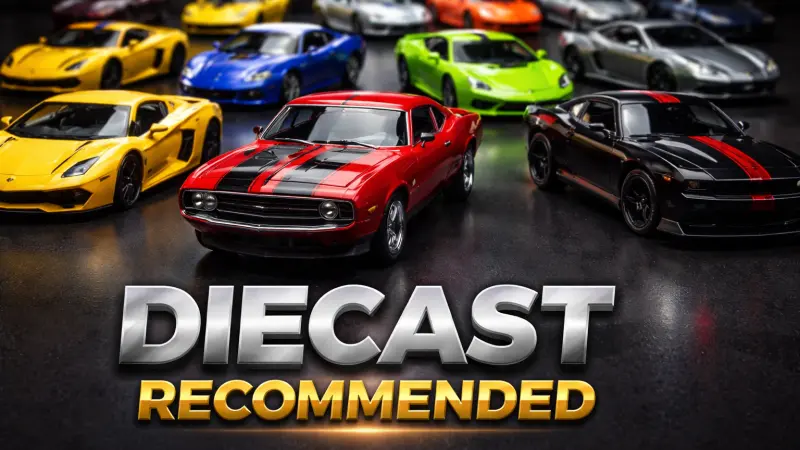
The world of diecast car collecting has grown into a multi-billion-dollar industry, attracting enthusiasts from every corner of the globe. Whether you're a seasoned collector with decades of experience or someone just beginning to explore this fascinating hobby, understanding the landscape of diecast manufacturers is essential. Diecast cars offer more than just nostalgia—they represent miniaturized engineering marvels, historical documentation of automotive design, and genuine investment opportunities.

A quality diecast collection tells stories: the evolution of automotive design, iconic movie cars, legendary race vehicles, and forgotten gems from automotive history. From the earliest Dinky Toys produced in the 1930s to today's hyper-detailed modern releases, diecast cars have become serious collectibles with some models commanding prices in the thousands of dollars. This comprehensive guide explores the top diecast car brands, what makes certain manufacturers stand out, and valuable insights that will help you make informed decisions about your collection.
Understanding the Diecast Car Market
What Exactly Are Diecast Cars?
Diecast vehicles are miniature replicas manufactured using the die casting process—a method where molten metal is forced into steel molds under high pressure. This manufacturing technique, developed in the early 20th century, allows for the production of highly detailed models with exceptional accuracy. Unlike plastic models that require assembly, diecast cars arrive complete and ready for display.
The term "diecast" refers to both the manufacturing process and the finished product. The resulting models typically range from 1:18 scale (larger, more detailed pieces) down to 1:100 scale or smaller. The die casting process creates incredibly durable vehicles capable of withstanding decades of handling, display, and occasional play—which explains why vintage diecast models from the 1950s and 1960s remain in remarkable condition today.
Why Collectors Invest in Diecast Models
Modern diecast collecting goes far beyond casual childhood toy collecting. Today's market encompasses serious enthusiasts who view these miniatures as legitimate investments, historical artifacts, and artistic expressions of automotive design. Several factors drive this passion:
Investment Potential: Rare and discontinued diecast models frequently appreciate in value. First editions, production errors, and limited releases can increase in worth by 50 to 500 percent over time. Some collectors treat their collections with the same strategic approach as fine art or vintage watches.
Historical Documentation: Diecast manufacturers often produce models that capture specific vehicles at precise moments in automotive history. These models serve as three-dimensional records of design evolution, from the muscle car era to modern hypercars.
Artistic Achievement: Modern diecast manufacturers employ skilled designers and engineers who create remarkable detail at miniature scales. Interior appointments, working doors, accurate badging, and weathering effects showcase genuine craftsmanship.
Accessibility: Unlike full-scale vehicle collecting, diecast collecting requires minimal space and financial commitment, making automotive passion accessible to people worldwide.
The Absolute Top Tier Diecast Brands
Hot Wheels – The Market Dominator
Hot Wheels remains the undisputed king of diecast production, having dominated the market since Mattel introduced the brand in 1968. The brand's impact on collecting culture cannot be overstated. With billions of individual cars produced and an estimated 300+ million collectors worldwide, Hot Wheels has achieved cultural penetration that few toy brands can match.
What separates Hot Wheels from competitors is the company's relentless focus on detail, accuracy, and variety. The brand releases approximately 400 new models annually across various product lines. Collectors distinguish between standard releases and premium lines like Hot Wheels Collector (formerly Hot Wheels ID), which features enhanced detail, metal bases, and more authentic paint schemes.
Investment-Grade Hot Wheels: The 1968 original sixteen "Sweet 16" models, particularly the "Python" in pink or the "Olds 442" in certain colors, regularly fetch thousands of dollars at auction. However, you don't need vintage rarities to build a valuable collection—even recent premium releases hold value effectively due to Hot Wheels' established aftermarket.
What Makes Hot Wheels Special: The brand's strength lies in consistency, innovation, and accessibility. Hot Wheels continuously refreshes its lineup with newly licensed vehicles, pop culture collaborations, and specialty lines dedicated to specific automotive genres (muscle cars, Japanese classics, European supercars).
Matchbox – The Heritage Leader
Lesney Products introduced Matchbox in 1952, predating Hot Wheels by sixteen years. While Matchbox never achieved Hot Wheels' market dominance, the brand commands deep respect and loyalty within the collecting community, particularly among vintage enthusiasts. Matchbox pioneered the small-scale diecast format and remains a cornerstone of collecting heritage.
The original 1952-1969 period produced what collectors call "Regular Wheels" and "Superfast" models, representing the brand's golden era. These vintage pieces exhibit excellent craftsmanship and, due to their age and limited production numbers, command premium prices. A near-mint 1968 Matchbox "King Size" Cadillac Eldorado can fetch $300 to $800, while truly rare variants exceed $1,000.
Modern Matchbox Quality: Post-2000 Matchbox models represent significantly improved engineering compared to 1970s-1980s releases. Contemporary production features crisp casting, detailed interiors, and authentic wheel designs that appeal to modern collectors unwilling to accept the quality compromises of mid-period Matchbox.
Investment Potential: Matchbox vintage models from the 1950s-1960s offer genuine investment prospects. The brand's heritage, limited original production, and passionate collector base maintain strong pricing for quality examples.
Dinky Toys – The Vintage Investment
Dinky Toys, produced by Hornby in Liverpool from 1934 to 1979, represent perhaps the finest vintage diecast vehicles ever manufactured. Pre-war and post-war Dinky models showcase meticulous attention to detail that, for their era, rivaled full-scale automotive quality standards. Today, Dinky Toys occupy a special position as collectible artifacts valued for both their craftsmanship and historical significance.
What distinguishes Dinky models is their construction quality. Early Dinky vehicles featured brass axles, solid construction, and applied details like individual headlights and mirrors. The paint finishes demonstrate remarkable complexity—two-tone combinations, striped patterns, and authentic color palettes reflecting specific vehicle production years.
Pricing Tiers: Common Dinky models from the 1950s-1960s might cost £20 to £100. Rare variants, special editions, or pre-war examples can reach £300 to £1,500 per piece. The scarcest 1934-1935 examples sometimes exceed £3,000.
Why Dinky Matters for Collectors: Dinky Toys established many of the standards modern diecast manufacturers follow. Studying Dinky models illuminates manufacturing evolution and helps collectors appreciate the engineering achievements represented in contemporary premium models.
Corgi Toys – Quality Engineering Excellence
Corgi Toys, produced by Mettoy Playcraft in Wales from 1956 onward, carved a distinctive niche emphasizing mechanical features. While Hot Wheels pursued speed and variety, Corgi focused on working components—opening doors, independent suspension, and detailed interiors. This philosophy created a loyal following among collectors who valued functional sophistication.
Early Corgi models from 1956-1965 demonstrate exceptional engineering. The 1963 Aston Martin DB5 "James Bond" model, complete with working machine guns and extending tire chains, became an icon of diecast engineering. These models influenced entire generations of collectors who appreciated mechanical complexity beyond mere aesthetic detail.
Corgi's Modern Era: While original Corgi production ceased in 2008, the brand was revived. Contemporary releases maintain the company's emphasis on accurate detail and sophisticated paint schemes, though typically without the mechanical features of vintage examples.
Collecting Advice: Vintage Corgi models from the 1960s-1970s offer exceptional value for collectors seeking detailed examples with mechanical features. Quality examples typically range from £50 to £400, with rare variants exceeding £1,000.
Premium Brands for Serious Collectors
Die-Cast Masters and High-End Manufacturers
Beyond the mainstream brands, several manufacturers cater to collectors seeking limited production, exceptional detail, and investment-grade materials. These brands typically operate at smaller scales with correspondingly higher price points, attracting serious enthusiasts with disposable income for premium collecting.
Autoart: Operating since 1998, AutoArt produces 1:18 and 1:43 scale models featuring exceptional detail, motorized versions with working steering and suspension, and comprehensive licensing agreements with major manufacturers.
AutoArt models frequently exceed $150-$300 per piece, positioning the brand as a premium option for collectors seeking museum-quality examples.
Minichamps: This German manufacturer specializes in 1:18, 1:43, and 1:64 scales, emphasizing accuracy and comprehensive model ranges. Minichamps produces complete lineups of specific manufacturers' vehicles—for example, comprehensive Porsche collections spanning decades. Models typically range from $80-$250 depending on detail level and scarcity.
Kyosho: The Japanese manufacturer combines scale modeling expertise with exceptional engineering, producing highly detailed models with motorized versions available. Kyosho's 1:18 releases feature working steering, opening components, and interior detail that set museum standards. Prices range from $150-$400+.
TSM Models (True Scale Miniatures): Representing the cutting edge of detail engineering, TSM produces extremely limited quantities (sometimes under 50 units per model) of 1:18 scale models featuring photo-etched details, complex interior appointments, and flawless paint finishes. Prices reflect exclusivity, typically ranging $300-$600+ per model.
Emerging Brands and Specialty Manufacturers
The diecast market continues evolving with new manufacturers entering segments previously dominated by established brands. Japanese manufacturers particularly have expanded offerings, bringing manufacturing excellence and automotive enthusiasm to the segment.
Ivy Models: This specialist produces 1:18 scale models with exceptional attention to interior detail, particularly for Japanese sports cars and rare vehicles. Limited production runs (typically 100-200 units) create strong collector interest and value appreciation.
Motor Max and Bburago: These brands occupy the middle market between mass-market Hot Wheels and premium AutoArt offerings. Models typically range 1:18 to 1:24 scales with good detail at $30-$80 price points, making them accessible entry points for new collectors.
Spark Models: Specializing in racing and limited-edition vehicles, Spark produces detailed 1:43 and 1:18 scale models with particularly strong racing car lineups. The brand's commitment to accuracy and limited production creates genuine collector appeal.
Building a Focused Diecast Collection
Defining Your Collecting Focus
Successful collectors recognize that attempting to own everything leads to unfocused, scattered collections lacking coherent identity. Instead, experienced collectors deliberately define collecting parameters, creating thematic cohesion that enhances both enjoyment and long-term value appreciation.
Manufacturer Focus: Some collectors concentrate exclusively on Hot Wheels, building comprehensive lineups across multiple years and variations. Others specialize in specific premium manufacturers like AutoArt, creating modest but exceptionally detailed collections.
Era or Decade Focus: Collecting vehicles from specific automotive eras (muscle cars from 1968-1972, Japanese 1990s sports cars, modern hypercars) creates thematic collections with natural parameters and clear collecting goals.
Scale Specialty: Committing to a specific scale (1:18, 1:43, 1:64) ensures collection cohesion and display compatibility. 1:18 scale models dominate shelf displays, while 1:43 scale enables comprehensive collections within manageable space.
Manufacturer Focus within a Brand: Many collectors build Hot Wheels collections featuring only Porsche models, or only Ferraris, or only muscle cars. This approach combines the brand's enormous variety with focused collecting goals.
Special Interest Collections: Some collectors focus on specific vehicle types—vehicles featured in movies and television, vehicles from specific manufacturers, or vehicles with special significance (vehicles owned by celebrities, historically important cars, etc.).
Quality Assessment and Purchasing Decisions
New collectors often struggle distinguishing between quality levels, understanding why certain models command premium prices while others remain affordable. Several factors determine quality and value:
Paint Quality: Premium models feature multi-layer paint with complex finishes, metallic applications, and authentic color accuracy. Entry-level models often display flat, single-color finishes lacking depth and sophistication.
Detail Sophistication: High-quality models feature photo-etched trim, individually applied details, and interior appointments rivaling full-scale vehicles in accuracy. Budget models typically display simplified interiors with printed details rather than applied components.
Manufacturing Precision: Premium models demonstrate tight panel gaps, perfectly aligned details, and flawless assembly. Budget models often display visible seams, misaligned decals, and component gaps.
Scale Accuracy: Premium manufacturers invest in precision engineering ensuring exact scale relationships. Entry-level models sometimes exhibit proportional inaccuracies resulting from simplified manufacturing processes.
Documentation and Certification: Premium manufacturers provide detailed specifications, production numbers, and authenticity documentation. This information supports long-term value assessment and authentication.
Smart Purchasing Strategies
Successful collectors apply strategic purchasing approaches that maximize collection growth while minimizing financial risk:
Purchasing at Retail: New releases provide the best pricing and guarantee authenticity. Building relationships with local hobby shops or participating in online communities helps access new releases before street markets develop.
Secondary Market Acquisition: After release periods, models often become available through online marketplaces at discounts. Patient collectors can acquire sold-out models at 20-40% discounts by purchasing during market downturns.
Estate and Liquidation Opportunities: Occasionally, large collections or deceased collectors' estates enter the market, offering opportunities to acquire multiple quality models at below-market pricing. Online auctions and specialized collectible dealers facilitate these acquisitions.
Avoiding Counterfeits: As diecast values increase, counterfeit manufacturers have begun producing convincing fakes, particularly affecting premium brands. Purchasing from established retailers, verifying packaging details, and comparing examples with authentic reference images protects against counterfeits.
Display, Storage, and Collection Preservation
Environmental Factors Affecting Preservation
Diecast models face specific environmental challenges that, if unmanaged, can significantly degrade appearance and value. Understanding preservation requirements protects long-term collection integrity.
Light Exposure: Ultraviolet light causes paint degradation, fading, and discoloration over years. Display cases with UV-protective glass or placing collections in areas with minimal direct sunlight prevents sun damage.
Overhead LED lighting, when properly designed, provides display illumination without harmful UV exposure.
Humidity and Moisture: Metal components corrode when exposed to excessive moisture. Maintaining relative humidity between 40-50% prevents corrosion while protecting decals and paint finishes. Dehumidifiers and moisture-absorbing packets help maintain appropriate humidity levels in display spaces.
Temperature Fluctuation: Extreme temperature variations cause paint cracking, decal separation, and metal expansion/contraction damage. Maintaining consistent temperature environments (ideally 65-75°F) minimizes these stresses.
Dust and Contamination: Dust accumulation requires careful cleaning. Soft brushes and microfiber cloths remove dust safely. For heavier contamination, specialized diecast cleaning solutions exist, though avoiding water exposure prevents paint damage and corrosion initiation.
Display Presentation Strategies
How collections are displayed significantly impacts both preservation and enjoyment. Professional collectors employ sophisticated presentation approaches:
Acrylic Display Cases: Custom acrylic cases protect collections from dust and environmental exposure while maintaining visibility. Cases with adjustable shelving accommodate multiple scales and arrange models thematically.
LED Lighting Integration: Integrated LED lighting showcases detail without excessive heat generation. Adjustable color temperature lighting enhances paint finishes—cooler lights emphasize metallic effects while warmer lights warm red and orange tones.
Thematic Arrangement: Organizing collections by manufacturer, era, manufacturer, or color creates visual coherence. Grouping complementary models—for example, displaying 1963-1967 muscle cars together—creates compelling visual narratives.
Diorama Creation: Advanced collectors build display dioramas featuring landscape elements, building structures, and miniature figures creating realistic scenarios. A collection of racing vehicles displayed on a racetrack diorama becomes far more impressive than simple shelf arrangement.
Understanding Market Values and Investment Potential
Factors Determining Diecast Model Value
Collecting success depends partly on understanding value determinants. Multiple factors interact to establish market prices for specific models:
Rarity: Limited production runs and discontinued models command premium pricing. Models produced only during specific years in limited quantities naturally increase in value as collectors actively seek examples.
Condition: The condition spectrum from mint (never removed from packaging) to heavily played creates dramatic value variations. Mint examples command 50-80% premiums over played examples. Understanding condition assessment—examining paint condition, decal integrity, and component functionality—helps evaluate purchases.
Popularity and Demand: Models featuring desirable vehicles, specific manufacturers, or pop culture significance generate collector demand supporting value appreciation. Current market trends—for example, recent Japanese sports car appreciation—directly influence values.
Completeness: Models with original packaging, included paperwork, and complete components command significant premiums. Missing wheels, decals, or original boxes reduce values by 30-50%.
Historical Significance: Models capturing important automotive moments, celebrity associations, or iconic designs appreciate significantly. The 1963 Corgi Aston Martin DB5 James Bond model exemplifies this—association with cinema made it historically significant beyond automotive merit.
Variants and Errors: Production variations—different wheel types, paint shade variations, or manufacturing errors—create variant enthusiasm. Rare color variants or error examples sometimes exceed standard editions by 200-500%.
Long-Term Value Appreciation Patterns
Studying historical pricing patterns reveals reliable appreciation trends:
Vintage Model Appreciation: Pre-1975 models from established manufacturers (Dinky, Corgi, Matchbox) demonstrate consistent long-term appreciation averaging 5-10% annually. Better examples and rare variants show significantly higher appreciation.
Hot Wheels Premium Lines: Modern Hot Wheels premium releases (Collector and Id lines) show moderate appreciation of 3-5% annually for retained examples. Standard releases typically stabilize at 30-50% of original retail within 2-3 years.
Premium Scale Models: AutoArt, Minichamps, and competing premium brands show stronger appreciation, particularly limited editions. Models with production runs under 500 units often appreciate 10-20% annually.
Condition-Dependent Appreciation: Only examples maintaining exceptional condition demonstrate reliable appreciation. Even valuable
models in poor condition often decline in value.
Manufacturer Discontinuation Effects: When manufacturers discontinue product lines or specific models, remaining examples often appreciate significantly as the supply becomes fixed.
Common Mistakes New Collectors Make
Investment-First Mentality
A common mistake involves viewing collecting exclusively through financial lenses, prioritizing potential appreciation over enjoyment. While investment potential matters, collections pursued solely for financial gain often become hollow, joyless accumulations. Experienced collectors emphasize personal enjoyment as the primary motivation, with value appreciation as a secondary benefit.
Chasing Every Release
Hot Wheels releases 400+ new models annually. Attempting to acquire every release guarantees financial strain and unfocused collections lacking coherent identity. Successful collectors deliberately filter releases against self-defined collecting parameters, purchasing selectively rather than comprehensively.
Ignoring Condition Assessment
New collectors frequently overlook condition details, discovering too late that minor paint damage or decal issues significantly impact values. Learning condition assessment basics—examining lighting conditions, understanding normal wear patterns, distinguishing intentional distressing from actual damage—prevents costly mistakes.
Inadequate Storage and Display
Poor storage practices—exposing collections to sunlight, extreme temperatures, or high humidity—damage investment value. Protecting collections with appropriate display cases, UV-protective lighting, and environmental controls ensures long-term preservation and sustained value.
Overpaying for Hype
Trending models occasionally generate speculative interest inflating prices beyond realistic values. New collectors sometimes overpay during hype cycles, discovering later that prices normalized to more reasonable levels. Patient collecting prevents these mistakes.
Purchasing Counterfeits
Increasingly sophisticated counterfeits, particularly affecting premium brands, sometimes deceive new collectors. Purchasing exclusively from established retailers and verifying authentic details prevents counterfeits entering collections.
Connecting with the Diecast Collecting Community
Online Communities and Forums
Vibrant online communities support diecast collecting enthusiasm. Platforms like Reddit's r/Diecast, collector-specific forums, and Facebook communities facilitate knowledge exchange, buying/selling, and social connection. These communities provide invaluable resources for identifying models, assessing values, and discovering collecting opportunities.
Local Hobby Shops and Toy Shows
Establishing relationships with local hobby shops provides access to new releases and connecting with knowledgeable staff. Toy shows and collector conventions offer opportunities to network with fellow collectors, examine physical examples, and discover specialized vendors.
Specialized Collecting Clubs
Some manufacturers, particularly Hot Wheels, support official collector clubs offering exclusive releases, communications, and community. Membership often includes access to limited-edition models unavailable through retail channels.
Supporting Local Business Visibility Beyond Core Marketing Efforts
The diecast collecting community increasingly relies on local businesses—hobby shops, toy stores, and specialized retailers—to support collecting activities. Understanding how these businesses maintain presence and discoverability within local markets provides valuable context for the broader collecting ecosystem.
The Role of Local Presence in Collector Discovery
Local retailers supporting diecast collectors benefit from community presence consistency. When hobby shops maintain active presence across various platforms—establishing reliable business information, maintaining consistent location details, and reinforcing trust signals—collectors more easily discover and patronize these establishments. A free company listing platform can help local businesses optimize their discoverability through proper information management.
For collectors seeking rare models or new releases, knowing which local retailers consistently stock quality inventory becomes valuable. Business visibility reinforcement, supported through accurate business information across platforms, helps shops build reputation within the local collecting community. Tools like Local Page UK enable hobby retailers to maintain consistent business details, making it easier for collectors to find, verify, and trust local sources.
Frequently Asked Questions About Diecast Car Collecting
Q1: What's the best diecast brand for beginners? Hot Wheels represents the most accessible entry point due to affordability ($1-5 per model), enormous variety, and easy availability. Newcomers can explore different themes and manufacturers without significant financial commitment, gradually developing preferences that guide more focused collecting.
Q2: How much should I expect to spend on a quality diecast collection? Entry-level collections focusing on Hot Wheels or modern Matchbox can develop with minimal investment—$50-100 monthly supports acquiring 10-20 quality models. Premium collecting using AutoArt or Minichamps requires significantly higher budgets—$100-300+ per model. Collection scope should match personal financial capacity and genuine collecting passion.
Q3: Are vintage diecast models worth the investment? Quality vintage models from established manufacturers demonstrate consistent value appreciation. Pre-1975 Dinky and Corgi models, 1960s Matchbox examples, and early Mattel Hot Wheels show reliable long-term appreciation. However, vintage collecting requires extensive condition knowledge to avoid overpaying for poor-condition examples.
Q4: How do I authenticate premium diecast models? Authentication involves examining packaging details, comparing casting characteristics with reference examples, evaluating paint quality, and verifying serial numbers where applicable. Purchasing exclusively from authorized retailers eliminates authentication concerns. Online collector communities provide valuable reference images for comparison.
Q5: Should I remove models from packaging for display? Mint-in-box examples command significant premiums over loose models—typically 50-80% higher values. If long-term investment potential matters, preserving original packaging is critical. For personal enjoyment, displaying models loose makes sense, though condition care remains important.
Q6: What scale should I focus on for collection development? Scale selection depends on available space and display preferences. 1:64 scale models (Hot Wheels size) demand minimal space, enabling large collections in modest areas. 1:18 scale models showcase exceptional detail but require significant display space. 1:43 scale offers a middle ground balancing detail and space efficiency.
Q7: How should I clean diecast models? Gentle cleaning using soft microfiber cloths and specialized diecast cleaning solutions maintains appearance safely. Avoid water exposure and harsh cleaners that damage paint and decals. For heavily soiled examples, professional cleaning services exist, though home care suffices for normal dust management.
Q8: Which diecast manufacturers appreciate most reliably? Vintage models from Dinky, Corgi, and early Matchbox show consistent appreciation. Modern premium brands like AutoArt and Minichamps appreciate steadily, particularly limited-edition releases. Hot Wheels premium lines show moderate but reliable appreciation, while standard Hot Wheels appreciate slowly if at all.
Q9: Can diecast collecting generate actual investment returns? Carefully curated collections of quality, sought-after models do appreciate meaningfully. However, diecast collecting primarily rewards genuine enthusiasts who enjoy the hobby itself, with investment returns as secondary benefits. Collectors treating models purely as financial instruments often face disappointment.
Q10: How do I find rare models for my collection? Online marketplaces (eBay, Mercari), specialized diecast websites, local toy shows, and collector communities facilitate rare model discovery. Establishing relationships with hobby shop owners and joining collector clubs provides access to hard-to-find examples. Patience and persistent searching typically yield results.
Q11: Are Japanese diecast manufacturers worth collecting? Japanese manufacturers like Kyosho, Ivy Models, and specialist producers create exceptional examples rivaling or exceeding Western manufacturers in detail and engineering. Japanese sports cars and limited-edition releases particularly showcase Japanese manufacturer expertise, making their products valuable collection components.
Q12: What's the difference between diecast grades (superfinish vs. regular)? Hot Wheels classification uses these terms inconsistently, but generally "superfinish" refers to higher-quality releases with better paint and detail. Historically, early Hot Wheels "Superfast" models featured superior engineering and detail compared to "Regular Wheels" contemporary models.
Q13: Should I insure my diecast collection? Substantial collections (combined value exceeding $5,000) warrant insurance documentation. Photographing examples, maintaining purchase records, and appraising valuable pieces provide documentation supporting insurance claims. Some homeowner policies cover collections, though specialized collectible insurance may be necessary.
Q14: How do storage temperature and humidity affect value? Extreme temperature fluctuations and high humidity damage paint finishes, cause corrosion, and separate decals. Maintaining 65-75°F temperatures and 40-50% humidity prevents deterioration. Poor environmental conditions can reduce values 30-50% even if damage isn't immediately visible.
Q15: What are the most sought-after models among collectors today? Current demand favors Japanese sports cars, limited-edition releases under 500 units, models from significant automotive franchises, and vehicles featured in popular media. Trends shift periodically, but historically significant vehicles and exceptional detail examples maintain consistent collector interest regardless of temporary market fashions.
Diecast car
Diecast car collecting offers remarkable depth appealing to collectors across multiple interest spectrums. Whether you're drawn to investment potential, automotive history, engineering excellence, or simple display enjoyment, the diecast market accommodates diverse motivations with options ranging from $1 impulse purchases to $500+ premium examples.
The brands discussed here—Hot Wheels, Matchbox, Dinky, Corgi, and premium manufacturers—each offer distinct philosophies and approaches. Your personal collecting journey will naturally gravitate toward manufacturers and models resonating with your interests, budget, and display space.
The key to sustainable, rewarding collecting involves defining clear parameters, purchasing selectively rather than comprehensively, and prioritizing genuine enthusiasm over speculative financial motivation.
Building a meaningful diecast collection represents an ongoing journey of discovery, connecting you with fellow enthusiasts, automobile history, and miniaturized engineering excellence. Whether your collection eventually numbers 10 models or 10,000, the genuine enjoyment derived from this hobby far exceeds any financial metrics. Start exploring today, connect with local collectors and retailers, and begin building a collection that brings lasting satisfaction and appreciation value.

Disclaimer: The information provided in this article is for general informational and research purposes only. Company details, features, services, and market positions may change over time. Readers are advised to visit official company websites and conduct independent research before making any business decisions or purchasing services.
Most Searchable Keywords

Recent Blogs

Related Listings


Categories
- Accountants (295)
- Advertising Agencies (559)
- Architects (149)
- Automobiles (377)
- Beauty (300)
- Carpenters (146)
- Cleaning Services (386)
- Dentists (189)
- Driving (62)
- Electricians (215)
- Energy (8)
- Event Organiser (685)
- Finance (598)
- Guide (3364)
- Health (2207)
- Information technology (206)
- Legal Services (353)
- Logistics (6)
- Maintenance (65)
- Manufacturing (35)

Sponsored Listings in Locksmith Services


Related Blogs

Where to Find the Best Summer Festivals in Br...
Read this insightful article "Where to Find the Best Summer Festivals in Bristol" to expand your knowledge!

Provisional Driving Licence UK Benefits and L...
Read this insightful article "Provisional Driving Licence UK Benefits and Limits Explained" to expand your knowledge!
Ross on Wye Minibus Hire for Group Travel Mad...
Read this insightful article "Ross on Wye Minibus Hire for Group Travel Made Simple" to expand your knowledge!
Questions & Answers – Find What
You Need, Instantly!
How can I update my business listing?
Is it free to manage my business listing?
How long does it take for my updates to reflect?
Why is it important to keep my listing updated?
