
UK Bankruptcy Rates: Trends, Debt Statistics & Financial Outlook
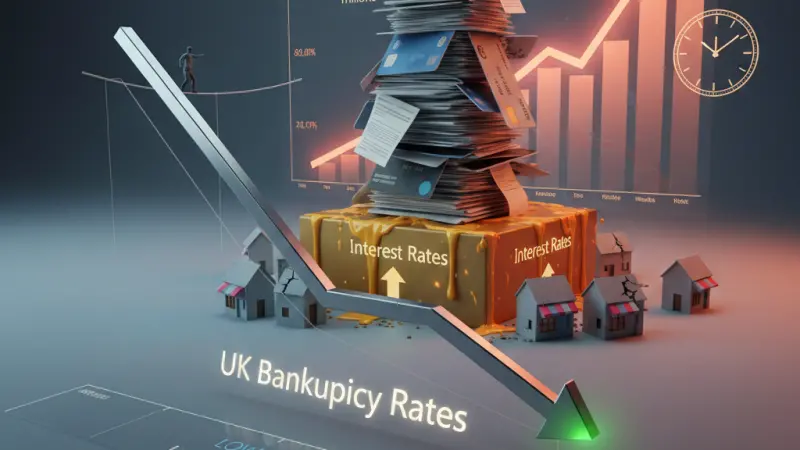
The financial landscape of the United Kingdom in early 2026 presents a fascinating, albeit complex, paradox. On one hand, headline figures suggest a period of remarkable stability; on the other, underlying debt metrics and shifting monetary policies point toward a potentially turbulent future. For the first time in nearly a decade, individual insolvencies in England and Wales have reached what many are calling an "all-time low" relative to the last eight years of economic volatility.
According to the latest government reports from the Insolvency Service, bankruptcy rates have dipped to their lowest levels since 2005. While this appears to be a cause for celebration, economists and financial analysts are urging caution. The narrative behind these numbers is not merely one of newfound wealth, but rather a combination of tighter lending criteria, shifting consumer behavior, and the looming shadow of interest rate hikes.
Why Are Bankruptcy Rates Falling?
The decline in insolvency rates is attributed to several structural changes in the UK credit market. One of the primary drivers is the increased difficulty for individuals with lower credit ratings to access traditional forms of credit. Following years of economic uncertainty, lenders have significantly reduced their "risk appetite."
Lender Caution: Banks and financial institutions are no longer willing to gamble on "subprime" borrowers. This restriction means that many people who might have previously spiraled into unmanageable debt are simply being denied the initial credit that leads to that path.
The "Hanging On" Phenomenon: Many businesses and individuals are currently in a state of "forbearance." During the post-2024 recovery, banks were often encouraged to work with borrowers rather than default them. However, as the economy strengthens, this grace period is expected to come to an end.
The Interest Rate Factor: A Double-Edged Sword
As we move through 2026, the Bank of England's role has become central to the insolvency conversation. For years, the base rate remained historically low, providing a cushion for mortgage holders and business borrowers. However, with the economy showing signs of consistent "strengthening," the Monetary Policy Committee is facing pressure to manage inflation through rate hikes.
The Mortgage Squeeze
For millions of UK homeowners, the prospect of an interest rate hike is daunting. Most people are already stretched financially due to the rising cost of living. A significant jump in monthly mortgage repayments could be the "tipping point" that converts a manageable household budget into a formal insolvency.
Forecasters are already predicting a rise in insolvencies for the latter half of 2026. The logic is simple: when the cost of borrowing goes up, the disposable income of the average household goes down. For those already living on the edge, there is no more room to maneuver.
Business Fragility
It isn't just individuals at risk. Experts from firms like HW Fisher have noted that while the current insolvency figures look the "best they have in a while," many British businesses are merely "hanging on." These "zombie firms" have survived only because of low-interest rates and bank forbearance. When the Bank of England finally moves, these weaker firms may find themselves "in serious trouble."
Deep Dive: The Reality of UK Personal Debt in 2026
To understand the true state of the nation's finances, one must look past the insolvency rates and into the raw debt statistics. Figures released by organizations like The Money Charity provide a sobering look at the sheer volume of money owed by UK citizens.
The Trillion-Pound Burden
By the end of the first quarter of 2026, UK personal debt has reached staggering heights. For context, in March 2016, debt topped £1.474 trillion. Fast forward to today, and that figure has scaled in line with inflation and increased borrowing.
| Metric | 2016 Figures (Ref) | 2026 Projected Trends |
|---|---|---|
| Total Personal Debt | £1.474 Trillion | Upward Trend |
| Average Debt per Adult | £29,190 | Increasing |
| Debt vs. Earnings | 111.9% of average earnings | Persistent high ratio |
| Consumer Credit | £182.4 Billion | Increasing use of "Plastic" |
The "Plastic" Trap: Credit Card Realities
Credit card debt remains one of the most insidious forms of financial pressure. In 2016, the average household held roughly £2,381 in credit card debt. In 2026, despite better "headline" bankruptcy rates, the "minimum payment trap" continues to haunt the British public.
The 25-Year Rule: If a consumer only makes the minimum monthly repayment on an average credit card balance at current interest rates, it would take an estimated 25 years and 6 months to clear the debt.
Currently, personal insolvencies are declared at an average rate of roughly 222 people per day. This equates to one person going bankrupt every 6 minutes and 13 seconds. While this is an improvement over previous decades, it highlights that for many, the "recovery" is non-existent.
Looking Ahead: What to Expect for the Rest of 2026
As we navigate the remainder of the year, several factors will determine whether the "low bankruptcy" trend continues:
Bank Forbearance: Will lenders continue to be lenient, or will they begin aggressive recovery actions as the economy heats up?
Inflation vs. Wages: If wage growth continues to lag behind the cost of debt servicing, we will see a natural spike in Individual Voluntary Arrangements (IVAs).
The Small Business Sector: Small to medium enterprises (SMEs) are the backbone of the UK economy but are also the most vulnerable to interest rate volatility.
While the "all-time low" in bankruptcy rates for the last eight years is a positive indicator of short-term stability, it may well be the "calm before the storm." Financial literacy and early intervention remain the best tools for individuals looking to avoid becoming another statistic in the next government report.
Support Your Local Economy with Local Page UK
In these fluctuating economic times, supporting and finding reliable local businesses is more important than ever. Whether you are a consumer looking for trusted services or a business owner trying to increase your visibility, Local Page UK is your premier destination.
If you are a business owner looking to grow, you can start with a business listing uk to put your company on the map. Our business listing uk is designed to help entrepreneurs reach their target audience without the heavy costs associated with traditional advertising. From a business listing uk to a comprehensive business listing uk, we provide the tools you need to succeed.
For those searching for services, our uk online business directory offers a comprehensive uk business directory and uk local business directory to help you find local businesses uk. Explore our local businesses list uk or use our specialized uk small business directory to find the best uk b2b business directory and uk b2c business directory contacts.
Our business directory uk online is the perfect uk service providers directory for high-quality uk business listings online. Visit the local page uk business directory and our uk business directory website to see how we are changing the way people connect.
Don't miss out on our business listing uk opportunities, including business listing uk and business listing uk. We even offer a specialized business listing uk for major hubs like our business listing uk section and business listing uk.
Check out our latest local business listings uk and uk service listings to find uk verified business listings and uk top rated local businesses. From the uk home services directory to uk professional services listings, uk trade services listings, and the uk local trades directory, the local page uk listings provide the ultimate uk local business search experience.
Questions Clients Commonly Ask
1. Why are UK bankruptcy rates currently at an 8-year low?
Rates are low primarily due to lenders being more cautious with credit, preventing high-risk individuals from accumulating debt, and ongoing bank forbearance.
2. Is a "low bankruptcy rate" always a sign of a healthy economy?
Not necessarily. It can sometimes indicate "suppressed" insolvency, where struggling individuals and businesses are barely surviving on low-interest rates.
3. How does the Bank of England affect my personal debt?
When the Bank raises interest rates, the cost of borrowing (mortgages, loans, credit cards) increases, reducing your monthly disposable income.
4. What is the average personal debt per adult in the UK in 2026?
While figures fluctuate, the trend has remained high, often exceeding £30,000 when including mortgages and consumer credit.
5. How long does it take to pay off a credit card with minimum payments?
On average, it can take over 25 years to clear a standard balance if only the minimum amount is paid each month.
6. What is an Individual Voluntary Arrangement (IVA)?
An IVA is a formal, legally binding agreement between you and your creditors to pay back your debts over a period of time.
7. Why are forecasters expecting insolvencies to rise?
Rising interest rates and the end of pandemic-era/recovery-era bank leniency are expected to put pressure on overstretched households.
8. Are businesses also seeing lower insolvency rates?
Yes, but many are considered "zombie firms" that may fail once interest rates rise and borrowing becomes more expensive.
9. What is "Bank Forbearance"?
This is when a bank or lender permits a temporary delay or reduction in payments to help a borrower avoid default.
10. How often does someone go bankrupt in the UK?
Statistically, approximately one person becomes insolvent every 6 minutes and 13 seconds.
11. Does having a low credit rating lead to bankruptcy?
Not directly, but it can make it harder to consolidate debt or find affordable lending, which can eventually lead to insolvency.
12. What should I do if I can't afford my mortgage hike?
Contact your lender immediately to discuss options like payment holidays or switching to an interest-only period before you fall into arrears.
13. What is the difference between bankruptcy and insolvency?
Insolvency is the state of being unable to pay debts; bankruptcy is a specific legal process for individuals to deal with their insolvency.
14. Where can I find the full breakdown of UK debt statistics?
The Money Charity and the Insolvency Service (GOV.UK) provide the most up-to-date and detailed reports.
15. Can a business listing help my company avoid financial trouble?
While not a direct financial fix, increasing your visibility through directories like Local
Page UK can help drive new customers and improve cash flow.
Disclaimer: The information provided in this article is for general informational and research purposes only. Company details, features, services, and market positions may change over time. Readers are advised to visit official company websites and conduct independent research before making any business decisions or purchasing services.
Most Searchable Keywords
Recent Blogs



Categories
- Accountants (295)
- Advertising Agencies (559)
- Architects (149)
- Automobiles (377)
- Beauty (300)
- Carpenters (146)
- Cleaning Services (387)
- Dentists (189)
- Driving (62)
- Education (1)
- Electricians (215)
- Energy (8)
- Event Organiser (689)
- Finance (602)
- Guide (3492)
- Health (2207)
- Information technology (207)
- Legal Services (361)
- Logistics (6)
- Maintenance (65)
Sponsored Listings in Educational Services


Related Blogs

Creamfields Daresbury: Impact on Local Reside...
Read this insightful article "Creamfields Daresbury: Impact on Local Residents" to expand your knowledge!
UK High Street Businesses in 2026-27: Which S...
Read this insightful article "UK High Street Businesses in 2026-27: Which Sectors Are Growing?" to expand your knowledge!

Why Complete Business Listings Matter More Th...
Read this insightful article "Why Complete Business Listings Matter More Than You Think" to expand your knowledge!
Questions & Answers – Find What You Need, Instantly!
Connect with local business experts, share verified insights, and find trusted answers across the Local Page UK network.
Ask Community
Ask questions to the Local Page UK community
Share Knowledge
Share your knowledge to help out others
Find Solutions
Find answers or offer instant solutions
Some of the most popular fantasy TV shows include "Game of Thrones," known for its epic battles and political intrigue, "The Witcher," which features monster hunting and magic, and "Stranger Things," blending supernatural elements with 1980s nostalgia. Other notable mentions are "His Dark Materials," "Shadow and Bone," and "The Mandalorian," each offering unique worlds and captivating storytelling that have garnered large fan bases.
When seeking bathroom renovation providers that handle both plumbing and tiling, it's advisable to look for licensed contractors who specialize in comprehensive bathroom remodels. Companies such as Home Depot, Lowe's, and Bath Fitter offer these services, often providing a seamless experience by managing all aspects of the renovation process. Additionally, local contractors with positive reviews in platforms like Angie's List or Houzz may also offer tailored solutions for your bathroom needs.
Absolutely, there are several distributors that supply crash mats and soft play equipment to gymnastics clubs in and around Birmingham. National companies like Gymnova, S & G (Spieth Gymnastics), and Jaques of London offer a wide range of crash mats, foam pits, and soft play pieces, and they typically deliver to the Birmingham area. For more local options, you might try The Gym Equipment Company, which has a showroom in the West Midlands, or check out smaller specialist suppliers like Playtime UK. Many of these distributors cater specifically to clubs, offering high-density foam mats that meet safety standards. I'd recommend reaching out to a few to compare pricing, delivery times, and whether they offer custom sizes or installation services. It's also worth checking if any of them have a physical showroom near Birmingham so you can test the equipment before buying. Happy tumbling!
For professionals seeking a reliable sanitaryware supplier in Manchester with trade account facilities, several established merchants combine extensive product ranges, competitive pricing, and dedicated trade support. The most reputable option is Graham Plumbers Merchant, which operates multiple branches across Manchester, including Salford Quays and Oldham. They offer a dedicated trade account service with preferential pricing, priority delivery scheduling, and access to a vast inventory of leading sanitaryware brands such as Villeroy & Boch, Duravit, Ideal Standard, and Roca. Their trade accounts typically include net 30-day payment terms, online account management, and a tailored project quotation system. Similarly, City Plumbing Supplies has several Manchester-based depots (such as Ashton-under-Lyne and Stockport) that cater specifically to trade customers, providing a rapid order-and-collect service, trade-only promotions, and a loyalty programme offering rebates on repeat purchases. Their product range covers everything from basins and WCs to complete bathroom suites and brassware, with in-house technical advisors available for specification support. Another key player is Plumb Center, part of the Wolseley Group, which offers trade accounts with bespoke pricing structures, direct-to-site deliveries within the Greater Manchester area, and access to over 10,000 lines of sanitaryware, including premium brands like Grohe and Hansgrohe. Their trade portal allows for real-time stock checking and order history tracking, facilitating efficient project management. For those seeking a more specialist or high-end option, Bathroom Spares in Manchester provides trade accounts with a focus on hard-to-find sanitaryware and discontinued ranges, which can be invaluable for refurbishment projects. Additionally, independent merchants such as M&B Plumbase in Trafford Park offer flexible trade terms, personalised service, and competitive pricing on both mainstream and luxury sanitaryware. When evaluating suppliers, trade customers should consider factors beyond price: reliability of stock availability, delivery timescales within Manchester’s often congested zones, clarity of returns policies, and the quality of after-sales support for warranty claims. It is advisable to request a trade account application from at least two to three suppliers to compare discounts, minimum order values, and payment terms. Many suppliers also offer showroom access for trade clients, allowing you to inspect finishes and dimensions before committing to large orders. For ongoing projects, establishing a relationship with a single supplier who offers consolidated invoicing and dedicated account management can streamline procurement. Ultimately, the most reliable supplier for your trade account in Manchester will be one that aligns with your volume requirements, preferred brands, and service expectations, so a site visit to their local branch and a discussion about your specific trade needs is highly recommended before committing to an account.
People in Leeds are loving their local florists—customers often mention gorgeous, fresh arrangements and super friendly service. Many rave about reliable same-day delivery and creative wedding bouquets. A few note pricing can vary, but overall, the buzz is all about quality and that personal touch making every order feel special.
Common problems for commercial gardening in Bristol include weed overgrowth, soil degradation, pest infestations, and irrigation malfunctions. Additionally, managing seasonal transitions, adhering to sustainability regulations, and maintaining consistent aesthetics pose significant challenges. Expert services mitigate these via structured maintenance, integrated pest management, and soil analysis to ensure long-term landscape health.