
UK Inflation Rate Right Now: Latest Figure Explained
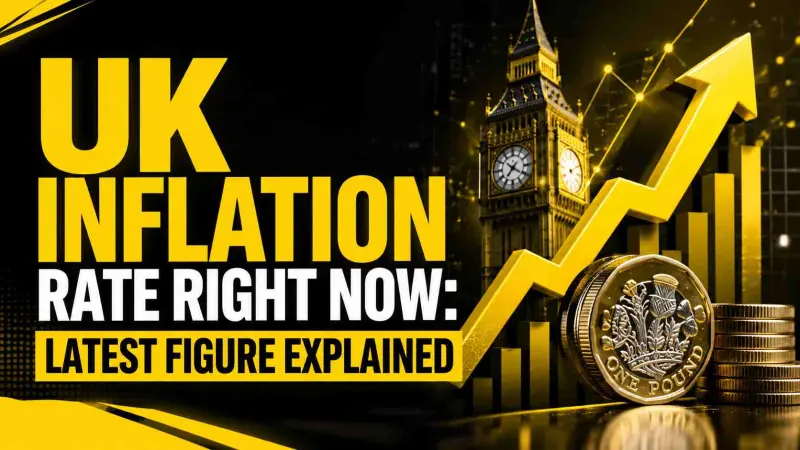
If your supermarket bill still feels higher than it did a year ago, you are not imagining it. The latest official UK inflation figure shows that consumer prices were 2.6% higher in June 2026 than a year earlier, down from 2.8% in May. Food and non-alcoholic beverage prices were rising more slowly, at 1.7%, and actually fell by 0.2% between May and June.
That sounds like encouraging news for household budgets, but there is an important distinction: slower inflation does not mean that supermarket prices have gone back to where they were. It means prices are increasing more slowly than before.
For a household doing a weekly shop, that difference matters. A basket that became significantly more expensive during the previous inflation shock does not automatically become cheap again simply because the inflation rate falls. Instead, the focus shifts from rapidly rising prices to whether individual food categories are stabilising, falling or continuing to increase.
This guide explains the latest UK inflation rate, what is happening to food prices, why your own shopping bill may feel very different from the headline figure, and what households can realistically do to manage their weekly spending.
What does the latest UK inflation rate mean for your weekly shop?
The latest official UK inflation rate is 2.6%, measured by the Consumer Prices Index (CPI) in the 12 months to June 2026. That was down from 2.8% in May. The next official inflation release, covering July 2026, is scheduled for 19 August 2026, so June is the latest published figure as of 8 August 2026.
For shoppers, however, the more relevant number is often food inflation.
Food and non-alcoholic beverage prices increased by 1.7% over the year to June, compared with 2.2% in May. On a monthly basis, food and non-alcoholic beverage prices fell by 0.2% in June. The ONS says this was the lowest annual food inflation rate since August 2024.
That gives households some reason for optimism. But it would be wrong to interpret the figure as meaning your entire grocery bill should be 1.7% higher than last year.
Your personal shopping inflation rate depends on what you buy.
A household buying a lot of meat, dairy, vegetables and branded products may experience a different change from a household that buys mostly rice, pasta, frozen food, supermarket own-brand products and discounted items. Inflation is an average across a large basket of goods and services, not a personalised calculation of your weekly shop.
What does 2.6% inflation actually mean?
Inflation measures how much prices have changed over a period of time.
If inflation is 2.6%, it broadly means the prices represented by the CPI basket are 2.6% higher than they were a year earlier, rather than that every individual item has risen by 2.6%. The Bank of England describes inflation in similar terms: if inflation is 3%, an item costing £1 a year earlier would cost £1.03 if its price rose in line with that rate.
This distinction is one of the easiest parts of inflation to misunderstand.
Suppose a family's weekly shop cost £100 one year ago. If the entire basket experienced exactly 2.6% inflation, it would theoretically cost about £102.60 today.
But real shopping baskets do not behave that neatly.
One product could have become cheaper, another could be 10% more expensive and another might be unchanged. Supermarket promotions, brand choices, seasonal prices and changes in what your household buys can all produce a different result.
Why does the weekly shop still feel expensive if inflation is falling?
Because inflation measures the rate at which prices are changing, not the absolute level of prices.
Imagine a simplified example:
| Period | Annual inflation | Example £100 basket |
|---|---|---|
| Year 1 | 8% | £108 |
| Year 2 | 5% | £113.40 |
| Year 3 | 2.6% | £116.35 |
The inflation rate has fallen dramatically, yet the hypothetical basket is still much more expensive than the original £100.
That is why people can hear that inflation is "coming down" while simultaneously feeling that their household budget has not returned to normal.
The earlier price increases remain embedded in the price level.
Is food inflation finally coming down?
Yes, the latest figures suggest a meaningful improvement.
Food and non-alcoholic beverage inflation slowed from 2.2% in May to 1.7% in June 2026. More importantly, food prices fell by 0.2% between May and June.
Several food categories contributed to the monthly movement. The ONS identified downward effects from areas including oils and fats, dairy and some meat products, while vegetable and meat prices still increased but by less than they had a year earlier. Chocolate prices also fell by more in June than in the same month of the previous year.
That does not mean every supermarket shopper will see a cheaper trolley.
It means the overall statistical basket of food and non-alcoholic beverages became slightly cheaper over that particular month.
Why your supermarket bill may still rise
There are several reasons your personal grocery spending can increase even when official food inflation is slowing.
Your household may buy different products
Inflation statistics represent an average basket. Your family's basket could contain significantly more of the products experiencing above-average price increases.
For example, a household buying large quantities of:
- Fresh meat
- Dairy products
- Coffee
- Baby products
- Branded household goods
- Convenience foods
may experience a different price change from someone buying mostly discounted or own-brand groceries.
Promotions can change your spending
A supermarket may reduce the price of a particular product for several weeks and then return it to its standard price.
Your own shopping inflation can therefore depend on when you buy.
A £4 product discounted to £3.20 one week and sold for £4 the next has not necessarily become permanently more expensive. But it can make two weekly receipts look very different.
You may be buying more
Sometimes the problem is not simply price.
If a family has added another household member, started buying more fresh produce, increased its protein intake or has children home during school holidays, the total weekly bill can increase even if individual prices have barely changed.
This is a useful distinction between price inflation and household spending.
Which prices are rising faster than food?
The latest inflation figures show that the overall CPI rate does not tell the whole story.
In June 2026:
| Category | Annual CPI inflation |
|---|---|
| Food and non-alcoholic beverages | 1.7% |
| Transport | 5.7% |
| Communication | 5.1% |
| Restaurants and hotels | 4.4% |
| Education | 5.1% |
| Health | 2.5% |
| Recreation and culture | 1.7% |
| Clothing and footwear | -0.5% |
| Furniture and household goods | -0.2% |
These figures show why the experience of inflation varies so widely between households.
Transport is particularly important because fuel costs can indirectly affect household finances as well as the prices businesses charge for goods and services.
The ONS reported that transport inflation slowed from 6.8% in May to 5.7% in June, with motor fuel prices providing the largest downward effect.
So while your food bill may be stabilising, other parts of your household budget can still be under pressure.
What is happening to petrol and diesel prices?
Fuel remains an important part of the wider cost-of-living picture.
In June, the average UK diesel price was 176.4 pence per litre, while petrol averaged 155.3 pence per litre, according to the ONS. Diesel prices fell by 10.7 pence per litre between May and June, while petrol fell by 2.1 pence.
However, motor fuel prices were still 21.3% higher than a year earlier.
That illustrates another important point about inflation: a monthly fall does not necessarily mean prices have returned to previous levels.
For households that drive to supermarkets, work or school, fuel prices can therefore affect the practical cost of getting through the week even when food inflation itself is relatively subdued.
How does inflation affect the cost of a typical weekly shop?
There is no single "average weekly shop" that applies to everyone.
The best way to understand the effect is to examine your own spending.
Suppose you spent £80 a week on groceries a year ago.
If your personal basket rose by 1.7%, the mathematical equivalent would be:
£80 × 1.017 = £81.36
But this is only an illustration.
Your actual bill could be £78, £82 or £90 depending on what you buy and where you shop.
A family that regularly switches between supermarkets to use promotions might experience lower effective inflation than a household that buys the same branded products every week.
How should you manage your weekly food budget while prices remain high?
The most effective approach is usually not to cut everything indiscriminately.
Instead, identify the areas where your spending has changed most.
1. Compare your last four receipts
Rather than relying on memory, look at your supermarket receipts from the previous month.
Create three simple groups:
Essential staples
Milk, bread, eggs, rice, pasta, vegetables and other products you buy regularly.
Flexible purchases
Snacks, desserts, premium brands, ready meals and products that can be substituted.
Occasional purchases
Cleaning supplies, toiletries, bulk packs and household items that are not bought every week.
This immediately shows where your budget is actually moving.
2. Compare unit prices
A larger package is not automatically cheaper.
Check the price per kilogram, litre or individual item rather than comparing package prices alone.
This becomes particularly useful when supermarkets run promotions.
A "two for £5" offer might look attractive, but if you only need one item or the standard price elsewhere is £2.30, the promotion may not represent a meaningful saving for your household.
3. Use own-brand products selectively
Switching from premium brands to supermarket own-label products can reduce spending without requiring major changes to meals.
You do not have to replace everything.
A practical strategy is to test one or two categories at a time and keep buying branded products where you genuinely prefer them.
4. Plan meals around what is already at home
Food waste is effectively money leaving the household budget without providing value.
Before shopping, check:
- The fridge
- Freezer
- Cupboards
- Use-by dates
- Open packets
- Leftovers
Then build the next few meals around ingredients that need using.
This can reduce the amount you need to purchase rather than simply forcing you to buy cheaper products.
5. Track your personal inflation rate
This is one of the most useful exercises a household can do.
Take your usual weekly basket and record its price once a month.
For example:
| Month | Basket cost |
|---|---|
| January | £92 |
| February | £94 |
| March | £93 |
| April | £95 |
| May | £94 |
| June | £93 |
You can then see whether your own food costs are actually increasing, falling or simply fluctuating.
That information can be more useful for budgeting than a headline inflation number.
Why the official inflation basket may not match your household
The CPI is designed to measure inflation across the economy, not to reproduce an individual family's shopping list.
The ONS uses a large basket of goods and services and assigns weights to reflect household spending patterns. The composition and weights of the basket are updated over time.
There is also an important development in grocery price measurement.
Since February 2026, the ONS has introduced scanner data covering around 50% of the grocery market. Rather than relying entirely on manually collected prices, the system incorporates roughly 300 million price points from more than a billion units of products sold each month through supermarket checkouts and online sales.
That is significant because supermarket shopping is increasingly complicated by promotions, product substitutions and different purchasing patterns.
The data can provide a richer picture of what shoppers are actually paying.
What is the difference between CPI and CPIH?
You will often see two inflation figures in UK economic reporting: CPI and CPIH.
CPI is the measure used for the UK's official inflation target and international comparisons.
CPIH is broader because it includes owner-occupiers' housing costs and Council Tax-related components.
In June 2026, CPI inflation was 2.6%, while CPIH inflation was 2.8%.
For the question "What is the UK inflation rate?", CPI is generally the number people mean.
For understanding household living costs more broadly, CPIH can provide additional context.
What does the 2% inflation target mean for shoppers?
The Bank of England's target is 2% CPI inflation. Its purpose is to keep inflation low and stable enough that households and businesses can make spending, saving and investment decisions with greater confidence.
But reaching 2% does not mean supermarket prices return to the prices seen several years ago.
It means the rate of increase becomes consistent with around 2% annual inflation over time.
For example, if a product costs £10 and then rises in line with 2% inflation, it would cost approximately £10.20 after a year.
The difference becomes more significant over many years because price increases compound.
Could the UK inflation rate rise again?
Yes.
A falling inflation rate is encouraging, but inflation can move in either direction.
The Bank of England said in its July 2026 decision that inflation had fallen to 2.6%, but it expected inflation to rise later in the year because higher energy prices could continue to feed through to household bills and business costs. Bank Rate was maintained at 3.75%.
This matters for grocery shoppers because energy and transport costs can affect businesses throughout the supply chain.
A food producer may face higher energy costs.
A logistics company may face higher fuel costs.
A retailer may face increased operating expenses.
Some of those costs can eventually appear in consumer prices.
That does not mean every increase will automatically be passed to shoppers. Businesses can also absorb costs through lower margins, improve efficiency or change suppliers.
What could happen to grocery prices next?
The immediate outlook is more stable than during the sharp inflation increases experienced previously, but there is no guarantee that food prices will continue falling.
Several factors can influence the next phase.
Energy prices
Energy affects farming, manufacturing, refrigeration, transportation and retail operations.
A sustained increase in energy prices can therefore create pressure throughout the food supply chain.
Weather
Food prices can be particularly sensitive to weather conditions.
Poor harvests can reduce supply and push up prices for certain crops.
Good growing conditions can have the opposite effect.
Global commodity prices
Wheat, vegetable oils, dairy inputs and other commodities are influenced by international markets.
The UK imports many food products and ingredients, so global conditions can affect domestic supermarket prices.
Exchange rates
The value of sterling matters because imported products become more or less expensive depending on exchange rates.
This can be particularly relevant for products sourced internationally.
Supermarket competition
Competition between major retailers can help limit how much cost increases are passed to consumers.
Promotions, loyalty schemes and price matching can also affect the prices shoppers actually pay.
What does lower food inflation mean for household budgets?
Lower food inflation is good news, but it should be interpreted as less pressure from new price increases, rather than a reversal of the previous cost shock.
That distinction is particularly important for households that have already had to adjust their spending.
If food inflation falls from 5% to 2%, the household does not suddenly recover
the money it spent during the period when prices were rising rapidly.
Instead, the household gains greater predictability.
Predictability itself has value.
If your weekly shop is consistently around £85 rather than moving from £80 to £84 to £89 in a short period, it becomes easier to plan your monthly budget.
Should you change your household budget because inflation is falling?
Probably not dramatically.
A better approach is to review your actual spending and make gradual adjustments.
If your weekly food budget was £100 during a period of rapid price increases and your receipts now average £94, you could choose to reduce the budget slightly.
But don't assume that a lower national inflation figure automatically means your household can cut its food budget by the same percentage.
Your spending should be based on your own receipts.
A sensible household budget should also leave some room for price fluctuations, unexpected purchases and seasonal changes.
What does this mean for people on fixed incomes?
Inflation can be particularly noticeable for people whose income does not increase in line with living costs.
If your income stays unchanged while food, transport, energy or other household expenses rise, your purchasing power falls.
Conversely, if income increases faster than your personal cost of living, your financial position may improve even when headline inflation remains above zero.
This is why the relationship between inflation, wages and household income matters just as much as the headline CPI figure.
The Bank of England's monetary policy decisions also take these wider pressures into account when assessing whether inflation is likely to remain persistent.
What should shoppers watch when the next inflation figure arrives?
The next official inflation release is due on 19 August 2026 and will cover July.
When it is published, don't look only at the headline CPI number.
For a household trying to understand the weekly shop, check:
- CPI inflation — the main headline measure.
- Food and non-alcoholic beverage inflation — more directly relevant to groceries.
- Monthly food price movement — whether prices rose or fell during the latest month.
- Transport inflation — useful if fuel is a major household expense.
- Services inflation — important for broader household costs.
- Energy-related movements — particularly if utility or fuel prices are changing.
- Core inflation — useful for understanding underlying price pressures.
The headline number is the starting point, not the entire story.
Key Insights
- The latest UK CPI inflation rate is 2.6%, based on the official June 2026 data; July's figure is not due until 19 August 2026.
- Food and non-alcoholic beverage inflation was 1.7%, down from 2.2% in May. Food prices also fell 0.2% month-on-month in June.
- Falling inflation does not mean supermarket prices have returned to their previous levels.
- Your personal grocery inflation rate can differ substantially from the national figure because households buy different products.
- Compare your own receipts and unit prices rather than assuming the headline CPI rate reflects your shopping basket.
- Fuel costs remain relevant: transport inflation was 5.7% in June, while motor fuel prices remained substantially higher than a year earlier.
- The Bank of England is targeting 2% CPI inflation, but its July 2026 assessment warned that inflation could rise later in the year because of higher and volatile energy prices.
- For the next inflation release, pay particular attention to food inflation and monthly food-price movements, not just the headline CPI figure.
FAQ
1. What is the UK inflation rate right now?
The latest published UK CPI inflation rate is 2.6% for June 2026. It fell from 2.8% in May. The July 2026 figure is scheduled for publication on 19 August 2026.
2. What is the current UK food inflation rate?
Food and non-alcoholic beverage prices were 1.7% higher in June 2026 than a year earlier, down from 2.2% in May. On a monthly basis, food prices fell by 0.2%.
3. Does 2.6% inflation mean my weekly shop will cost 2.6% more?
No. The 2.6% figure is an average measure across the CPI basket. Your own shopping bill depends on what you buy, where you shop, promotions, brands, quantities and changes in your household's consumption.
4. Why are supermarket prices still high when inflation is falling?
Because lower inflation means prices are rising more slowly, not that prices have returned to previous levels. Earlier price increases remain built into the current price level.
5. Are food prices actually falling in the UK?
Some are, and the overall food and non-alcoholic beverage category fell 0.2% between May and June 2026. However, individual products can move in different directions, so a falling category-level figure does not mean every food item is cheaper.
6. What foods are contributing to lower food inflation?
The ONS identified downward effects from areas including oils and fats, dairy and some meat products. Chocolate prices also contributed to the movement. Individual food prices can still rise even when the overall food inflation rate falls.
7. What is the difference between inflation and the cost of living?
Inflation measures the rate at which prices are changing. The cost of living is broader and includes the actual expenses a household faces, such as food, housing, energy, transport and other services.
8. Is UK inflation back to the Bank of England's 2% target?
No. June CPI inflation was 2.6%, which remains above the Bank of England's 2% target. The Bank has said its objective is to return inflation to the target sustainably over time.
9. Could UK inflation rise again?
Yes. The Bank of England said in July 2026 that inflation could rise later in the year because higher energy prices may continue to feed through into household and business costs.
10. How can I reduce the cost of my weekly shop?
Start by reviewing recent receipts, comparing unit prices, using supermarket own-brand products selectively, planning meals around food already at home and checking promotions across retailers.
11. Should I buy in bulk to beat inflation?
Only when the product has a genuinely lower unit price and you are confident you will use it. Buying a large quantity of something you do not need can increase spending rather than reduce it.
12. Why is my food bill rising faster than the official inflation rate?
Your household may buy products whose prices are rising faster than the overall food basket. Changes in quantities, brands, household size and shopping habits can also increase your total spending.
13. What is CPI inflation in the UK?
CPI, or Consumer Prices Index, measures changes in the prices of a representative basket of goods and services. It is the inflation measure used for the UK's official 2% inflation target.
14. What is CPIH and how is it different from CPI?
CPIH is a broader measure that includes owner-occupiers' housing costs and Council Tax-related components. In June 2026, CPIH was 2.8%, compared with CPI at 2.6%.
15. When is the next UK inflation figure released?
The ONS is scheduled to publish the July 2026 consumer price inflation figures on 19 August 2026. That release will provide the next official update on UK CPI and food-price inflation.
Final Thoughts
The latest UK inflation figures offer a more encouraging picture for shoppers than the rapid price increases seen during the earlier cost-of-living shock. Overall CPI inflation has fallen to 2.6%, while food and non-alcoholic beverage inflation has slowed to 1.7%, with food prices falling slightly between May and June.
But households should not confuse slower inflation with falling prices across the board.
Your weekly shop is shaped by your own buying habits. If you buy products experiencing higher-than-average price increases, your personal inflation rate may be well above the national figure.
If you use promotions, switch between brands and plan meals carefully, your spending may rise much more slowly.
The most useful response is therefore practical rather than alarmist: track your actual receipts, compare unit prices, watch food inflation separately from headline CPI and leave some flexibility in your household budget.
Disclaimer: The information provided in this article is for general informational and research purposes only. Company details, features, services, and market positions may change over time. Readers are advised to visit official company websites and conduct independent research before making any business decisions or purchasing services.
Most Searchable Keywords
Recent Blogs
Related Listings

Categories
- Accountants (295)
- Advertising Agencies (559)
- Architects (149)
- Automobiles (377)
- Beauty (300)
- Carpenters (146)
- Cleaning Services (387)
- Dentists (189)
- Driving (62)
- Education (1)
- Electricians (215)
- Energy (8)
- Event Organiser (687)
- Finance (602)
- Guide (3422)
- Health (2207)
- Information technology (206)
- Legal Services (361)
- Logistics (6)
- Maintenance (65)
Sponsored Listings in Plumbers

Related Blogs
Water Meter or Fixed Bill: Which Is Cheaper
Read this insightful article "Water Meter or Fixed Bill: Which Is Cheaper" to expand your knowledge!

ECO4 Free Insulation: What’s Still Available...
Read this insightful article "ECO4 Free Insulation: What’s Still Available in This Year" to expand your knowledge!

What It Costs to Run an Electric Fan Air Frye...
Read this insightful article "What It Costs to Run an Electric Fan Air Fryer or Tumble Dryer" to expand your knowledge!
Questions & Answers – Find What
You Need, Instantly!
How can I update my business listing?
Is it free to manage my business listing?
How long does it take for my updates to reflect?
Why is it important to keep my listing updated?
