
Weather London: The Essential Guide to Rainfall, Heatwaves, and Packing Tips
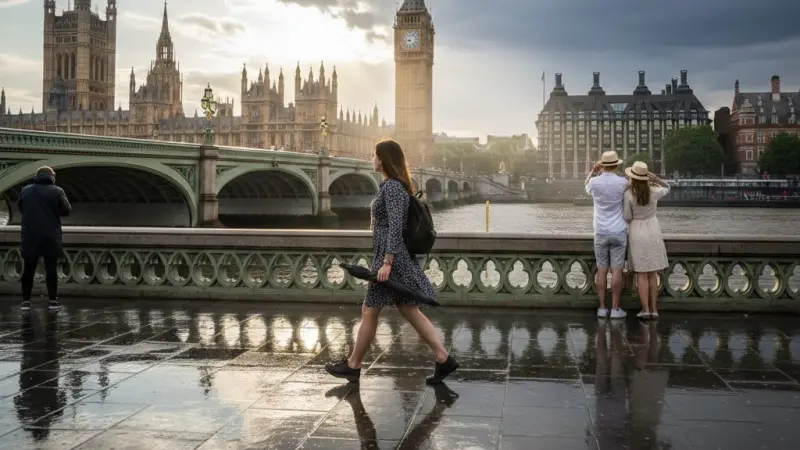
The weather in London is defined by its temperate oceanic climate, characterized by mild winters, cool summers, and a reputation for persistent cloud cover. While many visitors expect constant downpours, the reality of the London atmosphere is more nuanced; the city actually receives less annual rainfall than Rome or Sydney, averaging approximately 600 millimetres per year. However, its position in South East England means it is prone to the "four seasons in one day" phenomenon, where Atlantic depressions can bring rapid shifts from bright sunshine to grey drizzle within minutes. For anyone planning a visit or managing a daily commute, understanding these subtle shifts is the key to navigating the capital comfortably.
What is the weather like in London? London typically experiences average highs of 23°C in July and lows of 2°C in January. While extreme temperatures are rare, the city is subject to a "heat island" effect, keeping the centre several degrees warmer than the outskirts. Rainfall is spread relatively evenly throughout the twelve months, though autumn is statistically the dampest season.
Seasonal Temperature Variations across the Capital
London’s thermal profile is remarkably consistent compared to continental Europe, yet it possesses distinct seasonal characteristics that dictate the pace of city life. In the height of summer, typically July and August, temperatures frequently hover around the twenty-three degree mark, though recent years have seen spikes exceeding thirty degrees. These warm spells transform the city’s green spaces, from Hyde Park to Greenwich, into vibrant social hubs.
Conversely, the winter months from December to February bring a damp chill rather than arctic conditions. Sub-zero temperatures are infrequent, and heavy snowfall is a rarity that often grinds the transport network to a halt when it does occur. The transitional periods of spring and autumn offer the most variety, with crisp, clear mornings often giving way to mild afternoons, requiring a versatile approach to daily planning.
Springtime Bloom and Unpredictable Breezes
March marks the beginning of the transition, where the city shakes off its winter gloom. During this period, you can expect average daytime temperatures to climb from ten to fifteen degrees. The air remains brisk, particularly near the River Thames, where the wind-chill factor can make the Embankment feel significantly colder than the sheltered streets of Soho.
By May, the capital is often bathed in long periods of afternoon sunshine. This is arguably the most picturesque time to experience the weather, as the humidity remains low and the light is exceptionally clear. However, the legendary "April showers" are a statistical reality, often manifesting as brief, intense bursts of rain that clear as quickly as they arrive.
Daylight Hours and Visibility
One often overlooked aspect of the London climate is the dramatic shift in daylight. In mid-winter, the sun sets as early as four in the afternoon, which can impact sightseeing schedules and mood. By June, the city enjoys nearly seventeen hours of daylight, with twilight lingering until well after nine, providing ample opportunity for outdoor dining and evening walks.
Rainfall Myths and Statistical Realities
The global perception of London as a permanently rain-soaked metropolis is somewhat exaggerated by its frequent grey skies. While the city does experience around one hundred and ten rainy days per year, the total volume of precipitation is lower than many other major European capitals. The rain in London is frequently a fine drizzle or light shower rather than a torrential tropical downpour.
Statistics from the Met Office indicate that October and November are traditionally the wettest months, while March and April tend to be the driest. The challenge for residents is not the volume of water but the frequency of "dull" days where the sun remains hidden behind a persistent layer of stratocumulus clouds. This lack of direct sunlight is a defining feature of the British maritime climate.
Summer Thunderstorms and Humidity Spikes
While winter rain is often a lingering affair, summer precipitation usually takes the form of heavy, localized thunderstorms. These occur when warm, humid air from the continent meets cooler Atlantic systems over the London Basin. These storms can be dramatic, occasionally leading to localized flash flooding in lower-lying Tube stations or basement properties.
Humidity levels in London are generally moderate, but during heatwaves, the lack of wind can make the city feel oppressive. The "Urban Heat Island" effect is particularly noticeable during these periods, as the
dense concentration of brick and concrete absorbs heat during the day and radiates it back into the atmosphere at night, preventing the city from cooling down effectively.
Wind Speed and Coastal Influence
Although London is inland, its proximity to the Thames Estuary means it is not immune to coastal wind patterns. Prevailing south-westerly winds are common, often bringing moisture from the Atlantic. These breezes can feel refreshing in the summer but biting in the winter, making windproof clothing an essential part of any Londoner's wardrobe.
Navigating the Urban Heat Island Effect
The phenomenon known as the Urban Heat Island (UHI) is a critical factor in understanding London’s microclimate. Because of the sheer density of buildings, roads, and human activity, central zones like the City and the West End are often three to four degrees warmer than rural Home Counties. This is most significant during the night, especially during the summer months.
For the visitor, this means that even if the forecast suggests a cool evening, the central districts may remain uncomfortably warm. Air conditioning is not as ubiquitous in London as it is in North America, particularly in older residential buildings and certain sections of the London Underground. Planning for heat management is therefore essential during the peak months of July and August.
Choosing Accommodation with Climate in Mind
When booking a stay, it is wise to consider the ventilation and age of the building. Victorian and Georgian properties, while charming, often lack modern climate control. During rare heatwaves, top-floor "attic" flats can become exceptionally hot. Many modern hotels now offer full climate control, which may be worth the extra investment during the height of summer.
Proximity to green spaces can also provide a natural cooling effect. Staying near areas like Regent’s Park or Hampstead Heath can offer a reprieve from the stifling heat of the concrete jungle. The difference in air quality and temperature between a congested street in Camden and the open heights of Parliament Hill can be quite startling on a humid afternoon.
Underground Travel during Heatwaves
The London Underground can reach temperatures exceeding thirty-five degrees during summer spells, particularly on the deeper lines like the Central and Northern lines. It is advisable to use the air-conditioned "S-Stock" trains found on the District, Circle, and Hammersmith & City lines whenever possible, or opt for the overground bus network to stay cool.
Common Mistakes to Avoid in London
One of the most frequent errors made by those unfamiliar with the UK capital is underestimating the "damp cold" of a London winter. Even if the thermometer reads a seemingly mild seven degrees, the high humidity can make the air feel much more piercing than a dry sub-zero temperature elsewhere. Dressing in single, heavy layers is less effective than using multiple thinner layers to trap heat.
Another mistake is relying solely on a large umbrella. While useful for heavy rain, London’s narrow, crowded pavements and frequent gusts of wind make large umbrellas impractical and often prone to breaking. Many locals prefer a high-quality waterproof hooded jacket or a sturdy, compact collapsible umbrella that can be tucked away easily when the sun inevitably reappears.
The Pitfalls of Ignoring the UV Index
Surprisingly, sunburn is a common issue in London during the spring. Because the air temperature often remains cool due to breezes, people fail to realize the strength of the sun in May and June. The UV index can be high even on days that feel temperate, leading to unexpected burns for those spending the day sightseeing on the top deck of an open-top bus.
Additionally, many assume that the "grey" sky offers total protection from the sun. While cloud cover does block some rays, a significant amount of UV radiation still reaches the surface. Always carry a small bottle of sunscreen and sunglasses, as the glare from the river and glass-fronted skyscrapers like the Shard can be quite intense.
Over-reliance on Hourly Forecasts
London's weather is famously fickle. Checking an hourly forecast at eight in the morning and assuming it will remain accurate for the entire day is a recipe for disappointment.
The geography of the Thames Valley means that small pockets of rain can develop and dissipate rapidly. A "twenty percent chance of rain" in London often means it will rain somewhere nearby, so always be prepared.
Practical Guidance for Packing and Planning
The gold standard for London dressing is the "three-layer system." Start with a breathable base, add a light knit or fleece for insulation, and finish with a waterproof, wind-resistant outer shell. This allows you to adapt as you move between the chilly outdoors, the sweltering Tube, and heated shops or museums. Footwear should always be water-resistant; soggy socks are a quick way to ruin a day of exploration.
In terms of planning, utilize the official Met Office or BBC Weather apps for the most localized data. These services are specifically calibrated for the UK’s unique atmospheric conditions. If the forecast looks particularly grim, London offers an abundance of world-class indoor attractions, from the British Museum to the Tate Modern, which are perfect for "ducker and diver" weather days.
Essential Items for Your Day Bag
Your daily "London kit" should include a lightweight, packable raincoat, a pair of sunglasses, and a reusable water bottle. Staying hydrated is vital, especially when using the Underground. It is also worth carrying a small portable power bank; cold weather can drain mobile phone batteries faster than expected, and you will need your device for navigation and contactless payments.
For those visiting in winter, a scarf is more than just a fashion statement; it protects against the wind tunnels created by the city's high-rise architecture. In summer, a small hand-held fan can be a lifesaver on public transport. Always ensure your bag is secure and waterproof to protect your electronics from sudden, unexpected showers.
Step-by-Step Morning Weather Check
Begin your day by checking the "RealFeel" temperature rather than just the raw number. Look at the rain radar map to see if any systems are approaching from the west. Finally, check the Transport for London (TfL) status updates, as extreme weather—be it snow, heavy rain, or excessive heat—can occasionally lead to delays on specific lines or river services.
Future Outlook for the London Climate
Climate projections suggest that London will face increasingly hot and dry summers over the coming decades. By the middle of the century, average summer temperatures could be several degrees higher, with heatwaves becoming the seasonal norm rather than a rare event. This has led to significant investment in the city's infrastructure to improve cooling and flood resilience.
Conversely, winters are expected to become wetter, with more intense bursts of rainfall leading to greater pressure on the Victorian sewer system and the Thames Barrier. The barrier, which protects the city from North Sea storm surges, is being monitored closely as sea levels rise. For the resident and visitor alike, this means being prepared for more "extreme" versions of London's traditional weather patterns.
Adapting Infrastructure for New Extremes
Architectural trends in London are already shifting to combat these changes. Newer developments are incorporating "green roofs" and sustainable drainage systems to manage heavy rainfall.
Public spaces are being redesigned with more shade and water features to mitigate the effects of heatwaves, ensuring the city remains liveable even as the climate evolves.
There is also a growing emphasis on air quality. Schemes like the Ultra Low Emission Zone (ULEZ) are designed to reduce the pollutants that can become trapped during "stagnant" weather conditions, such as winter fogs or summer smogs. These initiatives ensure that despite the changing climate, the air in the capital remains as clean as possible for future generations.
Long-term Planning for Visitors
If you are planning a trip several years in advance, or considering moving to the capital, it is worth looking at the "climate resilience" of specific boroughs. Areas with high concentrations of parkland and modern, energy-efficient housing will likely be more comfortable during the hotter summers of the future. The city’s ability to adapt is one of its greatest strengths.
Frequently Asked Questions
Does it actually rain every day in London?
No, this is a common misconception. London actually has fewer rainy days than many other major cities. On average, there are around 110 days with some form of precipitation per year, meaning that for the majority of the time, the city is dry. The reputation comes from the frequency of overcast, grey skies which give the impression of imminent rain even when it is dry.
When is the best time to visit for good weather?
For the highest chance of warm temperatures and long days, late June through to early September is ideal. However, May and September often provide the most pleasant "touring" weather, with milder temperatures and less humidity. If you prefer crisp, sunny days without the crowds, late autumn can be beautiful, though the days are significantly shorter and the air is much cooler.
Should I pack a heavy coat for a London winter?
It is better to pack a medium-weight, waterproof coat and use layers underneath. Because you will likely be moving between the cold outdoors and very warm environments like the Tube or department stores, a single heavy coat can lead to overheating. A versatile system of a sweater, a light down vest, and a waterproof outer shell is much more practical for London life.
How common is snow in the city centre?
Snow is relatively rare in Central London due to the Urban Heat Island effect. While the outskirts may see a dusting, the centre often remains just warm enough for snow to turn into sleet or rain before hitting the ground. On the rare occasions that heavy snow does settle, it usually only lasts for a day or two before melting, though it causes significant transport disruption.
Is the weather significantly different in North and South London?
The differences are minor but noticeable. North London, particularly higher areas like Highgate and Hampstead, can be a degree or two cooler and slightly windier than the low-lying areas near the river. South London tends to be slightly more sheltered. However, for most daily activities, the weather remains consistent across the main travel zones of the capital.
Disclaimer: The information provided in this article is for general informational and research purposes only. Company details, features, services, and market positions may change over time. Readers are advised to visit official company websites and conduct independent research before making any business decisions or purchasing services.
Most Searchable Keywords
Recent Blogs


Related Listings

Categories
- Accountants (295)
- Advertising Agencies (559)
- Architects (149)
- Automobiles (377)
- Beauty (300)
- Carpenters (146)
- Cleaning Services (387)
- Dentists (189)
- Driving (62)
- Education (1)
- Electricians (215)
- Energy (8)
- Event Organiser (689)
- Finance (602)
- Guide (3492)
- Health (2207)
- Information technology (207)
- Legal Services (361)
- Logistics (6)
- Maintenance (65)
Sponsored Listings in Information Technology

Related Blogs

Creamfields Daresbury: Impact on Local Reside...
Read this insightful article "Creamfields Daresbury: Impact on Local Residents" to expand your knowledge!

UK High Street Businesses in 2026-27: Which S...
Read this insightful article "UK High Street Businesses in 2026-27: Which Sectors Are Growing?" to expand your knowledge!

Why Complete Business Listings Matter More Th...
Read this insightful article "Why Complete Business Listings Matter More Than You Think" to expand your knowledge!
Questions & Answers – Find What You Need, Instantly!
Connect with local business experts, share verified insights, and find trusted answers across the Local Page UK network.
Ask Community
Ask questions to the Local Page UK community
Share Knowledge
Share your knowledge to help out others
Find Solutions
Find answers or offer instant solutions
Some of the most popular fantasy TV shows include "Game of Thrones," known for its epic battles and political intrigue, "The Witcher," which features monster hunting and magic, and "Stranger Things," blending supernatural elements with 1980s nostalgia. Other notable mentions are "His Dark Materials," "Shadow and Bone," and "The Mandalorian," each offering unique worlds and captivating storytelling that have garnered large fan bases.
When seeking bathroom renovation providers that handle both plumbing and tiling, it's advisable to look for licensed contractors who specialize in comprehensive bathroom remodels. Companies such as Home Depot, Lowe's, and Bath Fitter offer these services, often providing a seamless experience by managing all aspects of the renovation process. Additionally, local contractors with positive reviews in platforms like Angie's List or Houzz may also offer tailored solutions for your bathroom needs.
Absolutely, there are several distributors that supply crash mats and soft play equipment to gymnastics clubs in and around Birmingham. National companies like Gymnova, S & G (Spieth Gymnastics), and Jaques of London offer a wide range of crash mats, foam pits, and soft play pieces, and they typically deliver to the Birmingham area. For more local options, you might try The Gym Equipment Company, which has a showroom in the West Midlands, or check out smaller specialist suppliers like Playtime UK. Many of these distributors cater specifically to clubs, offering high-density foam mats that meet safety standards. I'd recommend reaching out to a few to compare pricing, delivery times, and whether they offer custom sizes or installation services. It's also worth checking if any of them have a physical showroom near Birmingham so you can test the equipment before buying. Happy tumbling!
For professionals seeking a reliable sanitaryware supplier in Manchester with trade account facilities, several established merchants combine extensive product ranges, competitive pricing, and dedicated trade support. The most reputable option is Graham Plumbers Merchant, which operates multiple branches across Manchester, including Salford Quays and Oldham. They offer a dedicated trade account service with preferential pricing, priority delivery scheduling, and access to a vast inventory of leading sanitaryware brands such as Villeroy & Boch, Duravit, Ideal Standard, and Roca. Their trade accounts typically include net 30-day payment terms, online account management, and a tailored project quotation system. Similarly, City Plumbing Supplies has several Manchester-based depots (such as Ashton-under-Lyne and Stockport) that cater specifically to trade customers, providing a rapid order-and-collect service, trade-only promotions, and a loyalty programme offering rebates on repeat purchases. Their product range covers everything from basins and WCs to complete bathroom suites and brassware, with in-house technical advisors available for specification support. Another key player is Plumb Center, part of the Wolseley Group, which offers trade accounts with bespoke pricing structures, direct-to-site deliveries within the Greater Manchester area, and access to over 10,000 lines of sanitaryware, including premium brands like Grohe and Hansgrohe. Their trade portal allows for real-time stock checking and order history tracking, facilitating efficient project management. For those seeking a more specialist or high-end option, Bathroom Spares in Manchester provides trade accounts with a focus on hard-to-find sanitaryware and discontinued ranges, which can be invaluable for refurbishment projects. Additionally, independent merchants such as M&B Plumbase in Trafford Park offer flexible trade terms, personalised service, and competitive pricing on both mainstream and luxury sanitaryware. When evaluating suppliers, trade customers should consider factors beyond price: reliability of stock availability, delivery timescales within Manchester’s often congested zones, clarity of returns policies, and the quality of after-sales support for warranty claims. It is advisable to request a trade account application from at least two to three suppliers to compare discounts, minimum order values, and payment terms. Many suppliers also offer showroom access for trade clients, allowing you to inspect finishes and dimensions before committing to large orders. For ongoing projects, establishing a relationship with a single supplier who offers consolidated invoicing and dedicated account management can streamline procurement. Ultimately, the most reliable supplier for your trade account in Manchester will be one that aligns with your volume requirements, preferred brands, and service expectations, so a site visit to their local branch and a discussion about your specific trade needs is highly recommended before committing to an account.
People in Leeds are loving their local florists—customers often mention gorgeous, fresh arrangements and super friendly service. Many rave about reliable same-day delivery and creative wedding bouquets. A few note pricing can vary, but overall, the buzz is all about quality and that personal touch making every order feel special.
Common problems for commercial gardening in Bristol include weed overgrowth, soil degradation, pest infestations, and irrigation malfunctions. Additionally, managing seasonal transitions, adhering to sustainability regulations, and maintaining consistent aesthetics pose significant challenges. Expert services mitigate these via structured maintenance, integrated pest management, and soil analysis to ensure long-term landscape health.