
Educational Services Articles
Explore 93 business insights in all locations
Educational Services
Apr 08, 2026
International Society for Artificial Life: Global ALife Hub
The quest to define "life" has historically been the domain of biology, confined to the carbon-based organisms found on Earth. However, the International Society for Artificial Life (ISAL) has spent decades expanding this definition, shifting the focus from "life as we know it" to "life as it could be." As the premier global professional organization for the interdisciplinary field of Artificial Life (ALife), ISAL serves as the foundational pillar for scientists, engineers, and philosophers who seek to replicate the fundamental properties of living systems through synthetic means.
Headquartered in Brighton, United Kingdom, at the University of Sussex, ISAL is not merely a scientific society; it is the administrative and intellectual heart of a movement that bridges the gap between biological theory and digital synthesis.
The Origins of Artificial Life: From Santa Fe to the Global Stage
The formalization of Artificial Life as a rigorous academic discipline is largely credited to Christopher Langton, the founding president of ISAL. While the roots of the field reach back to the cybernetics of the 1940s and the cellular automata of John von Neumann, it was Langton’s inaugural workshop at the Los Alamos National Laboratory in 1987 that unified these disparate threads.
By 1991, the International Society for Artificial Life was officially established to provide a permanent home for this growing community. Today, ISAL oversees the flagship ALife Conference series and the prestigious Artificial Life journal, published by MIT Press. These platforms ensure that research into self-replication, open-ended evolution, and emergent complexity remains peer-reviewed, accessible, and cutting-edge.
The Three Pillars of ALife: Soft, Hard, and Wet
ISAL promotes research across three distinct but overlapping methodologies, often referred to as the "Soft, Hard, and Wet" branches of Artificial Life:
Soft ALife (Computational Modeling): This involves software-based simulations where digital "organisms" evolve and interact. It is the birthplace of evolutionary computation and swarm intelligence, providing insights into how complex global behaviors emerge from simple local rules.
Hard ALife (Evolutionary Robotics): In this domain, researchers build physical machines—robots—that exhibit life-like behaviors such as adaptation, autonomous navigation, and collective coordination.
Wet ALife (Synthetic Biology): Perhaps the most challenging frontier, Wet ALife involves the biochemical synthesis of life-like systems in a laboratory. This includes research into protocells and the origins of life on a molecular level.
Why Join ISAL? Global Membership and Programs
For researchers and students, ISAL membership offers more than just professional affiliation. It provides a gateway to the "last grand challenges" of science. Members gain access to:
Global Networking: Connection with a worldwide community of experts in synthetic biology, computational modeling, and the philosophy of life.
Academic Support: Digital access to conference proceedings and professional networking forums.
Student Travel Fellowships: Ensuring the next generation of researchers can present their work at international summits.
Annual Excellence Awards: Recognition for groundbreaking contributions to the field, fostering a culture of innovation and scientific rigor.
Bridging Technology and Philosophy
Artificial Life is as much a philosophical endeavor as it is a technical one. ISAL members frequently tackle questions regarding the nature of consciousness, the ethics of creating synthetic entities, and the "Strong ALife" hypothesis—the idea that a computer simulation could, in principle, be literally alive.
By hosting discussions on emergent behavior and the transition from non-living to living matter, ISAL ensures that the development of synthetic intelligence is grounded in a deep understanding of natural biological principles.
Contact and Administrative Information
Headquarters: Department of Informatics, University of Sussex, Falmer, Brighton, BN1 9RH, UK.
Website: https://alife.org
Email: secretary@alife.org
Helpdesk: 01273606755
Frequently Asked Questions
1. What is the main mission of the International Society for Artificial Life (ISAL)?
ISAL is dedicated to promoting research and education in the field of Artificial Life. Its mission is to support the study of "life as it could be" through computational, robotic, and synthetic biological methods, fostering a global community of interdisciplinary researchers.
2. Who founded ISAL and when?
The society was founded in 1991, following the momentum generated by the first Artificial Life workshop organized by Christopher Langton in 1987. Christopher Langton is recognized as the founding president.
3. What is the difference between Artificial Intelligence (AI) and Artificial Life (ALife)?
While AI focuses on replicating human-like intelligence and cognitive tasks, ALife focuses on replicating the processes of living systems, such as evolution, self-organization, metabolism, and reproduction. ALife often uses a "bottom-up" approach to see how intelligence emerges from life-like interactions.
4. Where is the ISAL headquarters located?
The administrative hub is located at the Department of Informatics, University of Sussex, in Brighton, United Kingdom.
5. How can I publish research with ISAL?
ISAL supports researchers through its official publication, the Artificial Life journal (MIT Press), and the annual ALife Conference proceedings. Researchers can submit their work during the annual call for papers.
6. Does ISAL offer memberships for students?
Yes, ISAL has a robust global membership program that includes specific support for students, such as travel fellowships and access to the ERA (Emerging Researchers in Alife) group.
7. What are the "Soft, Hard, and Wet" categories of ALife?
Soft: Computer simulations and digital evolution.
Hard: Robotics and physical hardware.
Wet: Synthetic biology and biochemical life-like systems.
8. Is ISAL a non-profit organization?
Yes, ISAL is a registered 501(c)(3) non-profit scientific organization with an international board of directors.
9. What payment methods are accepted for ISAL membership?
ISAL accepts Credit/Debit cards, PayPal, and Bank Transfers (BACS/Swift).
10. How can I stay updated on ALife research?
You can subscribe to the ALife Newsletter via the official website or follow ISAL’s social media channels, including their active LinkedIn group.
York
6 Views
Educational Services
Apr 08, 2026
The Society for Renaissance Studies: Leading the Field Since 1967
The Society for Renaissance Studies (SRS) stands as the preeminent United Kingdom-based organization dedicated to the rigorous, interdisciplinary exploration of the Renaissance. Since its founding in 1967, the Society has bridged the gap between diverse academic fields—from the history of science and philosophy to the fine arts—fostering a cohesive scholarly dialogue that resonates across the global academic community.
As a registered educational charity (No. 1025890), the SRS is more than just a membership group; it is a vital engine for research. Headquartered at the prestigious Warburg Institute in London, the Society provides a vibrant forum for researchers, students, and enthusiasts to examine the transformative period of the 14th to 17th centuries.
The Foundation and Legacy of SRS
The roots of the SRS are deeply embedded in the "Golden Age" of British historiography. Formed during a founding meeting at the Institute of Historical Research (IHR) on July 12, 1967, the Society was established to provide a formal structure for the burgeoning field of Renaissance studies.
The founders envisioned an organization that would not be confined to a single university but would serve as a national and international network. Today, it operates under the patronage of the University of London and maintains close ties with the Warburg Institute, located in the heart of Bloomsbury near the British Museum.
Renaissance Studies: The Flagship Journal
Central to the Society’s mission is the publication of its world-renowned journal, Renaissance Studies. Published by Wiley-Blackwell, this peer-reviewed journal is a staple in university libraries worldwide. It is celebrated for its commitment to interdisciplinary research, publishing articles that draw connections between:
Art History and political theory.
Early Modern Literature and the history of medicine.
Religious Reformation and scientific discovery.
Members of the SRS enjoy digital access to the journal's extensive archives, providing a treasure trove of scholarly insight spanning decades.
Empowering the Next Generation: Grants and Fellowships
The Society for Renaissance Studies is a champion for early-career researchers (ECRs). Recognizing the financial hurdles inherent in high-level humanities research, the SRS offers several prestigious funding opportunities:
Postdoctoral Fellowships: Providing essential financial support for scholars to transition from their PhD to permanent academic roles.
Doctoral Travel Grants: Assisting students in accessing archives, libraries, and galleries globally—crucial for primary source research.
Conference Subsidies: Funding local study days and national conferences to ensure that breakthrough research is shared and critiqued.
The SRS Book Prize: Awarded biennially to recognize outstanding first monographs, celebrating the best new voices in the field.
A Vibrant Calendar of Scholarly Exchange
The SRS is perhaps most famous for its Biennial National Conference. This event draws hundreds of delegates from across the globe, serving as a clearinghouse for the latest findings in Renaissance culture. Beyond the major conferences, the Society supports:
Interdisciplinary Study Days: Smaller, focused workshops that tackle specific themes or methodologies.
Public Lectures: Bridging the gap between the academy and the public to ensure the lessons of the Renaissance remain accessible.
Networking Forums: Digital and physical spaces where mentors and mentees can connect.
Why Join the SRS?
Membership in the Society for Renaissance Studies is open to anyone with an interest in the period. For a modest subscription fee, members receive:
Hard copies and digital access to Renaissance Studies.
Eligibility for all research and travel grants.
Priority booking and discounted rates for SRS conferences.
Access to a global network of leading scholars.
The Renaissance in the 21st Century
The legacy of the Renaissance—its innovations in art, its challenges to authority, and its expansion of human knowledge—remains deeply relevant. The Society for Renaissance Studies ensures that this legacy is not merely preserved but actively interrogated. By fostering collaborative exchange and supporting rigorous scholarship, the SRS empowers today’s researchers to inform and inspire contemporary thought.
Frequently Asked Questions
1. What is the primary focus of the Society for Renaissance Studies?
The SRS focuses on the interdisciplinary study of the Renaissance period (roughly 1300–1700), encompassing history, art, literature, music, science, and philosophy.
2. How do I apply for an SRS Postdoctoral Fellowship?
Fellowship calls are typically announced annually on the official SRS website. Applicants must usually be members of the Society and have completed their PhD within a specific timeframe.
3. Is the SRS only for UK-based scholars?
While the SRS is based in the UK, its membership and journal contributors are global. Anyone worldwide with an interest in Renaissance studies is encouraged to join.
4. Where is the Society for Renaissance Studies located?
The administrative headquarters are located at the Warburg Institute, Woburn Square, London, WC1H 0AB, United Kingdom.
5. How often is the journal "Renaissance Studies" published?
The journal is published five times a year, featuring peer-reviewed articles, book reviews, and exhibition reviews.
6. Can students receive travel grants from the SRS?
Yes, the SRS offers dedicated travel grants specifically for doctoral students to help cover the costs of visiting archives and attending relevant conferences.
7. Who founded the Society for Renaissance Studies?
The Society was formed by a group of eminent scholars, including art historian Ernst Gombrich and historian Denys Hay, during a meeting at the Institute of Historical Research in 1967.
8. What payment methods does the SRS accept for membership?
The Society accepts Bank Transfers (BACS), Credit/Debit Cards, and online payments through their membership portal.
9. Does the SRS offer mentorship for early-career researchers?
Yes, the Society facilitates mentorship through its networking forums and dedicated support programs for ECRs (Early Career Researchers).
10. Is the Society for Renaissance Studies a charity?
Yes, it is a registered educational charity in the UK (Charity No. 1025890), dedicated to the public benefit of advancing education in the Renaissance.
York
10 Views
Educational Services
Apr 08, 2026
University of York: A Global Leader in Research & Excellence
The University of York, established in 1963, stands as a beacon of academic brilliance and social progression in the heart of North Yorkshire, United Kingdom. As a proud member of the prestigious Russell Group, the university has cemented its reputation as a premier research-intensive institution. Founded with a visionary commitment to academic excellence and social equity, York has transitioned from a mid-century "plate glass university" into a global leader in higher education.
Operating through a distinctive collegiate system, the University of York provides much more than just a classroom experience; it offers a supportive, interdisciplinary community for its diverse student body. Guided by its mission to be a "university for public good," the institution drives cultural, social, and economic value through bold, creative thinking and world-class research.
Historical Foundations and Royal Charter
The university’s journey began on 09 July 1963, the date its Royal Charter (Registration Number: RC000679) was granted. The primary driving force behind its inception was John Bowes Morrell, whose dedication to expanding educational access in the North of England paved the way for the institution we see today.
Over the decades, the university has remained true to its founding principles while adapting to the needs of the 21st century. Today, it stands as a testament to how traditional scholarship can integrate with modern professional development to empower the next generation of global leaders.
Academic Prowess and Specializations
The University of York offers an extensive array of undergraduate degrees, postgraduate research opportunities, and online Masters courses. The institution is globally renowned for its high-impact research output, specifically within the following specializations:
Social Policy: Ranked consistently among the top departments in the UK for its influence on government policy and social welfare.
English Literature: A hub for literary criticism and creative writing, fostering a deep appreciation for the written word.
Archaeology: Utilizing state-of-the-art facilities like the YEAR (York Experimental Archaeology Research) Centre.
Health Economics: A world leader in evaluating healthcare systems and pharmaceutical efficiency.
Atmospheric Chemistry: Home to the Wolfson Atmospheric Chemistry Laboratories (WACL), tackling global climate and pollution challenges.
Through executive education and business consultancy, the university also bridges the gap between academia and the corporate sector, ensuring that its research translates into real-world solutions for global industries.
The Collegiate System: A Home Away from Home
One of York’s most defining features is its Collegiate Support System. Unlike many other universities, every student at York—whether living on or off-campus—is a member of one of its eleven colleges. This system fosters a sense of belonging, provides localized pastoral care, and encourages interdisciplinary collaboration.
The colleges act as the heartbeat of the campus, hosting social events, sports competitions, and academic workshops. This structure ensures that in a university of over 20,000 students, no one is ever just a number.
Campus Innovation and Facilities
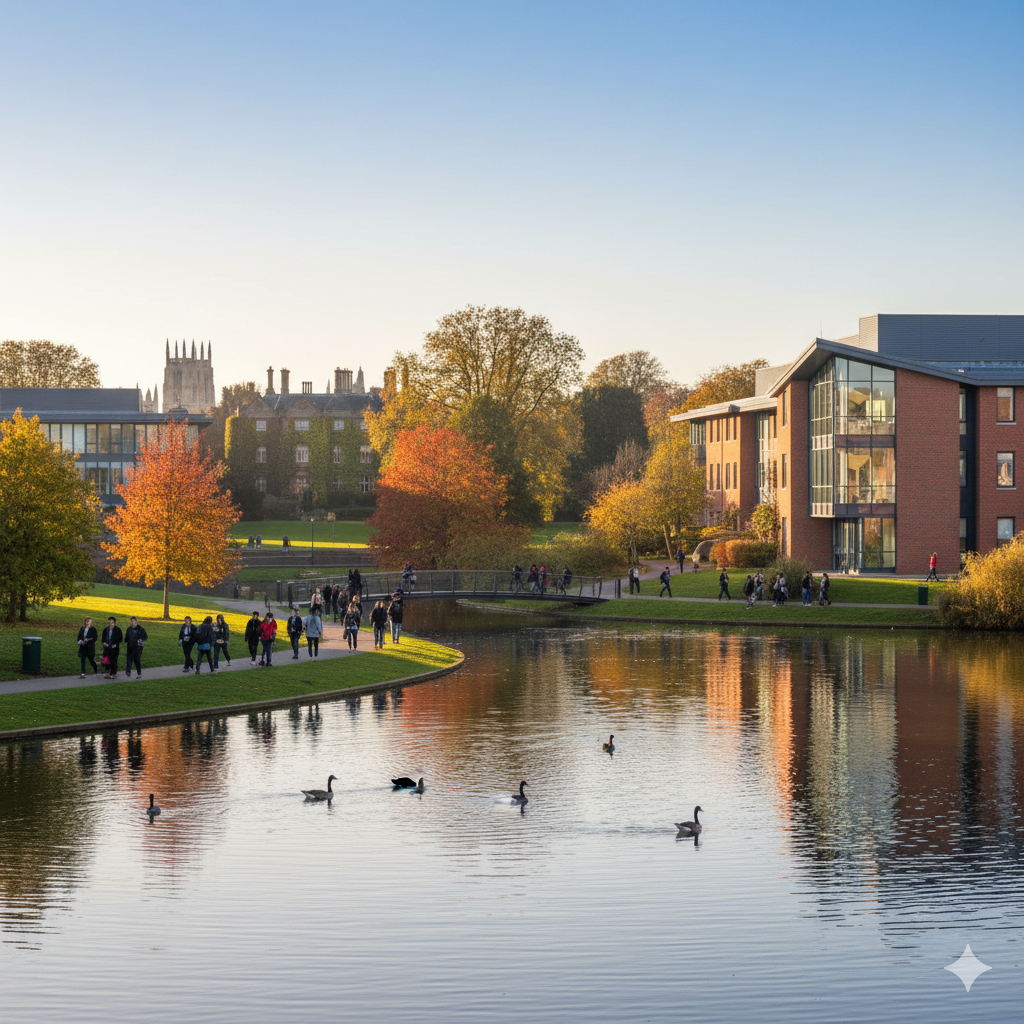
The University of York is physically situated in Heslington, York, YO10 5DD, centered around a beautifully landscaped 500-acre parkland. The campus is famous for its large plastic-bottomed lake, one of the largest in Europe, which serves as a unique landmark near Heslington Hall.
Amenities and Infrastructure:
24/7 Library Access: The JB Morrell Library and its extensions provide round-the-clock resources for rigorous scholarship.
Specialized Research Facilities: From the Hull York Medical School to the York Science Park, the infrastructure supports cutting-edge discovery.
York Sport Village: A multi-million-pound facility offering Olympic-sized swimming, high-tech fitness suites, and floodlit pitches.
High-Speed Wi-Fi: University-wide connectivity ensuring seamless access to digital resources and online learning platforms.
Economic Impact and Brand Association
The university is not just an educational hub; it is an economic powerhouse. With approximately 5,000 employees, it is one of the region's largest employers. Its brand associations, including York Conferences and York Science Park, contribute significantly to the local economy within a 50-mile service area radius.
The university fosters deep-rooted partnerships with local businesses and international organizations, facilitating knowledge exchange that drives regional growth. The York Science Park, in particular, provides a launchpad for high-tech startups and spin-off companies, reinforcing York’s status as an innovation hub.
Admissions and Practical Information
For prospective students and partners, the University of York maintains a transparent and accessible administrative structure.
Working Hours: Monday–Friday, 09:00 – 17:30 (Admin Hours).
Accepted Payment Methods: To facilitate ease of transactions for international and domestic students, the university accepts Bank Transfer, Online Student Portal Payments, and Credit/Debit Cards.
Language Supported: The primary medium of instruction and administration is English.
Contact Details:
Helpdesk/Phone: 01904320000
Email: enquiries@york.ac.uk
Website: https://www.york.ac.uk
LinkedIn: linkedin.com/school/university-of-york
Certifications and Affiliations
The University of York’s commitment to quality is validated by various prestigious affiliations and awards:
Russell Group Membership: Signifying its status among the UK's top 24 research-intensive universities.
Athena SWAN Awards: Recognition for its commitment to gender equality in higher education (holding various Bronze and Silver departmental awards).
Worldwide Universities Network (WUN): A global partnership facilitating international research collaboration.
Frequently Asked Questions
1. When was the University of York founded?
The university was established on 09 July 1963, when it received its Royal Charter.
2. Is the University of York part of the Russell Group?
Yes, the University of York is a prominent member of the Russell Group, representing the UK's leading research-intensive universities.
3. What is the "Collegiate System" at York?
The collegiate system divides the university into eleven distinct colleges. Every student belongs to a college, which provides a smaller, supportive community for socializing, support, and accommodation.
4. Where is the University of York located?
The main campus is located in Heslington, York, North Yorkshire, YO10 5DD, United Kingdom, near the historic Heslington Hall.
5. What are the university's strongest subjects?
York is particularly renowned for Social Policy, English Literature, Archaeology, Health Economics, and Atmospheric Chemistry.
6. Does the university offer 24/7 facilities?
Yes, the university provides 24/7 library access and high-speed Wi-Fi across the entire campus to support students' academic needs at any time.
7. How can I contact the University of York admissions team?
You can reach the helpdesk at 01904320000 or via email at enquiries@york.ac.uk.
8. What payment methods are accepted for tuition fees?
The university accepts Bank Transfers, Credit/Debit Cards, and payments through the Online Student Portal.
9. What kind of sports facilities are available?
The York Sport Village offers a wide range of amenities, including a 25m swimming pool, a 120-station gym, and various outdoor pitches and courts.
10. What is the university's mission?
The University of York defines itself as a "university for public good," focusing on research and education that creates positive social, cultural, and economic impact.
Shaping the Future
As the University of York moves forward, it continues to blend its rich heritage with a forward-thinking approach to global challenges. Whether you are a prospective student looking for an elite academic environment, a business seeking expert consultancy, or a researcher aiming to change the world, York offers the resources, community, and prestige to help you succeed. Its dedication to the "public good" ensures that every breakthrough made within its walls resonates far beyond the borders of North Yorkshire.
York
6 Views
Educational Services
Apr 08, 2026
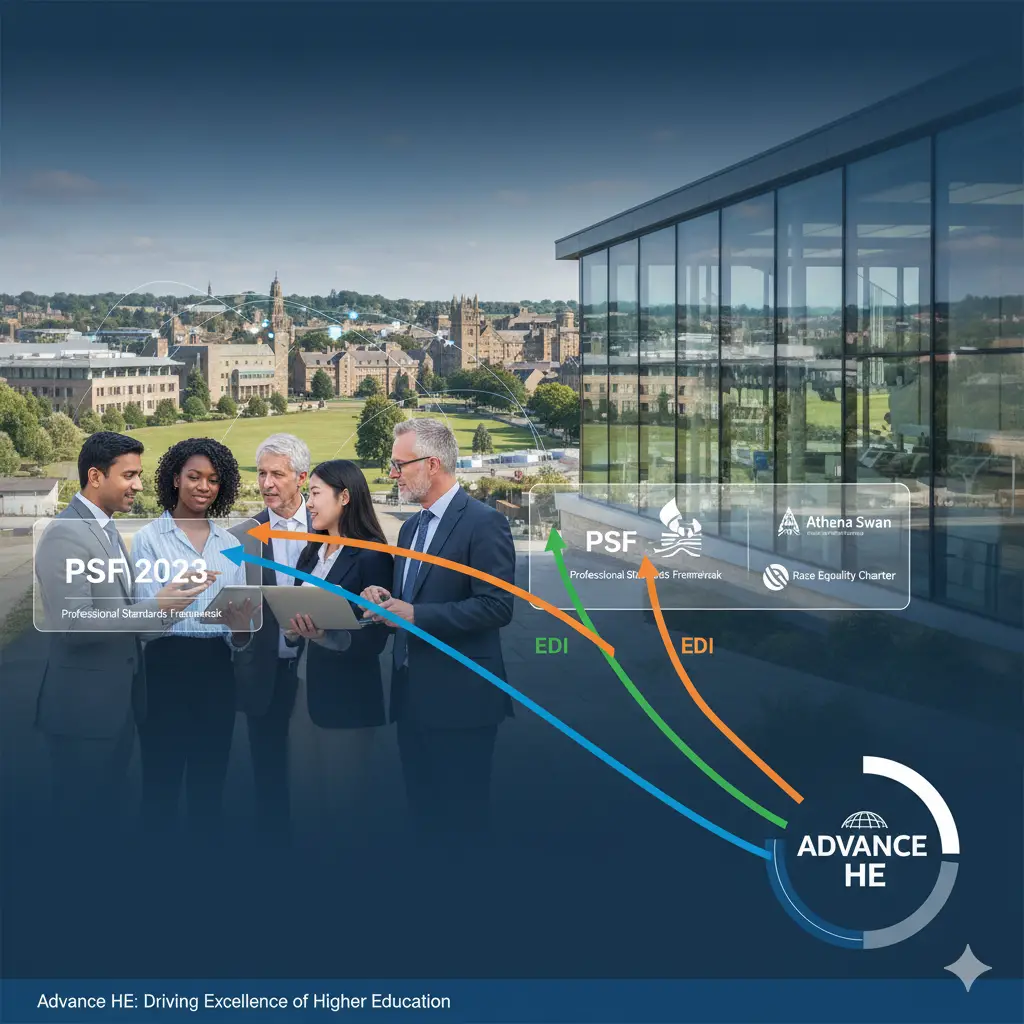
Advance HE: Driving Excellence in Higher Education
The landscape of higher education is undergoing a profound transformation. As institutions navigate shifting student demographics, digital disruption, and increasing calls for social accountability, the need for a unified, expert-led support system has never been greater. Enter Advance HE, a member-led, sector-owned charity headquartered in York, United Kingdom, dedicated to improving higher education for staff, students, and society at large.
Formed in 2018 through a strategic merger of three powerhouse organizations—the Higher Education Academy (HEA), the Equality Challenge Unit (ECU), and the Leadership Foundation for Higher Education (LFHE)—Advance HE serves as the ultimate professional body for the academic community. This article provides an in-depth exploration of its services, impact, and the frameworks that define modern teaching excellence.
The Genesis: A Merger for the Future of Learning
The birth of Advance HE on March 21, 2018, was not merely a change in name but a consolidation of specialized expertise. By bringing together teaching and learning (HEA), equality and diversity (ECU), and leadership and governance (LFHE), the organization created a holistic approach to institutional development.
Today, Advance HE operates as a global consultancy and professional body, supported by major UK stakeholders like Universities UK and GuildHE. With over 210 employees and a reach that spans from its base at the York Science Park to institutions in over 80 countries, it has become the "gold standard" for professional recognition in the sector.
The Professional Standards Framework (PSF 2023)
At the heart of Advance HE’s teaching and learning mission is the Professional Standards Framework (PSF). Recently updated in 2023 to reflect the evolving needs of the global HE community, the PSF provides a comprehensive set of standards for those who teach or support learning.
The Dimensions of Practice
The PSF is built upon three core sets of "Dimensions":
Professional Values: Including a commitment to inclusivity, equity, and evidence-informed practice.
Core Knowledge: The subject material and the methods of teaching it effectively.
Areas of Activity: The actual practice of designing curricula, teaching, and assessment.
The 2023 update placed a renewed emphasis on inclusive practice and the effectiveness and impact of teaching, ensuring that educators are not just performing tasks but are actively improving student outcomes.
Advance HE Fellowships: A Global Mark of Professionalism
The Advance HE Fellowship (formerly HEA Fellowship) is perhaps the most recognized credential in the academic world. It serves as an international "passport to teach," signifying a practitioner's commitment to professionalism and student success.
There are four distinct categories of Fellowship, tailored to different career stages:
Associate Fellow (AFHEA): Designed for early-career researchers, PhD students with teaching duties, or professional staff with limited teaching responsibilities.
Fellow (FHEA): The standard for established academics with a substantive teaching role.
Senior Fellow (SFHEA): Awarded to those who demonstrate a sustained record of effectiveness in strategic leadership of teaching and learning.
Principal Fellow (PFHEA): The highest level of recognition, reserved for senior leaders who have a significant, institution-wide (or even national/international) impact on the student learning experience.
With over 165,000 Fellows worldwide, this network forms a global community of practice dedicated to pedagogical innovation.
Driving Social Change: Athena Swan and Race Equality Charters
Advance HE is a world leader in promoting Equality, Diversity, and Inclusion (EDI) through its celebrated charter marks. These frameworks provide a roadmap for institutions to address systemic inequalities.
Athena Swan Charter
Originally launched in 2005 to support women in STEMM (Science, Technology, Engineering, Maths, and Medicine), the Athena Swan Charter has expanded to cover all disciplines and genders. It focuses on removing barriers to progression and transforming institutional culture to ensure that talent is nurtured regardless of gender.
Race Equality Charter (REC)
The REC aims to improve the representation, progression, and success of minority ethnic staff and students. It requires institutions to undergo a rigorous self-reflection process, identifying racial inequalities and committing to action-oriented solutions.
Leadership and Governance in Modern Higher Education
Effective leadership is the bedrock of a successful university. Advance HE provides a suite of programs designed to equip current and future leaders with the skills to manage complex academic environments.
Aurora: A unique leadership development initiative for women, which has seen thousands of participants gain the confidence and skills to move into senior roles.
Top Management Programme (TMP): The flagship program for those entering executive-level leadership.
Governance Effectiveness Reviews: Advance HE works directly with University Boards and Governing Bodies to ensure they are meeting regulatory standards and providing effective strategic oversight.
Global Reach and Consultancy Services
While headquartered in York, Advance HE’s influence is truly international. From supporting the development of national teaching standards in Thailand and Bahrain to facilitating leadership training in Ukraine, the organization leverages its UK expertise to benefit the global sector.
Member institutions gain access to:
Virtual Learning Environments (VLE) for professional development.
Research Data Dashboards that provide insights into student experience and staff demographics.
Peer-Review Networks that foster collaborative scholarship.
The Value of Membership
Advance HE is a member-led charity. Institutional membership provides universities with discounted access to accreditation, fellowships, and consultancy. It also allows staff to join a vast network of HE professionals, sharing best practices through webinars, conferences, and the Advance HE Connect platform.
Frequently Asked Questions
1. What is the difference between HEA and Advance HE?
HEA (Higher Education Academy) was one of the three organizations that merged to form Advance HE in 2018. While the name of the organization is now Advance HE, the professional recognition is still commonly referred to as "HEA Fellowship."
2. How do I apply for an Advance HE Fellowship?
Applications can be made through your institution if they have an accredited internal scheme, or directly to Advance HE via their online portal. You will need to provide an "Account of Professional Practice" (APP) mapped against the PSF 2023 dimensions.
3. What are the benefits of becoming a Fellow?
Fellowship provides professional recognition of your teaching expertise, enhances your CV for promotion and recruitment, and entitles you to use post-nominal letters (e.g., FHEA). It also demonstrates your commitment to student success.
4. How much does a Fellowship application cost?
Fees vary depending on whether you are applying through a member institution or as an individual. Current prices can be found on the Advance HE website, with significant discounts available for staff at member universities.
5. What is the Athena Swan Charter?
It is a framework used globally to support and transform gender equality within higher education and research. Achieving a Bronze, Silver, or Gold award demonstrates an institution's commitment to gender equity.
6. Can I apply for Fellowship if I work outside the UK?
Yes. Advance HE is a global body, and Fellowships are recognized and held by practitioners in over 80 countries.
7. What is the "Aurora" program?
Aurora is Advance HE’s leadership development initiative specifically for women in higher education. it combines training, mentoring, and networking to support career progression.
8. Is the PSF only for academic lecturers?
No. The Professional Standards Framework is designed for anyone who supports learning, including technicians, librarians, learning technologists, and student support staff.
9. How does Advance HE support university governance?
They offer Governance Effectiveness Reviews, training for new governors, and the "Governor Development Programme" (GDP) to ensure university boards operate efficiently and ethically.
10. Where is Advance HE located?
The global headquarters is located at York Science Park, Heslington, York (YO10 5BR), United Kingdom, near the University of York campus.
A Partner in Academic Transformation
Advance HE stands as a pillar of the global academic community. By integrating pedagogical excellence with social equity and strategic leadership, they ensure that higher education institutions are not just places of learning, but beacons of professional and social progress. Whether you are an early-career researcher seeking an Associate Fellowship or a Vice-Chancellor aiming for a Race Equality Charter award, Advance HE provides the tools, frameworks, and community to help you succeed.
For more information, visit their website at https://www.advance-he.ac.uk or contact their York-based helpdesk at 01904 917108.
York
7 Views
Article Posting
Get Started Today to Publish an Article
Educational Services
Apr 08, 2026
MIT Sloan: The Global Hub for Management Innovation
The intersection of rigorous analytical thinking and real-world application is the hallmark of the MIT Sloan School of Management. Founded in 1914 as "Course XV," the institution has evolved from an engineering administration program into one of the world’s most prestigious business schools. Located at 100 Main Street, Cambridge, MA, near the scenic Charles River, MIT Sloan operates as a premier academic hub under the broader umbrella of the Massachusetts Institute of Technology (MIT).
For executives in the UK and students across the globe, MIT Sloan represents more than just a degree; it is a gateway to a transformative ecosystem defined by the motto Mens et Manus (Mind and Hand).
The Core Philosophy: Action Learning
At the heart of the MIT Sloan experience is the concept of Action Learning. Unlike traditional case-study methods that rely on retrospective analysis, Action Learning immerses students in the current complexities of global organizations.
Global Action Learning Labs
Through initiatives like the Global Entrepreneurship Lab (G-Lab) and the GlobalHealth Lab, students travel to emerging markets and industrial hubs—including strategic locations in London and across Europe—to solve live business challenges. These labs allow for the immediate application of data-driven insights to help startups scale or to optimize healthcare delivery systems.
Elite Academic Programs and Specializations
MIT Sloan offers a diverse portfolio designed for every stage of a leader's career. Each program is rooted in Sustainability, Data Science, and Strategic Leadership.
1. The Flagship MBA Program
The MIT Sloan MBA is consistently ranked among the top globally. It is designed for "principled, innovative leaders" who wish to bridge the gap between technical expertise and management excellence.
Specialization: Students can pursue tracks in Finance, Entrepreneurship & Innovation, or Enterprise Management.
Brand Association: Access to the broader MIT ecosystem, including the Media Lab and the Computer Science and Artificial Intelligence Laboratory (CSAIL).
2. Specialized Master’s Degrees
Master of Finance (MFin): A rigorous program that prepares graduates for high-level roles in quantitative finance and asset management.
Master of Business Analytics (MBAn): Launched in collaboration with the Operations Research Center, this program focuses on the application of modern data science to business challenges.
3. Executive Education and Training
For senior leaders, the Advanced Management Program (AMP) and the Executive MBA (EMBA) provide the frameworks necessary to navigate the digital economy. These non-degree and degree-based executive programs emphasize Digital Business, Artificial Intelligence, and Systems Thinking.
A Global Presence: The UK Connection
While headquartered in Cambridge, Massachusetts, MIT Sloan maintains a robust presence in the United Kingdom. The MIT Club of Great Britain serves as a vital alumni hub in London, fostering strategic partnerships with British industry and academic institutions.
This UK connection ensures that "Action Learning" projects frequently engage with London’s thriving fintech and biotechnology sectors, allowing students to navigate the nuances of the European market while leveraging MIT’s global network.
The MIT Sloan Management Review (SMR)
The MIT Sloan Management Review is a world-leading publication that bridges the gap between academic research and management practice. It provides evidence-based insights into how technology—such as AI and blockchain—is reshaping the future of work and corporate culture.
Key Facts & Amenities
Founder: Alfred P. Sloan Jr.
Accreditation: AACSB Accredited.
Amenities: Digital Learning Platforms, Action Learning Labs, Career Development Office, and Research Centers.
Accepted Payment Methods: Bank Transfer, Credit/Debit Cards, Wire Transfer.
Frequently Asked Questions
1. What is the "Action Learning" method at MIT Sloan?
Action Learning is a hands-on pedagogical approach where students work on real-world projects for host organizations. It transforms classroom theory into practical, measurable results.
2. Does MIT Sloan have a presence in the UK?
Yes. While the main campus is in Cambridge, MA, the school has a strong UK Alumni Hub in London and collaborates closely with the MIT Club of Great Britain.
3. What are the core specializations offered?
MIT Sloan specializes in Innovation, Entrepreneurship, Sustainability, Data Science, and Strategic Leadership.
4. How does the Master of Finance differ from the Master of Business Analytics?
The MFin focuses on financial markets and portfolio management, while the MBAn is centered on using data science and machine learning to solve broader business operations problems.
5. Is MIT Sloan accredited?
Yes, the school is AACSB (Association to Advance Collegiate Schools of Business) accredited.
6. Can executives take short-term courses?
Absolutely. MIT Sloan Executive Education offers over 60 short courses and several Executive Certificate tracks in areas like Digital Business and Strategy.
7. Who founded the school?
The school was formally named after Alfred P. Sloan Jr., the former Chairman and CEO of General Motors, who played a pivotal role in its development in the mid-20th century.
8. What are the working hours for the admissions helpdesk?
The office is generally open Monday through Friday, 9:00 AM – 5:00 PM (EST).
9. Are there online learning options?
Yes, MIT Sloan offers a wide range of digital learning platforms and live online courses for global participants.
10. What is the relationship between MIT Sloan and the main MIT campus?
MIT Sloan is one of the five schools of the Massachusetts Institute of Technology. It is deeply integrated into the Institute’s culture of interdisciplinary innovation and technology.
Cambridge
11 Views

Educational Services
Apr 08, 2026
Wellcome Genome Campus: Leading the Future of Genomics
In the quiet, picturesque landscape of Hinxton, Cambridgeshire, lies an ecosystem that is anything but quiet in its scientific ambition. The Wellcome Genome Campus is more than just a research facility; it is the beating heart of global genomics. For over three decades, this campus has been the site of some of the most profound discoveries in biological history, serving as a lighthouse for scientists, entrepreneurs, and educators dedicated to understanding the very code of life.
From the monumental task of sequencing the first human genome to tracking the evolution of global pandemics in real-time, the Wellcome Genome Campus bridges the gap between raw biological data and life-saving medical applications. Today, home to over 2,600 experts, the campus is embarking on a transformative journey—expanding its footprint to become a global township where science, industry, and community live and breathe in unison.
A Legacy of Ambition: From 1994 to the World Stage
Founded in October 1994 by the Wellcome Trust, the campus was born from a necessity to scale. The biology of the late 20th century was shifting from small-scale laboratory experiments to "Big Science"—projects that required industrial-scale sequencing, massive computational power, and unprecedented international collaboration.
The campus was established specifically to house the Wellcome Sanger Institute (then the Sanger Centre), which played a pivotal role in the Human Genome Project. By the time the draft sequence was announced in 2000, the Sanger Institute had contributed one-third of the total data—the largest single contribution by any center worldwide. This legacy of "Open Science"—ensuring that genomic data is freely accessible to everyone—remains the guiding principle of the campus today.
The Powerhouse Institutes: Sanger and EMBL-EBI
The uniqueness of the Wellcome Genome Campus lies in the synergy between its two anchor institutes:
1. The Wellcome Sanger Institute
The Sanger Institute is a leader in genome research, using large-scale sequencing to explore health and disease. Their work is categorized into six primary scientific programs, including Cancer, Ageing and Somatic Mutation, Cellular Genetics, and Parasites and Microbes. By deciphering how DNA sequences encode biological functions, Sanger scientists are identifying new drug targets for cancer, understanding rare genetic disorders, and fighting the "arms race" against infectious diseases like malaria and cholera.
2. EMBL’s European Bioinformatics Institute (EMBL-EBI)
If the Sanger Institute is the engine of data generation, EMBL-EBI is the world’s library for that data. As part of the European Molecular Biology Laboratory, EMBL-EBI manages the world’s most comprehensive range of freely available molecular data resources. Every day, millions of researchers worldwide query EMBL-EBI databases to find information on genes, proteins, and small molecules. Their infrastructure supports the global scientific community in making sense of the "Big Data" generated by modern biology.
Bridging the Gap: The BioData Innovation Centre (BIC)
Science does not exist in a vacuum. To ensure that laboratory discoveries reach the patient’s bedside, the Wellcome Genome Campus established the BioData Innovation Centre (BIC). This 3,000-square-meter facility is a vibrant incubator for genomics and biodata companies.
By offering world-class "wet" and "dry" lab facilities, the BIC attracts a range of tenants—from high-growth startups to industry giants like Illumina and Genomics England. This proximity creates a unique "collision space" where academic researchers and commercial innovators share coffee at the campus café, sparking collaborations that turn genomic insights into diagnostic tools and personalized therapies.
Solving Humanity’s Greatest Challenges
The research conducted at Hinxton has direct, tangible impacts on global health:
Infectious Disease Surveillance: During the COVID-19 pandemic, the campus was a global leader in genomic surveillance, identifying variants of concern and helping governments shape public health policy.
Cancer Genomics: By sequencing the genomes of thousands of cancer cells, researchers are uncovering the specific mutations that drive tumor growth, leading to "precision medicine" where treatments are tailored to the individual patient’s genetic profile.
Rare Diseases: For many families, the campus has provided the first-ever diagnosis for rare developmental disorders, ending years of uncertainty and opening doors to targeted support.
Planetary Health: Beyond human health, the campus is leading efforts to sequence the genomes of all eukaryotic life on Earth (the Darwin Tree of Life project), providing a foundation for conservation and understanding biodiversity in the face of climate change.
The Future: A Global Township for Science
The Wellcome Genome Campus is currently undergoing one of the largest life sciences expansions in UK history. The vision is to grow the campus from its current 125 acres to a staggering 440 acres.
What the Expansion Includes:
1.6 Million Sq Ft of R&D Space: New laboratories and offices to accommodate over 250 additional companies.
1,500 New Homes: Residential dwellings specifically for campus workers and their families, creating a truly integrated "live-work" environment.
Community Infrastructure: A new primary school, nursery, health and fitness club, and retail spaces.
Sustainability at the Core: The expansion follows "Passivhaus" principles, featuring an energy farm, microgrid power networks, and 18km of new walking and cycling routes.
This expansion isn't just about buildings; it’s about removing barriers. The campus plans to take down gates and fences, welcoming the local community into its parks and cafes, and demystifying the world of high-tech science.
Campus Amenities: A World-Class Work Environment
The campus is designed to support the well-being of its 2,600+ employees. Beyond the labs, the site features:
Hinxton Hall Conference Centre: A premier venue for international scientific conferences and courses.
Sports & Leisure: A fully equipped gym, tennis courts, and football pitches.
Connectivity: A free shuttle bus service connecting the campus to Cambridge and local train stations (Whittlesford Parkway).
The Grounds: Award-winning wetlands and parklands that provide a serene environment for reflection and "blue-sky" thinking.
A Mission for Everyone
The Wellcome Genome Campus stands as a testament to what is possible when world-class talent is given the infrastructure and collaborative freedom to dream big. As it evolves into a global township, its mission remains unchanged: to use the power of genomics and biodata to solve the most urgent health challenges facing everyone, everywhere.
Frequently Asked Questions
1. What is the main mission of the Wellcome Genome Campus?
The mission is to solve humanity’s greatest challenges—from infectious diseases to cancer—through large-scale genomic research, open science, and the translation of discoveries into health benefits.
2. Who owns the Wellcome Genome Campus?
The campus is part of the Wellcome Trust, a global charitable foundation. It is managed by Genome Research Limited.
3. Can startups join the campus?
Yes. The BioData Innovation Centre (BIC) provides flexible workspace, incubator facilities, and accelerator programs specifically for genomics and biodata startups.
4. What major institutes are located on the campus?
The two main anchor institutes are the Wellcome Sanger Institute and EMBL’s European Bioinformatics Institute (EMBL-EBI).
5. Is the campus open to the public?
While the laboratories are secure areas, the campus hosts public engagement events, scientific conferences, and is currently expanding to include public parks, cafes, and community facilities.
6. How many people work at the Wellcome Genome Campus?
Currently, over 2,600 experts work on-site. Following the expansion, this is expected to grow to between 7,000 and 9,000 people.
7. Does the campus offer training for scientists?
Yes. Through "Wellcome Connecting Science," the campus provides world-leading training, conferences, and online courses for scientists and healthcare professionals globally.
8. What role did the campus play in the Human Genome Project?
The Wellcome Sanger Institute (based on the campus) sequenced one-third of the human genome, making it the largest single contributor to the international project.
9. Are there career opportunities for non-scientists?
Absolutely. The campus requires a vast range of professionals, including software developers, engineers, data analysts, facility managers, and administrative staff.
10. How do I contact the campus helpdesk?
The core facilities helpdesk can be reached at +44 (0) 1223 496813 or via email at facilities-helpdesk@wellcomegenomecampus.org.
Cambridge
5 Views

Educational Services
Apr 08, 2026
The Biochemical Society: Advancing Molecular Biosciences
In the vast landscape of scientific discovery, few organizations carry the weight of tradition and the spark of innovation as effectively as The Biochemical Society. Established in 1911, this premier UK-based learned society has spent over a century at the heart of the molecular biosciences. From its humble beginnings in a committee room to its current status as a global authority, the Society remains dedicated to one core mission: advancing the molecular biosciences to address the most pressing challenges of our time.
Whether you are an early-career researcher looking for research grants, a senior academic seeking to publish in high-impact scientific journals, or a policy expert shaping the future of UK science, The Biochemical Society provides the infrastructure, community, and prestige necessary to succeed.
A Legacy of Excellence: The History of The Biochemical Society
The history of the Society is, in many ways, the history of biochemistry itself. Founded on January 21, 1911, by visionaries Benjamin Moore and R.H.A. Plimmer, the organization was born from a need to provide a dedicated space for the burgeoning field of biochemistry.
Key Milestones in Our Journey
1911: The Society is founded with a commitment to academic excellence.
1912: Acquisition of the Biochemical Journal, which would become one of the most cited publications in the field.
2026: Leading the transition toward Open Access (OA) through the Subscribe to Open (S2O) model, ensuring global access to vital research.
Today, headquartered at Albert House in London, the Society continues to evolve, supporting over 4,000 members worldwide and acting as a bridge between academia and industry.
Portland Press: World-Leading Scientific Publishing
One of the most significant assets of The Biochemical Society is its wholly-owned publishing arm, Portland Press. Unlike commercial publishers, Portland Press operates under a "surplus-back-to-science" model. This means that every pound generated through journal subscriptions and article processing charges is reinvested into the scientific community via grants, awards, and educational resources.
Our Flagship Publications
The Society oversees a portfolio of high-impact journals that cover the full spectrum of molecular life sciences:
Biochemical Journal: Exploring the mechanisms of life for over 100 years.
Clinical Science: Bridging the gap between basic molecular science and disease mechanisms.
Bioscience Reports: A fully open-access journal for sound scientific research.
Neuronal Signaling: Focused on cellular neuroscience and signaling pathways.
Biochemical Society Transactions: The go-to source for mini-reviews and snapshots of current research.
Supporting the Scientist: Grants, Awards, and Career Development
For many bioscientists, the Society is a lifeline during critical career transitions. By offering a diverse range of research grants and travel bursaries, the Society ensures that financial constraints do not hinder scientific progress.
Opportunities for Growth
Summer Vacation Studentships: Providing undergraduates with their first taste of laboratory research.
General Travel Grants: Assisting members with travel and registration costs for international scientific conferences.
Early Career Research Awards: Recognizing outstanding achievements by scientists within six years of their PhD.
Care and Assistance Grants: Supporting researchers with caring responsibilities to attend events and training.
Advocacy and Science Policy: A Voice in Government
As a member of the Science Council and the Royal Society of Biology, The Biochemical Society plays a pivotal role in shaping science policy. The Society identifies key issues—such as R&D investment, climate change, and education reform—and ensures the voices of its members reach policymakers in the UK government.
By participating in consultations and issuing position statements, the Society protects the future of the discipline, advocating for an inclusive and sustainable research ecosystem.
Core Specializations and Research Areas
The Society’s expertise spans the most critical areas of modern biology, including:
Molecular Biosciences: Understanding the fundamental chemical processes of life.
Biotechnology: Applying biological systems to industrial and environmental solutions.
Protein Science: Investigating the structure and function of proteins in health and disease.
Cell Biology: Deciphering the inner workings of the cell to treat complex illnesses.
Membership: Join a Global Community
With over 4,000 members across the globe, membership in The Biochemical Society is a mark of professional distinction. Members enjoy a suite of exclusive amenities, including:
Discounted Registration: Reduced fees for world-class scientific meetings and training events.
Networking: Access to a vast network of peers in both academia and industry.
Free Journal Access: Complimentary online access to the Biochemical Journal and Biochemical Society Transactions.
Professional Development: Exclusive workshops, webinars, and online training portals.
Frequently Asked Questions
1. How do I join The Biochemical Society?
You can join via our website at . We offer various membership tiers, including student, early career, and full membership.
2. What is Portland Press?
Portland Press is the Society’s publishing arm. All profits from its journals are reinvested into the bioscience community to fund grants and educational programs.
3. Are there grants available for international students?
Yes, many of our grants and bursaries are available to both UK-based and international members.
4. Where is the Society’s headquarters located?
We are located at Office 605, Albert House, 256-260 Old Street, London, EC1V 9DD, near Old Street Station.
5. How can I submit a paper to the Biochemical Journal?
Submissions can be made through the Portland Press editorial portal. We follow a rigorous peer-review process to ensure scientific excellence.
6. Does the Society provide resources for teachers?
Absolutely. We offer a range of educational resources, scientific outreach grants, and classroom activities to support educators at all levels.
7. Can I attend a scientific meeting if I am not a member?
Yes, our meetings are open to the public, though members receive significantly discounted registration rates.
8. What is the Society’s role in UK science policy?
We provide expert advice to the government, respond to parliamentary consultations, and advocate for increased R&D funding and science education.
9. Is The Biochemical Society a registered charity?
Yes, we are a Registered Charity (No. 253894) and a company limited by guarantee.
10. How can I contact the helpdesk?
You can reach our London office at +44 (0)20 3880 2793 or email info@biochemistry.org.
Business Information Summary
Feature
Details
Address
Office 605, Albert House, 256-260 Old Street, London, EC1V 9DD
Phone
+44 203 880 2793
Website
Working Hours
Monday-Friday: 9:00 AM – 5:00 PM (GMT)
Accepted Payments
Credit/Debit Cards, Bank Transfer, PayPal
Key Associations
Science Council, Royal Society of Biology, FEBS
Cambridge
3 Views
Educational Services
Apr 08, 2026
University of Cambridge: Global Leadership & Innovation
The University of Cambridge, situated in the historic heart of the United Kingdom, stands as a beacon of intellectual achievement and scientific discovery. Founded in 1209 by a group of scholars from Oxford, it has evolved over eight centuries into one of the world's most influential higher education and research institutions. Today, the University is a self-governed community of scholars, comprising 31 autonomous Colleges and over 150 Departments and Faculties.
This article provides a deep dive into the unique ecosystem of Cambridge, from its transformative educational model to its role as a global engine for economic and technological growth.
The Collegiate System: A Unique Academic Framework
Unlike many global universities, Cambridge operates on a collegiate system. This structure is the cornerstone of the Cambridge experience, fostering interdisciplinary collaboration and providing a "home away from home" for over 24,000 students.
The 31 Autonomous Colleges
Each of the 31 colleges is an independent institution with its own property, income, and character. Whether it is the historic grandeur of King's College (located near the iconic King's College Chapel) or the modern, graduate-focused environment of Wolfson College, every student belongs to a smaller, supportive community.
Key Roles of the Colleges:
Admissions: Colleges are responsible for selecting undergraduate students.
Supervisions: The world-renowned "supervision" system provides small-group teaching (often 1-on-1 or 2-on-1) with leading experts.
Accommodation and Welfare: Students live, eat, and socialize within their college, supported by Tutors and Directors of Studies.
Global Leadership in Research and Innovation
The University of Cambridge is synonymous with the "Freedom of Thought and Expression" that drives its mission. With more Nobel Prize winners than any other single institution, its research impact is felt in every corner of the globe.
Tackling Global Challenges
Cambridge researchers are at the forefront of solving the most pressing issues of the 21st century:
Climate Change: Through initiatives like the Cambridge Institute for Sustainability Leadership (CISL), the university is scaling climate solutions and driving market transformations.
Artificial Intelligence: Exploring the future of AI, Cambridge focuses on ethical frameworks and the integration of machine learning into healthcare and social sciences.
Global Health: The Cambridge Biomedical Campus is a world leader in clinical medicine and biotechnology, producing breakthroughs in oncology and infectious diseases.
The "Cambridge Cluster" (Silicon Fen)
One of the most successful technology hubs in the world, the Cambridge Cluster (often called Silicon Fen), bridges the gap between academic research and commercial application. Valued at over £176 billion in 2026, the ecosystem is a testament to the university's commitment to innovation.
Bridging Academia and Industry
The university encourages entrepreneurship through Cambridge Enterprise, which helps staff and students commercialize their ideas. Major global tech firms—including ARM, AstraZeneca, and Microsoft Research—are headquartered or have major hubs within the 50-mile service area radius of the city.
Academic Programs and Excellence
The University offers a wide range of Undergraduate and Postgraduate degree programs across all major disciplines.
STEM and Clinical Medicine
Cambridge is a global powerhouse in STEM (Science, Technology, Engineering, and Maths). The School of Clinical Medicine provides world-class training, utilizing facilities like Addenbrooke’s Hospital to offer hands-on medical education.
Humanities and Social Sciences
The university’s heritage in the humanities remains unparalleled, with libraries like The UL (University Library) housing millions of volumes, including rare manuscripts that have shaped human history.
Cambridge University Press & Assessment
As a brand association, Cambridge University Press & Assessment extends the university’s reach globally. It is a leader in academic publishing and English language assessment, with its certifications recognized by over 25,000 organizations worldwide.
Student Life and Amenities
Life at Cambridge is not just about academic rigor; it is about holistic development.
Museums and Gardens: The Fitzwilliam Museum and the University Botanic Garden offer cultural and natural enrichment for students and the public.
Sports and Societies: From rowing on the River Cam to participating in the Cambridge Union (the world's oldest debating society), students have access to hundreds of extracurricular activities.
Libraries: With over 100 libraries, students have access to one of the most comprehensive academic resource collections in existence.
Commitment to Diversity and Accessibility
Cambridge continues to expand its reach, welcoming students from over 150 countries. Through the Cambridge Trust, over 22,000 scholarships have been awarded to ensure that the brightest minds can study at Cambridge, regardless of their financial background.
Business Information Summary
Feature
Details
Headquarters
The Old Schools, Trinity Lane, Cambridge, CB2 1TN
Founder
Association of Scholars from Oxford (1209)
Employees
~12,000
Specialization
STEM, Clinical Medicine, Humanities, AI
Contact
01223337733 / reception@admin.cam.ac.uk
Social Media
Instagram: @cambridgeuniversity
Frequently Asked Questions
1. How do I apply to the University of Cambridge?
For undergraduate courses, applications must be submitted via UCAS by the January 14 deadline for 2026 entry. Postgraduate applications are handled through the university's Applicant Portal.
2. What is the "Collegiate System"?
It is a structure where students belong to both the University (for lectures and exams) and one of 31 autonomous Colleges (for accommodation, dining, and small-group teaching).
3. What are the accepted payment methods for tuition?
The University accepts Bank Transfers (BACS/Swift), Credit/Debit Cards, Student Finance England (SFE), Sponsorship, and PayPal for specific services.
4. What is the "Cambridge Cluster"?
Also known as Silicon Fen, it is the high-tech hub surrounding Cambridge that includes thousands of technology and biotechnology companies, many of which originated from the University.
5. Does Cambridge offer scholarships for international students?
Yes, the Cambridge Trust and programs like the Gates Cambridge Scholarship provide extensive funding for international students from over 150 nations.
6. What are the working hours for the central administration?
The central administration at The Old Schools operates Monday–Friday, 09:00 – 17:00. However, colleges and libraries often operate on 24-hour or extended schedules.
7. Can I visit the University of Cambridge libraries?
The University Library (The UL) and various department libraries are primarily for members of the University, but many offer access to visiting scholars and researchers by appointment.
8. What certifications does the University hold?
The University is incorporated by Royal Charter (RC000646), is a registered charity, and is a member of the Russell Group and the G8 Research Group.
9. What makes Cambridge's teaching unique?
The supervision system is its primary differentiator, offering regular small-group or one-on-one sessions with experts to delve deep into the subject matter.
10. How many Nobel Prizes have been awarded to Cambridge members?
Cambridge members have won more Nobel Prizes than any other single institution, with over 120 laureates affiliated with the university.
Cambridge
8 Views
Article Posting
Sign In to Submit Your Content
Educational Services
Apr 08, 2026
ucisa: Driving Digital Excellence in UK Higher Education
In the rapidly evolving landscape of global education, technology is no longer a peripheral support service; it is the very foundation upon which modern learning, research, and administration are built. At the center of this transformation in the United Kingdom stands ucisa (UCISA Services Limited). As the member-led professional body for IT and digital practitioners within the Higher Education (HE), Further Education (FE), and Research sectors, ucisa has spent over three decades acting as the primary catalyst for digital excellence.
Headquartered in the historic city of Oxford, just steps away from the Ashmolean Museum, ucisa represents nearly every university in the UK. Its mission is clear: to provide a platform for collaboration, knowledge exchange, and professional development that ensures the UK remains a global leader in educational technology.
The History and Foundation of ucisa
Founded on April 1, 1992 (formally as the Universities and Colleges Information Systems Association), ucisa was born out of a necessity to unify the disparate voices of IT professionals across the academic sector. At its core, the organization was designed to bridge the gap between technical specialists and senior leadership, ensuring that technology investments were aligned with the strategic goals of teaching and research.
Over the last 30 years, ucisa has evolved from a simple association into a powerful professional body. Today, it operates as both a Registered Private Limited Company (No. 05249621) and a Registered Charity (No. 1106598), reinforcing its commitment to the public good and the advancement of education through technology.
Collaborative Innovation: The ucisa Value Proposition
The modern university is a complex digital ecosystem. From managing vast cloud infrastructures to protecting sensitive research data against global cyber threats, IT departments face unprecedented challenges. ucisa’s value proposition, defined as "Collaborative Innovation and Sector Leadership," directly addresses these complexities.
The Power of the Collective Voice
Individual institutions often face the same hurdles—budget constraints, legacy system migrations, and the integration of Artificial Intelligence (AI). ucisa facilitates an environment where IT Directors, Chief Information Officers (CIOs), and technical specialists share best practices. This "collectivist" approach prevents institutions from "reinventing the wheel," saving millions of pounds in potential trial-and-error costs across the sector.
Bridging the Gap with Government
As a critical bridge to government and regulatory bodies, ucisa represents the interests of the education sector in discussions regarding national digital infrastructure, data privacy laws, and funding for research computing.
Core Services and Industry-Leading Research
ucisa is perhaps best known for its comprehensive suite of resources that empower digital practitioners at every level.
The Digital Capabilities Survey
One of the most anticipated publications in the sector is the annual ucisa Digital Capabilities Survey. This research provides an exhaustive look at how UK universities are adopting new technologies. It tracks trends in:
Virtual Learning Environments (VLEs): The shift from traditional lecture halls to hybrid learning models.
Staff and Student Digital Literacies: Identifying the skills gaps that need to be filled for a digital-first future.
AI Integration: Analyzing how generative AI is being governed and utilized in classrooms.
Professional Development and Mentoring
Recognizing that technology is only as effective as the people who manage it, ucisa offers extensive professional mentoring schemes. These programs connect seasoned IT leaders with emerging talent, ensuring a robust pipeline of future CIOs who understand the unique nuances of the academic environment.
Specialist Interest Groups (SIGs)
The "Specialist Interest Groups" are the engine room of ucisa. These groups focus on specific domains such as:
Cyber Security: Developing sector-specific threat intelligence and response toolkits.
Enterprise Architecture: Creating frameworks for scalable and flexible university systems.
Digital Education: Exploring the pedagogical impact of new hardware and software.
Flagship Events: The ucisa Leadership Conference
Every year, the ucisa Leadership Conference serves as the premier gathering for IT decision-makers in the UK. This event is more than just a networking opportunity; it is a strategic forum where the future of the sector is debated.
Recent conferences have focused on "Smart Campuses"—utilizing IoT and data analytics to optimize energy consumption and improve student safety. The events also feature corporate partner programs, allowing members to engage with technology giants like Microsoft, Amazon Web Services (AWS), and Jisc in a way that is tailored to the needs of higher education.
Strategic Specializations
ucisa has developed deep expertise in several areas that are critical to the modern university's survival and growth:
Cyber Security in Academia
Universities are prime targets for cyberattacks due to the high value of their research data. ucisa provides members with specialized toolkits to implement robust security frameworks that comply with international standards while maintaining the "open" nature of academic inquiry.
Cloud Computing for Research
High-performance computing is essential for modern scientific discovery. ucisa supports institutions in navigating the transition from on-premise data centers to hybrid cloud environments, focusing on cost-efficiency and data sovereignty.
The Digital Student Experience
In a competitive global market, the quality of a university's digital interface can be a deciding factor for prospective students. ucisa leads the way in designing seamless digital journeys—from the first touchpoint on a website to the final graduation ceremony.
Business Operations and Community Reach
Operating out of Oxford with a dedicated team of 25 employees, ucisa manages an institutional reach that spans the entire UK.
Physical Presence: 30 St Giles', Oxford, OX1 3LE, United Kingdom.
Contact Information: Phone: 01865283425 | Email: admin@ucisa.ac.uk.
Working Hours: Monday through Friday, 09:00 to 17:00.
Corporate Identity: Known through brands like UCISA Services Ltd and its close partnership with Jisc.
The organization operates on a membership model that includes bank transfers, credit cards, and corporate invoicing as accepted payment methods, catering to the administrative needs of large educational institutions.
Associations and Partnerships
ucisa does not work in isolation. It maintains powerful affiliations with other major bodies, including:
Universities UK (UUK): The collective voice of 140+ universities.
Jisc: The UK's digital agency for tertiary education.
EDUCAUSE: Its US-based counterpart, ensuring a global exchange of ideas.
CAUDIT: The Council of Australasian University Directors of IT.
Shaping the Future of Learning
As we look toward the 2030s, the challenges facing Higher Education—financial sustainability, global competition, and the AI revolution—are primarily digital challenges. ucisa remains the indispensable partner for UK universities, providing the strategy, the community, and the technical leadership required to navigate this terrain.
By fostering a culture of "sharing for the common good," ucisa ensures that every institution, regardless of size, has access to the toolkits and expertise needed to provide a world-class digital experience for students and staff.
Frequently Asked Questions
1. What exactly does ucisa stand for?
Originally, it stood for the "Universities and Colleges Information Systems Association." Today, it is primarily recognized as the professional body for digital practitioners in UK education.
2. Who can join ucisa?
Membership is primarily institutional, covering nearly all UK universities. However, it also includes Further Education colleges, research institutes, and corporate partners who provide technology to the sector.
3. Does ucisa provide cybersecurity training?
While ucisa focuses on strategic leadership and best practices, its Specialist Interest Groups (SIGs) provide extensive resources, toolkits, and webinars focused specifically on cybersecurity within the academic context.
4. How can I attend the ucisa Leadership Conference?
The conference is an annual event. Registration details are typically posted on the official website (www.ucisa.ac.uk). It is a primary event for senior IT leaders (CIOs, Directors, etc.).
5. What is the Digital Capabilities Survey?
It is an industry-leading research report produced by ucisa that tracks how institutions are evolving their digital infrastructure, staff skills, and student support systems.
6. Is ucisa a government agency?
No, ucisa is a member-led professional body, a registered private limited company, and a registered charity. It works closely with government bodies but remains independent.
7. Where is the ucisa headquarters located?
They are located in Oxford, UK, at 30 St Giles', near the Ashmolean Museum.
8. Does ucisa support Further Education (FE) colleges?
Yes, ucisa has expanded its remit to support IT and digital professionals within the Further Education and Research sectors, recognizing the shared challenges across the tertiary education landscape.
9. What are Specialist Interest Groups (SIGs)?
SIGs are volunteer-led communities within ucisa that focus on specific areas of IT, such as Project Management, Infrastructure, or Enterprise Architecture. They allow for deep-dive collaboration among specialists.
10. How does ucisa collaborate with Jisc?
ucisa and Jisc have a long-standing partnership. While Jisc often provides the "pipes and wires" (network infrastructure), ucisa focuses on the professional development of the people managing those systems and the strategy behind their use.
Oxford
4 Views
Educational Services
Apr 08, 2026
University of Oxford: A Global Beacon of Learning
The University of Oxford, located in the heart of Oxfordshire, United Kingdom, stands as a testament to nearly a millennium of intellectual pursuit. As the oldest university in the English-speaking world, with evidence of teaching dating back to 1096, it has evolved from a medieval center for clerics into a 21st-century powerhouse of higher education and world-class research.
The Mission of Excellence
The University’s mission is clear and unwavering: to achieve and sustain excellence in every area of its teaching and research. This mission is not merely a corporate statement but a lived reality for the 14,000 employees and over 26,000 students who call Oxford home. By maintaining and developing its historical role as a leading center of learning, Oxford continues to foster a unique collegiate ecosystem that promotes interdisciplinary collaboration and intellectual independence.
A Tradition of Innovation: The Value Proposition
Oxford’s value proposition lies in its ability to marry centuries-old traditions of academic rigor with a modern, forward-looking approach to innovation. Whether it is the Oxford-AstraZeneca COVID-19 vaccine or pioneering work in Artificial Intelligence (AI) and Ethics, the University consistently proves that historical institutions can lead the charge in technological and social advancement.
The Collegiate System: A Unique Academic Ecosystem
Unlike most modern universities that operate from a centralized campus, Oxford is a federation of over 30 self-governing colleges and halls. This collegiate system is the heartbeat of the Oxford experience.
Personalized Learning: Each college provides a small, supportive community where students benefit from the "tutorial system"—intensive, small-group teaching sessions that encourage deep critical thinking.
Interdisciplinary Life: At a college dining table, a nuclear physicist might sit next to a philosopher, sparking the kind of cross-pollination that leads to global breakthroughs.
Lifelong Membership: A student’s college often becomes their primary social and academic identity, providing a sense of belonging within a vast, global institution.
Global Impact and Research Leadership
Oxford’s research footprint is massive. In the 2021 Research Excellence Framework (REF), Oxford was recognized for having the highest volume of world-leading research in the UK.
Medical Sciences and Global Health
Oxford is perhaps most globally recognized for its Medical Sciences Division. The development of the Oxford-AstraZeneca vaccine saved millions of lives during the pandemic and showcased the University's ability to mobilize rapidly for global health. Beyond vaccines, the University leads in:
Genomics and Personalized Medicine: Tailoring treatments to individual genetic profiles.
Tropical Medicine: Operating major research units in Africa and Southeast Asia to combat malaria, tuberculosis, and emerging pathogens.
Neuroscience: Mapping the human brain to understand mental health and degenerative diseases.
Humanities and Social Sciences
While its scientific achievements often make headlines, Oxford’s leadership in the Humanities and Social Sciences is equally profound. From the Oxford Internet Institute (studying the societal impact of the web) to the Blavatnik School of Government (shaping global policy), the University is a primary architect of modern thought.
Academic Divisions and Programs
Oxford offers a vast array of undergraduate and postgraduate programs across four main divisions:
Humanities: Including History, Classics, and Modern Languages.
Mathematical, Physical, and Life Sciences: Home to world-class labs in Physics, Engineering, and Chemistry.
Medical Sciences: Leading the world in clinical and experimental medicine.
Social Sciences: Including the world-renowned Saïd Business School and the Department of Politics and International Relations.
The Oxford University Press (OUP)
As the largest university press in the world, Oxford University Press serves as a vital arm for the dissemination of knowledge. Publishing in over 40 languages, OUP supports the University’s objective of excellence in research and education by making high-quality resources accessible globally.
A Diverse and Global Community
With students and faculty from over 160 countries, Oxford is a melting pot of global talent. This diversity is central to its success, ensuring that research and learning are informed by a wide range of cultural and social perspectives. The Rhodes Trust, based at Oxford, continues to bring the world's most promising scholars to the University, further cementing its role in shaping future global leadership.
Amenities and Facilities
Oxford’s physical infrastructure is as impressive as its academic standing.
Bodleian Libraries: One of the oldest and most extensive library systems in Europe, containing over 13 million printed items.
University Parks: Providing 70 acres of green space for recreation and sports.
Museums: The Ashmolean Museum, the Museum of Natural History, and the Pitt Rivers Museum offer students and the public access to world-class collections.
Innovation Districts: Through Oxford University Innovation, the University has spun out hundreds of companies, turning academic research into commercial reality.
Practical Information for Visitors and Applicants
Headquarters: Wellington Square, Oxford, OX1 2JD, UK.
Contact: For general inquiries, the helpdesk can be reached at +44 (0)1865 270000 or via email at enquiries@admin.ox.ac.uk.
Working Hours: University offices typically operate Monday to Friday, 9:00 AM – 5:00 PM.
Certifications: The University holds a Royal Charter and a TEF Gold status for teaching excellence.
Frequently Asked Questions
1. What is the University of Oxford's ranking?
As of 2025, the University of Oxford has held the #1 spot in the Times Higher Education World University Rankings for nine consecutive years, recognized for its research quality and teaching excellence.
2. When was the University of Oxford founded?
While there is no single "founding date," evidence of teaching in Oxford exists from as early as 1096, making it the oldest university in the English-speaking world.
3. How do I apply to Oxford?
Undergraduates apply through UCAS by a specific deadline (usually October 15th for the following year). Postgraduates apply directly to the University through its online portal.
4. What is the "Collegiate System"?
It is a structure where the University is comprised of many independent colleges. Every student belongs to a college, which provides accommodation, meals, and academic support.
5. Can I visit the University of Oxford?
Yes. Many of the University’s libraries, museums, and college grounds are open to the public, though some colleges may charge a small entry fee or have restricted hours during exam periods.
6. What subjects is Oxford best for?
Oxford is a world leader across the board, but it is particularly famous for Medical Sciences, Humanities (especially PPE—Philosophy, Politics, and Economics), and Mathematical & Physical Sciences.
7. Does Oxford offer financial aid?
Yes, Oxford has one of the most generous financial support packages in the UK for domestic students, and numerous scholarships (like the Rhodes and Clarendon scholarships) are available for international students.
8. What is the Oxford-AstraZeneca vaccine?
It is a COVID-19 vaccine developed by the University of Oxford and the British-Swedish company AstraZeneca. It was one of the first and most widely distributed vaccines globally.
9. Who are some famous Oxford alumni?
Oxford has produced 28 British Prime Ministers, over 30 international leaders, 55 Nobel Prize winners, and 120 Olympic medalists. Famous names include Stephen Hawking, Oscar Wilde, and Malala Yousafzai.
10. How many students go to Oxford?
The University has approximately 26,000 students, including roughly 12,000 undergraduates and 14,000 postgraduates.
The University of Oxford remains an unparalleled pillar of global knowledge. From its medieval roots to its leadership in 21st-century AI & Ethics, it continues to prove that academic excellence and innovative research are the most powerful tools for addressing the world's most complex challenges. For students, researchers, and visitors alike, Oxford offers a glimpse into the past and a blueprint for the future.
Oxford
4 Views
Educational Services
Apr 08, 2026
University College of Estate Management: Full Guide
The University College of Estate Management (UCEM) stands as the world’s leading provider of supported online education for the built environment. With a rich heritage spanning over 100 years, UCEM has transitioned from a traditional correspondence college to a cutting-edge, digital-first institution. Founded in 1919 and headquartered in Reading, Berkshire, UCEM’s mission remains steadfast: to provide accessible, relevant, and cost-effective education that enhances professional careers and contributes to a sustainable future for our global infrastructure.
Whether you are looking for an online real estate degree, a construction management masters, or a chartered surveyor apprenticeship, UCEM offers a pathway to professional success that is recognized by the world’s most prestigious accrediting bodies, including RICS, CIOB, and CABE.
The History and Evolution of UCEM
From 1919 to the Digital Era
UCEM was established in 1919 by a consortium of professional bodies to address the urgent need for skilled estate managers following the First World War. In 1922, it was granted a Royal Charter (RC000125), cementing its status as a pillar of British education. For decades, it operated in close association with the University of Reading before asserting its independence.
A pivotal milestone occurred in 2013 when the institution was granted Taught Degree Awarding Powers. By 2015, it officially became the University College of Estate Management. Most recently, in 2022, UCEM achieved Indefinite Degree Awarding Powers, a testament to its academic rigor and the quality of its digital delivery.
Horizons: A Sustainable Headquarters
Located at "Horizons" on 60 Queens Road, Reading, UCEM’s physical headquarters reflects its commitment to the environment. The building serves as the nerve center for a global network of academic support tutors and administrative staff who serve thousands of students in over 100 countries.
Core Value Proposition: Excellence in the Built Environment
UCEM’s unique selling point lies in its specialization. Unlike generalist universities, UCEM focuses exclusively on the built environment. This allows for a curriculum that is deeply integrated with industry needs, emerging technologies, and global sustainability standards.
Why Choose UCEM?
Global Accessibility: As a "university without walls," UCEM enables students to study from anywhere in the world without the need for a UK visa.
Professional Accreditation: Programs are accredited by the Royal Institution of Chartered Surveyors (RICS), the Chartered Institute of Building (CIOB), and the Chartered Association of Building Engineers (CABE).
Flexibility for Working Professionals: The supported online model is designed specifically for those balancing a career with education.
Sustainability at the Core: UCEM is a leading voice in "green" construction, ensuring graduates are prepared for the climate challenges of the 21st century.
Undergraduate Programs: Building the Foundation
UCEM offers a range of BSc (Hons) degrees that serve as the gateway to professional registration.
BSc (Hons) Real Estate Management
This program is tailored for aspiring property managers and valuers. It covers property law, investment analysis, and asset management, providing the credits required to pursue RICS chartered status.
BSc (Hons) Quantity Surveying
Focusing on the financial and contractual aspects of construction, this degree equips students with the skills to manage project costs from inception to completion.
BSc (Hons) Construction Management
Designed for future site managers and project leaders, this course emphasizes construction technology, project planning, and health and safety within a sustainable framework.
Postgraduate Excellence: Advancing Your Career
For professionals seeking leadership roles, UCEM’s postgraduate portfolio provides advanced strategic insights.
MSc Real Estate
A conversion degree ideal for those from non-cognate backgrounds looking to enter the property sector. It is highly regarded by global real estate firms for its practical application.
MBA Construction and Real Estate
This specialist MBA focuses on high-level management and leadership within the international built environment sector. It is the gold standard for senior managers aiming for executive positions.
MSc Innovation in Sustainable Built Environments
A forward-thinking program that addresses the intersection of technology, design, and environmental responsibility.
The Apprenticeship Advantage
UCEM is one of the UK’s largest providers of Chartered Surveyor Apprenticeships. By blending workplace experience with academic study, apprentices can earn their degree and achieve RICS professional membership simultaneously, often with the cost of tuition covered by the UK Apprenticeship Levy.
The Virtual Learning Environment (VLE)
The heart of the UCEM experience is the Virtual Learning Environment (VLE). This custom-built platform provides:
Interactive Webinars: Real-time sessions with industry-expert tutors.
e-Library Access: A vast digital repository of journals, e-books, and research papers (over 5,000 full-text titles).
Discussion Forums: A space for global peer-to-peer networking and collaboration.
Student Central: 24/7 access to support services, including disability and wellbeing assistance.
Commitment to Sustainability
UCEM isn't just teaching sustainability; they are leading the industry toward it. As the lead for the Education & Qualification workstream of the Construction Industry Council’s (CIC) Climate Action Plan, UCEM influences how the entire sector approaches carbon neutrality.
Their "Energy and Carbon in the Built Environment" short courses have trained thousands of professionals, emphasizing:
Net-zero building design.
Sustainable material selection.
Efficient retrofitting of existing structures.
Global Alumni Network
Graduating from UCEM means joining a prestigious global community. With alumni in high-ranking positions at firms like JLL, CBRE, and Savills, the UCEM Alumni Association provides lifelong networking opportunities, career mentorship, and continued professional development (CPD) discounts.
Admissions and Contact Information
Applying to UCEM is a streamlined digital process.
Website: www.ucem.ac.uk
Helpdesk (UK Free): 0800 019 9697
General Enquiries: enquiries@ucem.ac.uk
Address: Horizons, 60 Queens Road, Reading, RG1 4BS, UK.
Frequently Asked Questions
1. Is UCEM a recognized university?
Yes. UCEM is a fully independent higher education institution with Indefinite Degree Awarding Powers and a Royal Charter. It is regulated by the Office for Students (OfS) in the UK.
2. Are UCEM degrees accredited by RICS?
Absolutely. Most of UCEM’s undergraduate and postgraduate programs are accredited by the Royal Institution of Chartered Surveyors (RICS), as well as CIOB and CABE.
3. Can I study at UCEM while working full-time?
Yes. UCEM’s "supported online learning" model is specifically designed for working professionals, offering the flexibility to study from any time zone and balance work-life commitments.
4. Do I need a visa to study with UCEM if I live outside the UK?
No. Because the programs are delivered entirely online, international students do not require a UK study visa.
5. What are the entry requirements for an MSc conversion course?
Generally, you need an undergraduate degree in any subject (non-cognate). UCEM also considers professional experience for mature students through its flexible entry routes.
6. How does the UCEM apprenticeship program work?
Apprentices work for an employer in the built environment while studying part-time with UCEM. The employer and the government typically fund the training, leading to a degree and professional chartership.
7. What support does UCEM offer to students with disabilities?
UCEM has a dedicated Disability and Wellbeing Service that provides tailored support plans, assistive technology recommendations, and additional time for assessments where eligible.
8. What payment methods are accepted for tuition fees?
UCEM accepts Bank Transfers, Credit/Debit cards, Student Finance England (SFE) loans for eligible UK students, and Employer Sponsorship.
9. Who is the current head of UCEM?
The current Principal of UCEM is Ashley Wheaton, who has led the institution through its recent evolution into a digital-first university.
10. Does UCEM offer short courses?
Yes. Through the Online Academy, UCEM offers a wide range of CPD (Continued Professional Development) and short courses focusing on topics like fire safety, valuation methods, and sustainable urban design.
Shaping the Future of the Built Environment
In a world facing rapid urbanization and climate change, the role of the built environment professional has never been more critical. The University College of Estate Management provides the perfect blend of historical prestige and modern innovation. By choosing UCEM, students aren't just earning a degree; they are joining a mission to build a better, more sustainable world.
Whether you are in the heart of London or a remote corner of the globe, UCEM brings world-class education to your doorstep. Explore their programs today and take the next step in your professional journey.
Reading
5 Views
Educational Services
Apr 08, 2026
University of Reading: Global Leader in Research & Excellence
The University of Reading stands as a beacon of academic prestige and innovative research within the United Kingdom and across the globe. Established in 1892 and formally incorporated by Royal Charter on 17 March 1926, the institution has evolved from an extension college of Oxford into a world-class powerhouse of higher education. Today, it is recognized not just for its historic roots, but for its proactive role in addressing 21st-century challenges through cutting-edge science and ethical leadership.
A Legacy of Innovation: From Oxford Extension to Global Institution
Founded with a vision to democratize elite education, the University of Reading holds a unique place in British history as the only university awarded a Royal Charter between the two World Wars. Under the leadership of the current Vice-Chancellor, Professor Robert Van de Noort, the university continues to uphold its mission: providing transformative education that empowers students to become the leaders of tomorrow.
With its primary headquarters in Berkshire, Reading, the university operates across several award-winning campuses, most notably the Whiteknights Campus. This 300-acre parkland is frequently recognized as one of the best green spaces in the UK, providing a serene yet stimulating environment for its 4,000 employees and thousands of students.
Academic Specialization and World-Class Research
The University of Reading is synonymous with specialization in fields that are critical to the future of our planet. Its value proposition is anchored in "Excellence, Sustainability, and Global Impact."
1. Meteorology and Climate Science
Reading is home to one of the largest academic communities of atmospheric and climate scientists in the world. Its collaboration with the European Centre for Medium-Range Weather Forecasts (ECMWF) places it at the absolute forefront of global climate change research.
2. Agriculture and Food Science
Consistently ranked among the top institutions globally for Agriculture, the university plays a vital role in global food security. Through its research, Reading develops sustainable farming techniques and innovative food technologies that impact international policy and industry standards.
3. Henley Business School
The world-renowned Henley Business School is a cornerstone of the university’s prestige. As a triple-accredited institution (AACSB, AMBA, EQUIS), it offers elite executive education and business management programs that cultivate ethical, high-performing global leaders.
4. Architecture and Biomedical Sciences
With a focus on sustainable urban design and life-saving medical research, the university’s diverse portfolio ensures it remains a vital partner for both the public sector and private industry.
Empowering Careers: The 95% Success Rate
A defining metric of the University of Reading is its commitment to student employability. Recent data indicates that 95% of graduates are in professional work or further study within 15 months of graduation. This success is driven by:
Knowledge Transfer Partnerships (KTP): Bridging the gap between academic theory and commercial application.
Thames Valley Science Park: A high-tech hub providing students and researchers with access to innovative businesses and startups.
Career Advisory Centre: Offering bespoke guidance, mock interviews, and industry networking events.
Campus Amenities and Student Life
Life at Reading extends beyond the lecture hall. The university offers a vibrant collegiate environment equipped with modern amenities:
The Library and LRC: A 24/7 resource center with extensive digital and physical archives.
SportsPark: A state-of-the-art facility supporting a wide range of athletic disciplines.
Award-Winning Green Spaces: Including the Harris Garden, offering a unique blend of biodiversity and tranquility near Earley Gate.
High-tech Laboratories: Facilitating ground-breaking research in chemistry, pharmacy, and environmental science.
Global Reach and Community Engagement
While deeply rooted in the UK, the university has a significant global digital reach and physical presence, including University of Reading Malaysia. This international outlook allows for a diverse exchange of ideas and ensures that "Reading Research" has a tangible impact in every corner of the world.
Locally, the university serves as a cultural and economic hub for Berkshire. From providing conference facilities to engaging in local sustainability projects, it is a vital community partner.
Practical Information for Future Students and Partners
Address: Whiteknights House, Whiteknights, Reading, RG6 6UR, United Kingdom.
General Enquiries: 01189875123
Email: communications@reading.ac.uk
Working Hours: Monday–Friday, 09:00 – 17:00.
Accepted Payments: Student Loans (SFE), Bank Transfer, Credit/Debit Cards, and International Portals like Convera.
Frequently Asked Questions
1. Is the University of Reading part of the Russell Group?
While not a member of the Russell Group, the University of Reading is a research-intensive institution with a global reputation, frequently outranking several Russell Group members in specific fields like Agriculture and Meteorology.
2. What is Henley Business School known for?
Henley is famous for its triple-accredited status and its focus on executive education, being one of the oldest and most respected business schools in Europe.
3. What are the main campuses of the university?
The main campuses are Whiteknights (the primary hub), London Road (historic site), and Greenlands (home to the business school), plus the international campus in Malaysia.
4. How does the university support sustainability?
Sustainability is a core value. The university has won numerous "Green Flag" awards for its campus management and leads world-class research into climate change and environmental preservation.
5. What is the graduate employment rate at Reading?
95% of University of Reading graduates are in employment or further study within 15 months of completing their course.
6. Does the university offer scholarships?
Yes, the university offers a variety of undergraduate and postgraduate scholarships based on academic merit, specific subject areas, and international background.
7. Can businesses partner with the university?
Absolutely. Through Knowledge Transfer Partnerships (KTP) and the Thames Valley Science Park, the university provides extensive commercial research and innovation services.
8. What language is used for instruction?
All primary courses and services are supported in English.
9. Is on-campus accommodation guaranteed?
The university offers a wide range of on-campus accommodation options, with guarantees often available for first-year undergraduate students who meet application deadlines.
10. How can I contact the university for general enquiries?
You can reach the helpdesk at 01189875123 or via email at communications@reading.ac.uk during standard working hours (09:00 - 17:00).
Reading
6 Views
Article Posting
Contact us today and let us help you grow your business.
Share This Page
My Page
Scan QR to open
Barcode