
How to Claim Flight Compensation UK
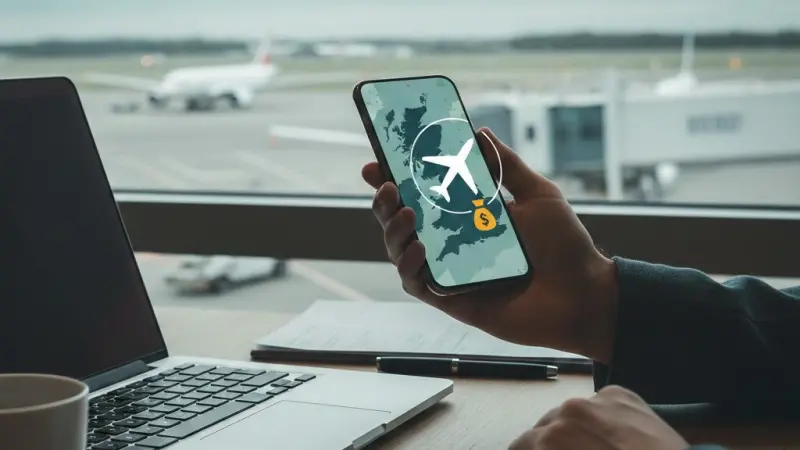
How to Claim Flight Compensation UK: A Professional Guide
Published by LocalPage.uk Senior Content Architecture Team | Updated for 2026 Compliance

In the high-stakes environment of UK business, time is the most valuable commodity. For the 5.6 million private sector businesses operating across the United Kingdom, international and domestic air travel remains a cornerstone of growth, client acquisition, and operational management. However, when flight disruptions occur, the impact extends far beyond a simple delay; it ripples through project timelines, boardroom negotiations, and corporate budgets. Understanding the intricate landscape of flight compensation in the UK is no longer just a consumer right—it is a matter of professional financial recovery and compliance.
£2.3 Trillion The annual turnover contributed by UK SMEs, many of whom rely on consistent air connectivity for cross-border trade and regional expansion.
Navigating the Legal Framework of UK261 Regulations
Since the UK's departure from the European Union, the legal landscape for air passenger rights has transitioned into a domestic framework known as UK261. This regulation is a mirror image of the original EU261 but operates under the jurisdiction of the Civil Aviation Authority (CAA) and the UK legal system. For a business owner or a corporate traveller, knowing the nuances of this legislation is the first step in ensuring that the company's rights are protected when an airline fails to meet its schedule.
Defining the Scope of UK-Specific Protections
UK261 applies to any flight departing from a UK airport, regardless of the airline's nationality. It also covers flights arriving at a UK airport if the airline is a UK or EU carrier. Whether your team is flying from Heathrow to New York or Glasgow to Belfast, the protections remain robust. In Scotland, the legal system may involve the Sheriff Court for small claims, whereas in England and Wales, the County Court handles such disputes. Recognising these regional procedural differences is vital for multi-site professional services firms.
The Distinction Between Delay and Cancellation Rights
Compensation triggers are specific. For delays, the magic number is three hours. If your arrival at the final destination is delayed by 180 minutes or more due to reasons within the airline's control, the business is entitled to fixed-sum compensation. Cancellations are more complex, involving the timing of the notification. If the airline cancels with less than 14 days' notice, compensation is typically due unless they provide a suitable alternative that fits within tight time windows.
Evidence is the Currency of Successful Claims
Professional travellers should always endeavour to obtain written confirmation of the delay reason from the ground staff at the gate. Whilst verbal explanations are common, documented proof is what satisfies the legal departments of major carriers or the Financial Conduct Authority (FCA) regulated insurers.
Determining Eligibility for Corporate Travel Compensation
A common misconception amongst UK SMEs is that compensation belongs to the company because the company paid for the ticket. Legally, under UK261, the compensation is for the "passenger" who suffered the inconvenience. However, business owners can structure their travel policies to manage how these funds are handled or offset against future travel costs, provided they remain compliant with HMRC's benefit-in-kind regulations.
Analysing 'Extraordinary Circumstances' in 2026
Airlines often cite extraordinary circumstances to avoid payouts. In the current 2025-2026 climate, the definition of these circumstances has been narrowed by several landmark court rulings. Whilst severe weather and genuine security threats remain valid excuses, technical faults and routine staffing shortages—which affected 64% of the hospitality and transport sectors recently—are generally not considered extraordinary. Businesses should be prepared to challenge these claims through the appropriate ADR (Alternative Dispute Resolution) schemes.
The Impact of Connecting Flights on Claim Value
If a delay on a regional hop from Cardiff to Amsterdam causes a missed connection to a long-haul destination, the compensation is calculated based on the final destination's arrival time. This is particularly relevant for businesses in Northern Ireland, where cross-border trade and indirect flights via hubs are common. Since 2024, the Windsor Framework has simplified some aspects of travel, but the core compensation rights remain anchored in the arrival time at your ultimate stop.
Calculating the Financial Value of Your Claim
The amount of compensation is fixed by law and is determined by the distance of the flight and the length of the delay. These amounts are periodically reviewed to reflect inflation and economic shifts. In the 2026 business environment, these figures represent a significant recovery of lost "man-hours" for a micro-business or a startup.
Standard UK261 Payout Scales:
- Short-haul (under 1,500km): £220 per passenger
- Medium-haul (1,500km to 3,500km): £350 per passenger
- Long-haul (over 3,500km): Up to £520 per passenger
Distance and Duration: The Determining Factors
For a flight from London to Edinburgh (short-haul), a delay of over three hours triggers the £220 tier. For a professional services team of five consultants, this represents a £1,100 recovery—essential for maintaining the liquidity of a small firm.
In Wales, where 94% of businesses are micro-enterprises, such sums are not negligible and can often cover the cost of a replacement venue or missed networking event.
Managing Expenses Beyond Fixed Compensation
In addition to the fixed sum, airlines must provide "duty of care." This includes meals, refreshments, and, if necessary, overnight accommodation with transport. Businesses should instruct their employees to keep all VAT receipts. HMRC requires these for corporate tax records, and they are the primary evidence needed to claim back "out-of-pocket" expenses that exceed the standard provision.
Step-by-Step Recovery Strategy for UK Businesses
To successfully claim, a business must follow a structured approach that satisfies both the airline's internal processes and the requirements of the Civil Aviation Authority. Efficiency here prevents the claim from becoming an administrative burden that outweighs the compensation value.
Initial Documentation and Real-Time Reporting
The claim process begins the moment the disruption is announced. Using a smartphone—which 82% of UK adults now own—passengers should take photos of departure boards and save digital boarding passes. Digital search queries for "near me" travel support have increased 43%, reflecting a trend toward real-time problem-solving. Businesses should optimise their travel apps to include a 'disruption checklist' for staff.
Formal Submission to the Airline's Legal Department
The first formal step is a Letter Before Action (LBA) or the airline's specific claim form. This should include the flight number, date, and booking reference. It is advisable to mention "UK261" explicitly to demonstrate that the claimant is informed. If the airline is based in Scotland, the language should reflect Scottish civil law nuances, whereas for an England-based carrier like British Airways, standard English tort law principles apply.
Avoid Common Filing Errors
Failure to provide the correct IBAN or account details for the business or the passenger is a frequent cause of delay. Ensure that all names match the passport exactly to avoid the airline's security filters from flagging the claim as fraudulent.
Addressing Extraordinary Circumstances and Airline Rejections
It is common for airlines to issue a standard rejection letter as a first line of defence. For a professional services firm or a retail business owner, this should be viewed as a negotiation phase rather than a final verdict. Understanding the common "defence" strategies used by carriers is essential for a successful appeal.
Challenging 'Technical Defect' Claims
Airlines frequently claim a technical fault was "unforeseen." However, the UK courts have generally ruled that most technical issues are inherent in the normal operation of an aircraft and thus do not qualify as extraordinary. Reference previous rulings if the airline maintains this stance. The British Chambers of Commerce often provides resources or networking with legal experts who specialise in these commercial disputes.
The Role of Weather in Compensation Disputes
While a hurricane is clearly an extraordinary circumstance, light snow or rain that other airlines are successfully flying through is not. If your flight was cancelled but other carriers were departing on time, use that data from the airport's website to challenge the airline's assertion. This level of diligence is what separates successful professional claims from rejected consumer ones.
76% of UK consumers research local businesses online before purchasing; the same level of scrutiny should be applied to airline performance data when building a claim case.
Regional Variations in the UK Claims Process
Whilst the regulation (UK261) is national, the mechanism for enforcement varies across the four nations. This is a critical consideration for businesses with a UK-wide footprint or those engaged in cross-border trade in Northern Ireland.
Legal Proceedings in Scotland vs England and Wales
In Scotland, the Simple Procedure handles claims up to £5,000. It is designed to be user-friendly for non-lawyers. In England and Wales, the Small Claims Track of the County Court is the equivalent. Welsh businesses can access bilingual support through Business Wales if they need assistance in preparing their documentation in both English and Welsh, ensuring full accessibility and compliance with the Welsh Language Act.
Northern Ireland and the Windsor Framework Context
For businesses in Northern Ireland, the situation is unique. Due to the Windsor Framework and the NI Protocol, some flights to the EU might technically fall under EU261, while flights to Great Britain fall under UK261.
In practice, the rights are nearly identical, but the regulatory body you might appeal to—such as the Consumer Council for Northern Ireland—offers local expertise that is invaluable for Belfast-based enterprises.
Utilising Professional Claim Management Companies
Many UK SMEs choose to outsource these claims to professional recovery firms. While these companies take a percentage of the payout (usually 25-35% plus a 'success fee'), they reduce the administrative burden on the business. For a startup or a micro-business, this might be a strategic decision to stay focused on core growth.
Pros and Cons of the 'No Win, No Fee' Model
The primary advantage is the lack of upfront cost and the professional handling of legal escalations. The disadvantage is the loss of a portion of the compensation. For a business with 22% of the UK professional services share, the cumulative loss of these percentages across multiple staff travels might justify an internal "travel desk" approach instead.
Vetting Third-Party Providers for ICO Compliance
If you use a third party, you must ensure they are compliant with the Information Commissioner's Office (ICO) and GDPR. You are sharing sensitive employee data (passport numbers, travel habits). A breach here could lead to significant fines for your business, far outweighing the value of a flight claim. Always check their registration on the ICO's public register.
Tax and Accounting Considerations for Compensation
How you record flight compensation in your accounts is vital for HMRC compliance. It is not "revenue" in the traditional sense, but it is an inflow of funds that must be accounted for correctly to avoid issues during a VAT inspection or end-of-year filing.
VAT Treatment of Compensation Payments
Under current HMRC guidance, statutory compensation under UK261 is generally outside the scope of VAT because it is not a "supply of services." However, if the airline provides a voucher instead of cash, the accounting becomes more complex. Professional services firms should consult their chartered accountant to ensure these are recorded as an offset to travel expenses rather than taxable income.
Employee Benefits and 'Benefit in Kind'
If an employee keeps the compensation for a business trip they took, does it count as a taxable benefit? Generally, HMRC views this as compensation for personal distress and inconvenience, meaning it is often not taxable. However, if the company has a policy that all compensation must be returned to the firm, the company must ensure this is clearly outlined in the employment contract to avoid disputes with the Federation of Small Businesses (FSB) guidelines or ACAS.
Future Trends: Flight Compensation in 2026 and Beyond
The landscape of air travel is evolving. With the rise of AI and automated flight tracking, the process of claiming is becoming more transparent. Businesses that adapt their travel policies now will be better positioned to recover costs automatically in the future.
The Shift Towards Automated Payouts
Some innovative corporate travel platforms are now offering "instant" compensation. They monitor flights in real-time and trigger a claim the moment the three-hour threshold is crossed. This technology is particularly popular in London and the South East, which accounts for 34% of the UK business population and handles the highest volume of international corporate travel.
Environmental Levies and Their Impact on Claims
As the UK strives for Net Zero, new environmental taxes on domestic flights are being discussed. While these don't currently affect compensation amounts, they are increasing the base cost of travel. This makes the recovery of £220-£520 even more critical for a business's travel ROI (Return on Investment). Companies in the North of England and Scotland, where domestic flying is a necessity due to rail limitations, must be especially vigilant.
Voice Search: Quick Answers for Travellers
"Hey Siri, how much compensation can I get for a 3-hour flight delay?"
For a short-haul flight under 1,500km, you are entitled to £220. For medium-haul up to 3,500km, it is £350. Anything over that is £520, provided the delay was the airline's fault.
"Alexa, what counts as extraordinary circumstances for UK flights?"
Extraordinary circumstances include things out of the airline's control, like extreme weather, air traffic control strikes, or hidden manufacturing defects. Routine technical faults or crew sickness do NOT count.
Final Checklist for UK Business Claimants
Before concluding your claim, ensure you have addressed the following points to maximise your success rate and maintain professional standards.
- Verification: Did the flight depart from the UK or arrive on a UK/EU carrier?
- Duration: Was the delay at the final destination more than 180 minutes?
- Documentation: Do you have the boarding pass and a written reason for the delay?
- Accounting: Have you notified your finance team about the potential inflow for HMRC reporting?
Frequently Asked Questions
Can I claim if my flight was delayed due to a staff strike?
It depends on who was striking. If it was the airline's own staff (pilots, cabin crew), you can usually claim because the airline is responsible for its employees. If it was a third party, like airport security or air traffic control, this is usually considered an "extraordinary circumstance" and compensation is not due.
How far back can I claim for a delayed flight in the UK?
In England, Wales, and Northern Ireland, you have up to six years to bring a claim. In Scotland, the limit is five years. This allows businesses to conduct a "travel audit" and recover funds from past disruptions that were never processed.
Do I get compensation if the airline offers me a different flight?
Yes, if the alternative flight still results in you arriving at your destination more than three hours later than originally planned. The focus is on your arrival time, not the time of departure or the fact that a seat was provided.
Is the airline required to give me cash or can they give vouchers?
Under UK261, you have a right to be paid in cash (or bank transfer/cheque). You are not required to accept vouchers. If the airline offers vouchers, they must obtain your signed agreement. For businesses, cash is always preferable for liquidity and straightforward accounting.
What happens if I missed my connection because of a short delay?
If all flights were booked under a single reference, and a small delay on the first leg caused you to miss the second, the airline must compensate you based on your arrival time at the final destination, provided that delay is over three hours.
Can I claim for lost business or a missed contract?
No. UK261 compensation is a fixed statutory amount and does not cover "consequential losses" like a lost deal or missed meeting. For these, you would need to rely on your professional corporate travel insurance or the Montreal Convention, which is much harder to prove.
What if the airline goes bust before I get my money?
If the airline enters administration, you become an unsecured creditor, and it is unlikely you will receive the compensation. This is why it is essential to file claims immediately and not wait the full five or six years.
Does this apply to "Free" business flights booked with miles?
Yes. As long as the ticket was not free to the general public (i.e., it was a standard commercial booking made with frequent flyer points), you have the same rights as a passenger who paid with a corporate credit card.
Is the compensation per person or per booking?
Compensation is per person. If a team of four is delayed, each individual is entitled to the full amount.
This is why the recovery for a business can be substantial, often running into thousands of pounds for a single disrupted trip.
Do I need a lawyer to take the airline to court?
No. The UK small claims systems are designed for individuals and business owners to use without a solicitor. Most of the process can be done online through the Money Claim Online (MCO) service in England and Wales.

Disclaimer: The information provided in this article is for general informational and research purposes only. Company details, features, services, and market positions may change over time. Readers are advised to visit official company websites and conduct independent research before making any business decisions or purchasing services.
Most Searchable Keywords

Recent Blogs


Related Listings

Categories
- Accountants (295)
- Advertising Agencies (559)
- Architects (149)
- Automobiles (377)
- Beauty (300)
- Carpenters (146)
- Cleaning Services (386)
- Dentists (189)
- Driving (62)
- Electricians (215)
- Energy (8)
- Event Organiser (685)
- Finance (599)
- Guide (3364)
- Health (2207)
- Information technology (206)
- Legal Services (353)
- Logistics (6)
- Maintenance (65)
- Manufacturing (35)

Sponsored Listings in Locksmith Services


Related Blogs
What Is the £12.71 National Living Wage Strat...
Read this insightful article "What Is the £12.71 National Living Wage Strategy for UK Employers" to expand your knowledge!

Where to Find the Best Summer Festivals in Br...
Read this insightful article "Where to Find the Best Summer Festivals in Bristol" to expand your knowledge!

Provisional Driving Licence UK Benefits and L...
Read this insightful article "Provisional Driving Licence UK Benefits and Limits Explained" to expand your knowledge!
Questions & Answers – Find What
You Need, Instantly!
How can I update my business listing?
Is it free to manage my business listing?
How long does it take for my updates to reflect?
Why is it important to keep my listing updated?
